

Stations, airports and major transport hubs are places we often pass through without a second thought. Yet sometimes, an extraordinary building can transform the way we experience a journey: a roof that seems to defy gravity, a garden tucked inside an airport, or a station that becomes a landmark in its own right. Architecture can turn a routine stop into an experience worth remembering.
Around the world, some infrastructure projects have become attractions in their own right, as compelling as the destinations they connect. Designed to accommodate millions of passengers every year, these spaces have evolved into tourism destinations to explore, photograph and experience, even without trains to catch or flights to board. Because sometimes, the journey begins long before we reach our destination.
1 – Naples’ Art Stations
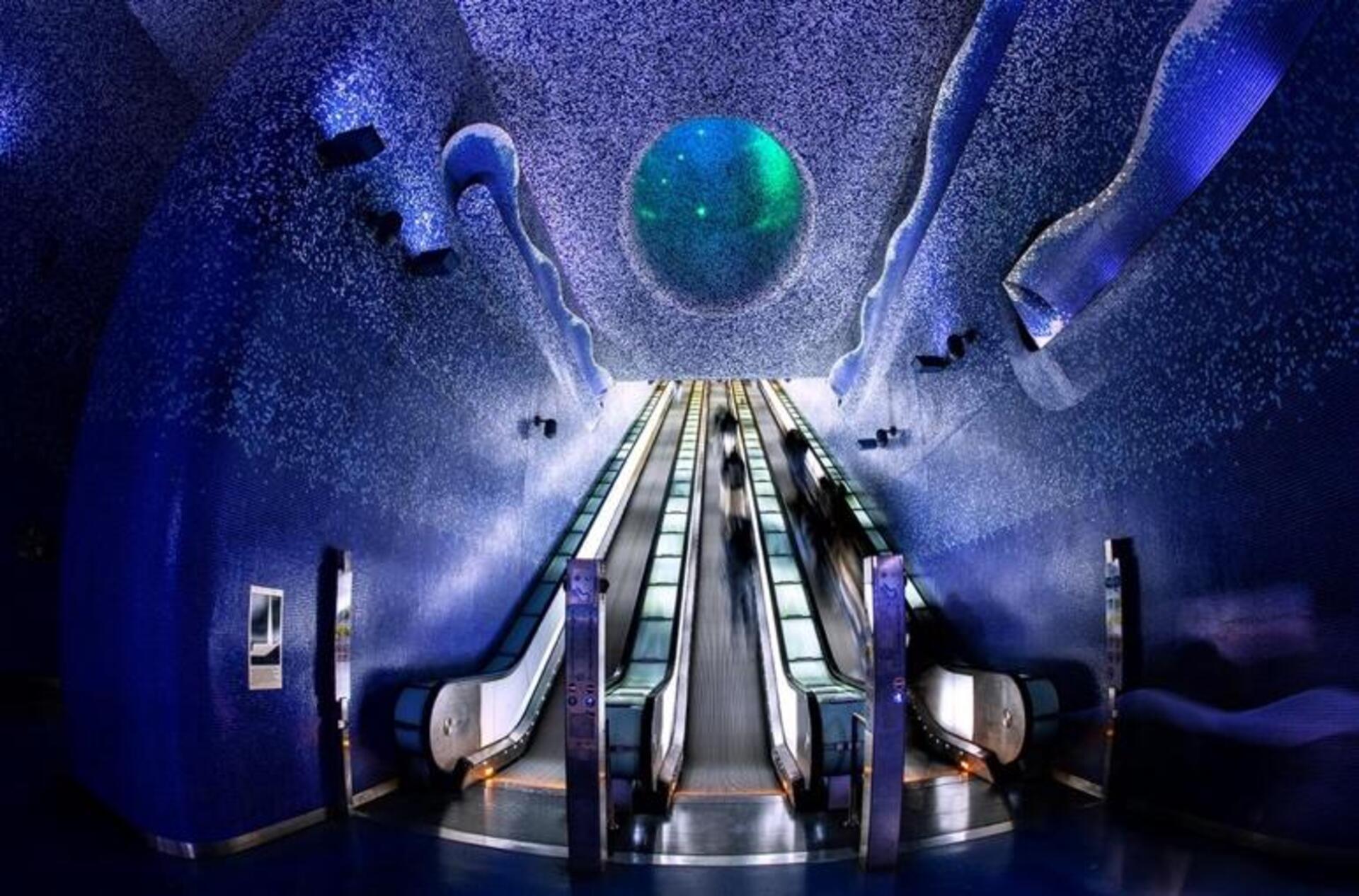
In Naples, even a trip on the metro can become an artistic experience. Designed by architect Óscar Tusquets Blanca, Toledo station takes passengers on a journey through mosaics, shades of blue and plays of light that evoke the sea and the sky.
It is one of the best-known examples of the “Stazioni dell’Arte” (Art Stations), an initiative that has transformed numerous Naples metro stations into spaces where mobility meets contemporary art.
The infrastructure project brings together international architects and artists and features around 200 artworks. Highlights include the colourful interiors of Università station, designed by Karim Rashid, and the works by Gae Aulenti at Dante and Museo stations.
Webuild has built several of these metro stations, contributing to a project in which infrastructure is more than just a place to pass through: it becomes part of the city’s identity and a destination in its own right, even for those with no train to catch.
2 – Airport Central Station, Perth
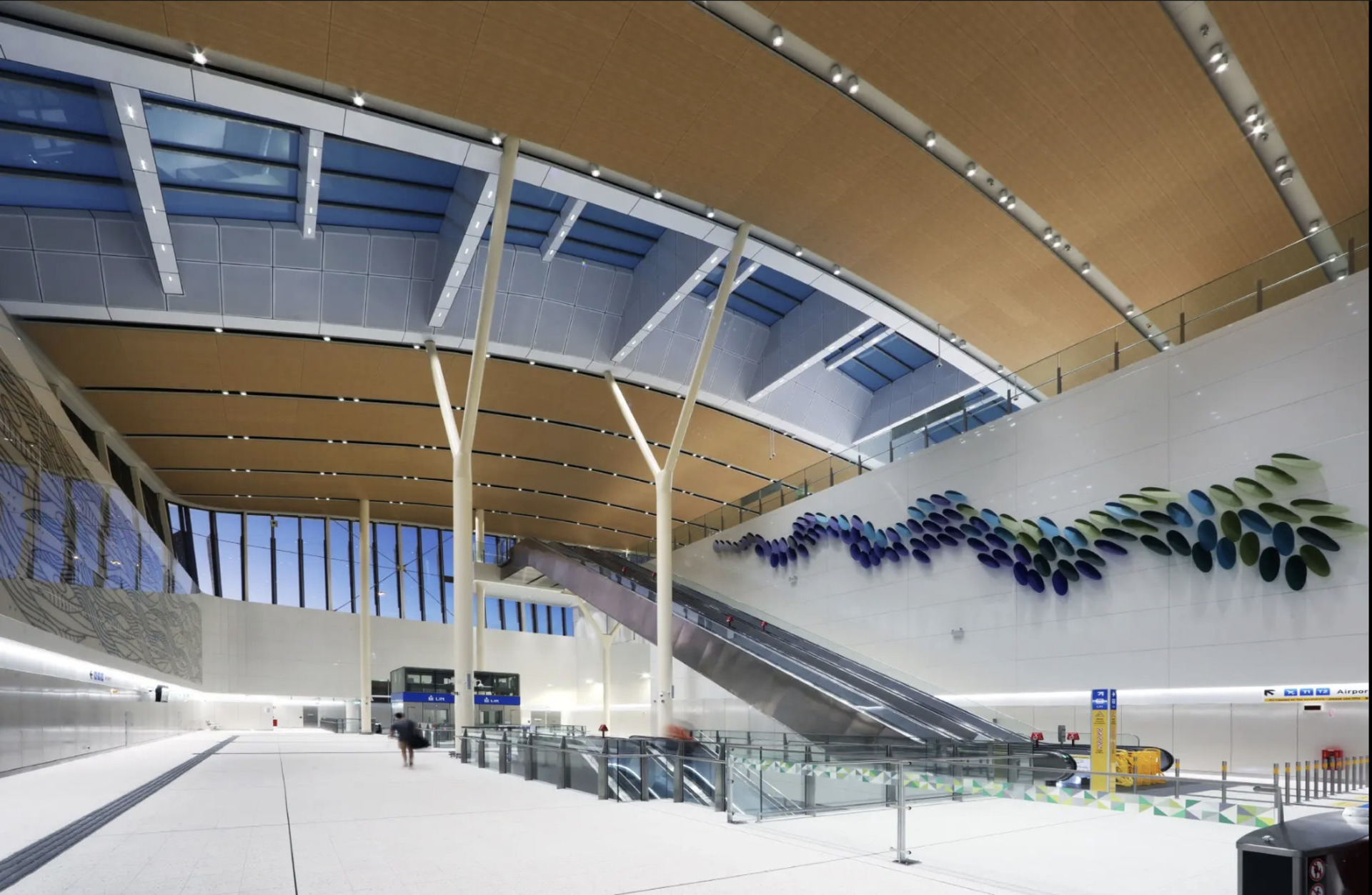
What if the journey from the airport to the train could become part of the travel experience itself? In Perth, Australia, Airport Central Station transforms a functional transit point into a space with a distinctive architectural identity.
The station is part of the Airport Line, a railway line built by Webuild in partnership with local company NRW and opened in 2022. In 2023, its design received the Award for Public Architecture from the Australian Institute of Architects’ Western Australia chapter.
The station provides a direct connection between the airport terminal and the rail network, making the transfer from air to rail simpler and more seamless. But the infrastructure project also demonstrates how architecture can help make public transport more appealing: not just a service for reaching a destination, but a place that welcomes, guides and surprises travellers.
3 – Naples-Afragola High-Speed Rail Station
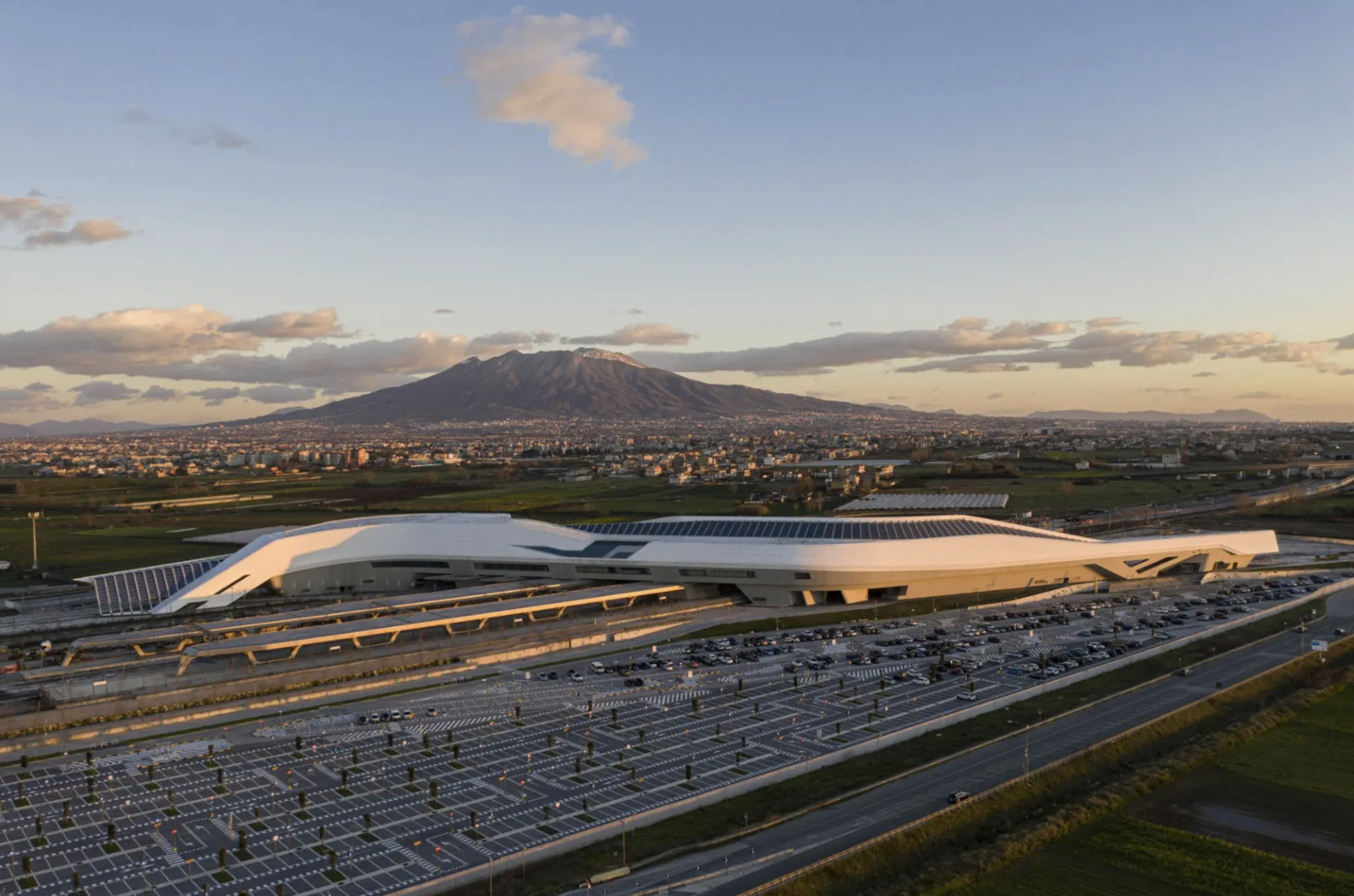
At Napoli-Afragola, a high-speed rail station resembles a suspended bridge more than a traditional terminal. Designed by Zaha Hadid, the station spans the tracks as a sinuous structure of glass and steel, with walkways and volumes that appear to flow through space.
Opened in 2017, Naples-Afragola station was conceived to connect several railway lines and improve access to the northern Naples area, while also creating a new architectural landmark for the region. Webuild constructed the station, bringing to life the design by the Iraqi-British architect’s practice.
The form of the Naples-Afragola High-Speed Rail Station is more than an aesthetic statement: the expansive elevated structure organises passenger flows and connects entrances, platforms and circulation routes. Here, architecture guides movement and transforms a functional stop into a visual experience.
4 – Jewel Changi Airport, Singapore
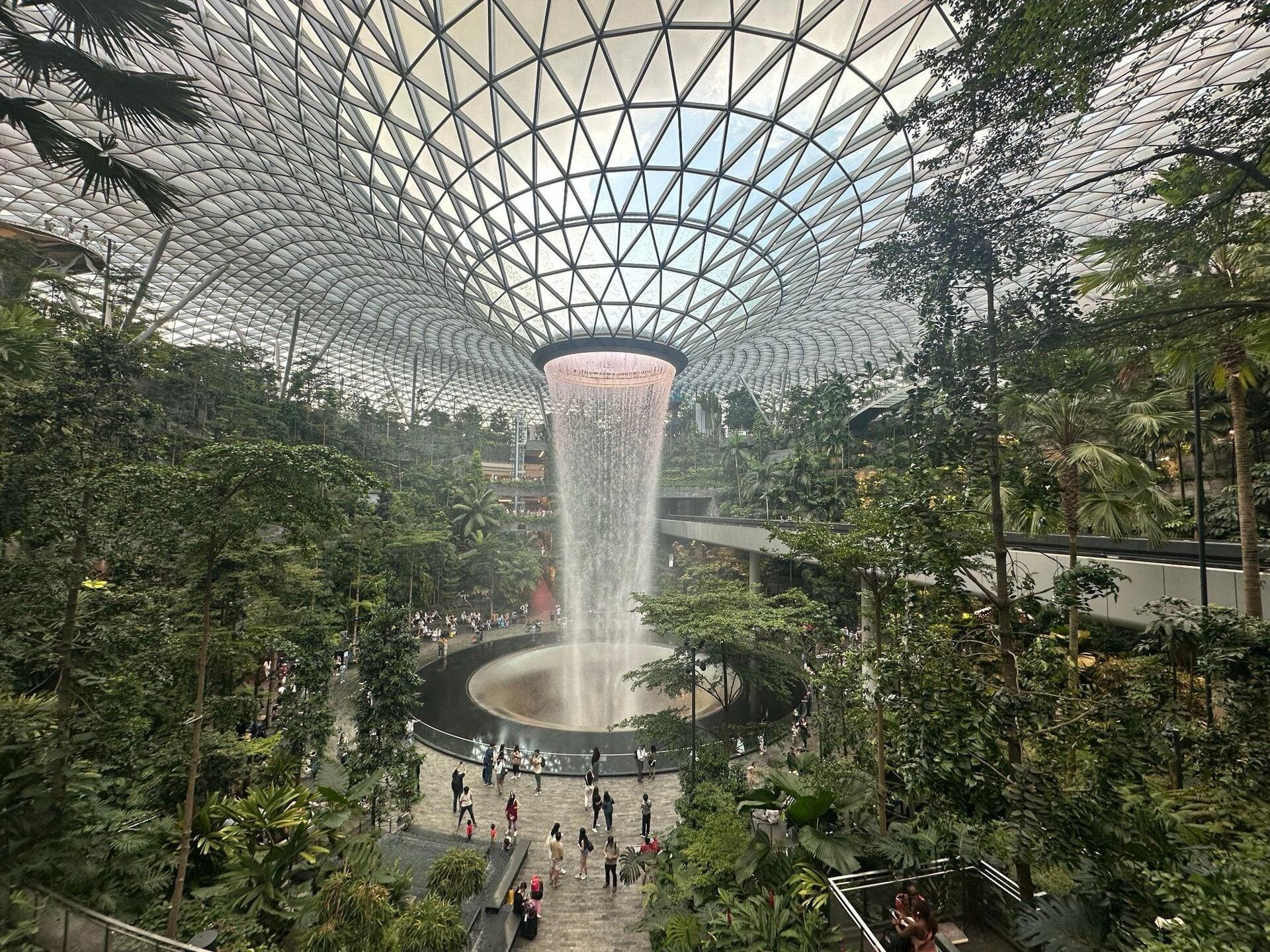
At Singapore Changi Airport, some travellers stop to admire a waterfall before even boarding their flight. This is the Rain Vortex, a spectacular 40-metre-high indoor waterfall cascading through the heart of Jewel, a complex enclosed beneath a vast glass-and-steel dome.
Designed by architect Moshe Safdie, it is surrounded by the Forest Valley, a multi-level garden criss-crossed by walking trails and lush tropical vegetation: an unexpected landscape in the middle of one of the world’s major aviation hubs.
Opened in 2019, Jewel brings together nature, retail, dining and attractions in a space connected to the airport terminals. The waterfall channels rainwater through the central opening in the roof and, after dark, becomes the centrepiece of a light and sound show.
5 – Grand Central Terminal, New York
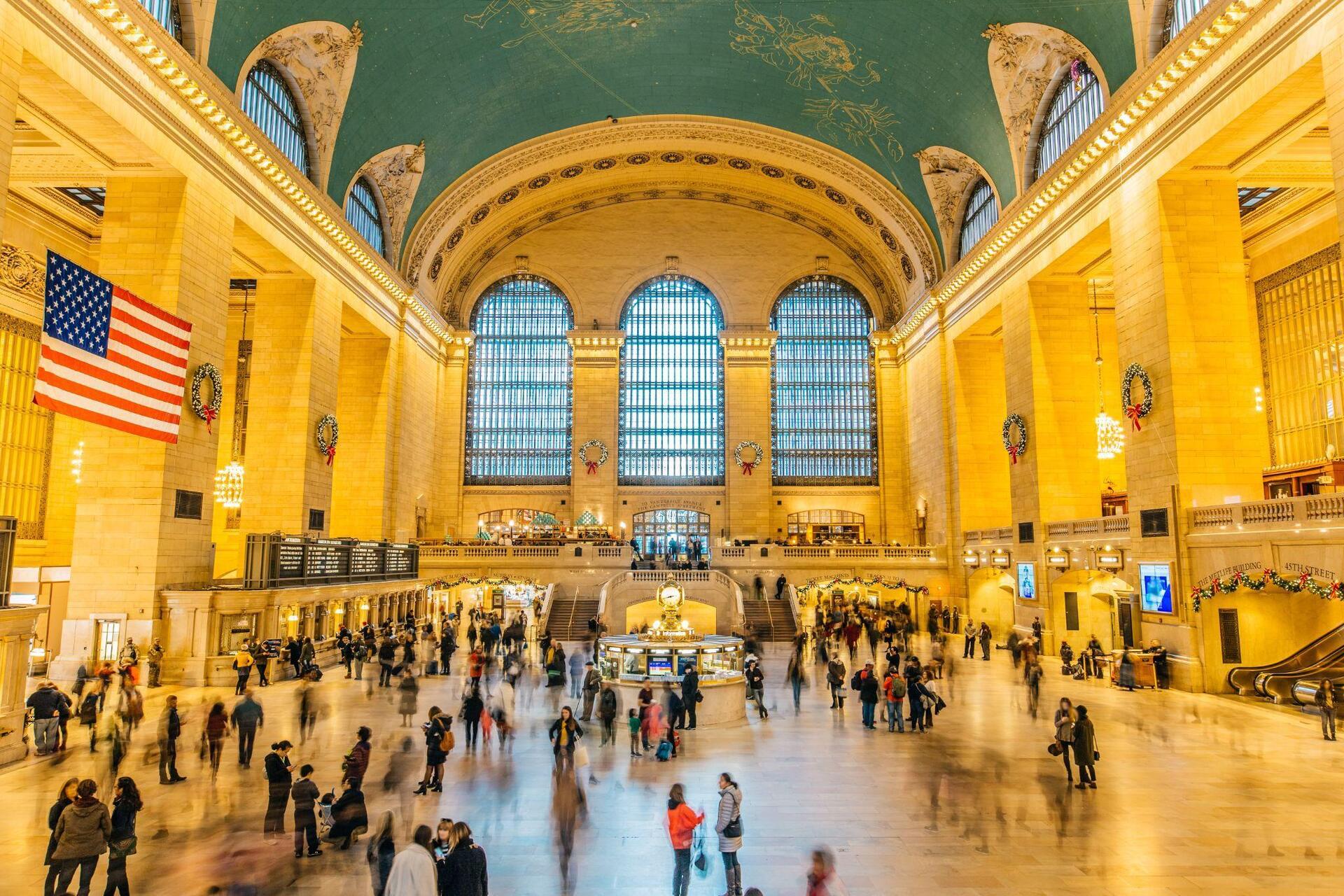
In New York, there is a place where thousands of people gather every day beneath a starry sky without ever stepping outside. It is the Main Concourse of Grand Central Terminal, the historic station opened in 1913, renowned for its ceiling adorned with golden constellations and the large opal-faced clock above the information booth. Here, architecture transforms a transport hub into one of the city’s most recognisable landmarks.
But Grand Central Terminal is more than a cinematic backdrop or a destination for architecture enthusiasts. It remains a busy railway hub, with regional and commuter rail services, shops, restaurants and spaces to explore.
Among them is the Whispering Gallery, where the shape of the vaulted surfaces allows a voice to travel from one corner to the other. It is a place where even waiting for a train can become a way to discover New York.