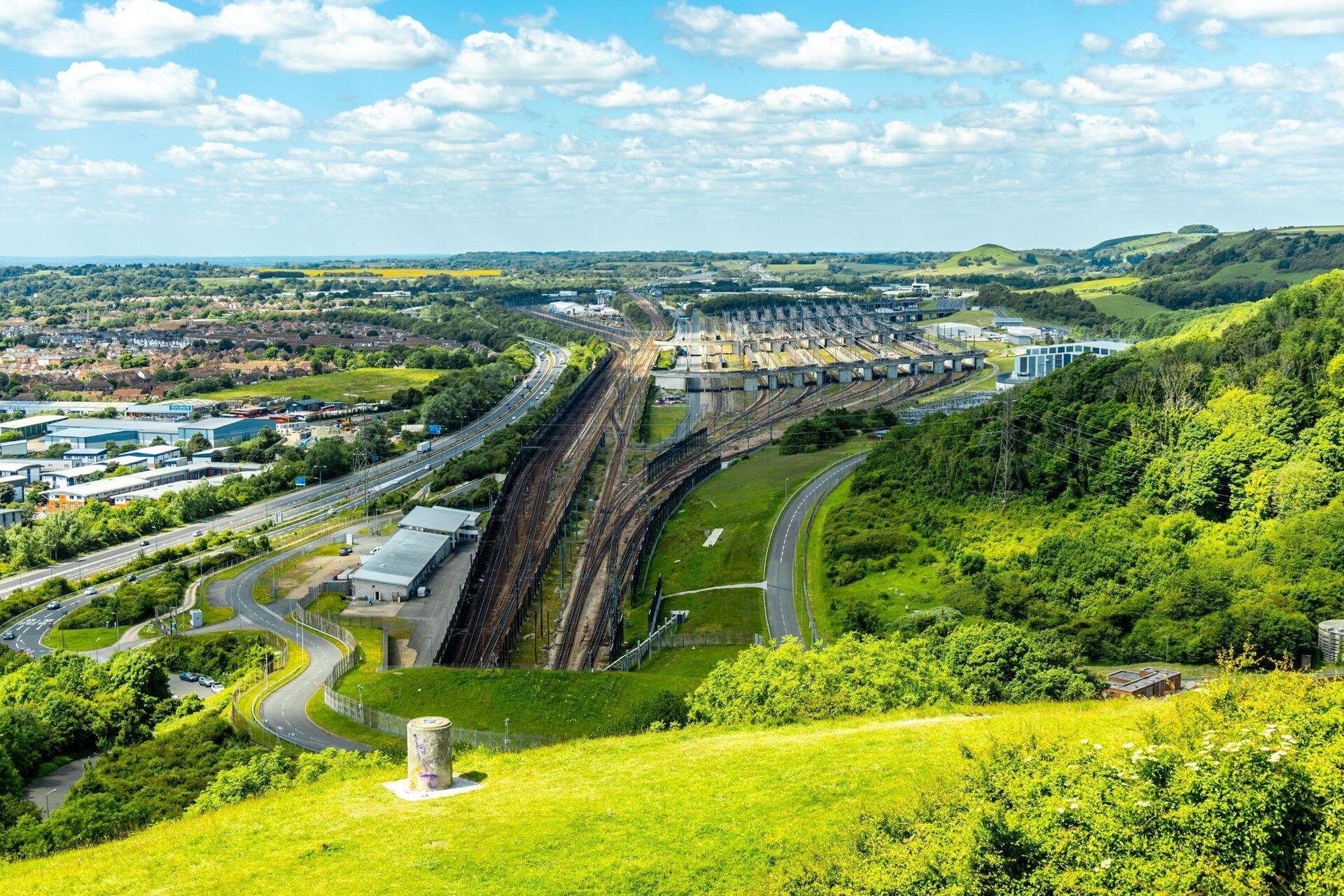


Some infrastructure projects stand out for their height, others for their depth or the complexity of the technologies behind them. Yet some of the most impressive are those defined above all by their sheer scale: tunnels cutting through entire mountain ranges, bridges connecting islands and cities separated by the sea, and railway viaducts that seem to stretch endlessly.
These are projects designed to overcome distances that for centuries represented natural barriers, transforming once-isolated territories into increasingly integrated networks.
Behind these achievements lies not only an extraordinary engineering challenge, but also a new vision of connectivity. A vision capable of reducing travel times, strengthening economic exchanges, and bringing people, cities, and countries closer together.
From major European rail corridors to the colossal transport systems built across Asia, these infrastructure facilities demonstrate that length is often more than a matter of kilometres: it is a measure of the ambition with which engineering can reshape the world.
1 – Brenner Tunnel (BBT), Italy-Austria
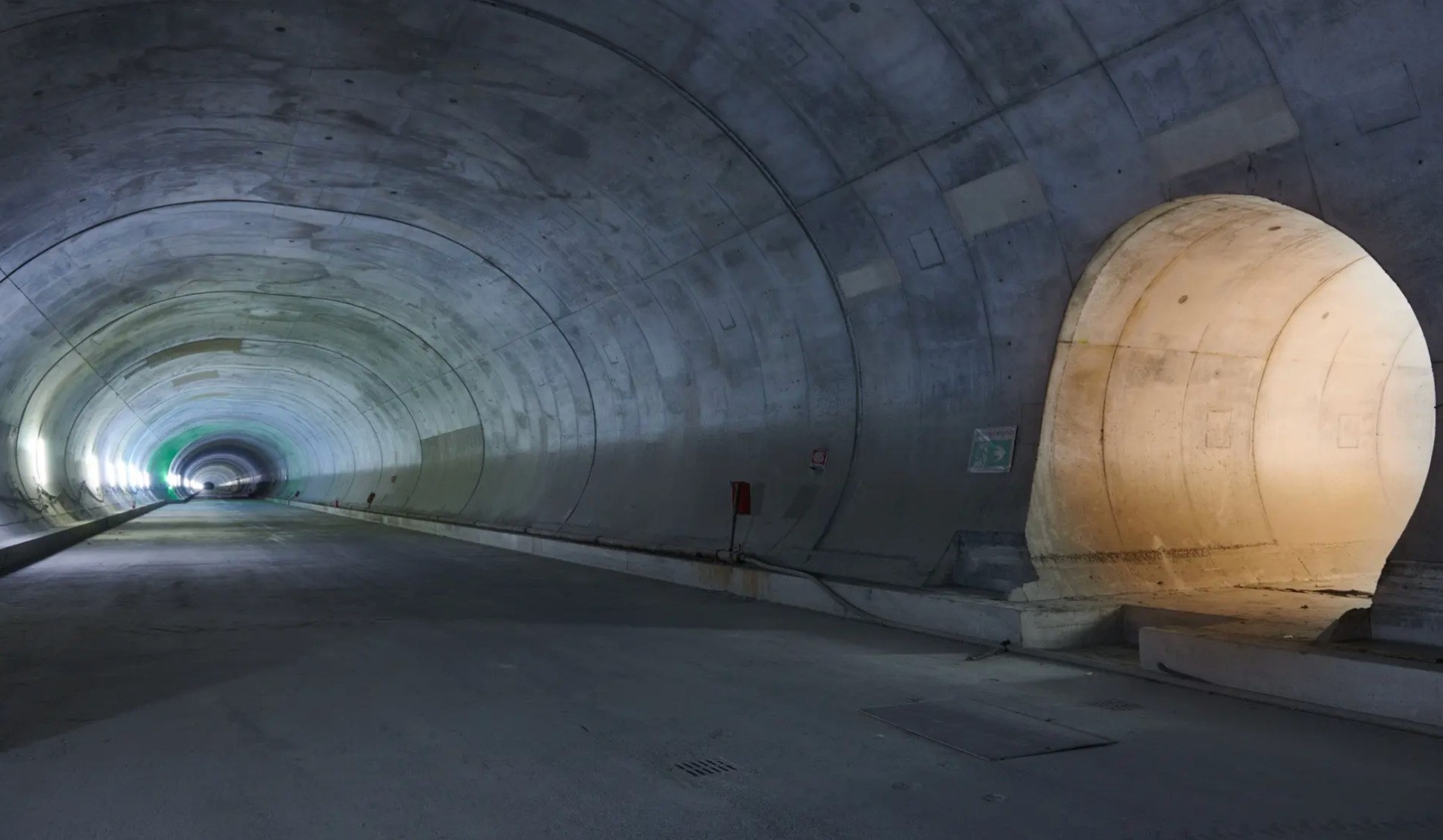
Between Italy and Austria, one of Europe’s most ambitious railway infrastructure projects is taking shape. The Brenner Base Tunnel (BBT), in which the Webuild Group is involved, will extend for 64 kilometres, becoming the longest underground railway tunnel in the world.
At the heart of the Scandinavian–Mediterranean Corridor of the TEN-T network, the Brenner Pass tunnel will connect Fortezza with Innsbruck by crossing the Alps and reducing travel times from 80 to just 25 minutes.
But its significance goes far beyond its record-breaking length: the Brenner Tunnel is set to transform European mobility by encouraging the shift of freight transport from road to rail and making connections between the northern and southern parts of the continent more sustainable.
2 – Grand Paris Express, Paris Metro
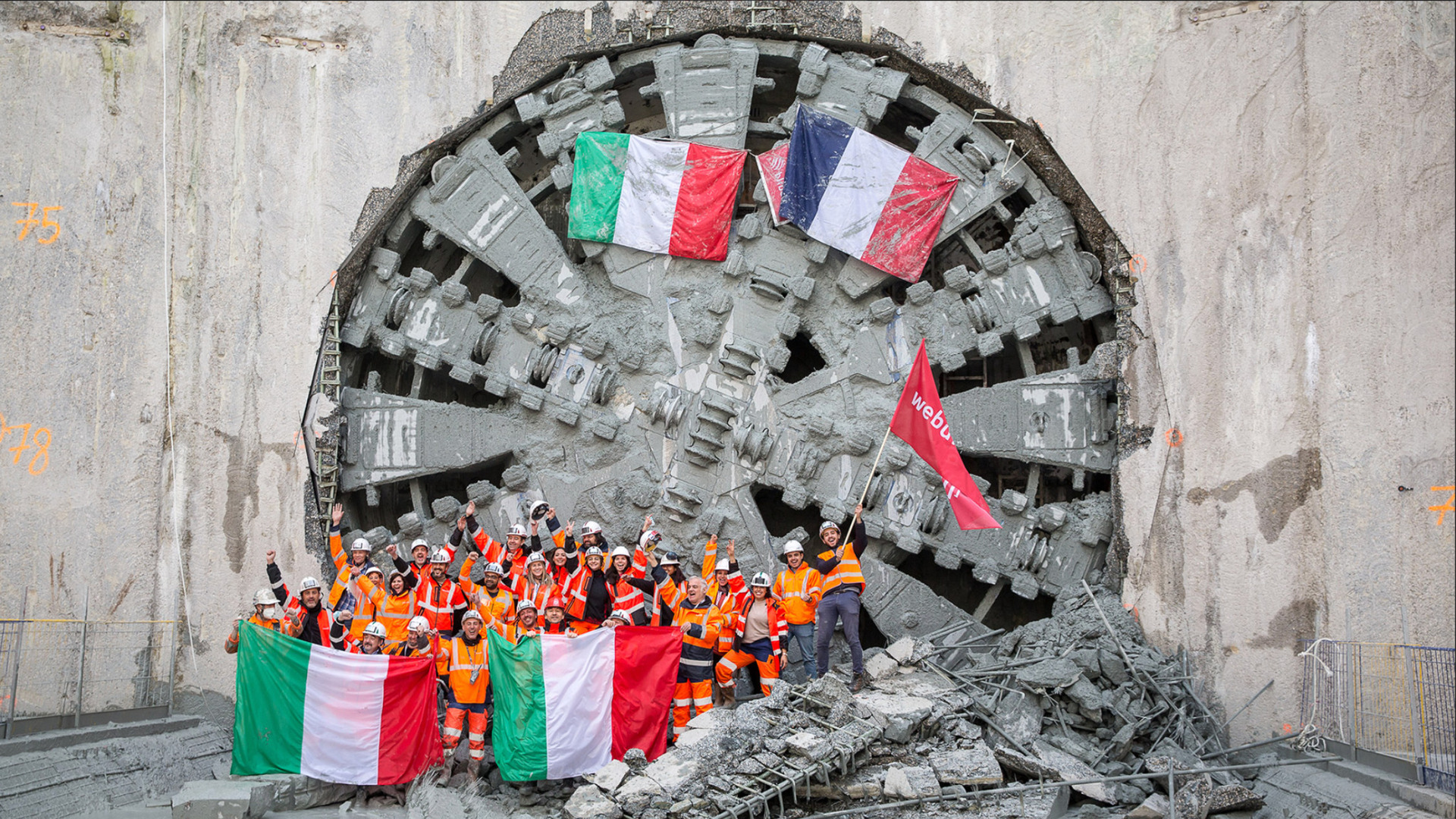
Beneath the streets of the French capital, one of Europe’s largest underground infrastructure projects is taking shape. The Grand Paris Express, also developed with the contribution of the Webuild Group, involves more than 200 kilometres of new automated metro lines and will connect almost all the municipalities of the Île-de-France region, reshaping mobility across one of the continent’s most densely populated metropolitan areas.
More than an extension of the existing Paris metro network, the project represents a new vision of the city, which is capable of integrating urban centres and suburbs through a faster, more efficient, and more sustainable transport system.
Webuild is involved in the construction of several sections of the Grand Paris Express, contributing to the development of tunnels and stations designed to reduce road traffic.
3 – Danyang–Kunshan Grand Bridge, China
In China’s Jiangsu province stands the Danyang–Kunshan Grand Bridge, the longest bridge in the world.
Stretching 164.8 kilometres, it is part of the Beijing–Shanghai high-speed railway and crosses plains, rivers, and wetlands while maintaining an elevated structure to ensure uninterrupted and high-speed connections along the route.
Opened in 2011, the Danyang–Kunshan Grand Bridge is one of the largest railway engineering achievements ever realised, where the sheer scale of the infrastructure becomes a tool for overcoming natural barriers and connecting territories across an unprecedented distance.
4 – Hong Kong-Zhuhai-Macau Bridge, China
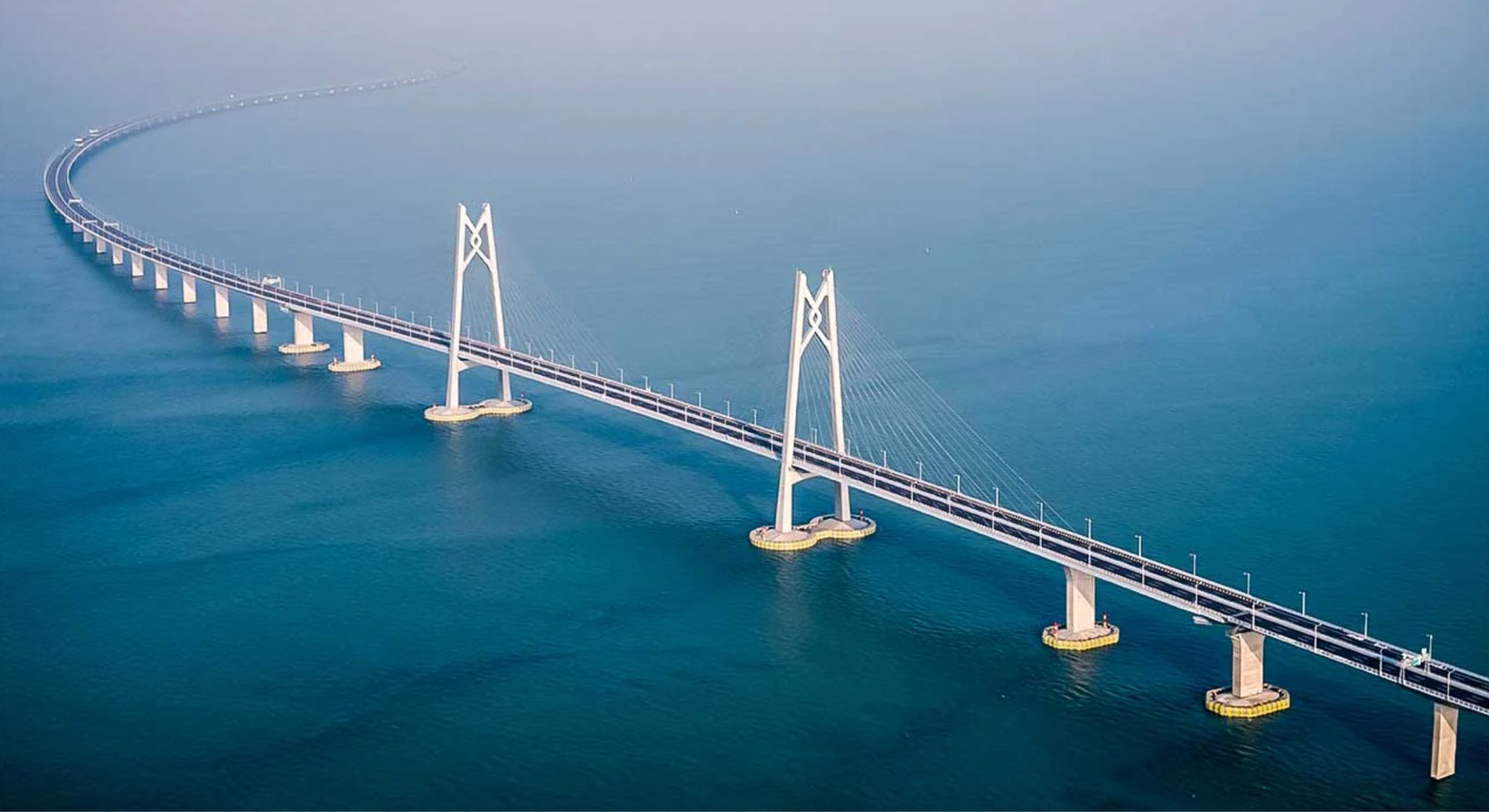
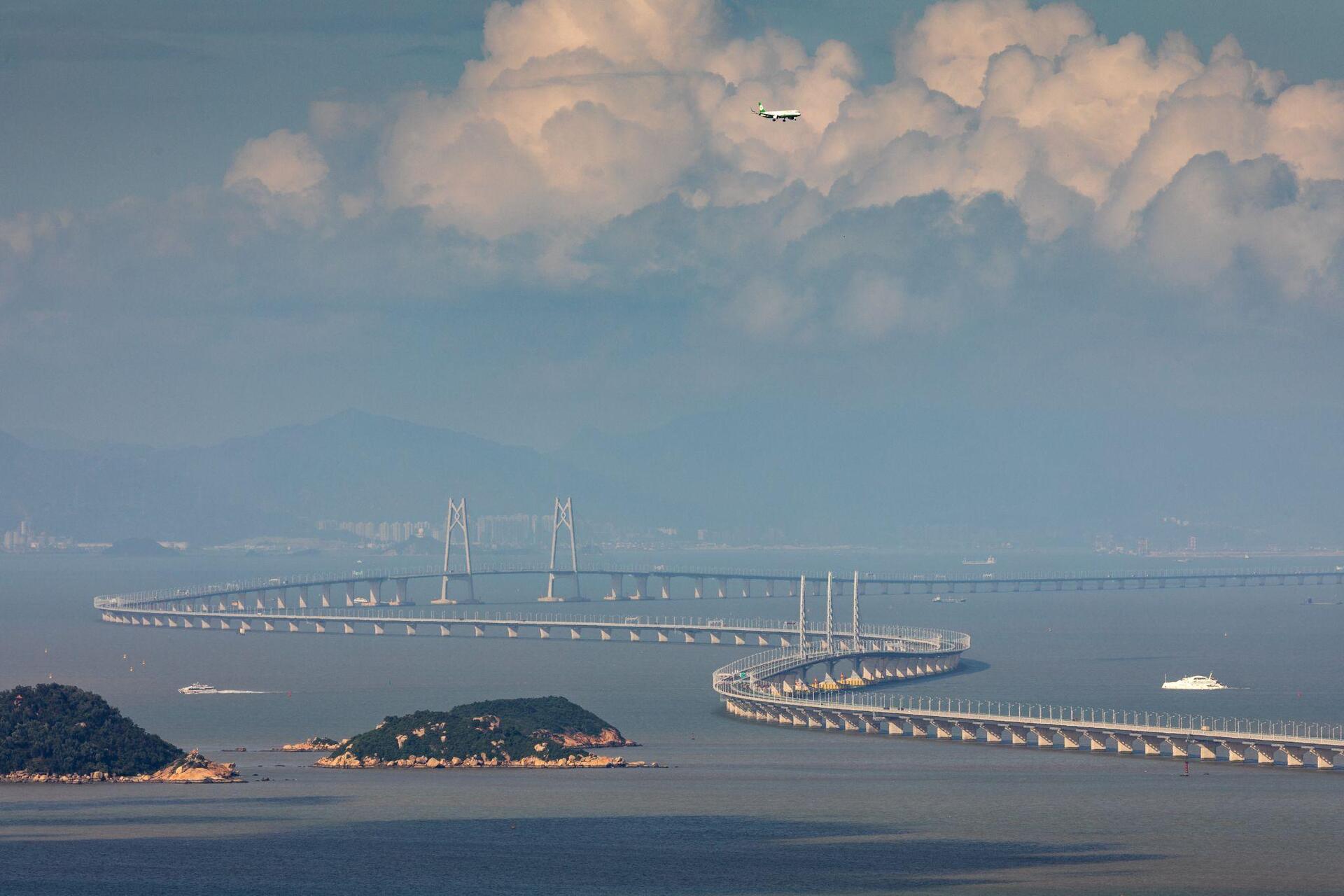
In the heart of the Pearl River Delta, the Hong Kong–Zhuhai–Macau Bridge represents one of the largest maritime crossing projects ever built.
Stretching 55 kilometres, the connection links Hong Kong, Zhuhai, and Macau through an integrated system of bridges, an undersea tunnel, and artificial islands.
Opened in 2018, the Hong Kong–Zhuhai–Macau Bridge has transformed one of China’s most dynamic economic regions, shortening distances between three major urban centres and creating a new corridor for people, goods, and trade.
5 – Channel Tunnel (Eurotunnel), UK-France
Beneath the English Channel lies one of the most extraordinary railway projects ever built. Inaugurated in 1994, the Channel Tunnel (also known as Chunnel and Eurotunnel) connects the United Kingdom and France through a system of tunnels stretching approximately 50 kilometres, nearly 38 of which run beneath the seabed.
Created through one of the greatest engineering challenges of the 20th century, the Eurotunnel consists of two main railway tunnels and a central service tunnel, excavated using massive TBMs that enabled the two construction teams to meet with remarkable precision deep beneath the Channel.