


 "Tools," the new work of the Murales Project in Piazza Venezia
 "Tools," the new work of the Murales Project in Piazza Venezia
 "Tools," the new work of the Murales Project in Piazza Venezia
 "Tools," the new work of the Murales Project in Piazza Venezia
 "Tools," the new work of the Murales Project in Piazza Venezia
 "Tools," the new work of the Murales Project in Piazza Venezia
 "Tools," the new work of the Murales Project in Piazza Venezia
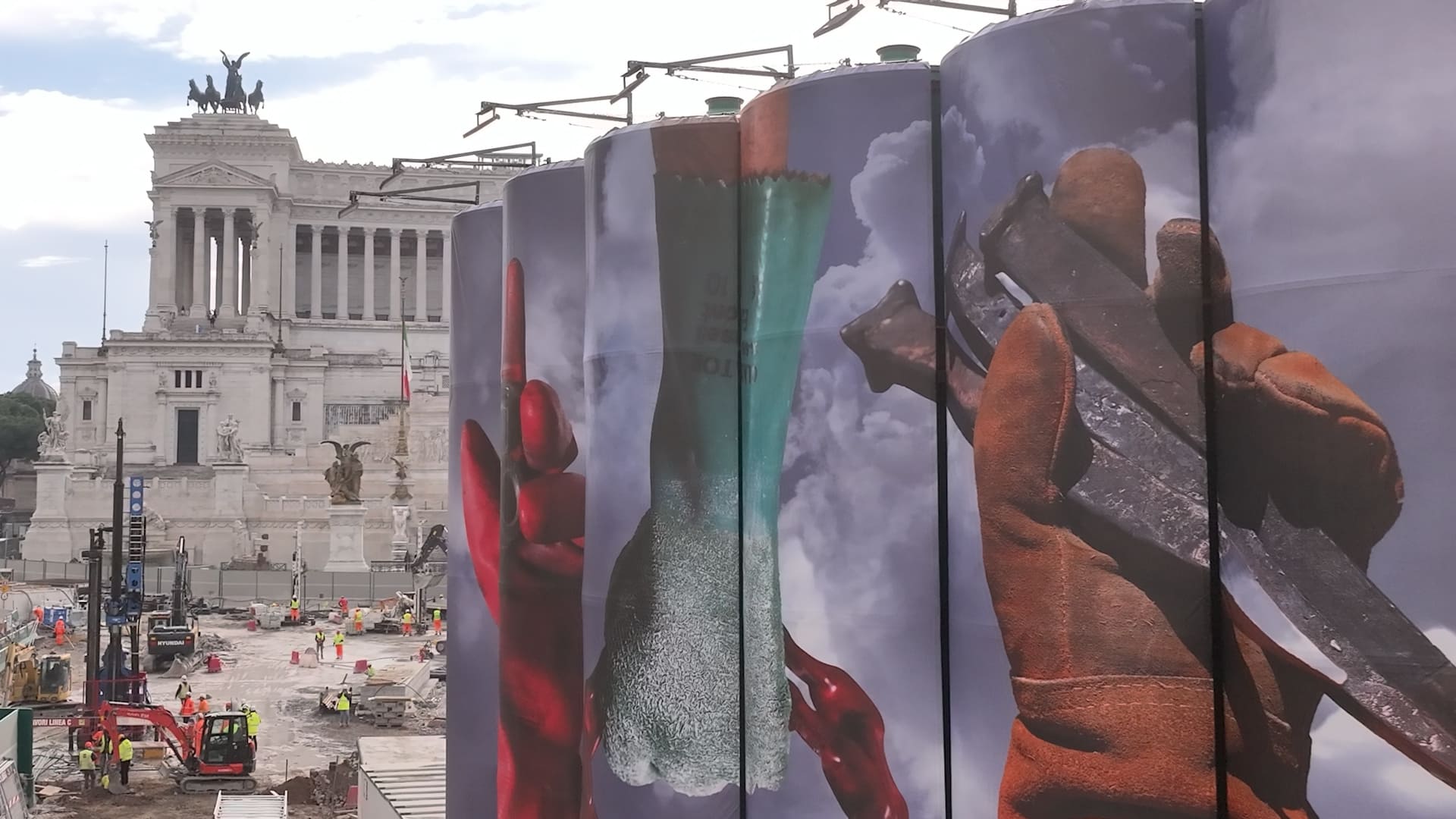 "Tools," the new work of the Murales Project in Piazza Venezia
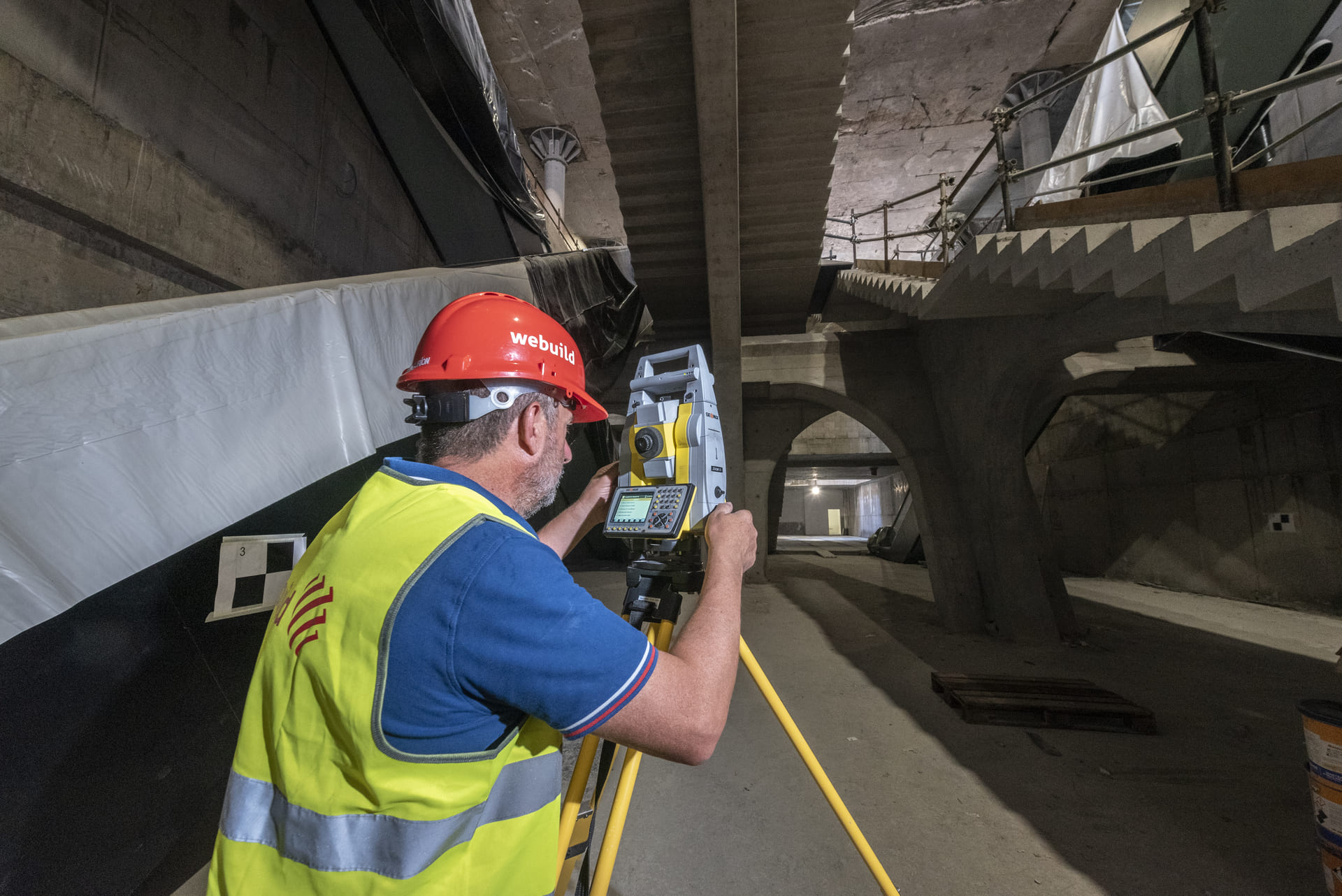 Construction site of the Colosseo-Fori Imperiali station of the Metro Line C, Rome
 Construction site of the Colosseo-Fori Imperiali station of the Metro Line C, Rome
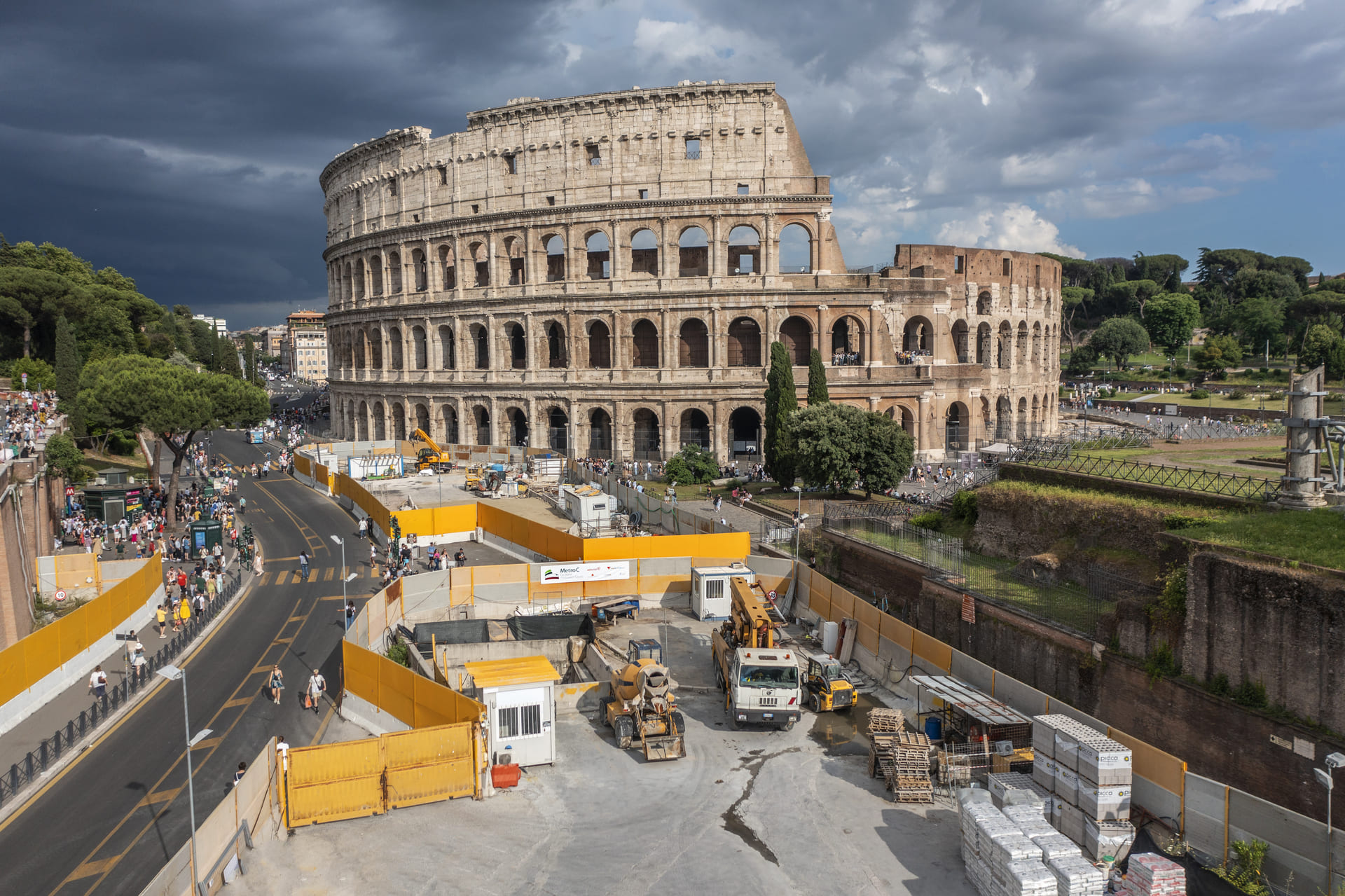 Construction site of the Colosseo-Fori Imperiali station of the Metro Line C, Rome
 Construction site of the Colosseo-Fori Imperiali station of the Metro Line C, Rome
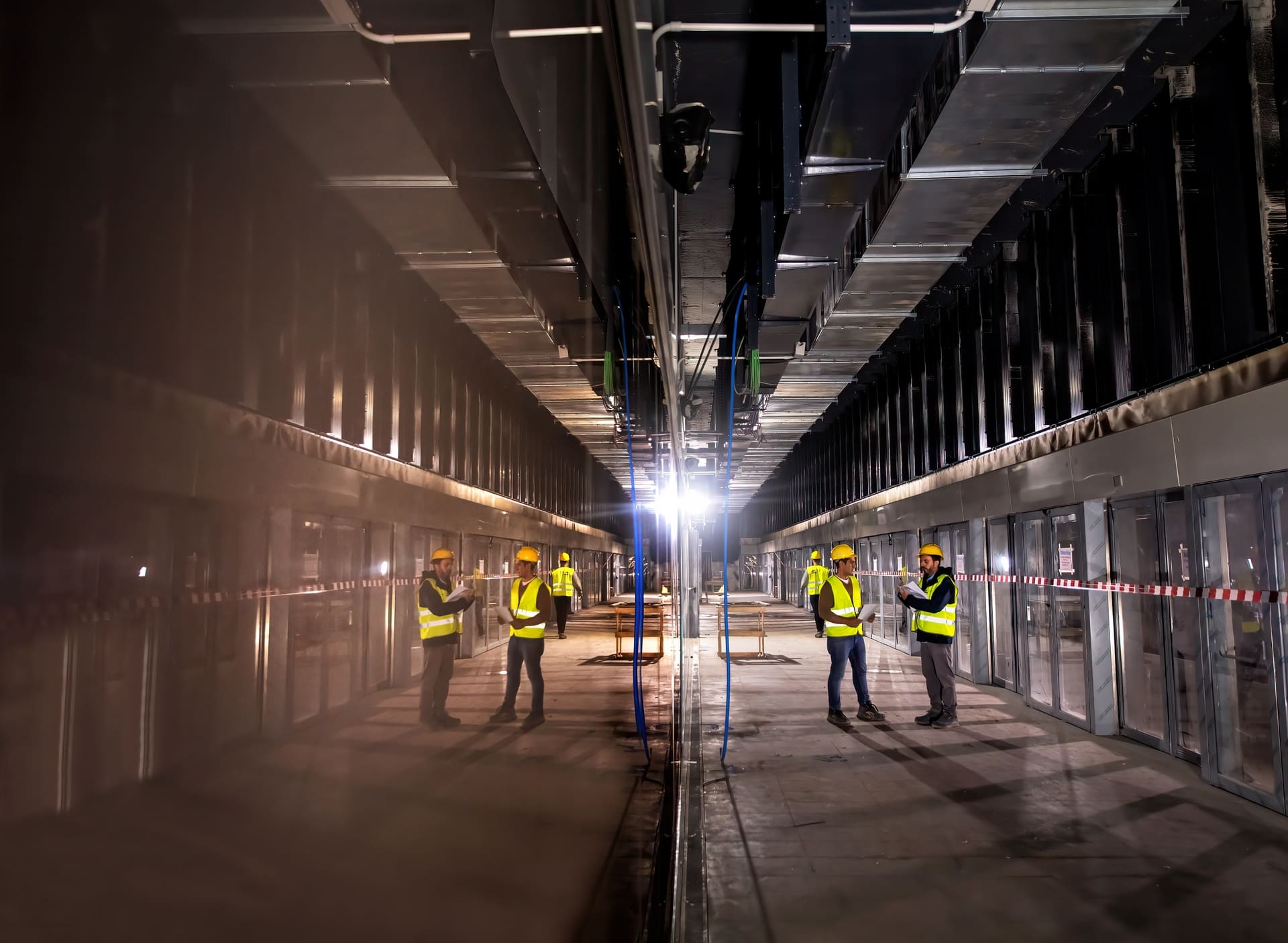 Construction site of the Colosseo-Fori Imperiali station of the Metro Line C, Rome
- The Murales project presents “Tools,” the new piece of contemporary art by Elisabetta Benassi that pays tribute to the hardworking community of the Line C construction site.
- For the third time, ten industrial silos are transformed into a single installation that weaves together Baroque imagery, contemporary labor, and symbolic memory.
- The workers’ hands, photographed by the contemporary artist, create a bridge between the tools of the construction site and the instruments of Christ’s Passion.
- “Tools” is part of the urban regeneration initiative promoted by the Metro C Consortium (led by Webuild and Vianini Lavori) within the construction site of the future Piazza Venezia station.
- Rome’s Metro Line C is one of the largest infrastructure projects currently under construction in Italy.
read more

In Piazza Venezia, a crossroads of two thousand years of history, urban renewal continues to shape Rome’s daily life to the rhythm of the works of one of the most complex construction sites in Europe: the future Venezia station of Line C. A unique engineering work that will become a true “archaeostation” articulated across six underground levels, with an archaeological excavation area described as «one of the largest ever carried out in Europe».
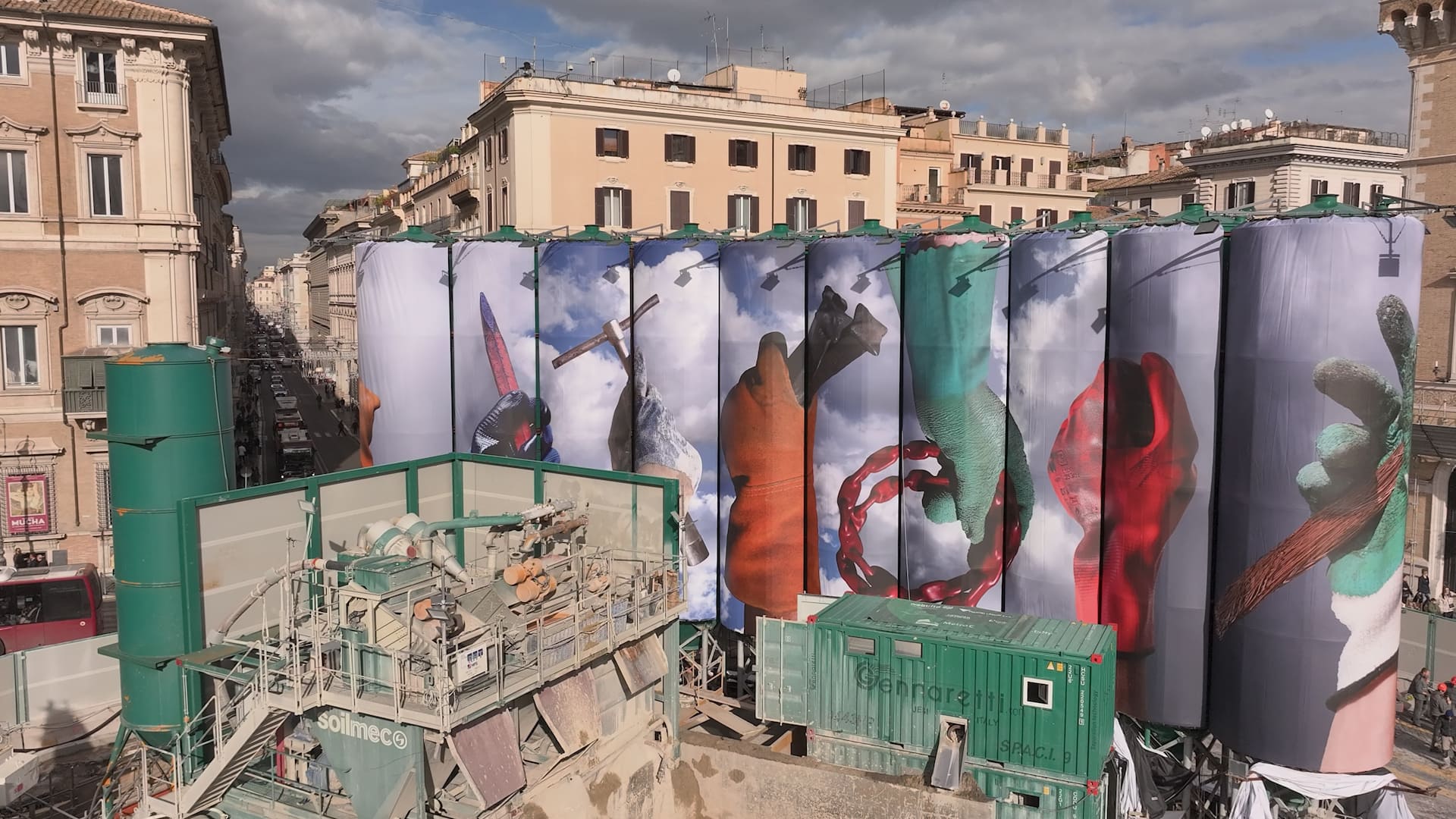
It is here, in the heart of this landscape in transformation, that Murales comes to life, the public art project promoted by the Metro C consortium, led by Webuild and Vianini Lavori, under the patronage of Roma Capitale and in collaboration with the relevant Superintendencies. A programme that invites international-profile artists to transform the site’s ten silos — 10 metres high and 64 metres long — into a single, gigantic artistic installation.
After Pietro Ruffo’s “Constellations of Rome” and Marinella Senatore’s “We rise by lifting others”, on 5 December came “Tools”, the new work by contemporary artist Elisabetta Benassi.
A lot of artists who transform a construction site into an open-air contemporary art museum.
“Tools”: A Piece of Installation Art born from the Piazza Venezia Construction Site and is inspired by Bernini
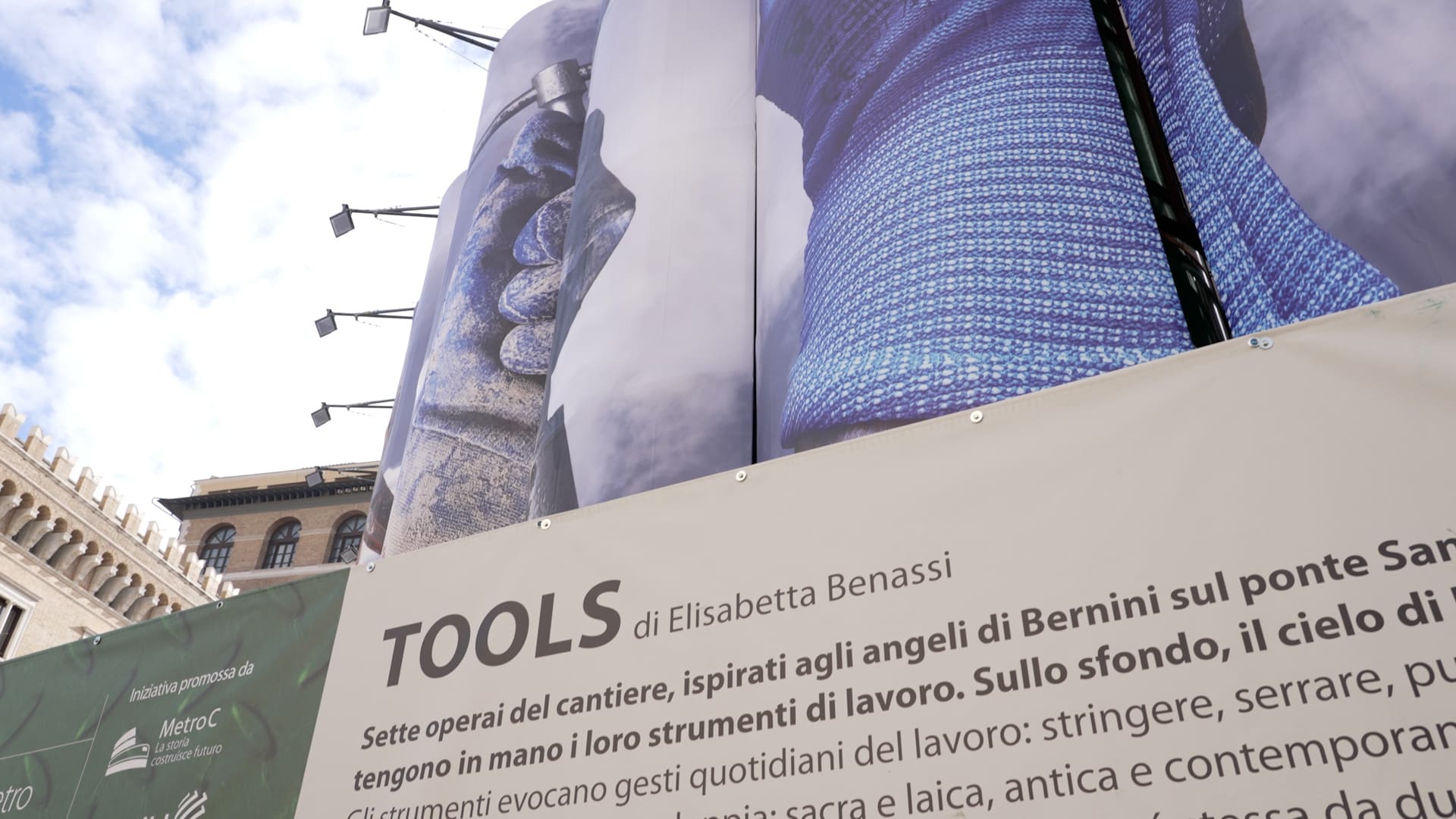
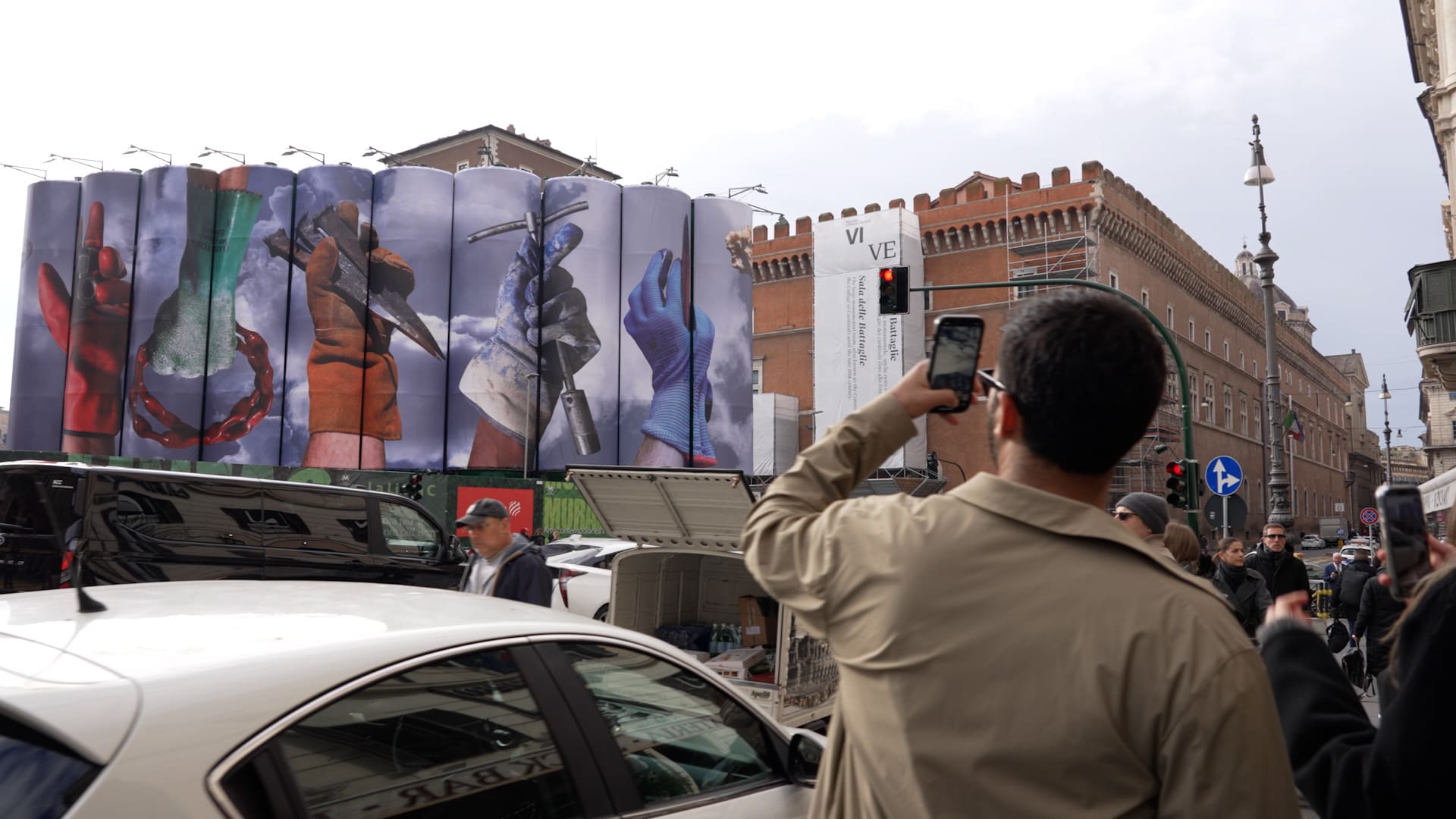
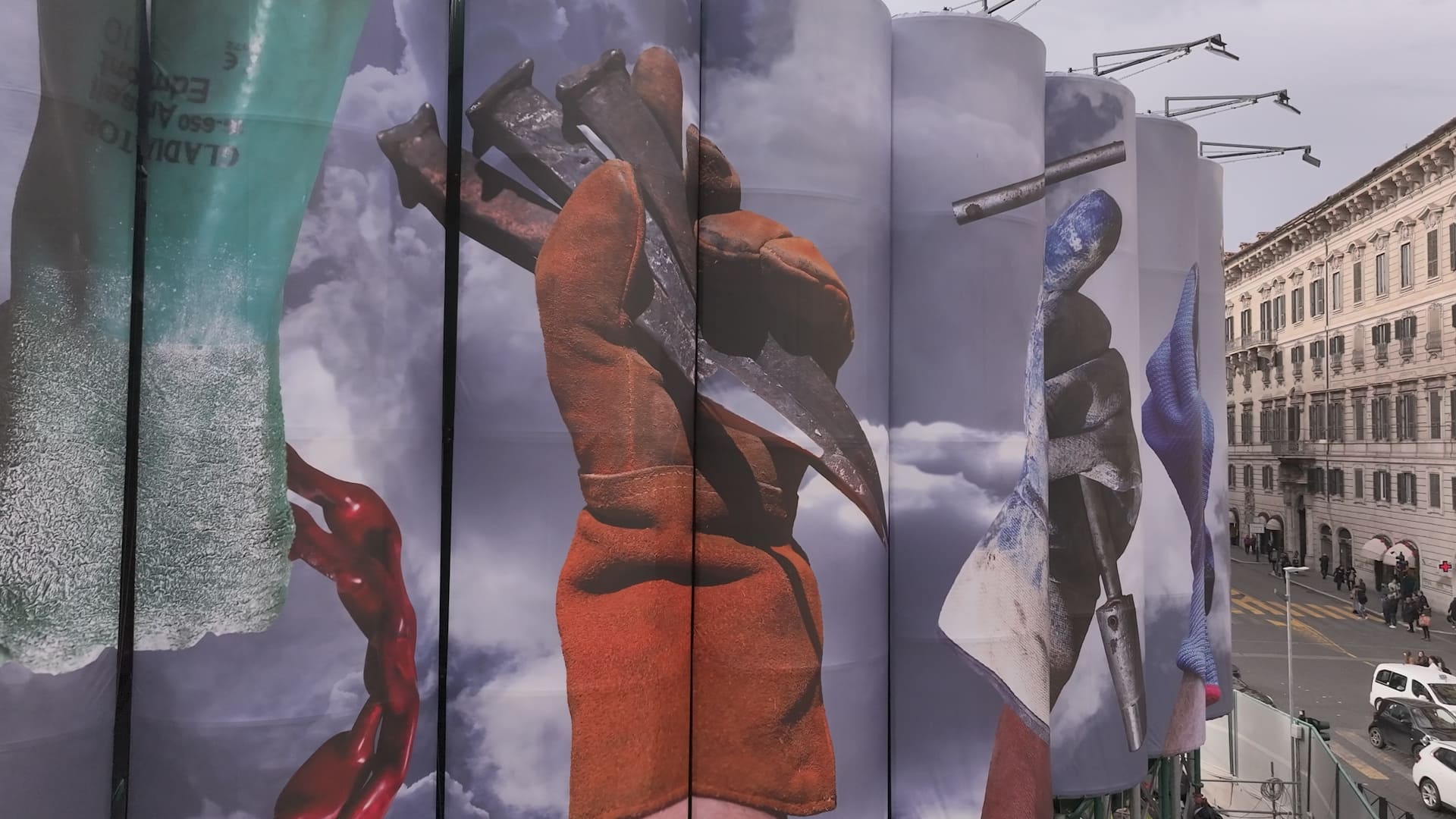
“Tools” is a piece of public art that speaks directly to the living material of the construction site. It portrays the hands of real workers, photographed by the artist as they grasp everyday tools: spanners, chisels, cables, bolts, sponges, chains.
«The hands wearing these gloves», describes Elisabetta Benassi as she introduces the large-scale artistic installation, «are the very same hands of the site workers».
Benassi explains that she was inspired by the theatrical gestures of Bernini’s angels on Ponte Sant’Angelo, who since 1669 have held the Instruments of the Passion like a sacred drama sculpted in marble. The bridge, built by Hadrian in 134 AD, already binds empire, papacy and art history.
The artist thus constructs a sort of “Baroque mirror” applied to contemporary workers: like Bernini’s angels, the workers also rely on the tools of their trade – but in this case secular, material, concrete tools.
A choice that reflects all of Benassi’s research, as one of the most highly regarded Italian contemporary artists, always attentive to bringing out the material memory of history and recombining it into new symbolic constellations.
Her work stages exactly this: the city as a theatre where past and present converse, where every everyday gesture becomes part of a millenary narrative.
Contemporary Art and Infrastructure: The Murales Project as Urban Regeneration
As with Pietro Ruffo and Marinella Senatore, “Tools” is also part of Murales, the contemporary art project that aims to transform the construction site of a major infrastructure into a place for reflection, encounter and culture.
In the intention of the members of Metro C Consortium who promote it, Murales is indeed an opportunity for urban redevelopment and a way to unite major infrastructure and artistic heritage. At the same time, Murales creates a profound bond between Rome and Line C, bringing into the city centre works capable of engaging with its history.
With “Tools”, this vocation is fully achieved. The work transforms the silos into a narrative device that tells the story of the industrious community, a central theme of the entire project, as Elisabetta Benassi reiterates: «In the end, I too felt like a worker on the site».
Line C, Piazza Venezia and the Art Accompanying the City into the Future
Line C is currently the largest infrastructure under construction in Rome and one of the most significant in Italy. With 22 stations already operating and 19 km in service, the project is advancing towards its next strategic junctions: the museum-stations of Colosseo-Fori Imperiali and Porta Metronia, expected soon.
The construction site at Piazza Venezia, however, represents the real challenge: here the metro is not only a means of public transport but an intervention that will redefine the city’s mobility and archaeological accessibility. The future station will connect, in a single walkway, the wonders of the square, from Palazzo Venezia to the Vittoriano and the area of the Fori Imperiali, bringing to light artefacts that have lain beneath the road surface for centuries.
With “Tools”, Elisabetta Benassi adds a decisive element to this journey. Her work does not merely tell the story of the site workers, but the profound essence of Rome: a city that continues to build itself upon itself, layering visions, arts and trades.
«I believe this initiative shows how Rome is not only an ancient city but also profoundly contemporary», the artist affirms. And Piazza Venezia proves it today: a place where archaeological sites meet engineering, and engineering meets art.