


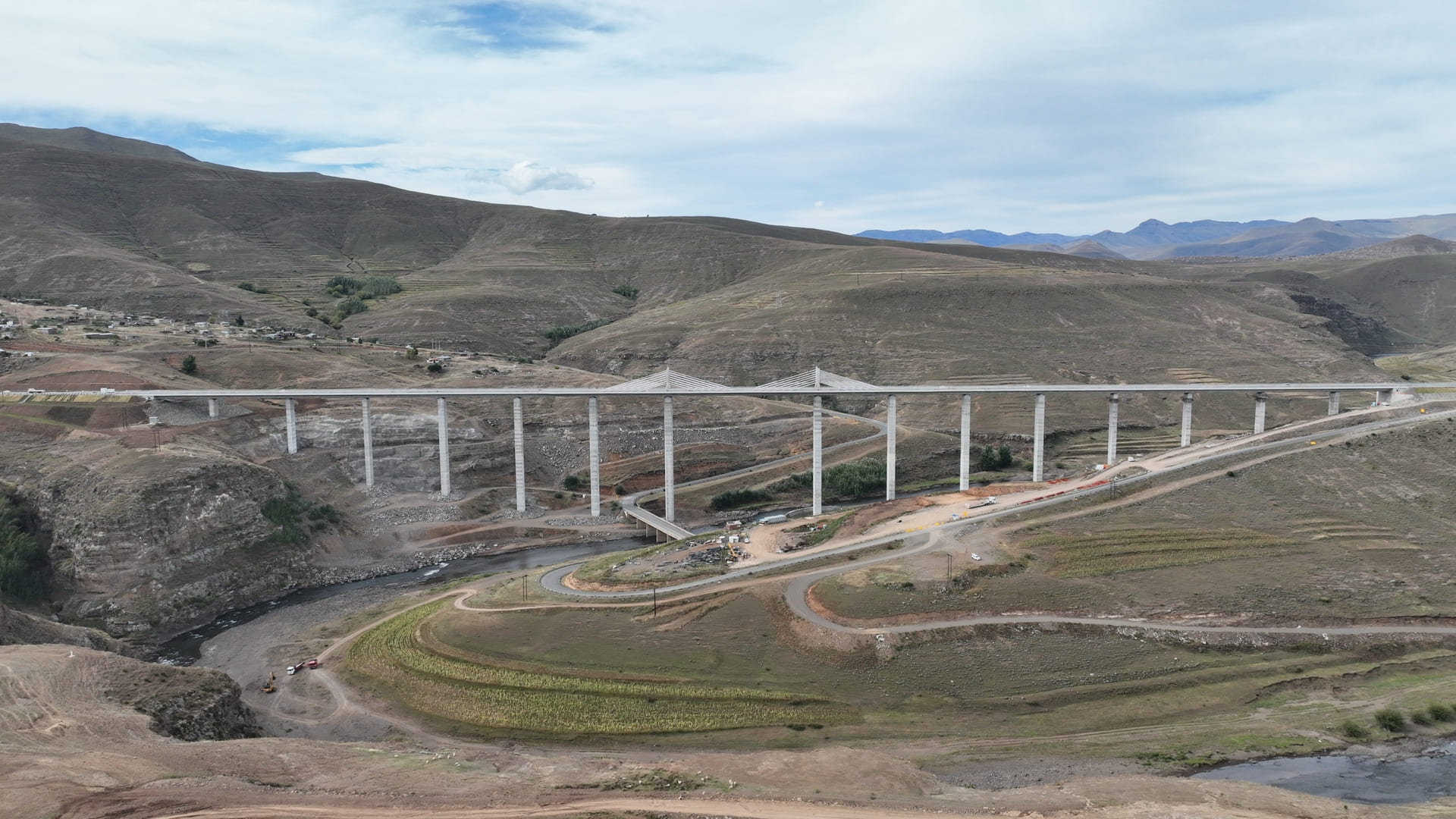
 Senqu Bridge, Lesotho
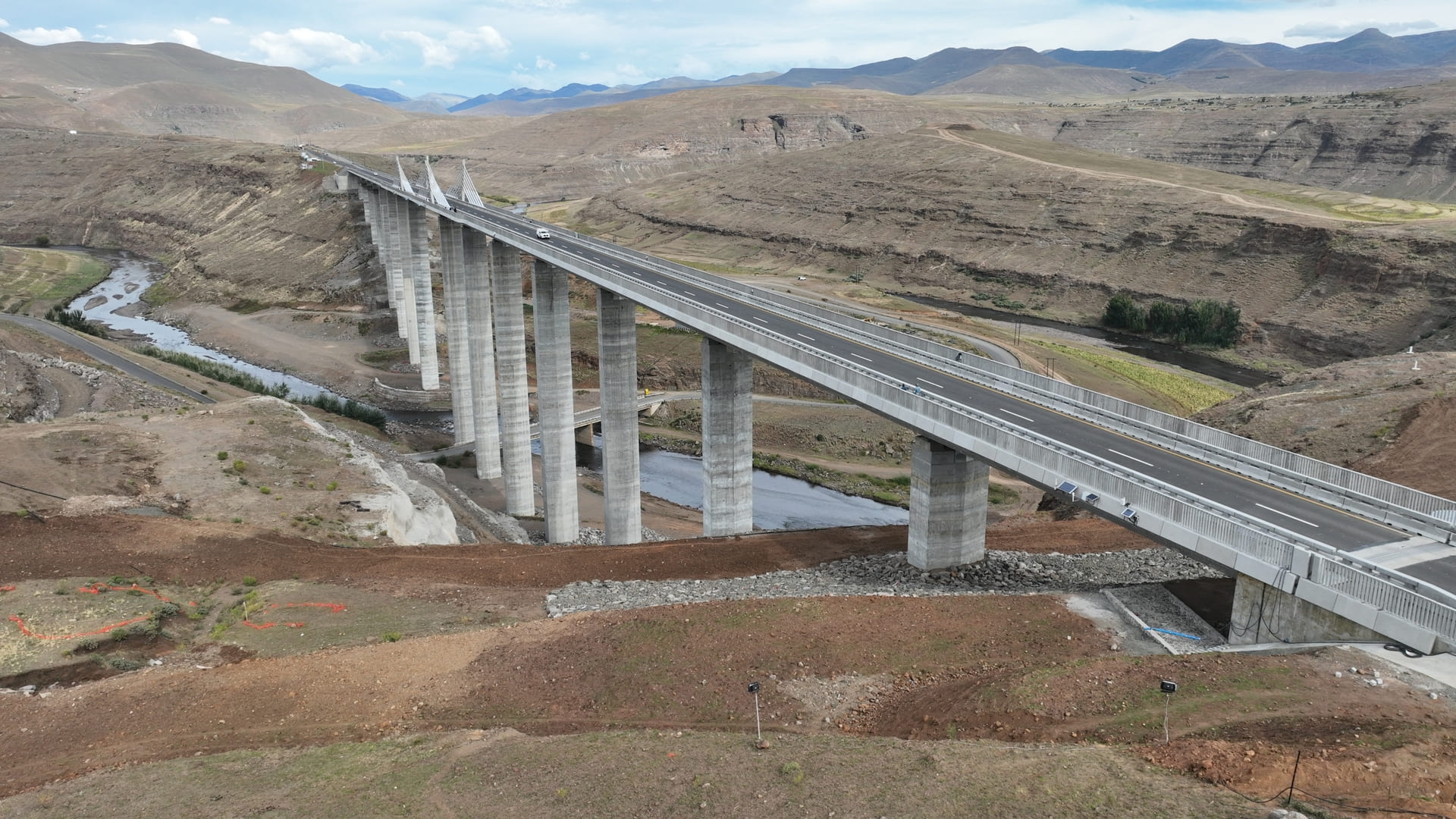 Senqu Bridge, Lesotho
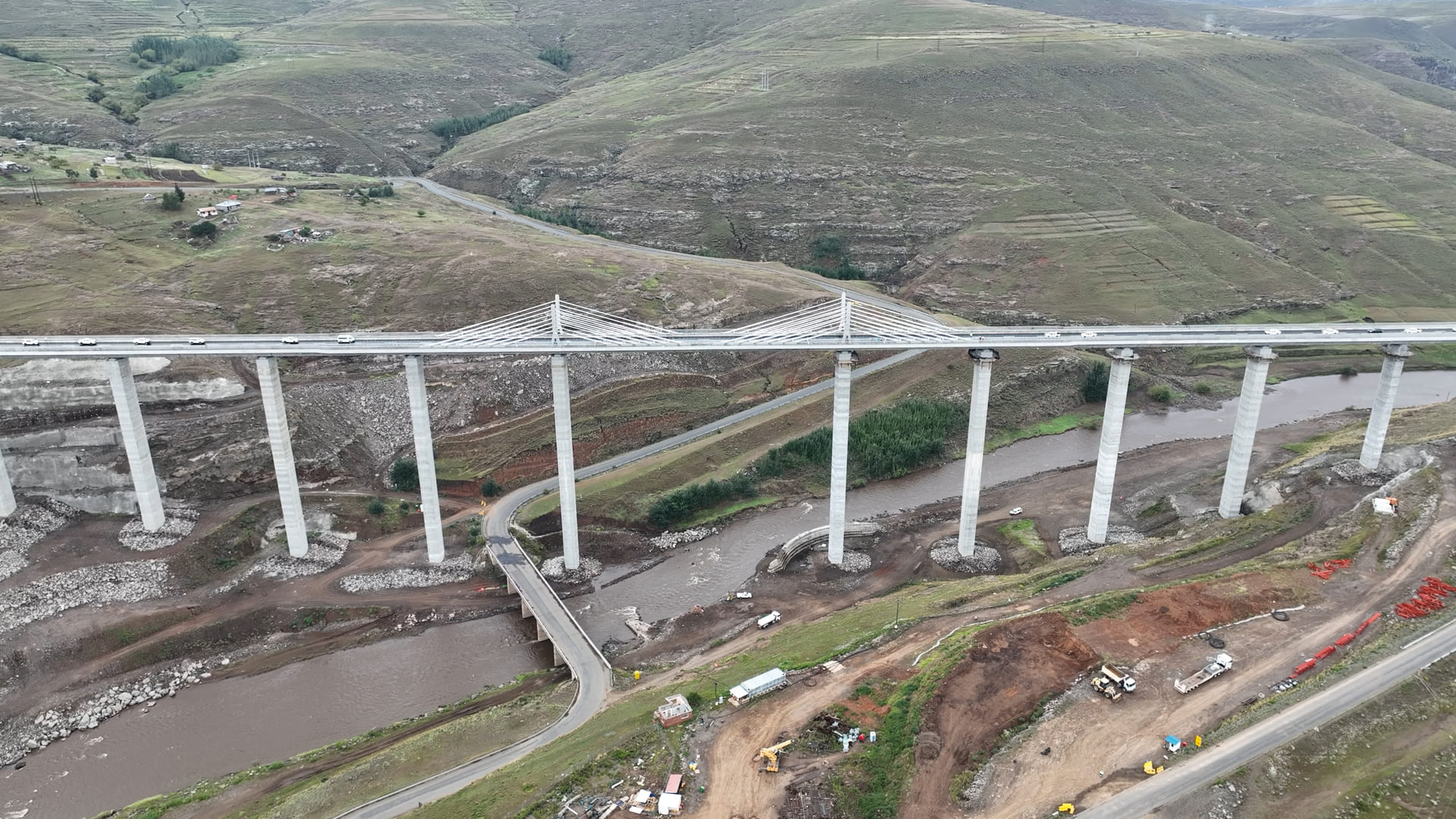 Senqu Bridge, Lesotho
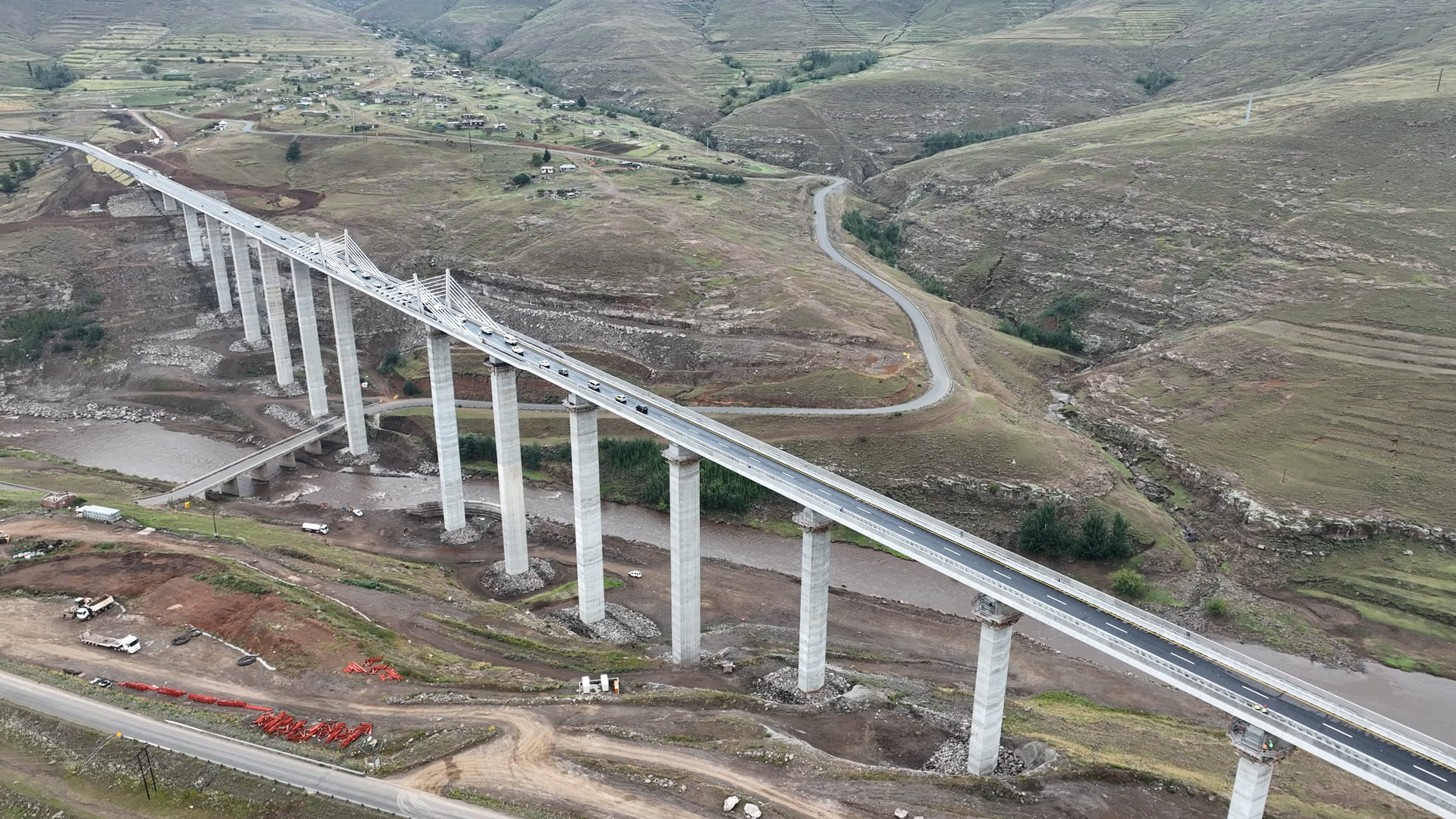 Senqu Bridge, Lesotho
 Senqu Bridge, Lesotho
 Senqu Bridge, Lesotho
 Senqu Bridge, Lesotho
 Senqu Bridge, Lesotho
 Senqu Bridge, Lesotho
- Webuild and its partners deployed several innovative solutions to overcome the challenges of building the Senqu Bridge at such a high altitude in Lesotho
- Inaugurated on April 22, the bridge is the latest piece of infrastructure to be added to the Lesotho Highlands Water Project (LHWP), a vast network of dams, reservoirs and tunnels
- The project, the largest water transfer scheme in Africa, will transfer millions of cubic metres of water per year to South Africa, and produce electricity for Lesotho
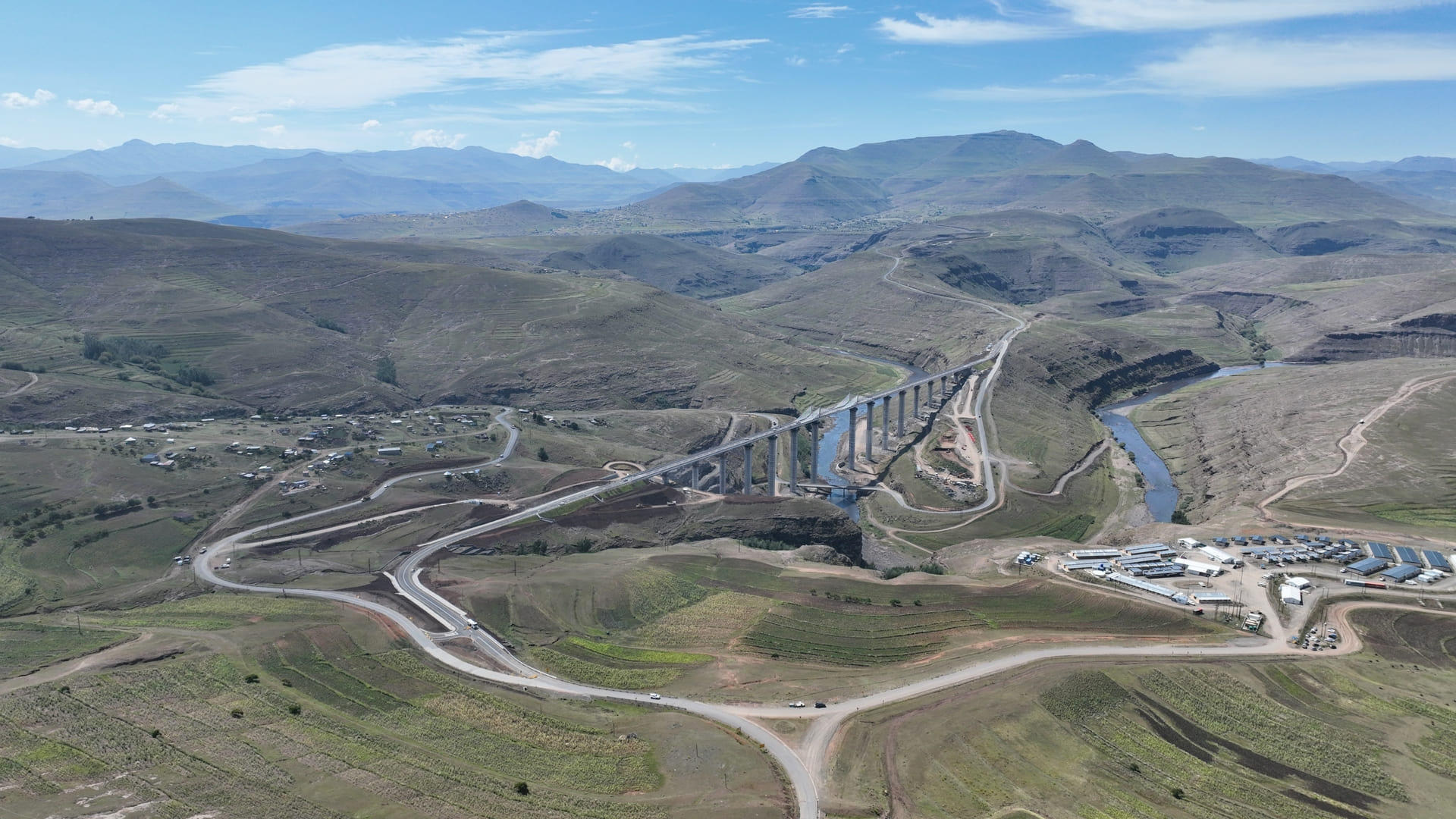
- The bridge is the largest of three to cross a valley that will eventually be flooded by the reservoir waters of a future dam, ensuring access to the capital city for scores of towns and villages
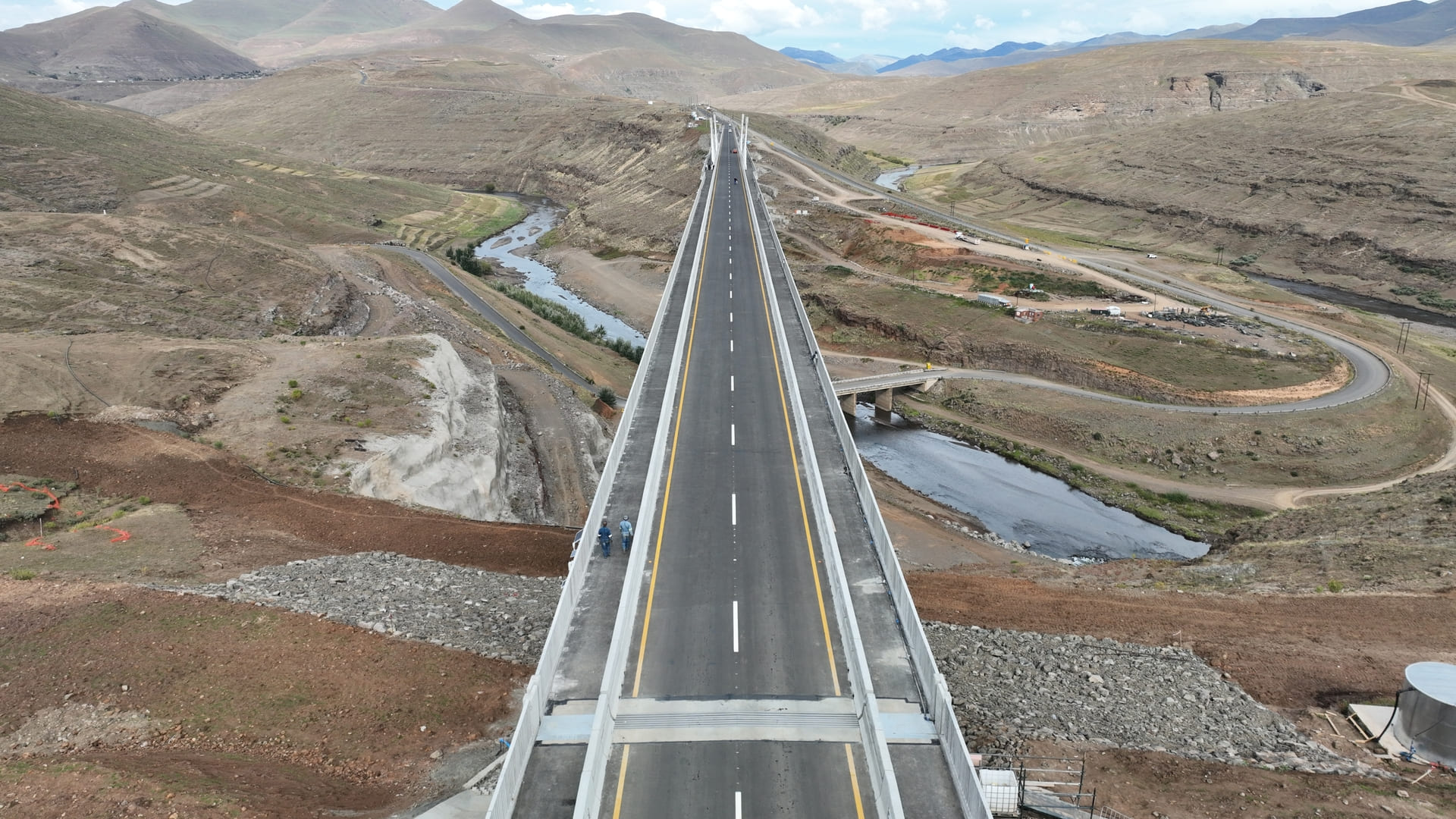
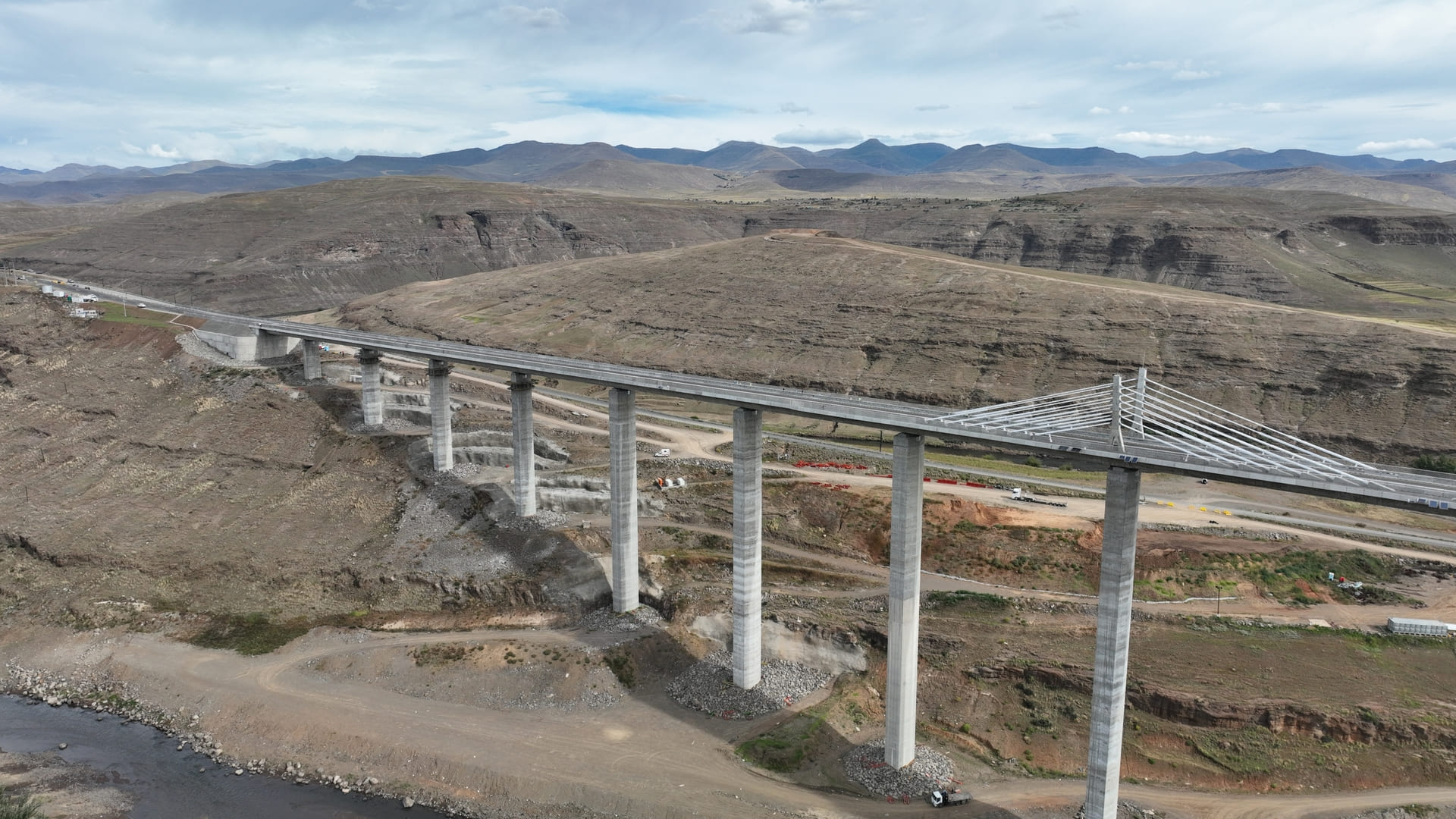
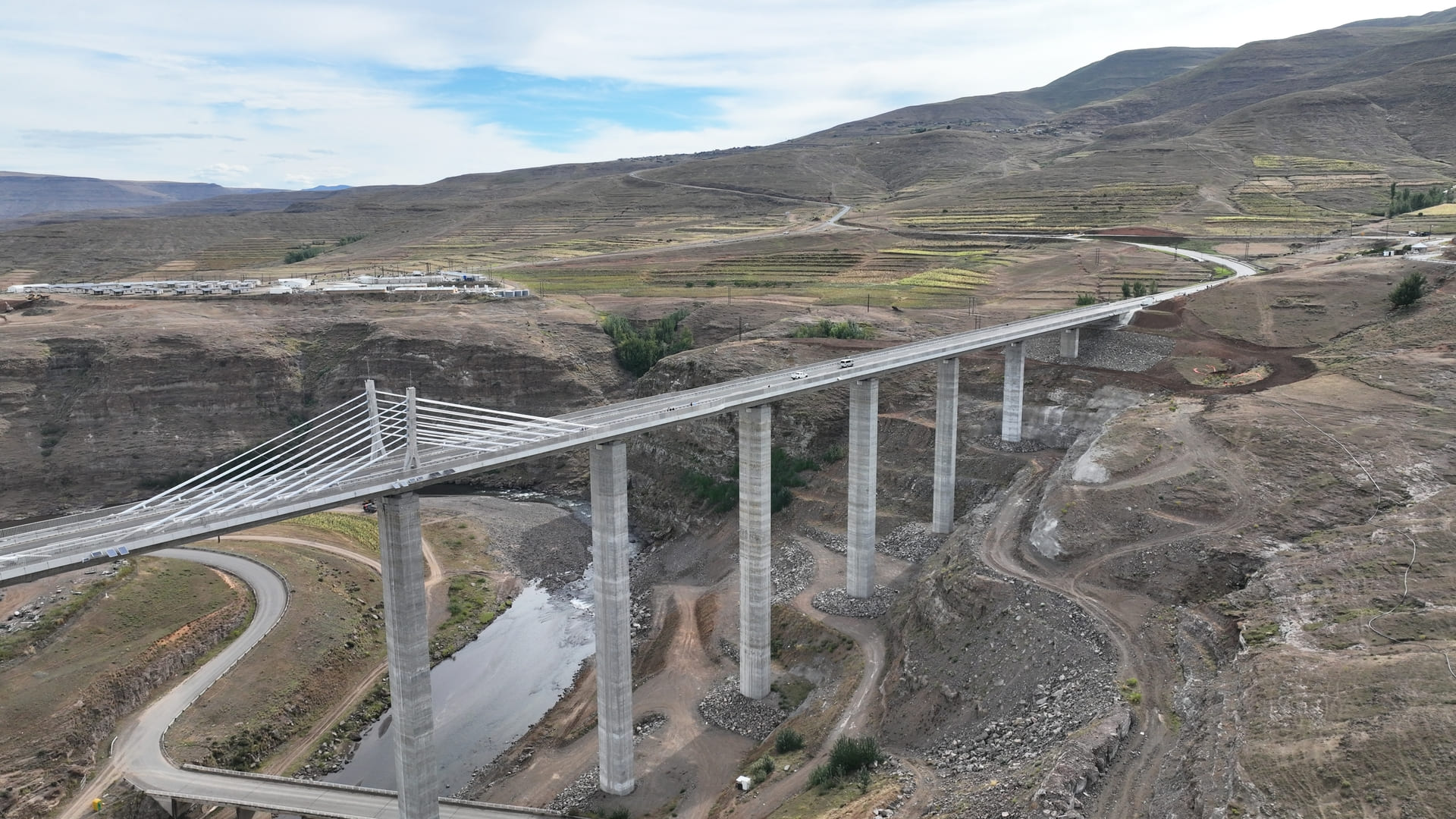
- The Senqu Bridge is the first extradosed bridge in Lesotho, incorporating features of both a cable-stayed bridge and a girder bridge
- Webuild was involved in the construction of a number of other parts of the LHWP, including the Katse Dam, the main storage for the diverted waters before they are transferred to South Africa


Working at high altitudes has its challenges – especially when the construction site is located in the mountainous highlands of Lesotho, a tiny landlocked kingdom in southern Africa. Known as the “Kingdom in the Sky”, it is the only sovereign state in the world that is entirely above 1,400 metres in elevation.
So the challenges were indeed many as Webuild, the Italian civil engineering giant, and its partners built the Senqu Bridge, one of the last remaining pieces of infrastructure to be set in place for Phase 2 of the Lesotho Highlands Water Project (LHWP), the largest water transfer scheme in Africa.
With a few innovative solutions, however, they managed to get the job done. And on April 22, the bridge was officially inaugurated with Lesotho King Letsie III and South Africa President Cyril Ramaphosa in attendance.
Lesotho Highlands Water Project: An Impressive Network for Water Transport
Launched in 1986, the Lesotho Highlands Water Project is a vast network of dams, reservoirs and hundreds of kilometres of tunnels that capture the waters of the Senqu River – known as the Orange River in South Africa – and a number of its major tributaries in Lesotho and transfer them north to South Africa.
The LHWP is well into its second and potentially final phase, which includes the Senqu Bridge, the future Polihali Dam and the 38-kilometre tunnel that will allow it to transfer waters from its reservoir to the Katse Dam. Built during Phase 1 of the LHWP, the Katse Dam acts as the main storage for the diverted waters before they are sent to South Africa.
Construction of the Polihali has yet to start, while excavation of the tunnel is already underway.
Safety and Sustainability: Water and Hydropower as Drivers of Development
Once Phase 2 is complete, the LHWP will be able to send up to 40 percent of the Senqu River’s waters to the Vaal River in South Africa. The potential increase in this water transfer will be from the current 780 million cubic metres per year to 1,260 million cubic metres per year, according to the African Development Bank (ADB), which is partly funding the development of the LHWP.
With its relatively dry climate, South Africa needs the water to support its economic growth and meet the demands posed by urbanisation. Meanwhile, Lesotho, which is actually located inside its much bigger neighbour, has ample water, and it is keen to generate revenue from the sale of this precious resource so it can invest in its own development.
Lesotho also stands to benefit from the additional electricity to be produced by the Muela hydropower station near the border with South Africa through which the extra water will flow. As the largest station of its kind in the kingdom, it is helping Lesotho become energy self-sufficient.
A High-Impact Infrastructure Project for South Africa and Lesotho
“The Project will provide secure and sustainable water sources to the population living in the Gauteng Region… of South Africa with a combined population of 26 million and 60% of South Africa’s economy,” the ADB said in one of its reports on the LHWP. “(It) will ensure water availability for domestic consumption, irrigation, industries and mining.” The cumulative socio-economic impact on the Gauteng Region, where the city of Johannesburg is located, includes the security of 120,000 job opportunities and more than 420,000 jobs associated indirectly during the operation phase of the LHWP, it said.
In Lesotho, meanwhile, more than 85,000 people stand to benefit, according to the ADB’s estimates on the impact the LHWP would have on community and business development in one of the poorest states in the world. “It is expected that about 52% of the beneficiaries will be female,” it said. “Through reinvestment of the royalty income and operation of the infrastructure (upon the project’s completion), more than 5,500 new jobs …will be directly and indirectly created in the economy.”
Senqu Bridge: A Bridge Ensuring Connectivity
The Senqu Bridge is the largest of three major bridges being built along the national A1 trunk road to replace existing bridges that will eventually be flooded by the waters of the reservoir of the Polihali Dam. Several pedestrian and smaller vehicle bridges will also be built. At capacity, the reservoir will cover more than 5,000 hectares.
These bridges ensure that the town of Mokhotlong and other villages – including farmers and livestock heders scattered throughout the area – do not lose access to Maseru, the capital. “Rising above the future (reservoir)… the (Senqu Bridge) restores a vital transport link… ensuring continued connectivity for communities and supporting economic activity,” read a recent Lesotho government statement.
A Transport Infrastructure Built to Last
The Senqu is the kingdom’s first extradosed bridge, whose features borrow from those of a cable-stayed bridge and a girder bridge. Its particular structure allows for the use of simpler and cheaper cables and anchorages since they are subject to lower fatigue due to the lower stress ranges. The design eliminated the need to build a 90-metre-high pier in the centre of the flood-prone valley floor through which passes the Senqu River.
The bridge’s design also increases its resistance to the strong gusts of wind typical of the Maluti Mountains where the valley is located.
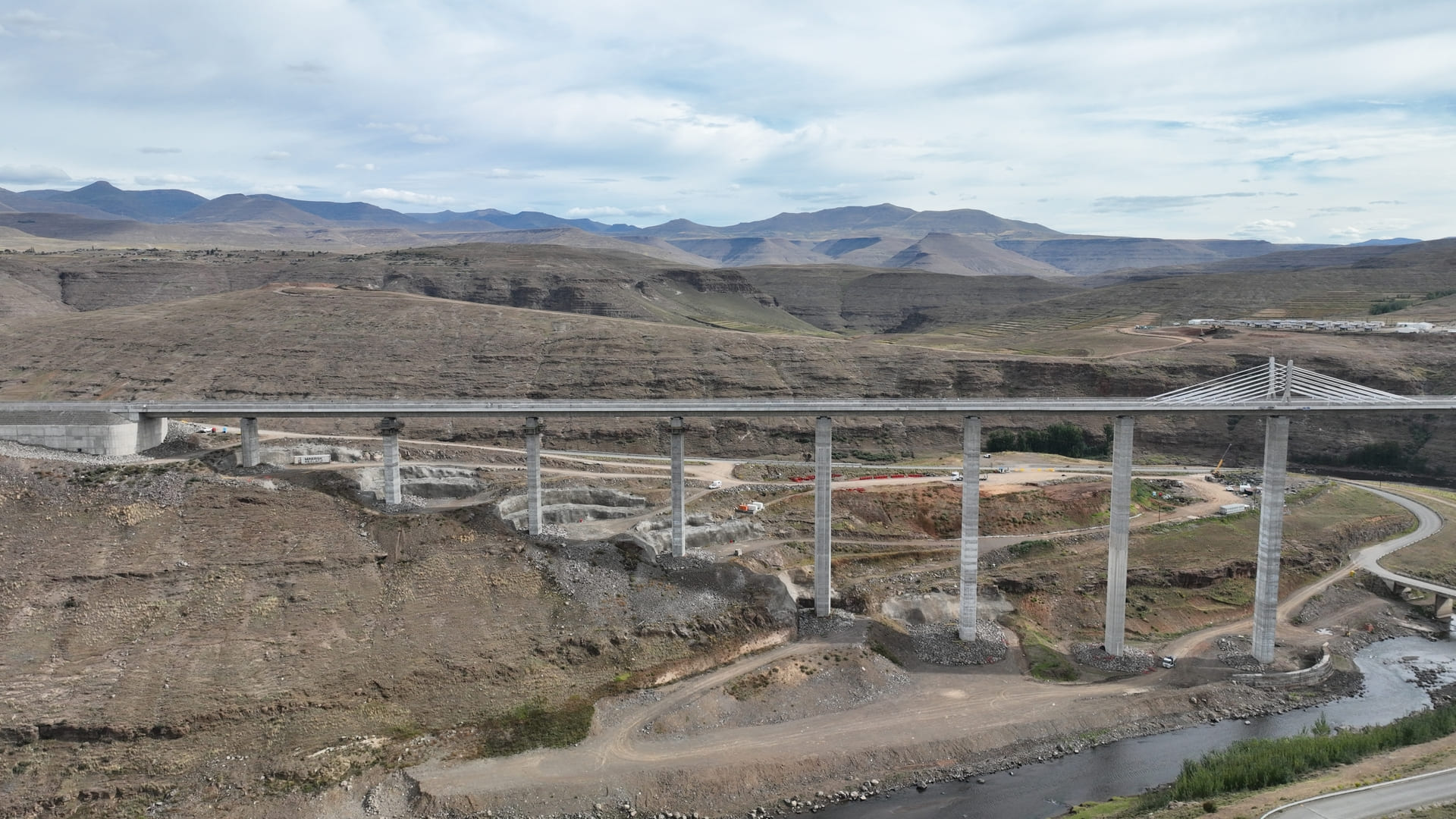
The Senqu Bridge is 825 metres long. Its continuous box girder deck is supported by 16 spans, the central one being 100 metres long, supported by extradosed cable stays. The piers, which are hollow and hexagonal in shape, vary in height between 15 and 90 metres.
Webuild and its partners chose the Incremental Launching Method to build the deck. After installing the piers across the valley floor, workers used hydraulic jacks and bearings on each side of the valley to roll out one prefabricated, prestressed concrete segment after another across the top of the piers. Once the two sections of the deck approaching each other from either side of the valley floor met, workers stitched them together to form the deck.
At the peak of construction, some 1,000 workers were involved.
Building a Bridge Over the Mountains: A Test of Extreme Engineering
It was not an easy job, given how the construction site was more than 2,100 metres above sea level. With winds reaching speeds of up to 110 kilometres per hour, workers often had to stop what they were doing atop the piers.
In the depths of winter, when temperatures fell to minus 10 degrees Celsius, workers used heating lamps under large canvas covers to cure the concrete being poured. At the height of summer, they used cooling fans inside the hollow interiors of the piers to again get the freshly poured concrete to set.
They also affixed sensors to monitor any deformation in the concrete caused by the stress of the extreme temperatures.
Construction Sites in Africa: A Long-Time Partner
Webuild, a global leader in water infrastructure, was involved in the construction of a number of other parts of the LHWP, including the Katse Dam. Built during Phase 1, the arch dam is one of the highest in Africa at 185 metres. Webuild also took part in the construction of the Mohale Dam, an additional reservoir for Katse.
Then there is the infrastructure project that it did on the network of tunnels connecting the dams and their respective reservoirs: the Matsoku diversion tunnel and weir, which also facilitates the transfer of water from the river of the same name to the Katse.
In anticipation of the Polihali Dam, Webuild participated in the excavation of the temporary diversion tunnel at the site of the Polihali dam wall.