


 Wellington, New Zealand
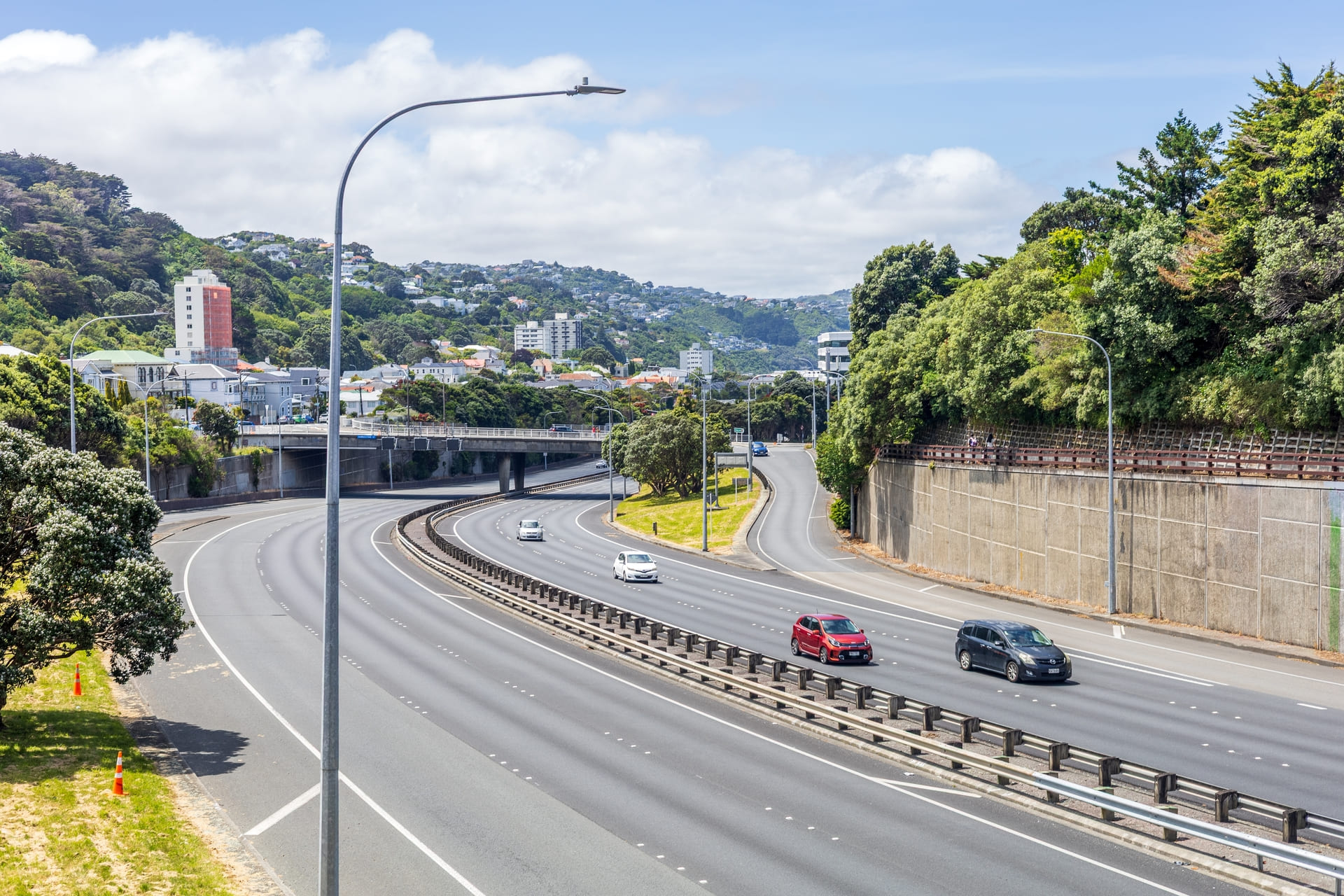 State Highway 1, Wellington
 State Highway 6 near Cromwell
 Johnstone Hill Tunnel, Pohui
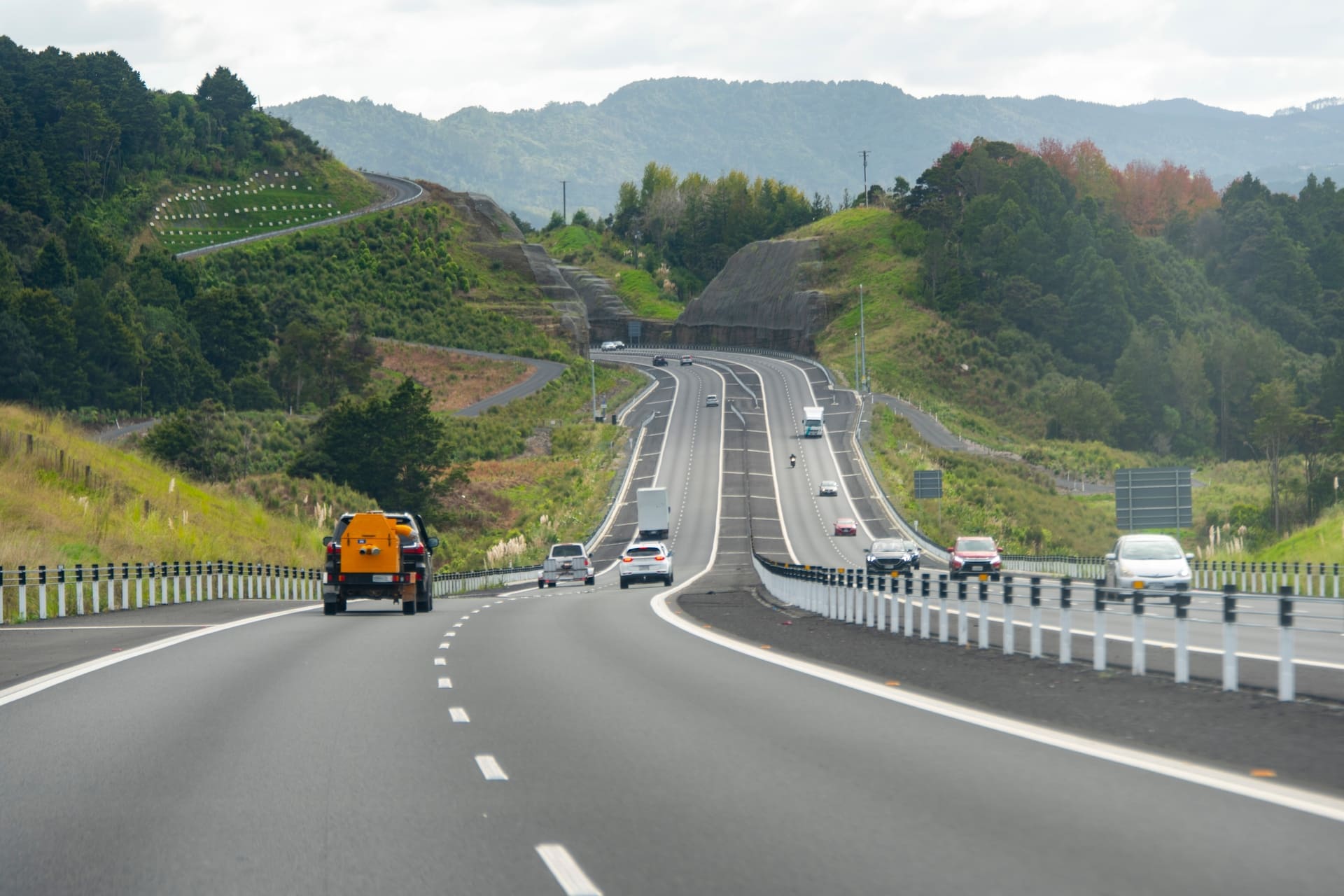 New Zealand State Highway 1
 Auckland, New Zealand
 Auckland, New Zealand
 Auckland, New Zealand
- New Zealand is launching a plan worth over NZ$30 billion (US$19 billion) to modernise its transport system, with a strong focus on road safety
- New highways, upgrades and targeted measures aim to reduce road accidents in a country where the road network remains the primary mode of mobility
- With around 95,000 kilometres of roads, including more than 11,000 kilometres of State Highways, the network forms the backbone of connections between regions and cities
- Much of the road network dates back to the nineteenth and twentieth centuries and now shows structural limitations requiring modernisation
- In an economy based on exports, agriculture and tourism, road logistics are central to national competitiveness
read more

In New Zealand, road safety has become a strategic priority. The government has launched a new phase of infrastructure investment through the National Land Transport Programme, allocating around NZ$32.9 billion (approximately US$19 billion) over the next three years to the entire transport system, with a significant share directed towards roads and major highways.
Alongside this, the relaunch of the Roads of National Significance programme—with an initial phase worth around NZ$1.2 billion (US$700 million)—aims to unlock and accelerate the country’s key strategic corridors.
The plan operates on several levels. On the one hand, it includes the construction of new infrastructure and the completion of projects launched in previous years. On the other, it encompasses a wide-ranging programme of targeted interventions to improve road safety, from carriageway separation to the upgrading of the most dangerous junctions.
This is complemented by parallel investment in active safety, with NZ$1.335 billion (US$800 million) earmarked between 2024 and 2027 for road enforcement and accident prevention activities.
The result is a comprehensive programme that goes beyond building new roads, reshaping the entire mobility system.
Why New Zealand Is Investing: Road Safety and Infrastructure Gaps
The push for investment stems from a dual need: improving traveller safety and addressing the infrastructure deficit.
The government has repeatedly stressed the importance of developing a stable pipeline of projects to support economic growth and competitiveness, acknowledging that much of the existing infrastructure no longer meets current standards.
It is in this context that road interventions are positioned as an immediate lever to reduce risk and improve the efficiency of connections.
New Zealand’s road network began to take shape in the second half of the nineteenth century, when the first pieces of road infrastructure were built to connect ports, agricultural settlements and expanding urban centres. Today it extends to around 95,000 kilometres, including 11,000 kilometres of State Highways.
For decades, road construction was largely the responsibility of local authorities, with limited resources and fragmented planning. Only over time did the central government assume a stronger role in coordinating and funding the system.
Today the network is organised on two levels. State Highways, managed nationally, form the backbone, ensuring strategic connections between the two islands and the main cities. Alongside them, a dense local road network links rural areas, productive zones and communities.
It is an extensive and complex transport system, but in many stretches it is still characterised by narrow carriageways, winding routes and uneven standards—factors that affect both road safety and journey times.
The Role of State Highways and Investments in Strategic Corridors
Over the past fifteen years, New Zealand’s infrastructure policy has focused on strengthening its main arteries. The Roads of National Significance programme, launched in 2009, marked the first major attempt to develop high-capacity corridors.
Today that model is being revived and updated. New road infrastructure projects target strategic routes such as the Northland Expressway and connections in the Wellington area, combining widening works, new sections and measures to improve infrastructure resilience.
The aim is to create a more continuous and safer transport network, capable of supporting growing traffic volumes and reducing travel times.
From Freight Transport for Export to Tourism: An Economy That Relies on the Road
The centrality of road infrastructure in New Zealand is closely tied to the structure of its economy. The country strongly relies on exports for growth, with sectors such as agriculture, livestock farming and tourism being key drivers.
In this context, road logistics dominate. Goods are transported mainly via the road network to reach ports and distribution centres, while tourism depends on the ability to travel easily between often remote areas.
Road infrastructure investments therefore mean acting directly on the competitiveness of the national system. That is why this new investment cycle represents a key step for New Zealand.
Improving road safety means reducing the social costs of road accidents, but also making economic flows more efficient and strengthening territorial cohesion. In a country where geography presents complex challenges, the quality of infrastructure becomes a decisive factor.