


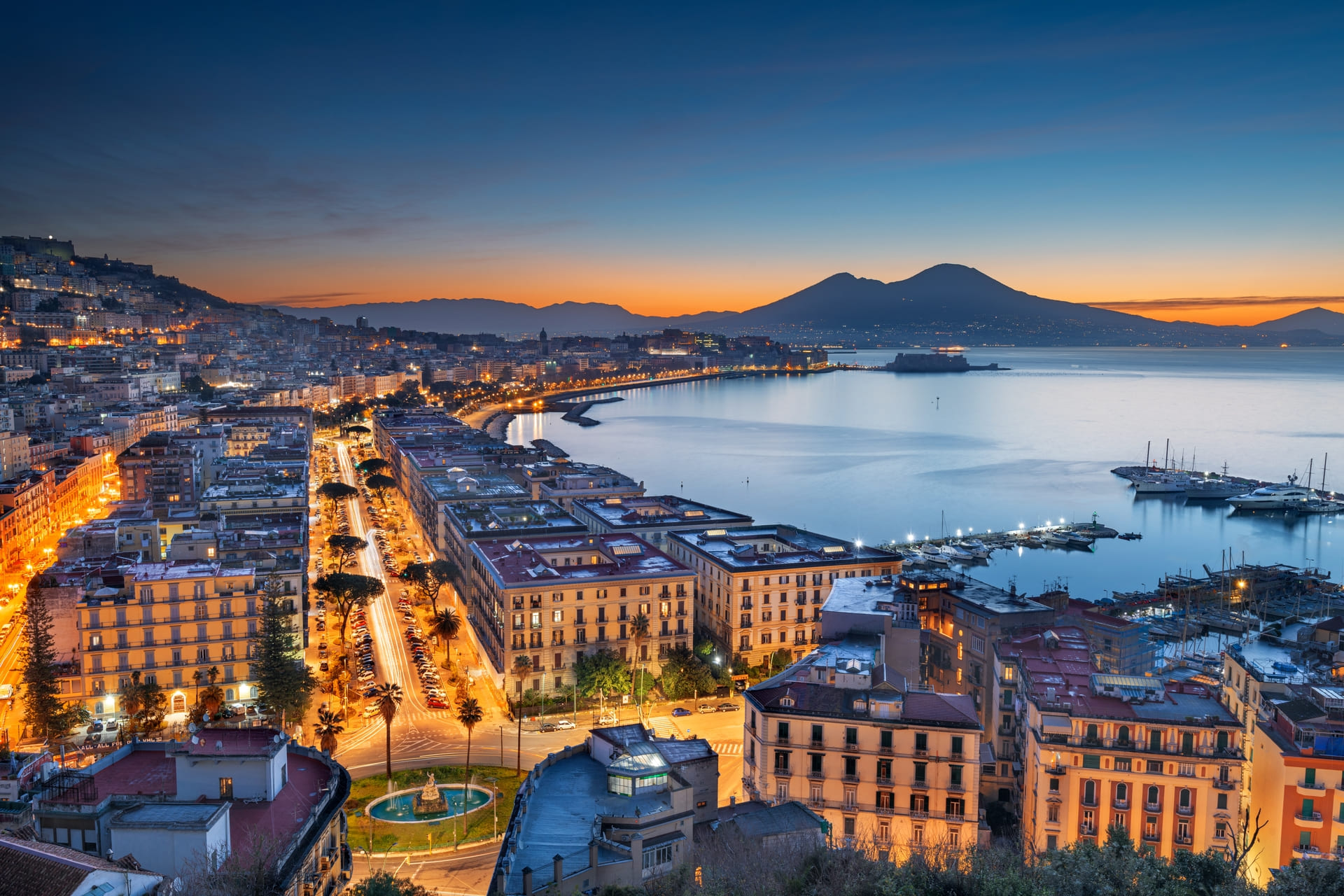
 Panoramic view of Naples
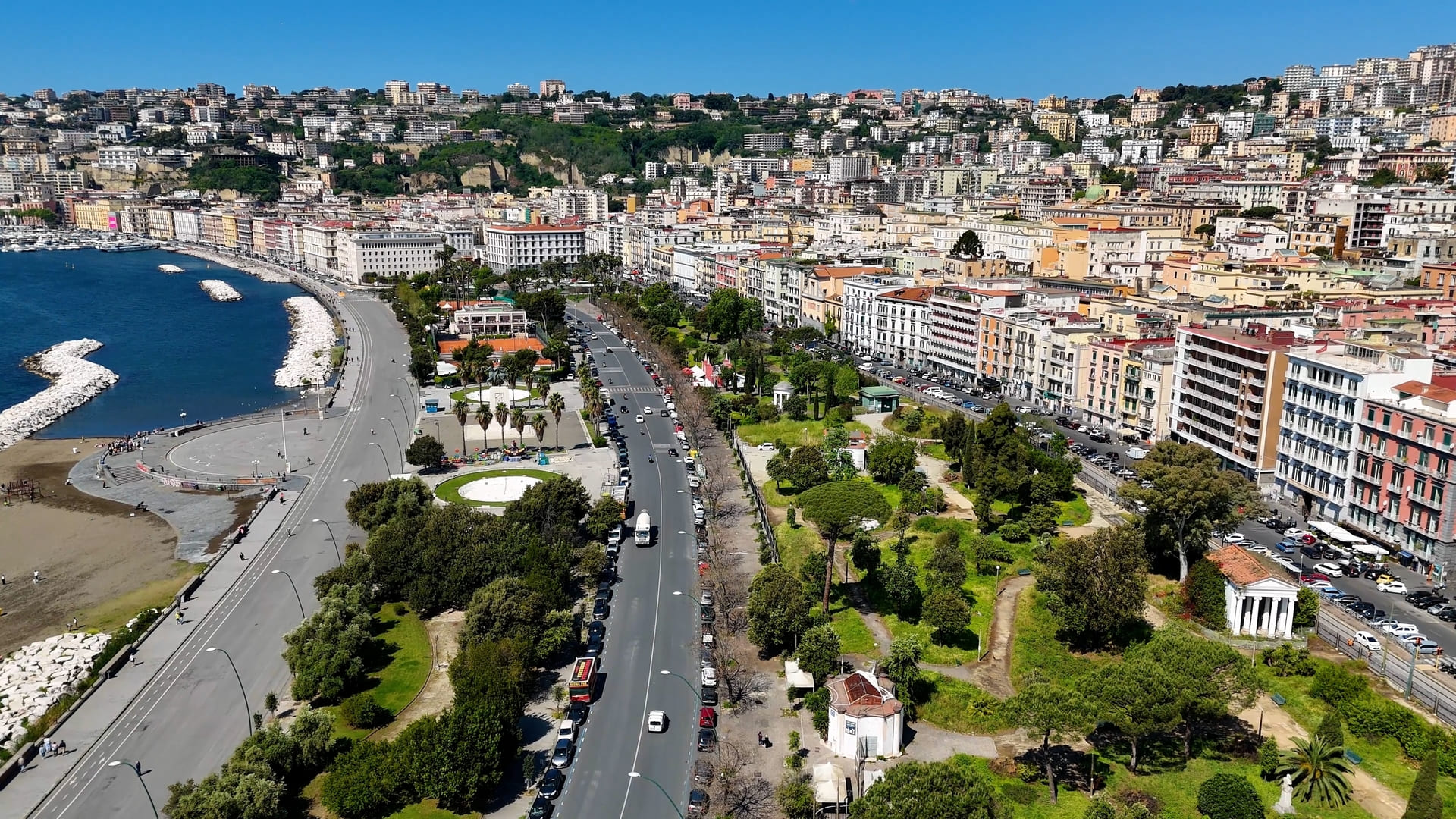 Riviera di Chiaia, Naples
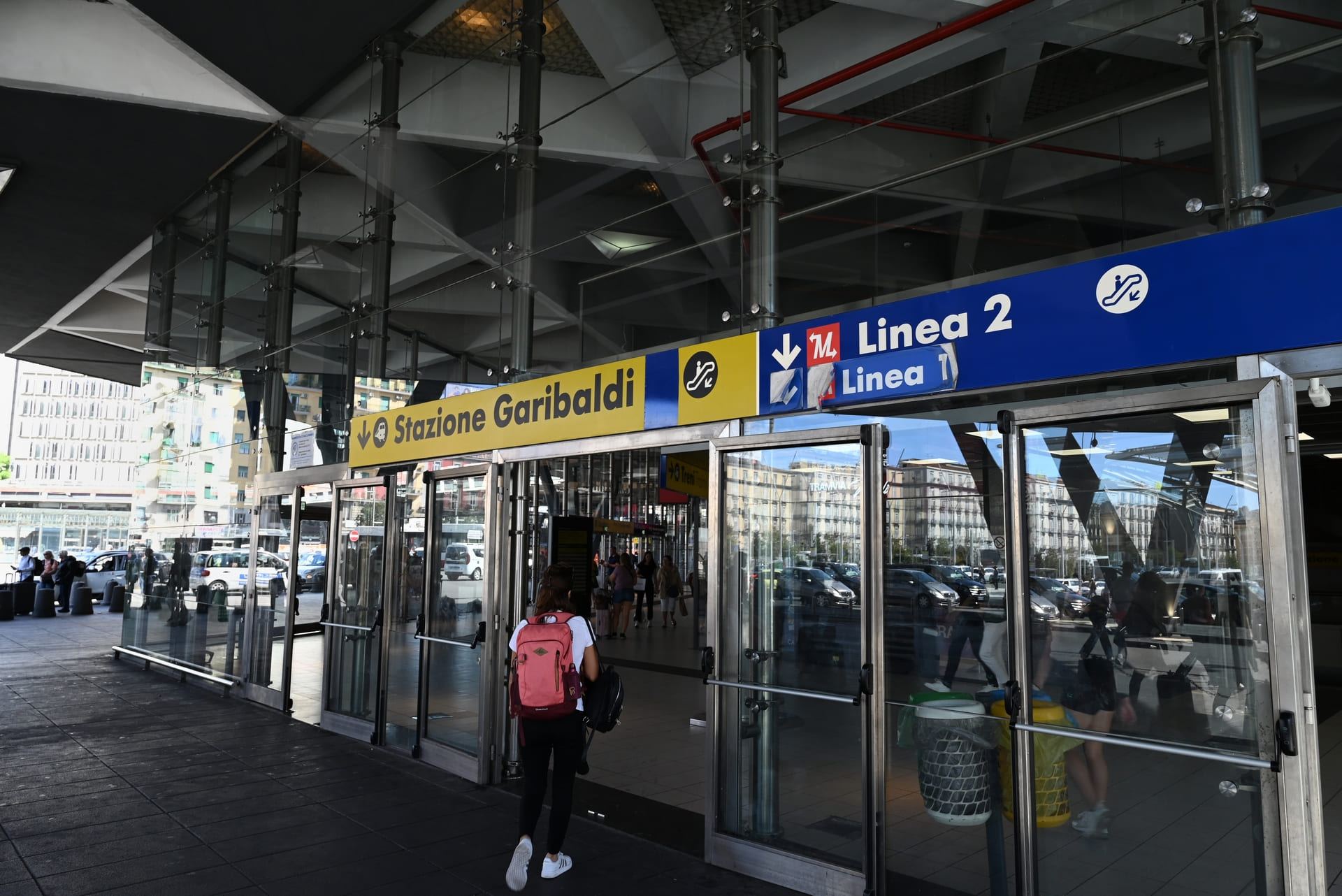 Line 2, Naples Metro
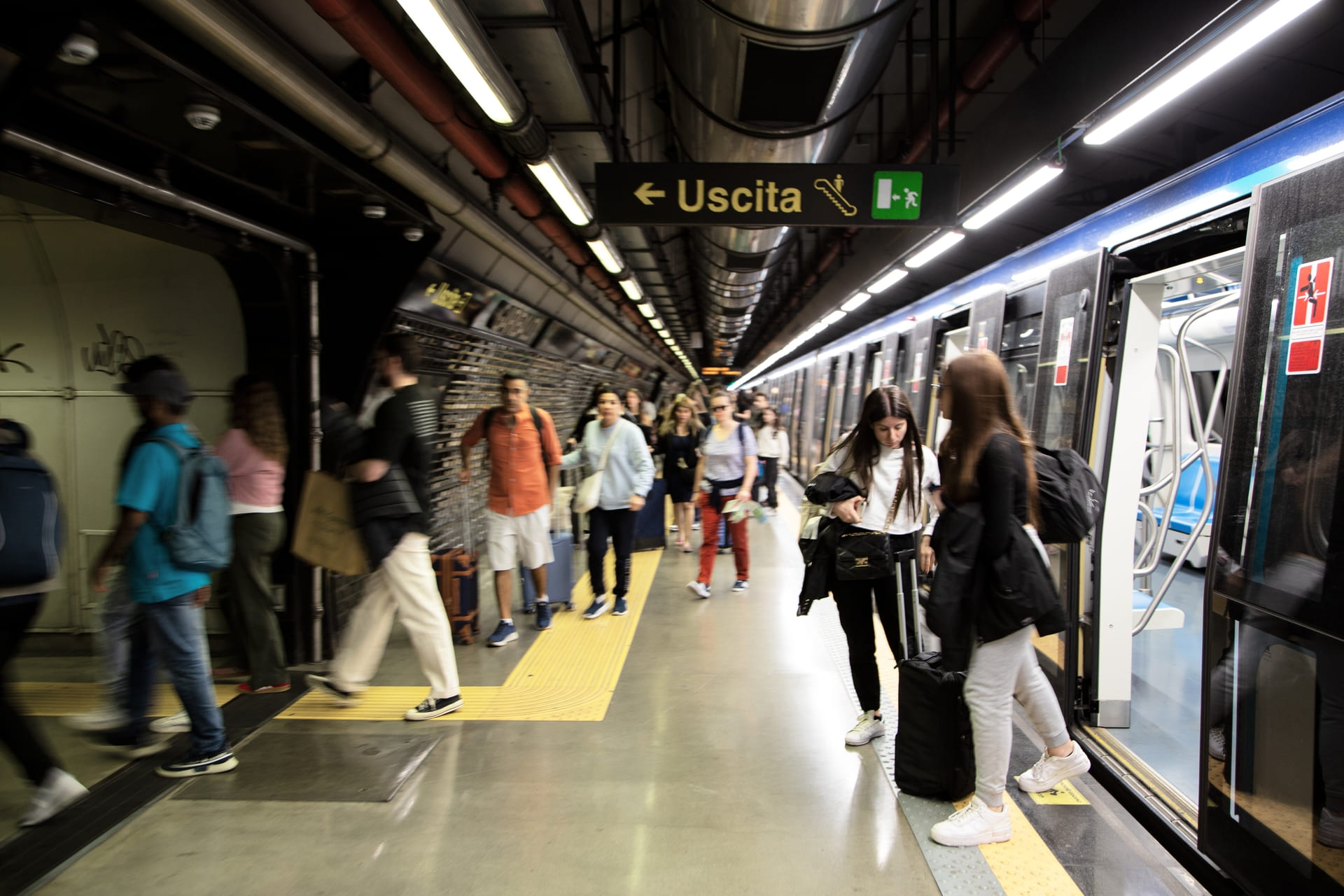 Naples Metro
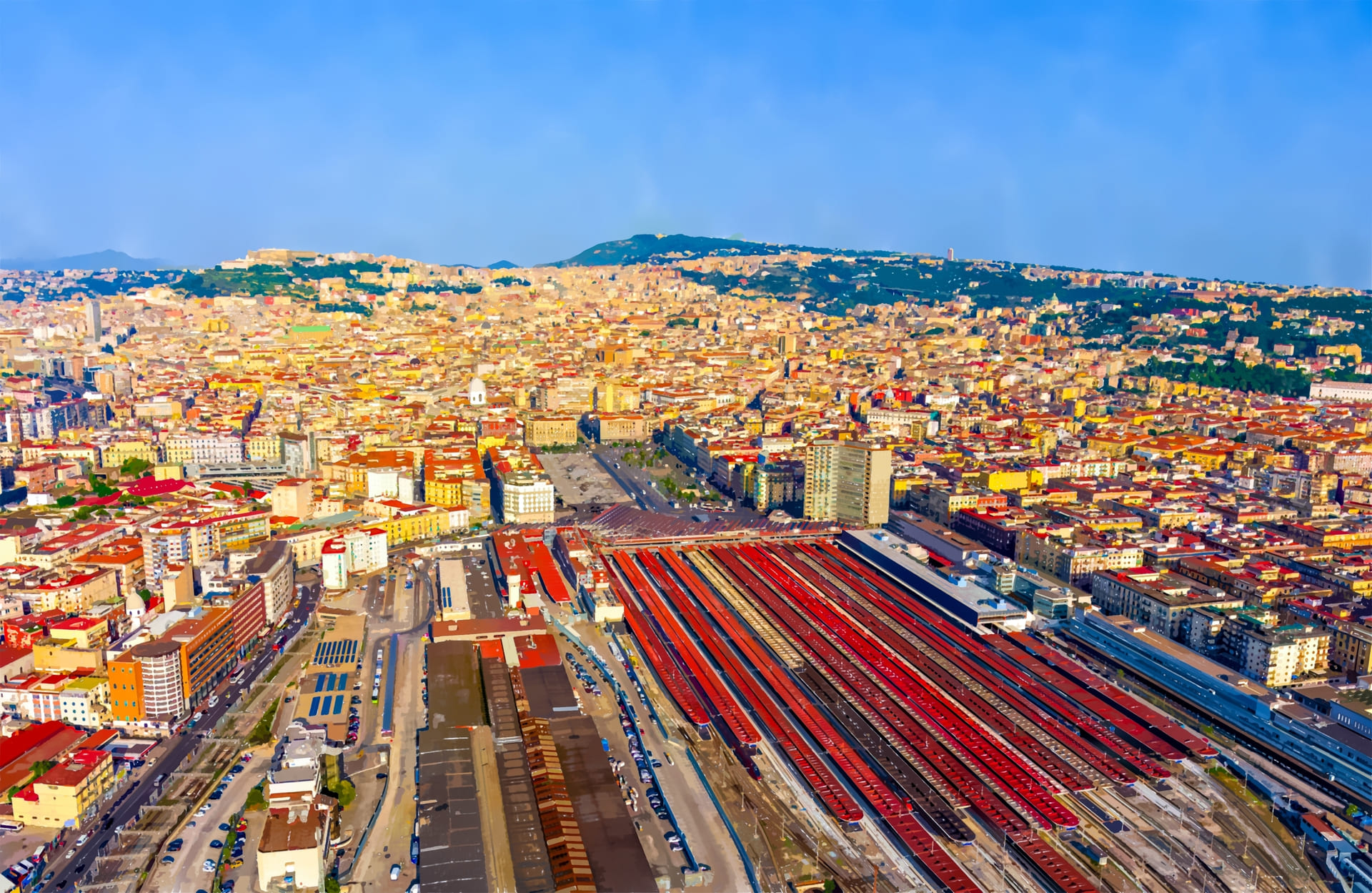 Naples Central Station
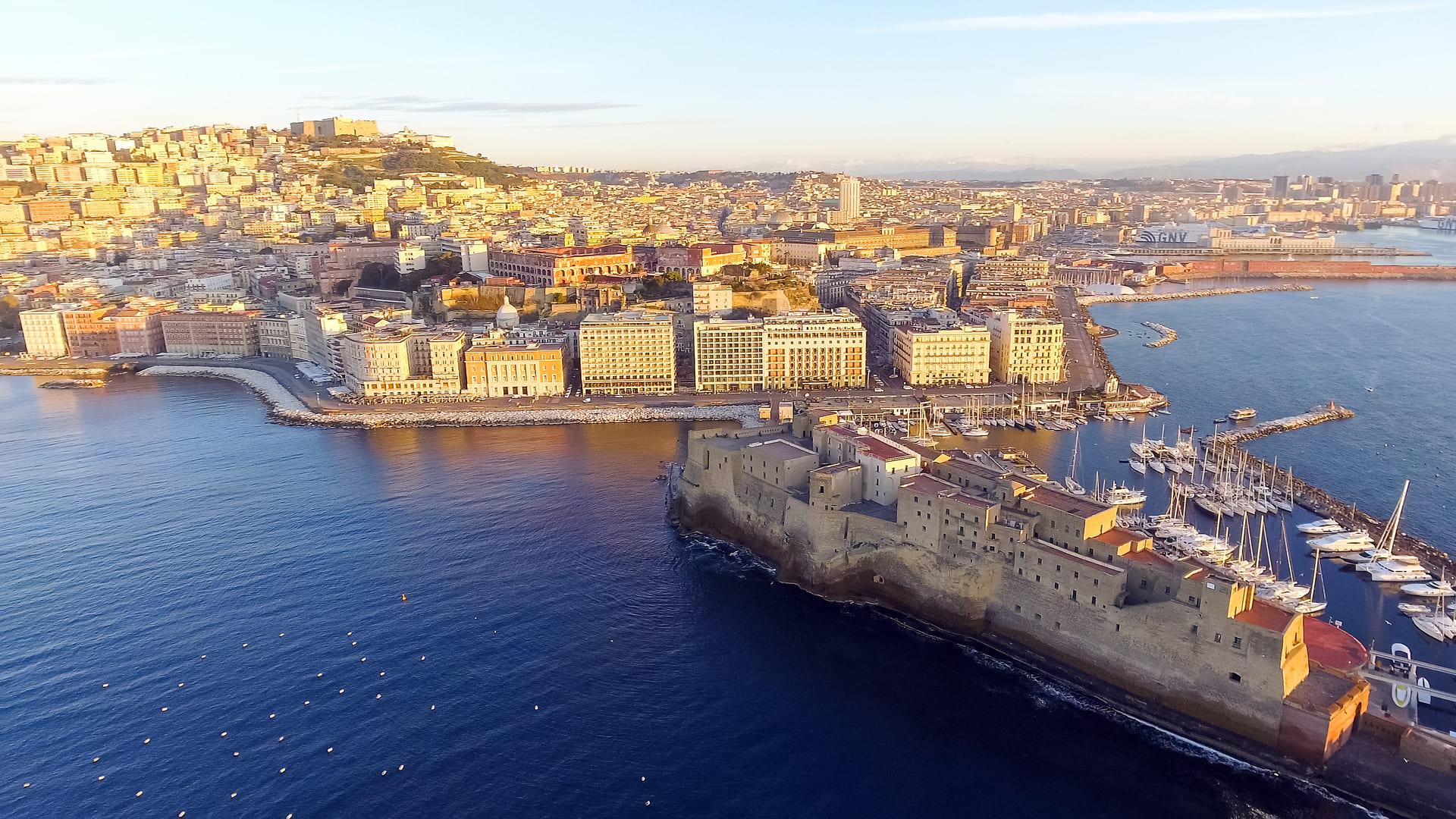 Panoramic view of Naples
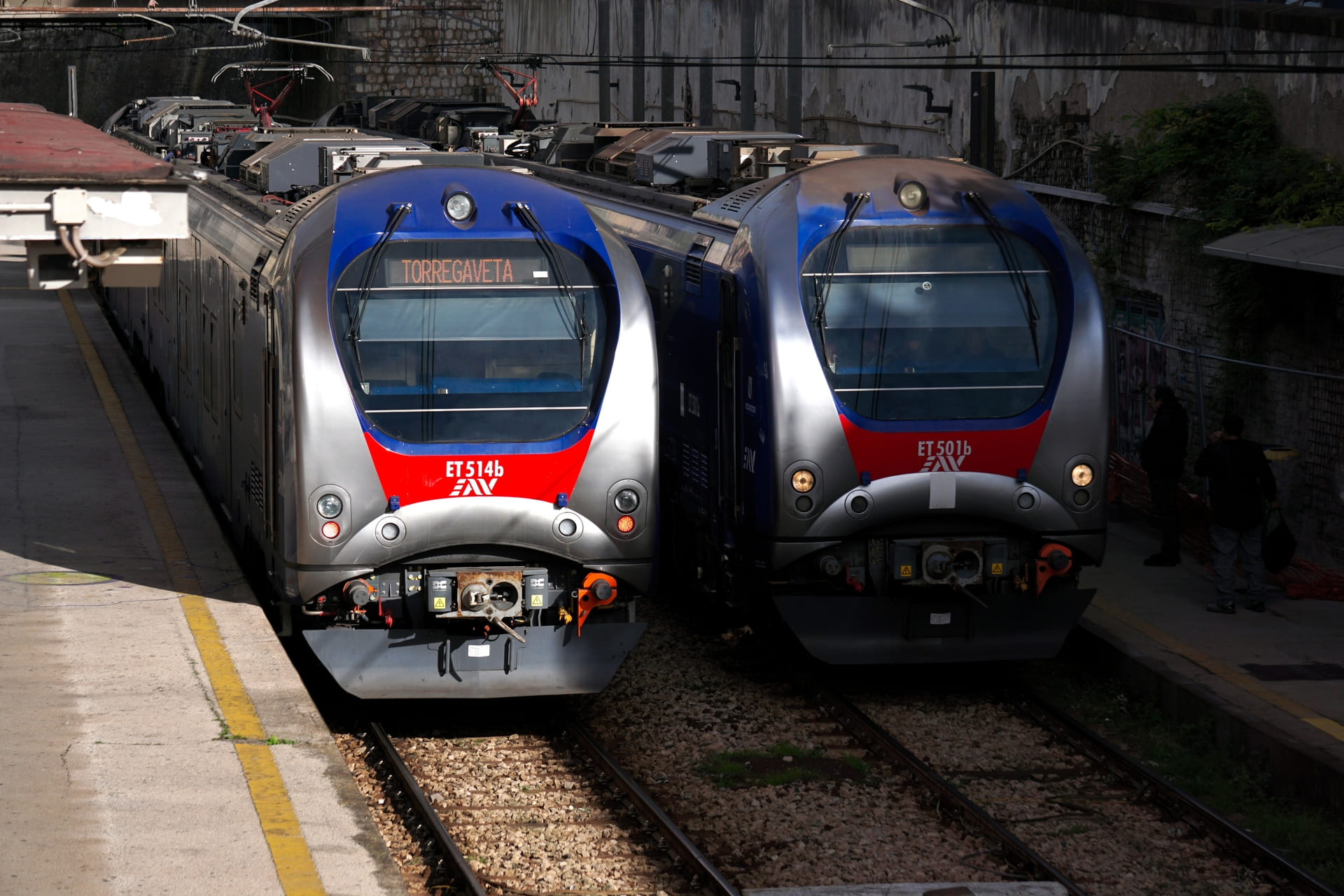 Cumana railway train at Pozzuoli Solfatara station
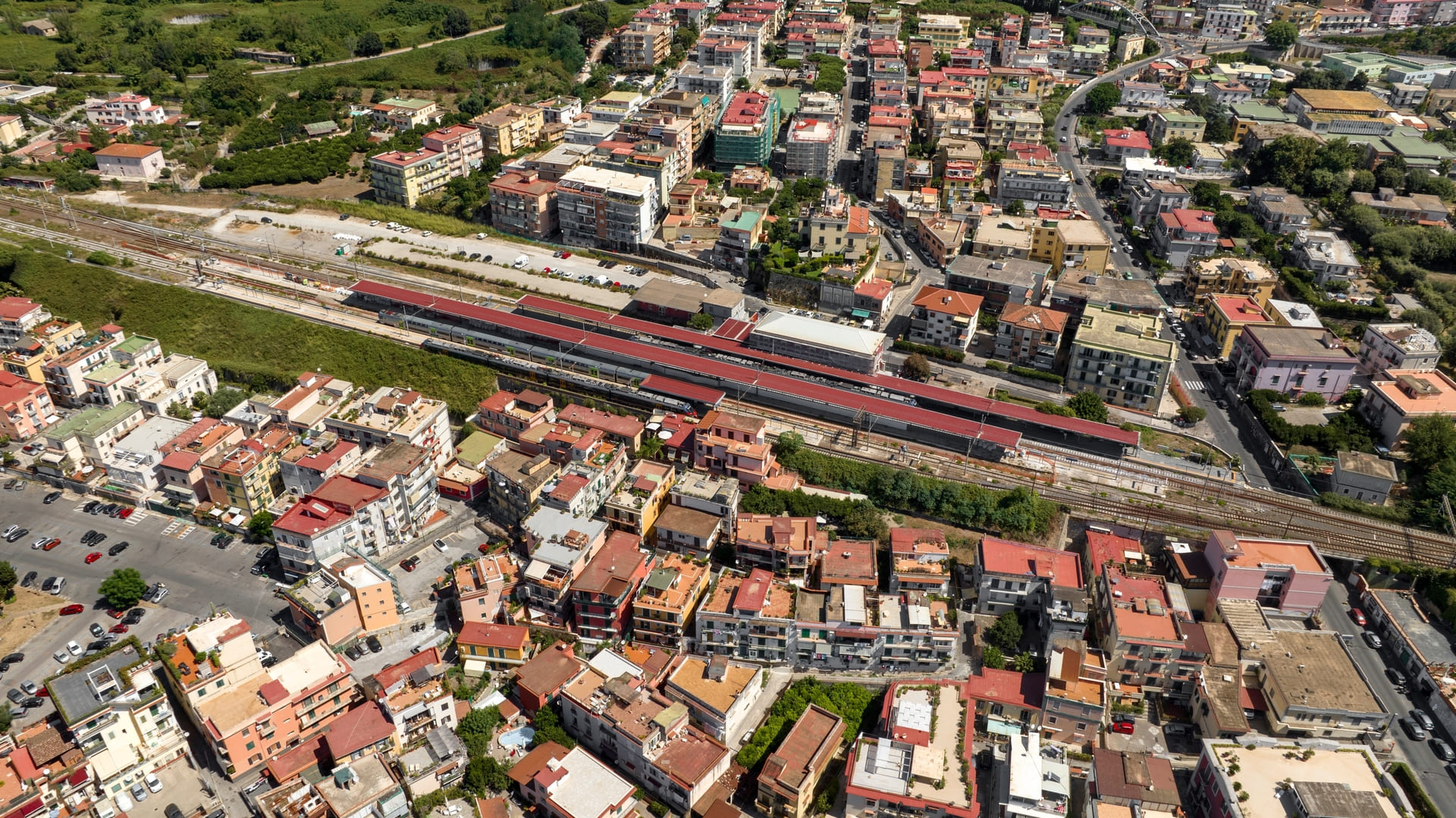 Aerial view of the Pozzuoli railway station, near Naples
- The Passante ferroviario di Naples, known today as Line 2 in Italy’s southern city, celebrates 100 years of service
- Launched in 1925, it was the first underground urban rail service in the country
- The Passante started out with 14 kilometres of track and eight stations
- More critical infrastructural projects of this kind helped Italy develop into one of the most industrialised economies in the world
- The story of the impact of public infrastructure on the country is illustrated in an exhibition called Evolutio: For 120 Years We Have Been Building Infrastructure for the Future, which runs until April 7 in Milan
read more

It was ahead of its time and, by extension, the first of its kind in Italy. A century ago, Naples pursued a new idea for urban mobility: a light rail line that would cross its centre between its eastern and western districts. With its underground stations, the innovative public transportation service would integrate itself seamlessly with the bustling life of the port city in southern Italy.
A precursor to the metropolitan – or subway – service that has since become a fixture of major cities across the country, the Passante ferroviario di Napoli began transporting commuters along its 14-kilometre route in 1925. And it still does today, thanks, of course, to the repairs, replacements and other upgrades performed during the decades since it went into service.
It would later come to be known as Metropolitana FS, the initials referring to Ferrovie dello Stato Italiane, the state railway operator that still runs the line. Today, it is simply called Linea 2 – Line 2 in Italian. With its 12 stops – four more than the original line – it serves about 90,000 people a day, according to Trenitalia, the line’s actual operator, which belongs to FS. It has since been joined by other urban and suburban rail lines, which together form a network covering nearly 40 kilometres in a city with a population of one million.
The Passante’s impact on Naples is part of the story of the development of Italy through its critical infrastructure. And that story is being told in the most vivid manner in Evolutio: For 120 Years We Have Been Building Infrastructure for the Future, an exhibition conceived by the Webuild Group. Opened on February 11, it will remain at the Leonardo da Vinci National Museum of Science and Technology in Milan until April 7. A virtual museum of the same name accompanies it (www.evolutio.museum), one of the first of its kind in the world dedicated to infrastructural projects, offering access to Webuild’s vast multimedia archive.
From the Cumana to the Passante Ferroviario: An Electrified Double-Track Train
When the Passante – which is Italian for crosstown rail service – went into operation in September 1925, its E-20 train ran along a track that had a third electrified rail running alongside it to power the engine.
Although a 20-kilometre single-track rail service called the Cumana had been serving the city since 1890, the Passante was deemed at the time to be different.
This urban transportation infrastructure had two tracks – one for each direction – and it carried commuters within the urban area. The Cumana, meanwhile, was more of a tourist train, bringing people to beaches and archeological sites outside the city centre.
The First Underground Rail Service in Italy
According to an article published in L’Eco di Bergamo newspaper late last year, the Passante had been described at the time as the first public transport on rail in Italy.
And the fact that some of its stations were underground also merited it the title of the first underground urban rail service in the country. The depths of its stations varied between 1.5 and 6.0 metres below the surface. Technically, it was more like a suburban commuter line, but nobody appeared to be bothered by that detail. Italy’s first genuine metropolitan line was what would later be known as Line B in Rome. Opened in 1955, it ran between the Termini train station and EUR district.
Apart from those at each end of the line – Napoli Centrale (Piazzale Basso) and Pozzuoli Solfatara – the stations of the Passante were Napoli Piazza Cavour, Napoli Montesanto, Napoli Piazza Amedeo, Napoli Chiaia and Napoli Fuorigrotta “even though only Centrale, Chiaia and Fuorigrotta were actual stations, with the others simple stops,” the newspaper article said.
Built between 1906 and 1925, the Passante had another modern feature that distinguished it: escalators. “Montesanto and Piazza Cavour featured long escalators to provide a quick and easy connection between the rail platforms and the outside and vice versa,” said L’Eco di Bergamo.
Evolutio's Message: The History of Italy Told Through Infrastructure Development
Speaking at the Passante’s inaugural ceremony at a central station decorated with flags, garlands, and ornamental plants, government minister Costanzo Ciano highlighted the engineering prowess that brought this urban transport infrastructure into existence.
“The difficulty of the completed project honours the valiant technicians of railway engineering,” he was quoted as saying in a September 22, 1925 article from the archives of La Stampa newspaper. “Just think for a moment about this line… measuring 14 kilometres in length, of which 8 kilometres and 700 metres were excavated underground in the face of the harshest and most unpredictable conditions.”
The very same engineering expertise that made the construction of the Passante possible would later contribute to Italy’s rebirth from the ruins of World War II. Through the building of roads, bridges, metro lines, railways, and other infrastructures crucial for growth, this experience allowed the country to become one of the most industrialized in the world.
This story is told within the Exhibition as well as in the Evolutio digital museum (www.evolutio.museum) – one of the world’s first virtual museums dedicated to the infrastructure sector. Inside, visitors can access the Webuild Group’s vast historical archive, which reconstructs how major works have shaped the development of society, both in Italy and across the globe.