

Contemporary railway stations are no longer simple transit points. They are complex infrastructure projects where speed, sustainability, and urban integration converge to redefine how people move within cities and across major international corridors.
Designed as strategic intermodal transport hubs, these projects combine advanced technologies, efficient passenger flow management, and architectural solutions capable of reducing energy consumption, environmental impact, and travel times.
In this balance between railway infrastructure performance and the quality of public space, stations become key drivers of urban regeneration and transformation, connecting sustainable mobility and new forms of collective urban experience.
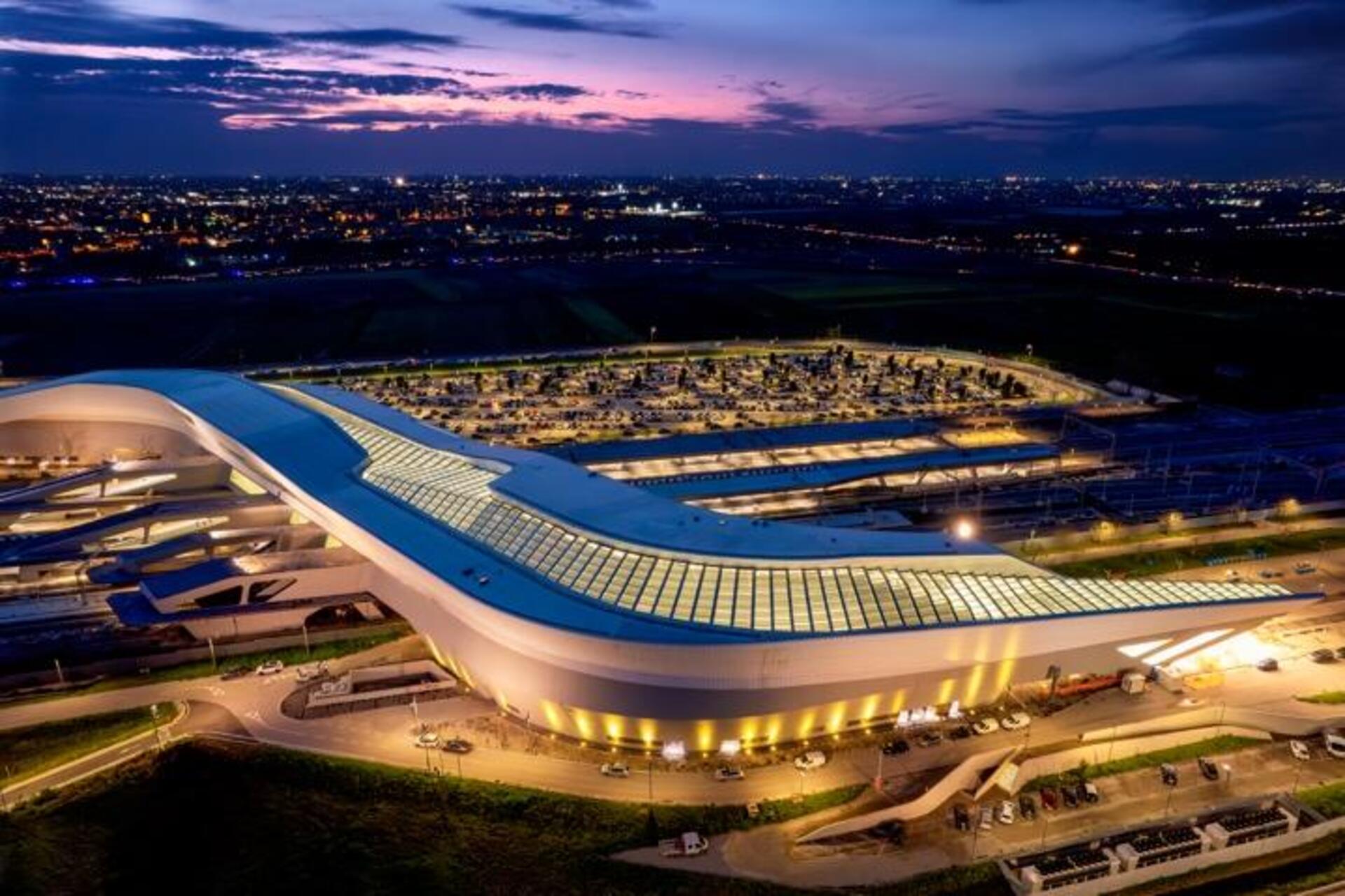
1 – Naples-Afragola High-Speed Railway Station
Naples Afragola High-Speed Railway Station, built by the Webuild Group to a design by Zaha Hadid, is one of the most advanced examples of railway infrastructure conceived to integrate speed, sustainability, and urban regeneration within a single architectural project.
Designed as an inhabited bridge spanning the Rome–Naples railway line, the station extends for approximately 500 meters, featuring fluid, curvilinear forms that evoke the movement of high-speed trains. Steel, glass, and reinforced concrete are combined in a structure of remarkable technical complexity.
Constructed without interrupting operations on the existing high-speed rail line, the station was designed to become a strategic transport hub within Southern Italy’s rail network, thanks also to its future integration with the Naples–Bari railway line and regional and metropolitan transport systems.
2 – Milan-Naples High Speed Railway – Bologna Railway Hub
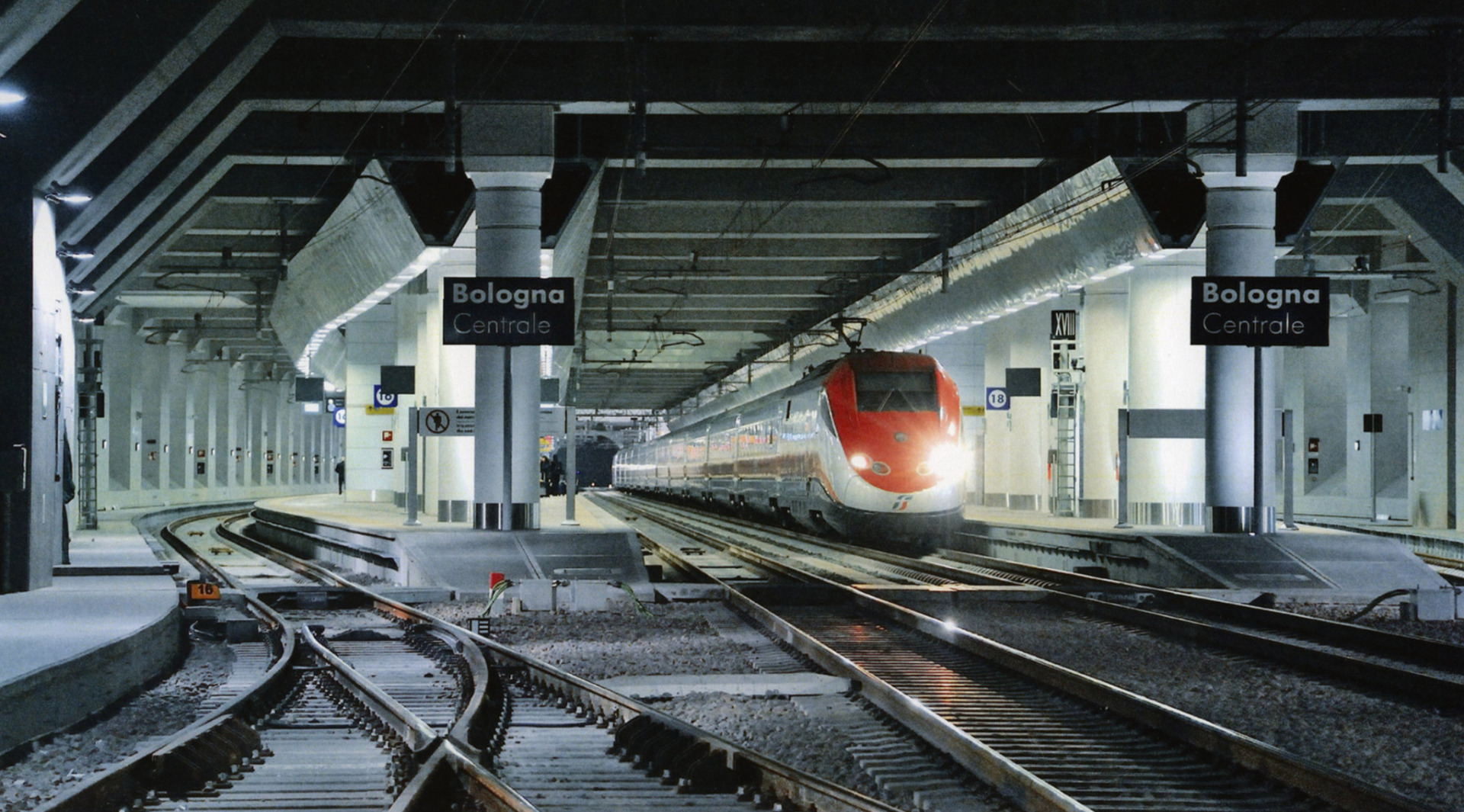
The Bologna high-speed rail hub, part of the Milan–Naples high-speed rail line, is one of the most complex and strategically important infrastructure projects within Italy’s railway system. It was conceived to increase capacity, speed, and integration across the national transport network while minimizing its impact on the existing urban environment.
The centerpiece of the project, delivered with the contribution of the Webuild Group, is the new underground station, located approximately 23 meters beneath the historic Bologna Central station. It features a network of tunnels and intermodal transport spaces designed to separate high-speed rail services from regional and conventional rail traffic.
Within this highly integrated system, the railway infrastructure not only accelerates connections along one of Europe’s key transport corridors but also redefines the relationship between sustainable mobility and urban space.
3 – Southern Cross Station, Melbourne
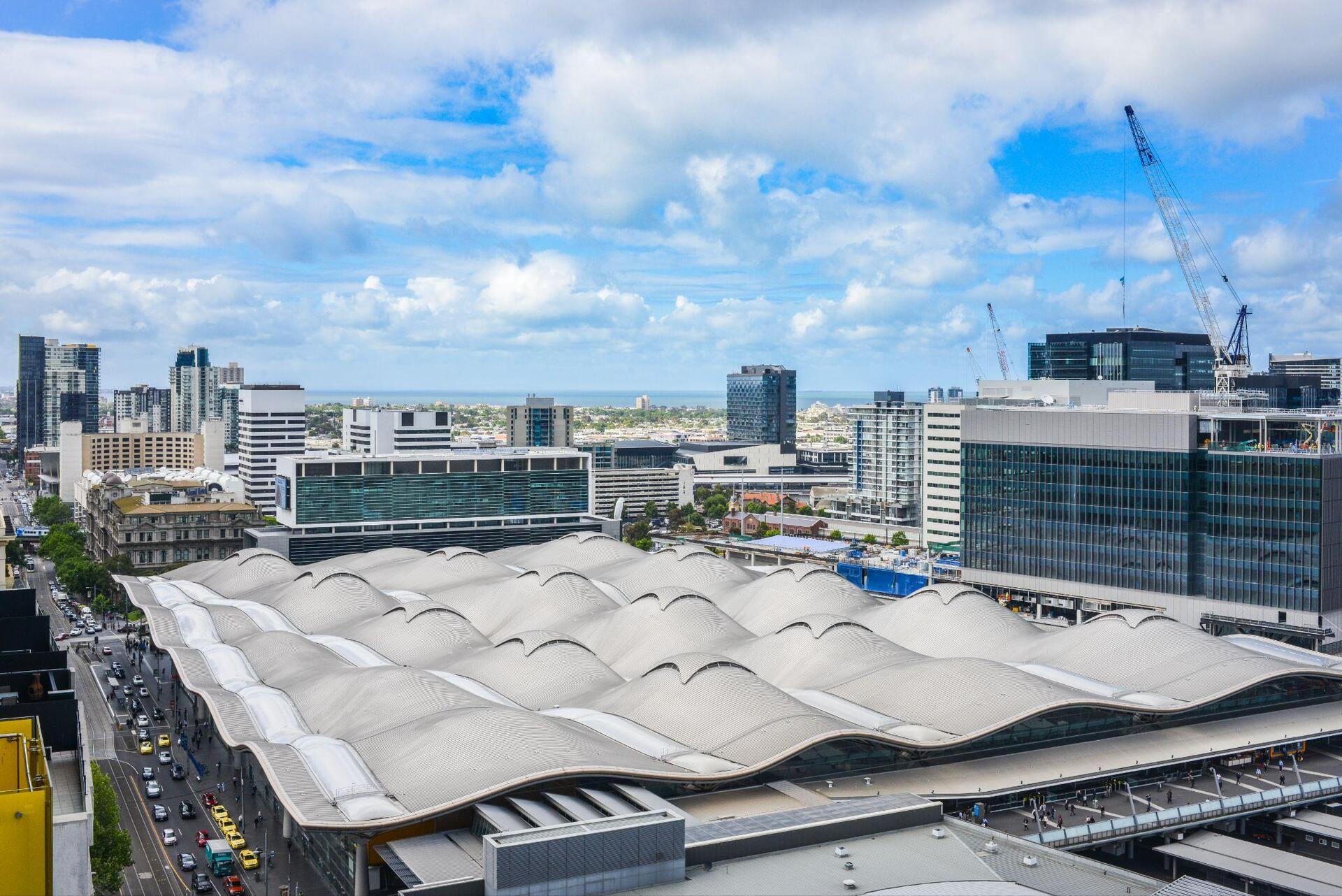
Melbourne’s Southern Cross Station stands as one of the most significant examples of contemporary railway infrastructure where operational efficiency, sustainability, and urban quality are combined within a single architectural system.
Redeveloped in the early 2000s as the primary rail transport hub of the State of Victoria, the Southern Cross Station is distinguished by its large undulating roof, which enables natural ventilation, diffused daylighting, and greater energy efficiency. In doing so, the building envelope becomes an active component of the station’s environmental performance, transforming architecture into a key element of sustainable infrastructure.
4 – Rotterdam Central Station
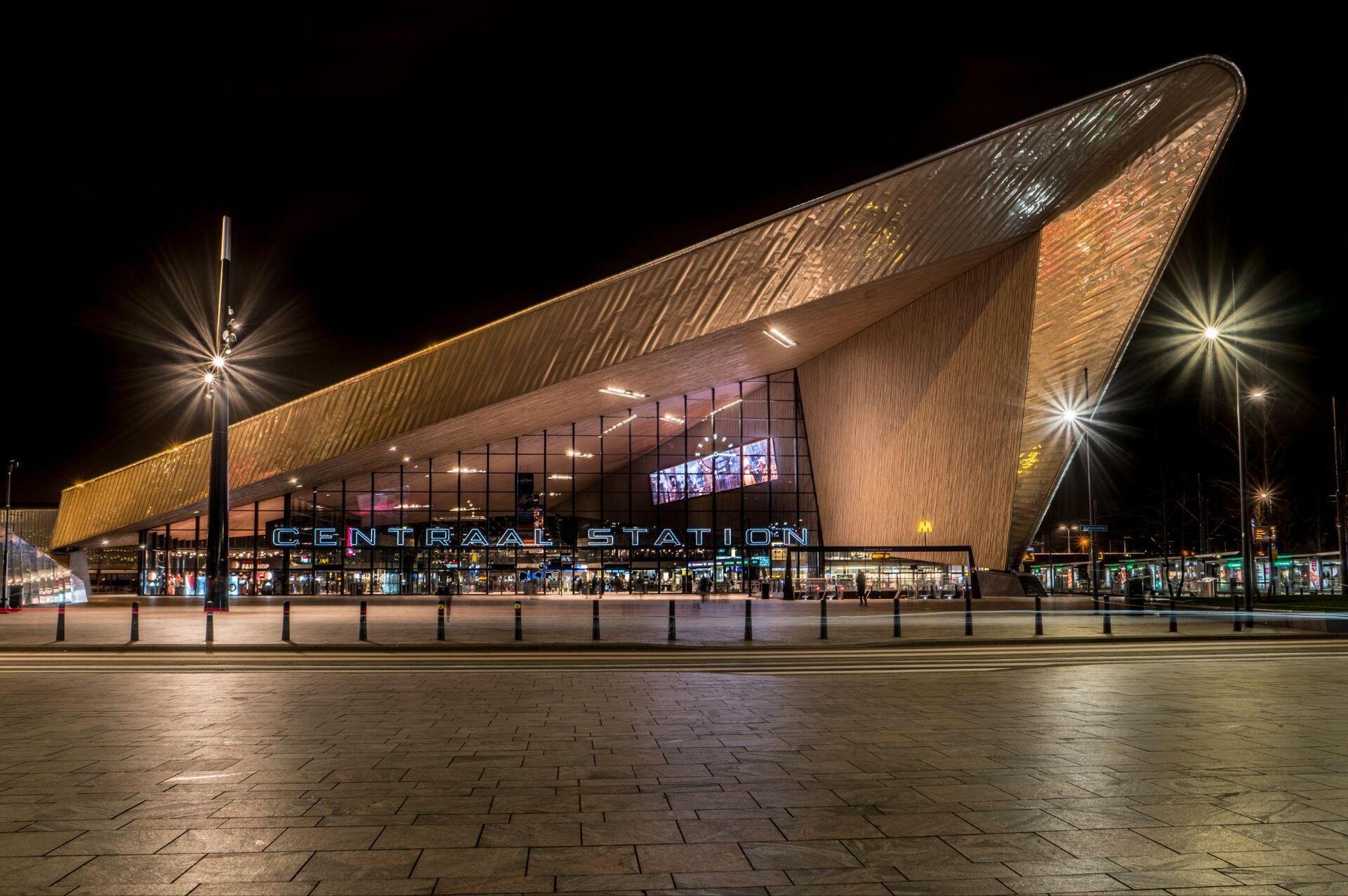
Rotterdam Central Station, designed by Team CS (Benthem Crouwel Architects, MVSA, and West 8), is one of the Netherlands’ principal rail transport hubs and a leading example of contemporary infrastructure where transport capacity, sustainable mobility, and urban regeneration converge within a single integrated system.
Completely rebuilt and reopened in 2014 following an extensive redevelopment program, the Rotterdam Central Station was designed to meet growing mobility demand by connecting high-speed rail services, regional trains, trams, and buses through an exceptionally efficient intermodal transport hub.
Its expansive steel-and-glass roof, together with the distinctive triangular canopy facing the city center, creates a recognizable architectural identity that transforms the railway station into an urban gateway between transport flows and public space.
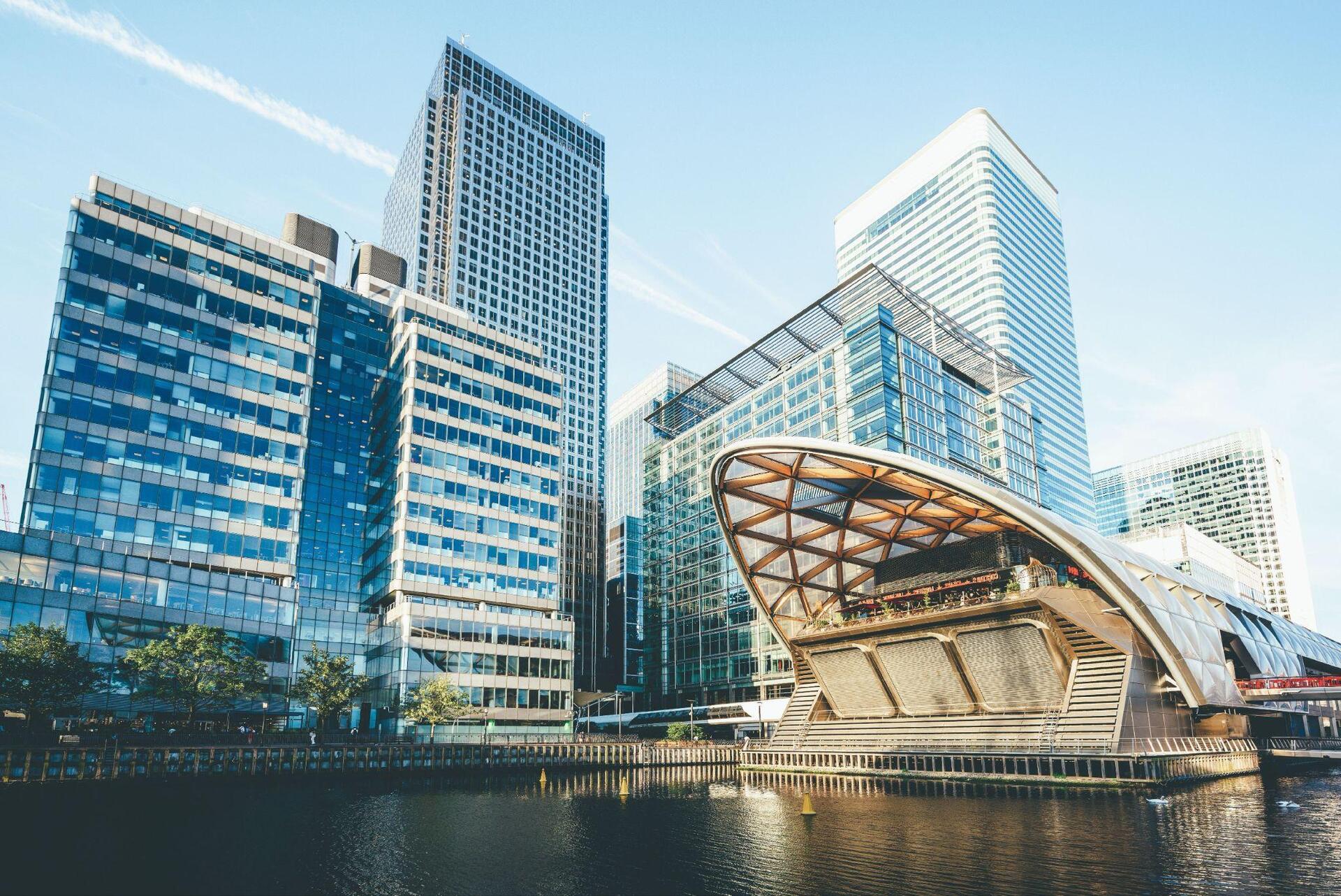
5 – Canary Wharf Station, Elizabeth Line, London
Canary Wharf railway station, part of London’s Elizabeth Line, is among the most complex railway infrastructure projects ever developed within a dense urban environment. It was designed to provide high-capacity transportation at the heart of the city’s financial district.
Built as part of the Crossrail project, the Canary Wharf station occupies a vast underground structure approximately 475 meters long within the Docklands area, with platforms designed to accommodate large passenger volumes and provide rapid connections to London’s underground and rail networks.
Within this integrated system, the Canary Wharf station serves as a strategic link between sustainable mobility and urban development, contributing to the transformation of the Docklands into one of London’s leading business districts.