


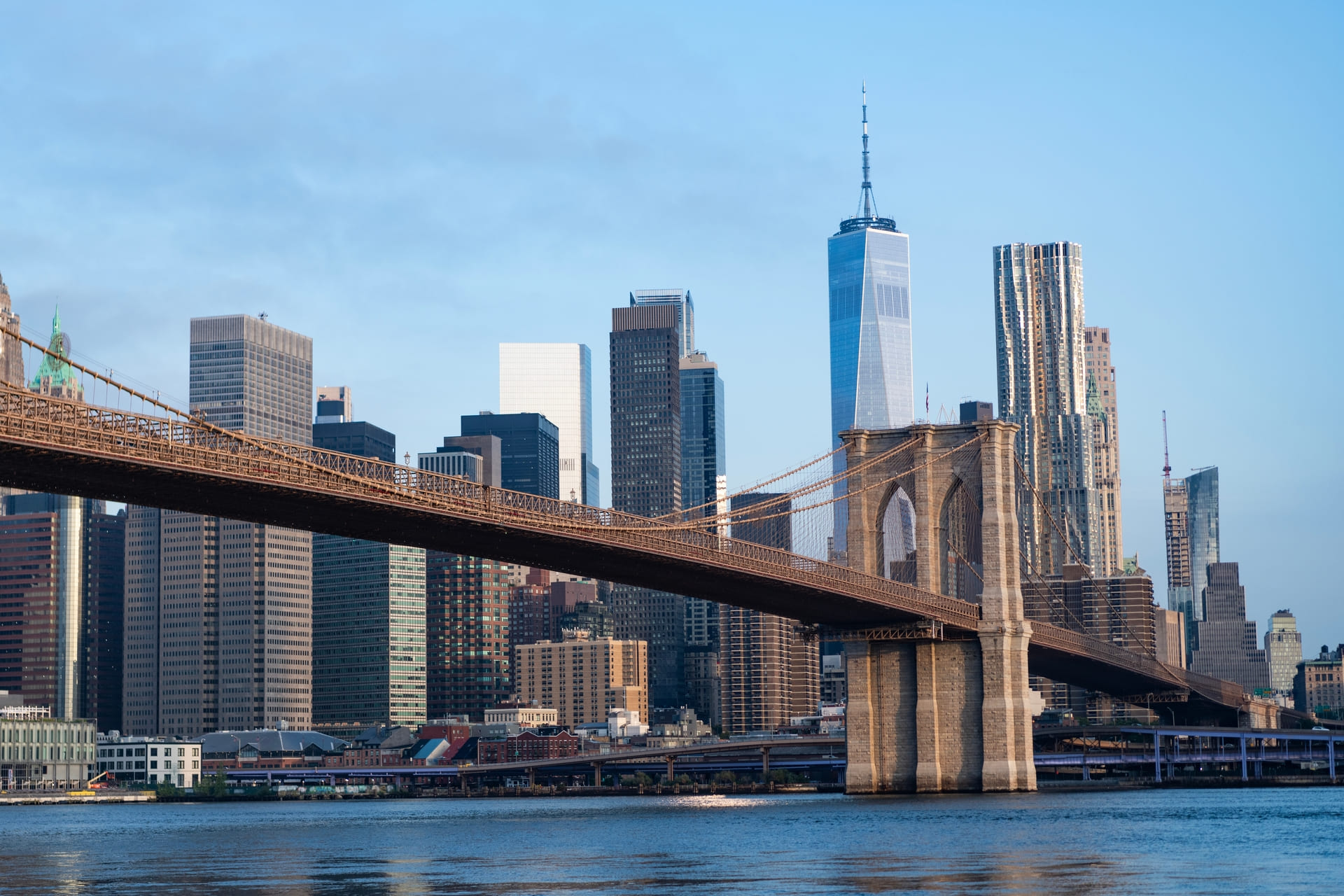
 Brooklyn Bridge, New York
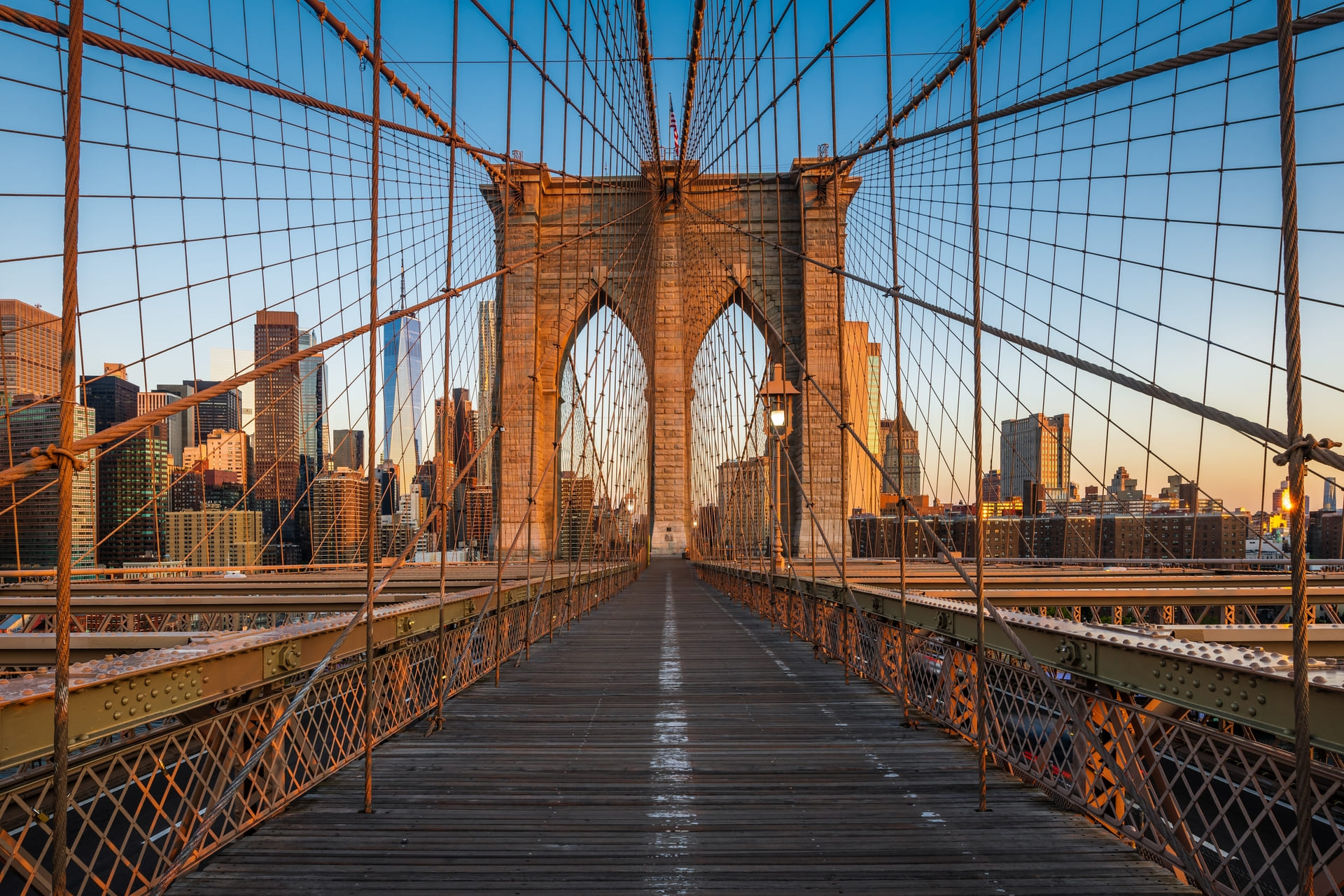 Brooklyn Bridge, New York
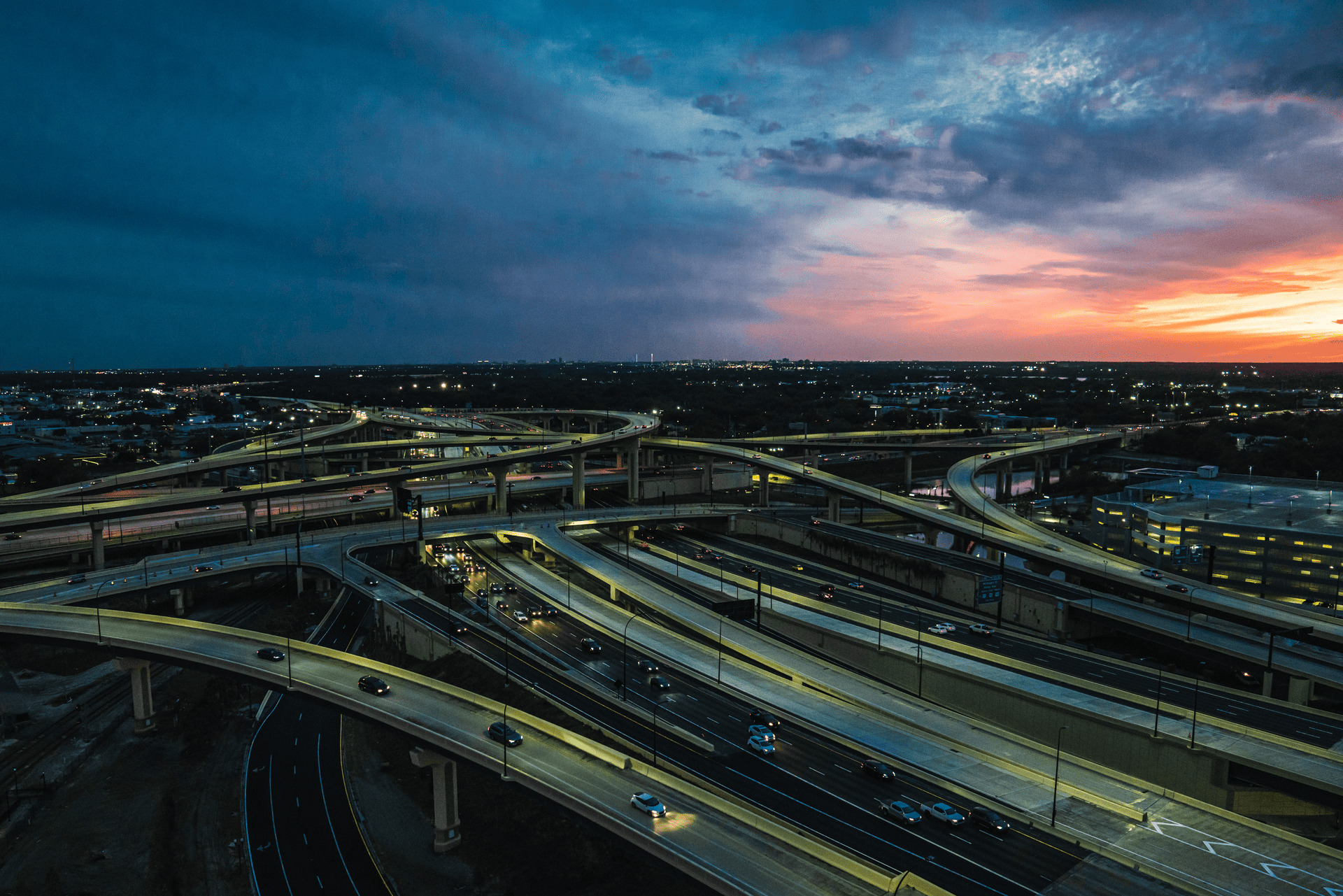 I-4 Ultimate Improvement Project – Orlando, Florida
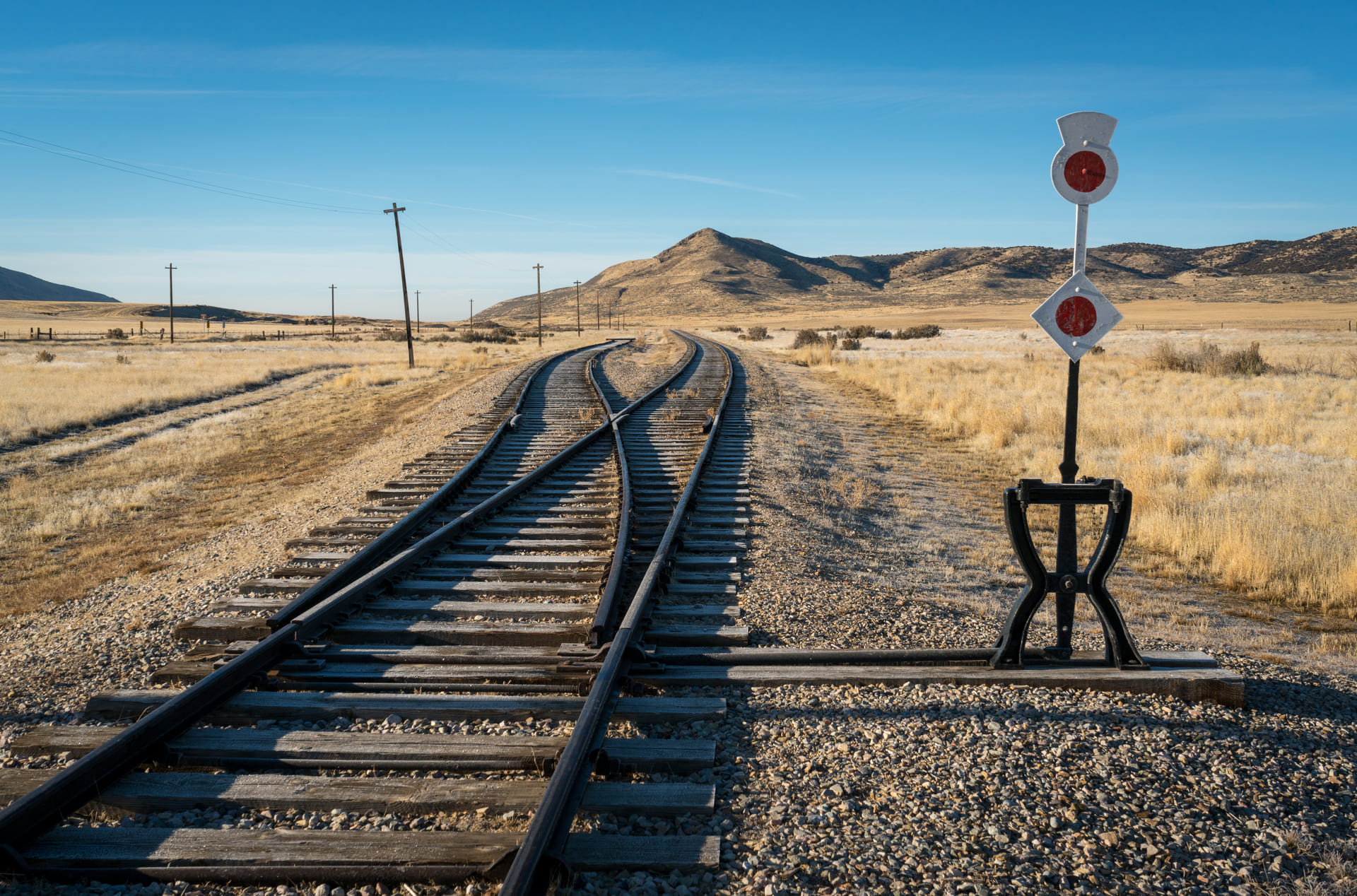 Golden Spike National Historic Site, Utah
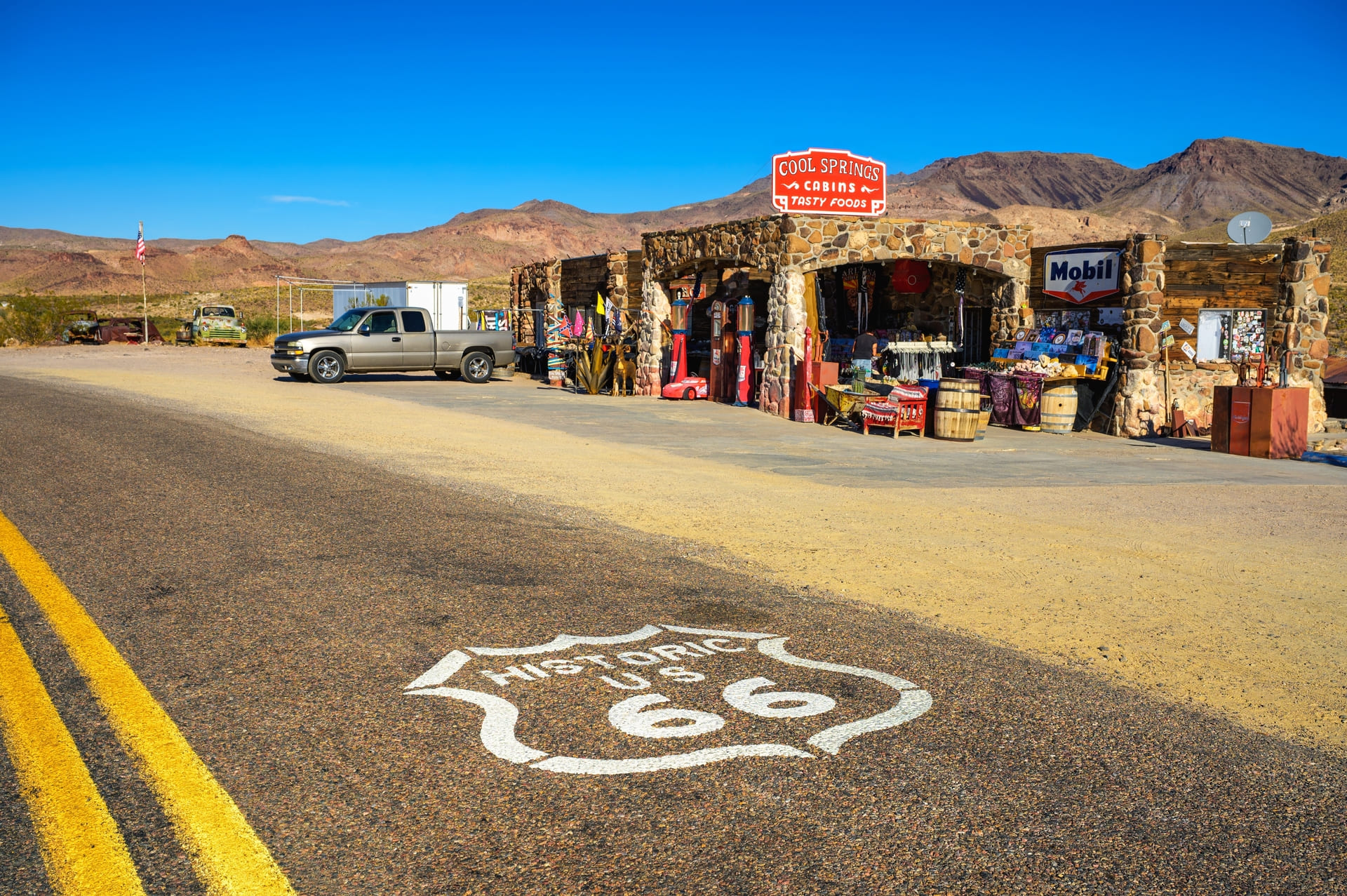 Historic Route 66 in Cool Springs, Arizona
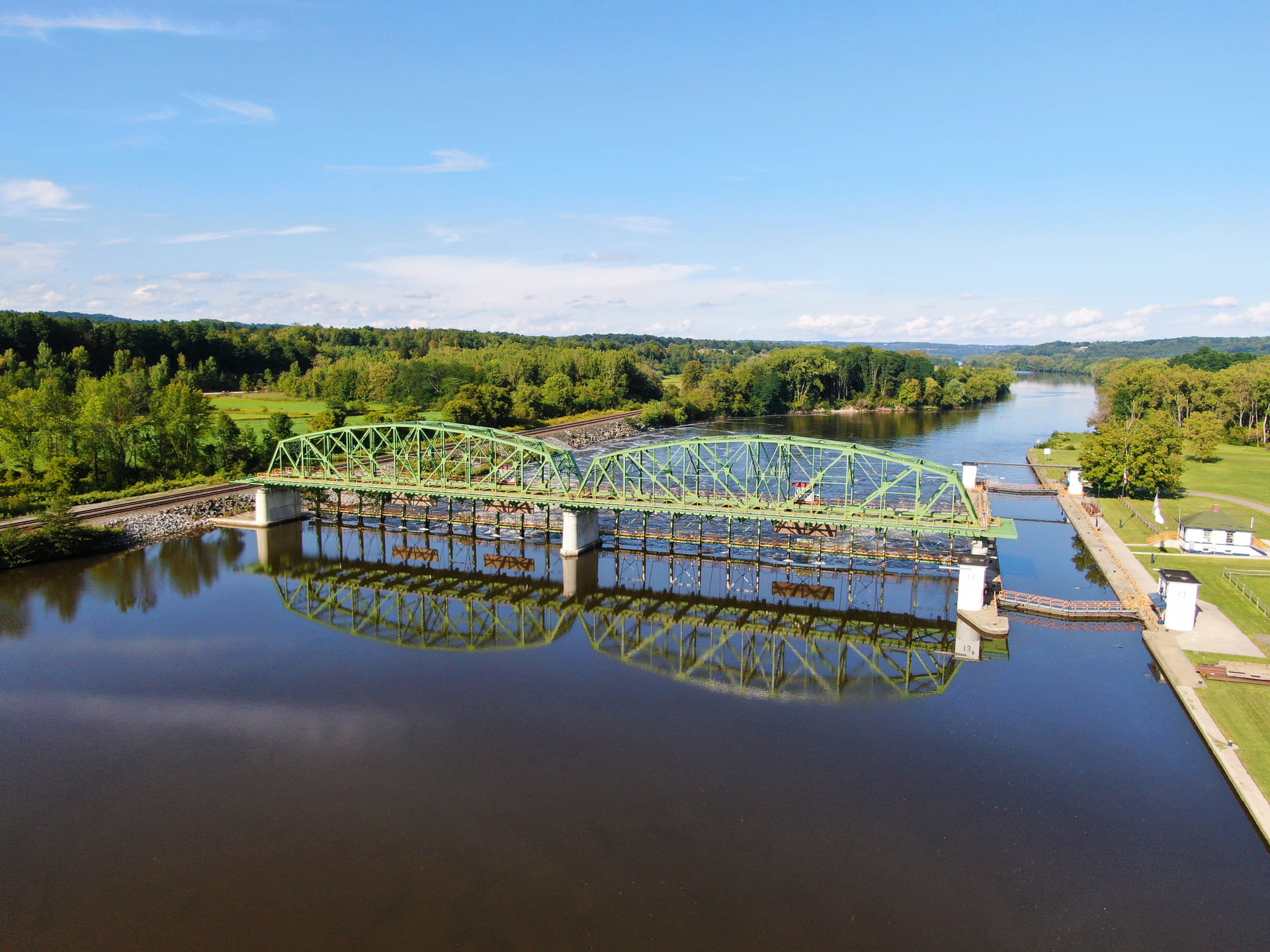 The Erie Canal Lock #13, Fultonville, New York
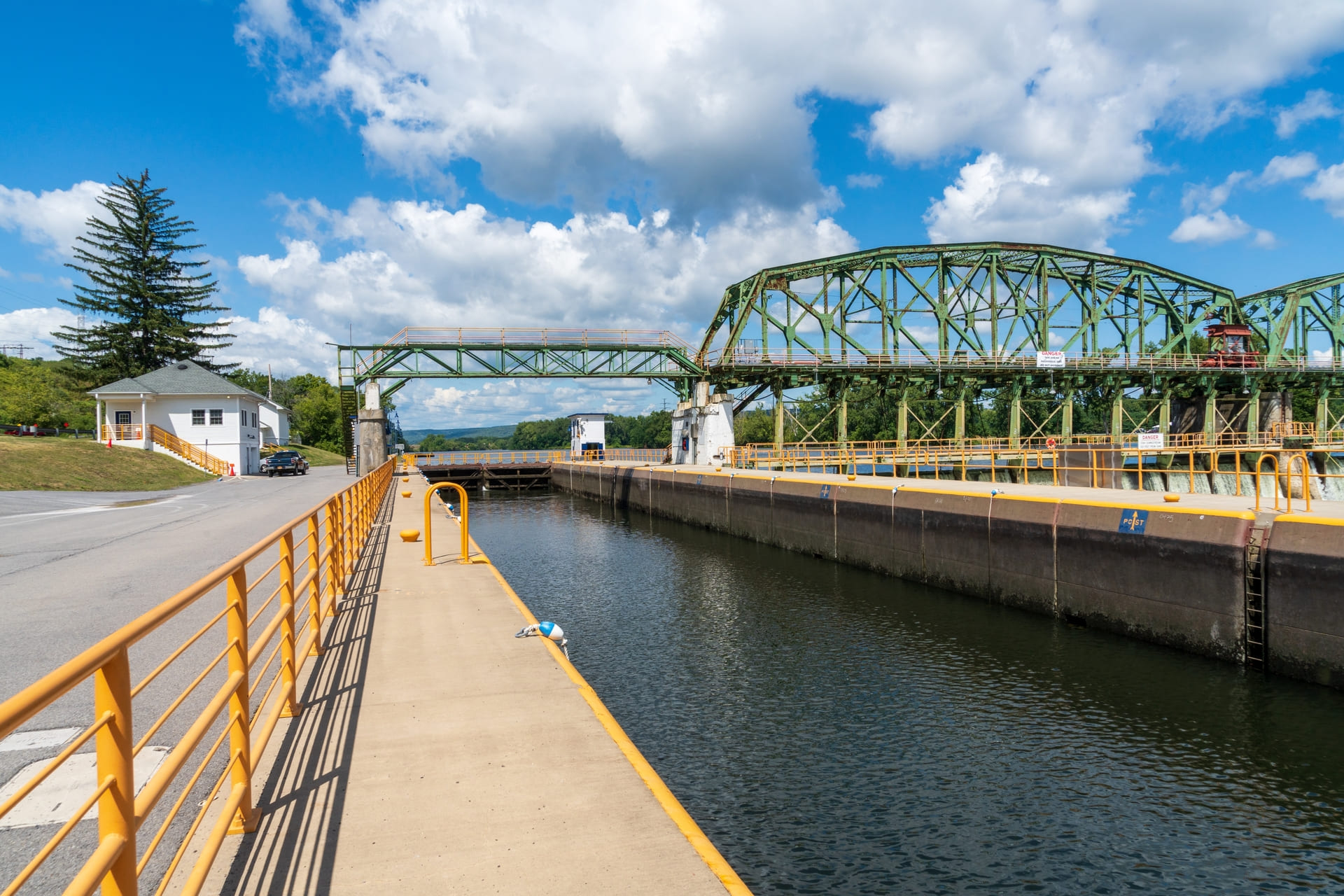 The Erie Canal Lock #8 in Upstate New York
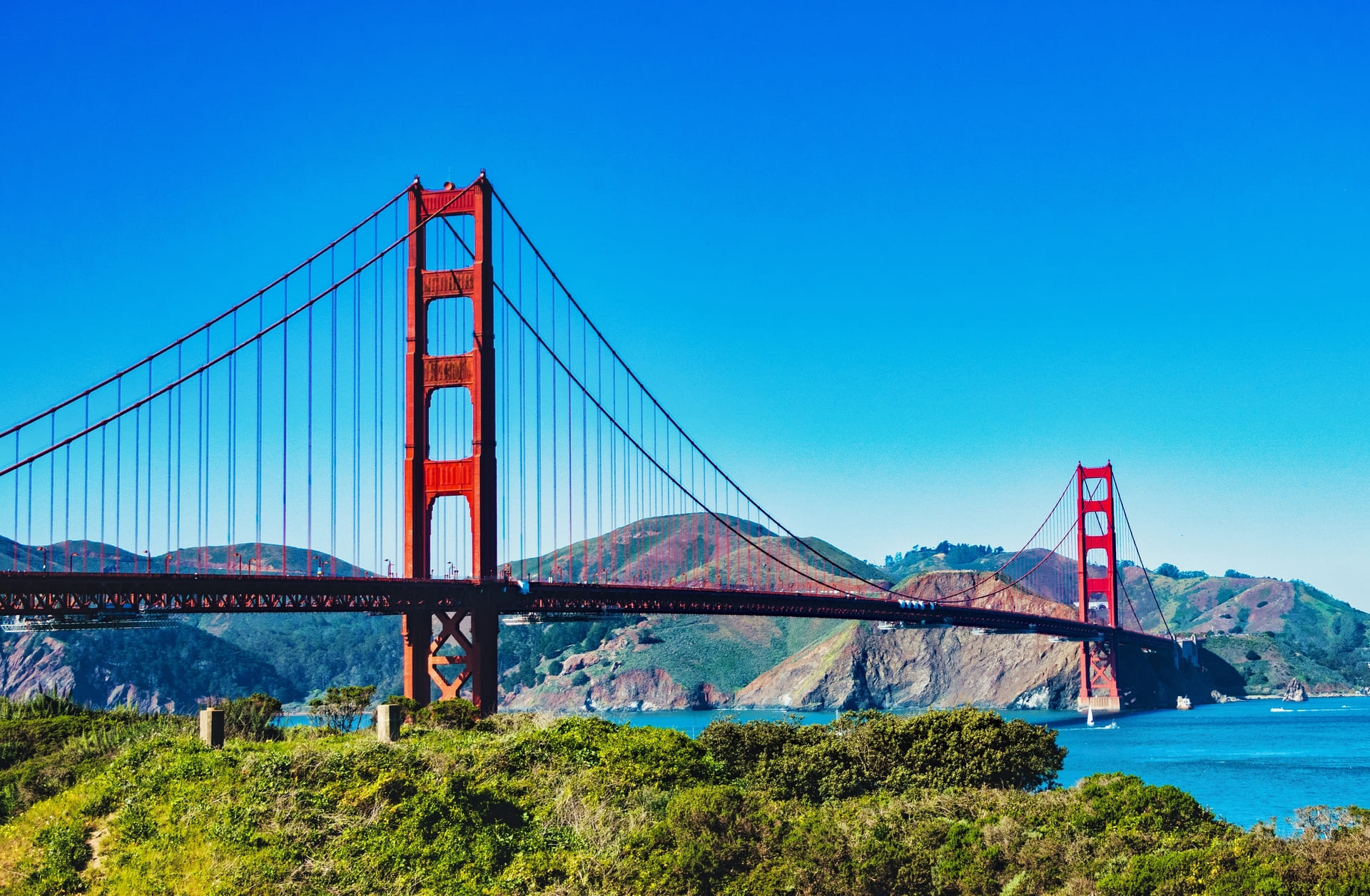 Golden Gate Bridge, San Francisco
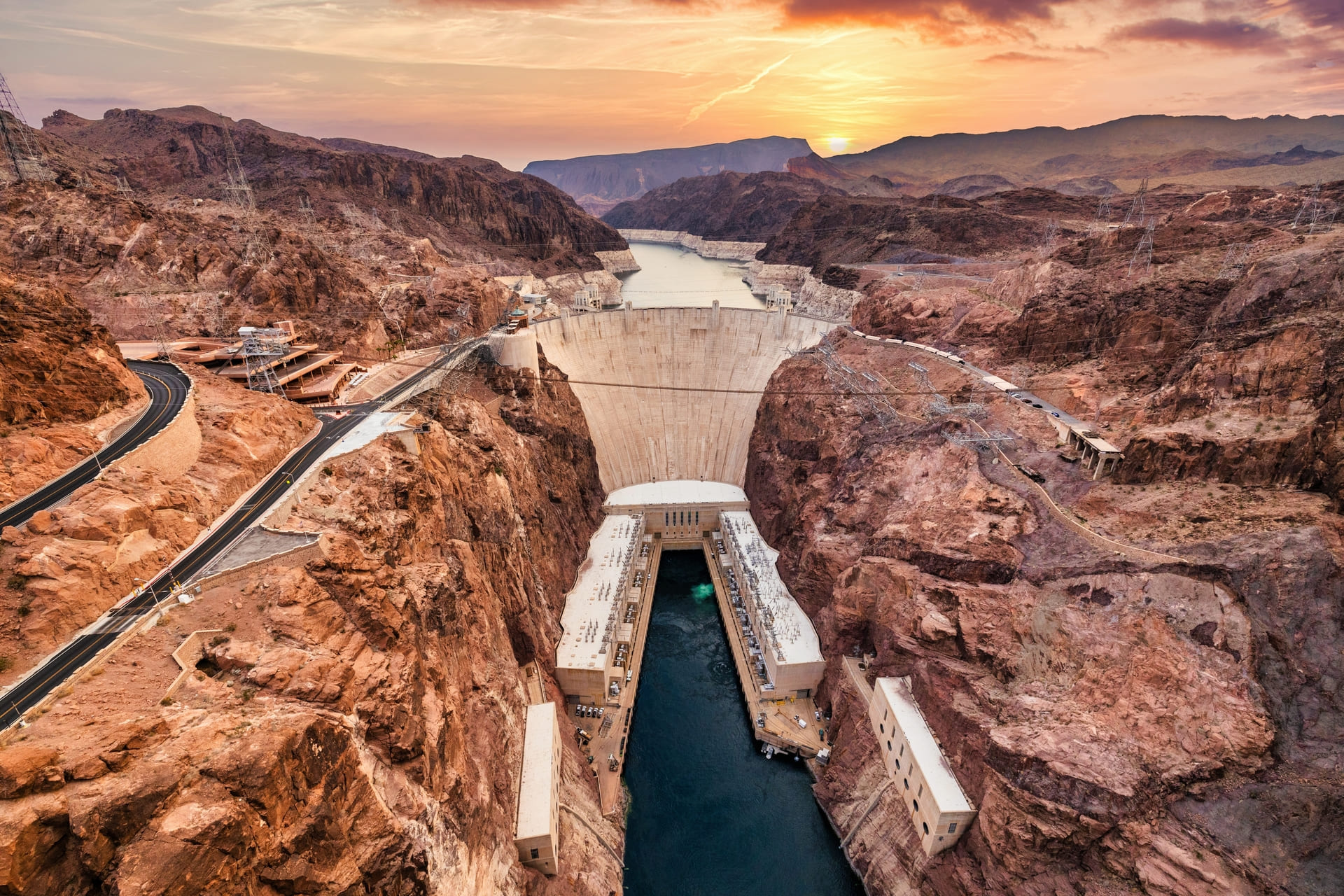 Hoover Dam on Colorado River
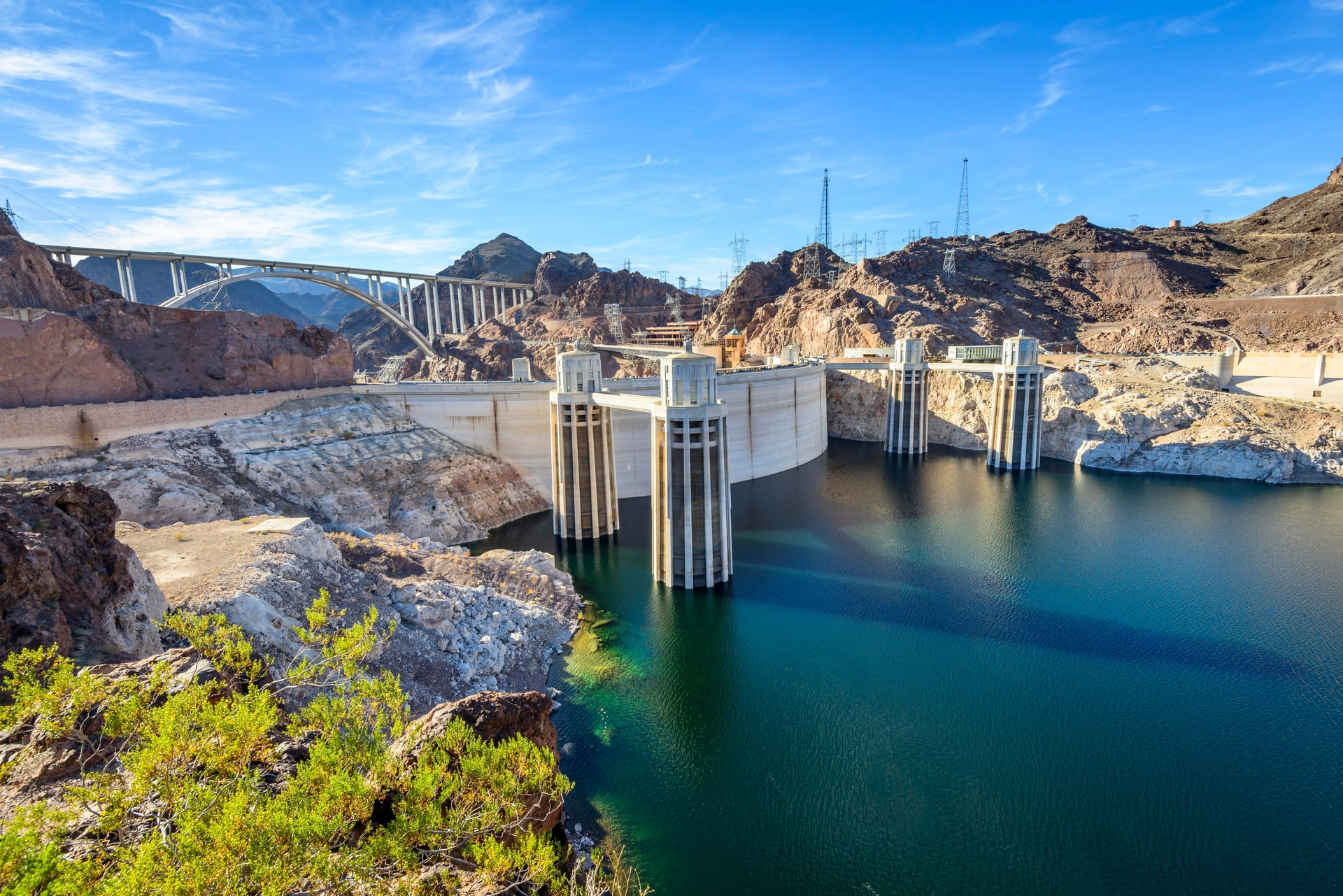 Hoover Dam on Colorado River
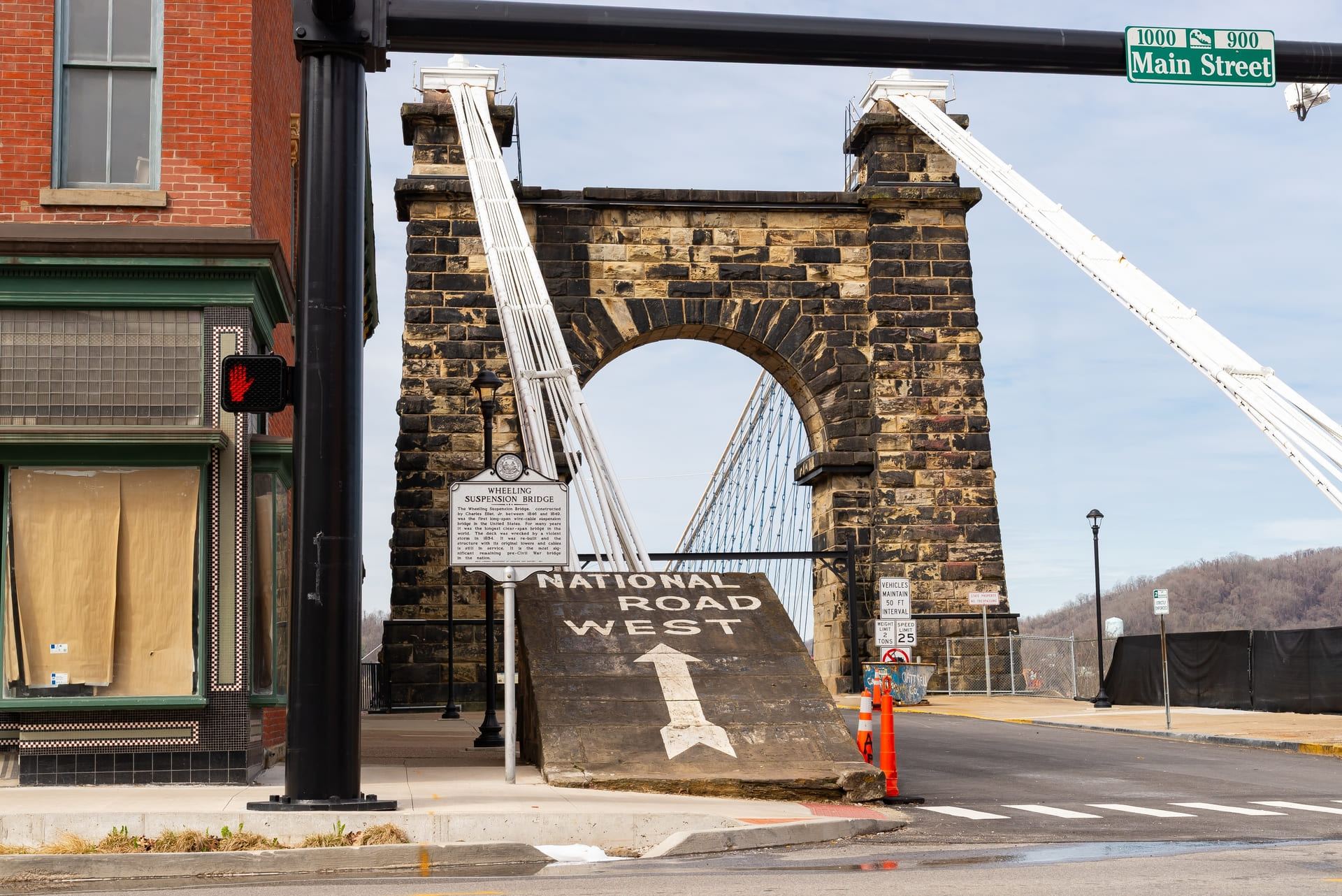 A section of the National Road in Wheeling, West Virginia
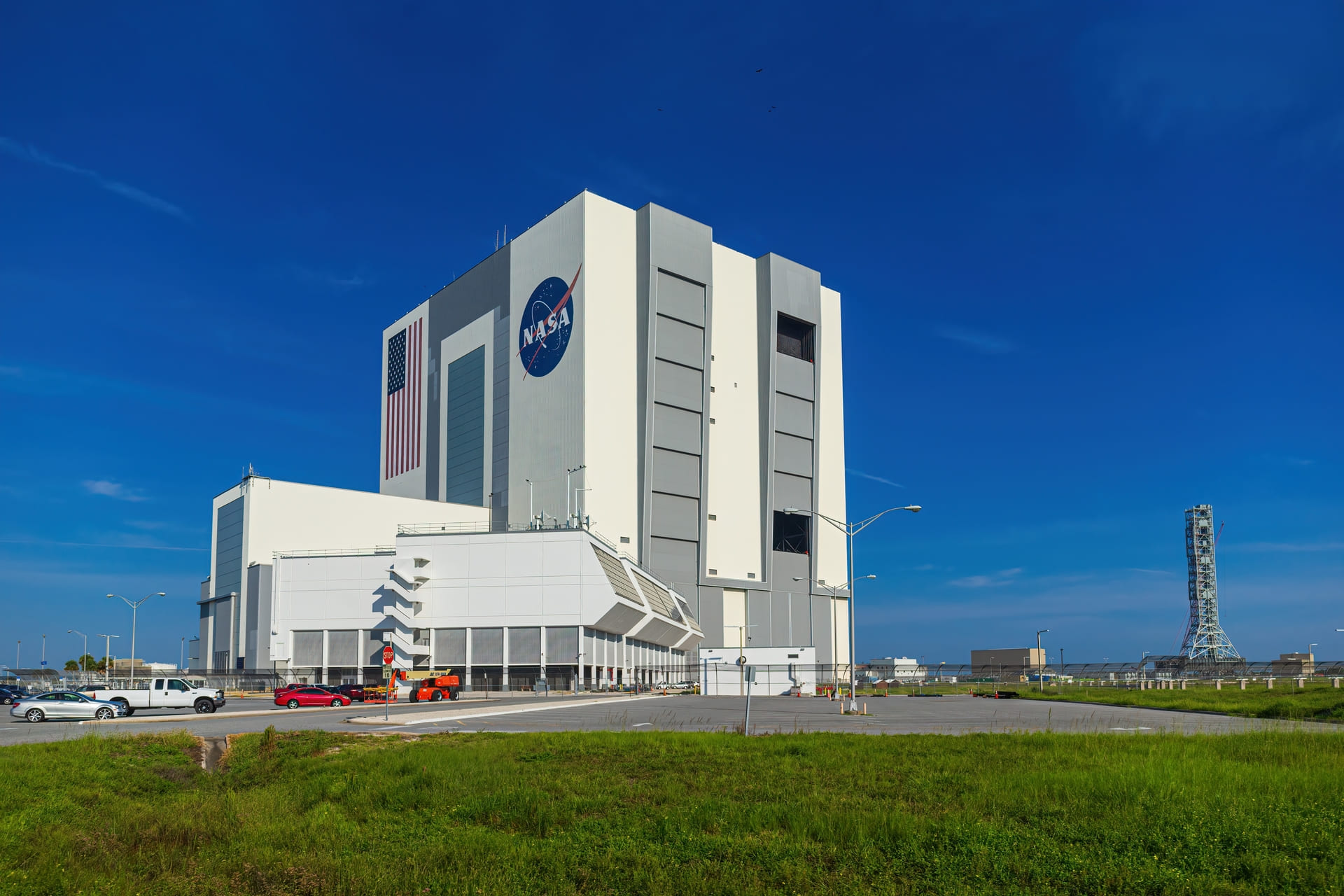 Vehicle Assembly Building, Kennedy space center, Florida
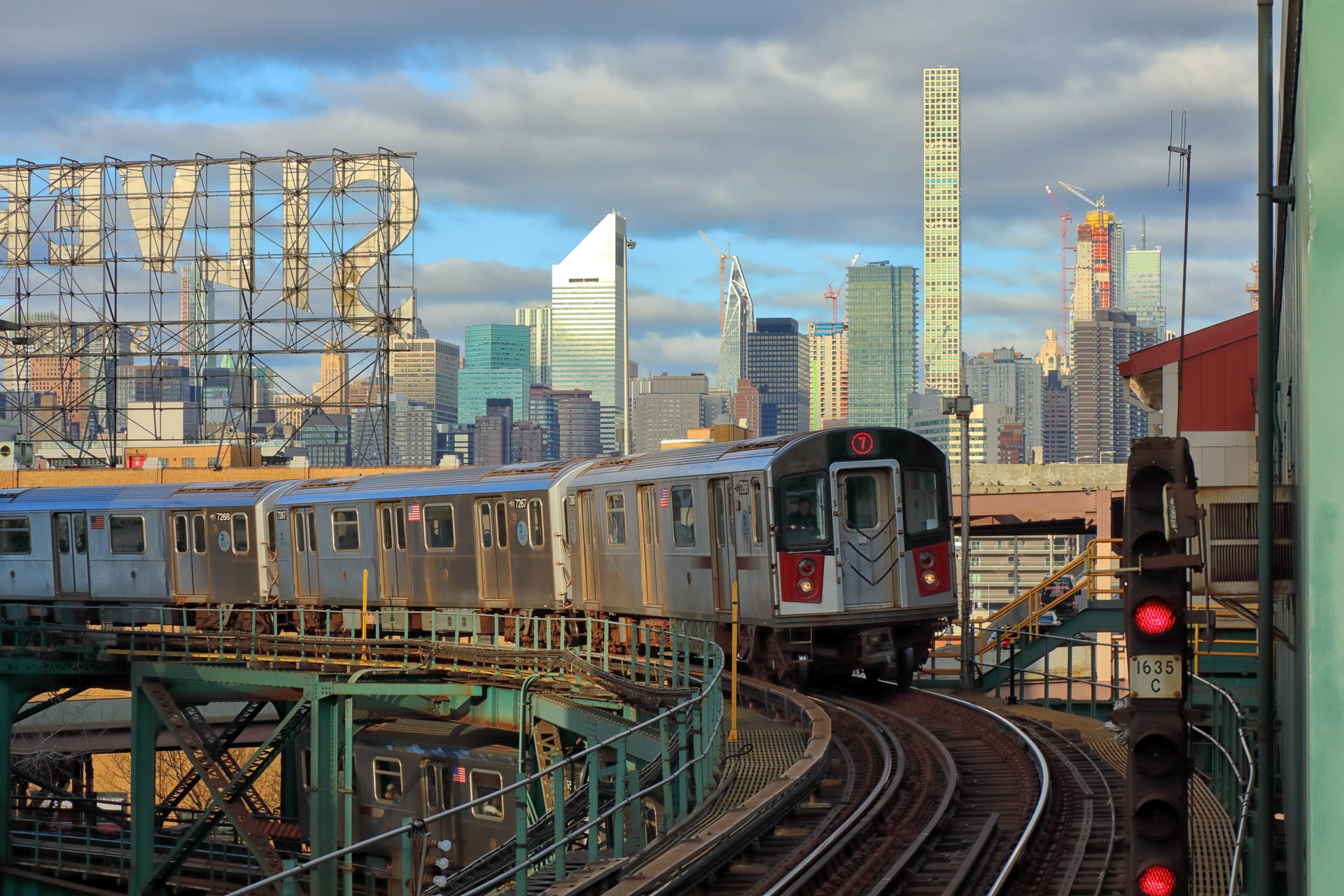 New York Subway
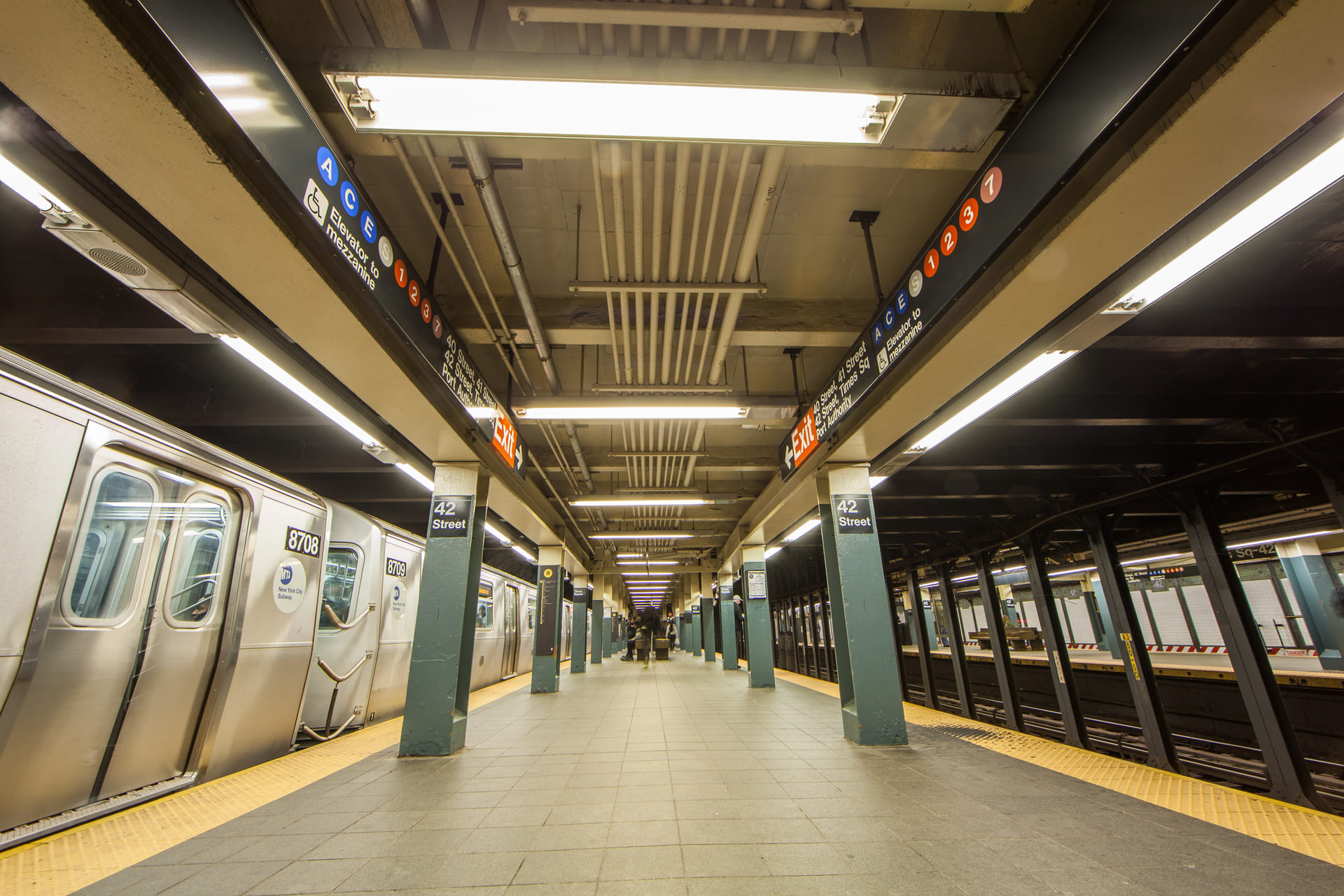 New York Subway
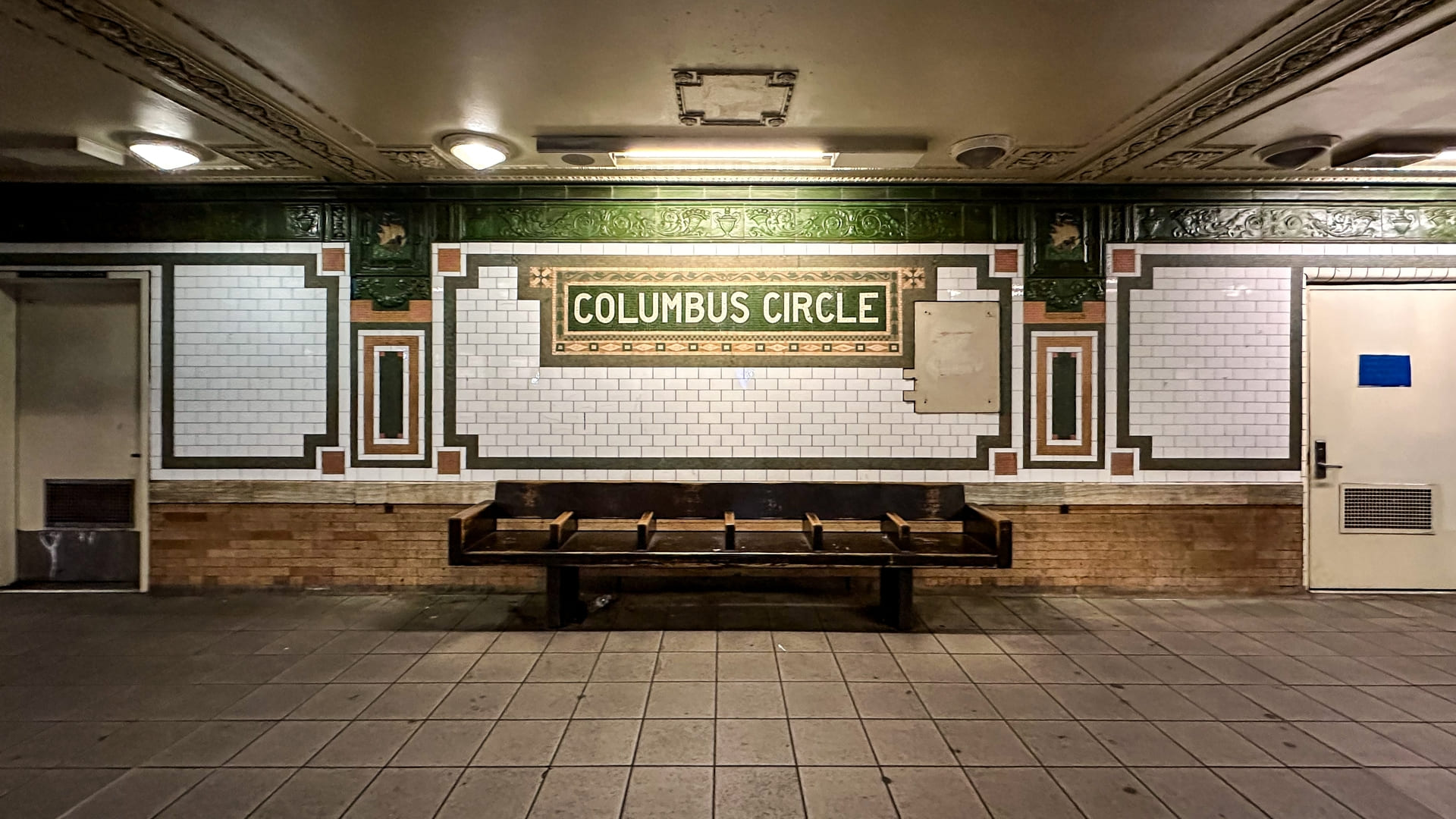 New York Subway
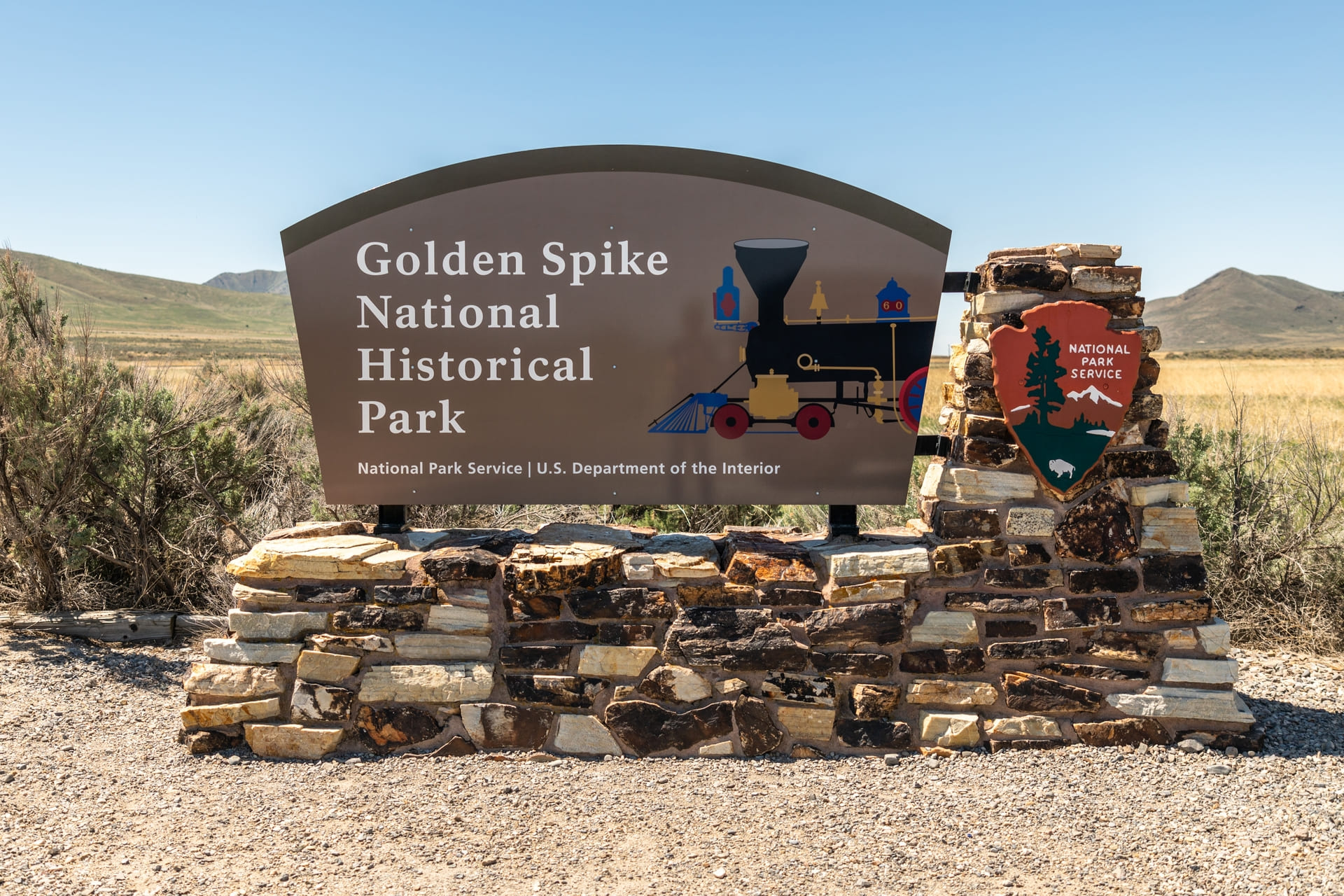 Golden Spike National Historic Site, Utah
- In 1776, the United States consisted of thirteen colonies on the Atlantic coast; today, they possess one of the most extensive infrastructure networks on the planet.
- The Erie Canal reduced transport costs between the Midwest and the East Coast by over 90%, contributing to the rise of New York as America's economic capital.
- The transcontinental railroad completed in 1869 united the Atlantic and Pacific for the first time, transforming the United States into a true continental nation.
- The New York City Subway continues to evolve thanks to new expansion and modernization programs, with Webuild and Lane contributing to some of the most important rail projects in the Northeast.
- In Lake Mead, one of the America's largest artificial lakes, Webuild built the Intake 3 system to address the challenges posed by drought and secure water for Las Vegas.

Imagine a traveler in 1776 leaving the port of New York, heading toward the great Mississippi River. To reach it, they must cross the Appalachian Mountains, venture into impassable forests, ford rivers, and walk along muddy trails. It takes weeks of travel on horseback to cover a distance that today can be traveled in just a few hours. This contrast reflects one of the most fascinating stories of the United States.
When the Founding Fathers adopted the Declaration of Independence on July 4, 1776, the United States was not yet a continental nation. They were thirteen colonies facing the Atlantic, squeezed between the ocean and a boundless frontier. Crossing the continent was unthinkable.
Two hundred and fifty years later, the United States is connected by nearly 79,000 kilometers of Interstates, traversed every day by millions of subway passengers, served by some of the largest ports on the planet, and equipped with infrastructure that reaches even into space.
Today, the country possesses more than 19,000 airports, over 615,000 bridges, approximately 92,000 dams, hundreds of commercial ports, and a road network that could circle the Earth more than 160 times. None of the Founding Fathers could have ever imagined such a transformation.
The history of America can be told through wars, industrial revolutions, and technological innovations, but there is another common thread that runs through these 250 years: infrastructure. If the Declaration of Independence gave birth to the United States, it was infrastructure that transformed them into a continental nation.
Let us review nine of the most important ones.
1. Before Route 66, the National Road: The Highway That Opened the West
The first major infrastructure project funded by the federal government was born in 1806: the National Road. It became the primary artery of expansion from Maryland toward Ohio and the Midwest, traveled by pioneers, settlers, and stagecoaches heading west.
For the young republic, it was what Route 66 would become a century later: the symbol of opening up the continent and the American spirit of Coast-to-Coast travel.
Today, many sections of the National Road still survive along modern U.S. Route 40, which largely follows its original path. More than two centuries later, it continues to be used in daily life, a tangible testament to the first great infrastructure push of the United States.
2. The Erie Canal: The Project That Made New York Great
The Erie Canal, inaugurated in 1825, was one of the most audacious undertakings of early industrial America, designed to connect the Great Lakes to the Hudson River and consequently to the Atlantic. The result was revolutionary: transport costs between the Midwest and the East Coast plummeted by over 90%, and New York City quickly became the primary commercial hub of the country.
Today, the Erie Canal is part of a water highway spanning approximately 524 miles (over 840 km), which remains navigable today primarily to support regional and tourist traffic.
3. The Golden Spike, the Transcontinental Railroad: Uniting Two Oceans
On May 10, 1869, at Promontory Summit in Utah, the Golden Spike marked the completion of the first transcontinental railroad, connecting the Atlantic and Pacific coasts for the first time in a continuous line. A journey that previously required months became a matter of a few days, transforming the United States into a true continental nation.
Today, the Golden Spike no longer exists in its original form, but it has been absorbed into the national rail system managed by operators such as Union Pacific Railroad and BNSF Railway. This modern network collectively covers over 140,000 miles of freight rail lines in the United States.
4. The Brooklyn Bridge: The Symbol of Industrial America
The Brooklyn Bridge, inaugurated in 1883, was the longest suspension bridge in the world at the time of its opening, built after years during which many considered it simply impossible to construct. Between accidents, unprecedented engineering innovations, and the vision of the Roebling family, the project became a symbol of defying the technological limits of the era.
Today, the Brooklyn Bridge is one of New York City’s iconic landmarks and continues to be crossed every day by tens of thousands of people, fully integrated into the modern urban network.
With over 140 years of history, it remains a timeless engineering marvel still in use in the United States. More than just a bridge, the Brooklyn Bridge stands as physical proof of America’s transition into the industrial and urban era.
5. The New York City Subway: Building the Vertical City
The New York City Subway, inaugurated in 1904, is today one of the most extensive and complex urban transit networks in the world, with over 1,000 kilometers of tracks and millions of passengers transported every day.
Far from being a “historical” system, the New York City Subway is an infrastructure in continuous expansion and renewal. Over decades, the Webuild Group, through its predecessor companies and subsidiaries, has contributed to various excavation and modernization projects across the network, including the renovation of sections of the F Line in the heart of Manhattan and complex works in highly dense urban areas, executed using advanced tunneling techniques without interrupting the city’s rhythms.
In parallel, today its American subsidiary, Lane, is part of the joint venture delivering the Palisades Tunnel package of the Hudson Tunnel Project, a major investment in passenger-rail capacity between New Jersey and New York.
6. The Hoover Dam: Hydroelectric Energy for the American Dream
The Hoover Dam, begun in 1931 at the height of the Great Depression and completed in 1936, was one of the most iconic federal public-works of the era and one of the largest dams ever built in the world. Constructed on the Colorado River, it radically transformed the American Southwest, securing water and power for cities like Las Vegas, Phoenix, and Los Angeles.
Today, the Hoover Dam remains fully operational and still generates hydroelectric power for hundreds of thousands of residents, in addition to regulating the water supply for one of the most arid regions in the United States.
Essential to this purpose is the role played by the Lake Mead reservoir, one of the largest man-made lakes in the United States. In recent years, to counter the progressive drop in lake levels caused by drought, a new deep water intake system, Intake 3, was built by Webuild. This system ensures the water supply even under critical conditions, thereby securing, for example, the water provisions for the city of Las Vegas.
7. The Golden Gate Bridge in San Francisco: The Gateway to the Pacific
When it was inaugurated in 1937, the Golden Gate Bridge was considered an unfeasible infrastructure project: wind, currents, and the depth of the strait made it extremely risky. Yet, the bridge was completed, immediately becoming a global icon of engineering and modern America.
The Golden Gate Bridge connects San Francisco to Marin County and is today crossed by tens of millions of vehicles each year. With its 2.7-kilometer length and its international orange towers suspended over the bay, it remains one of the most photographed infrastructure works in the world.
Despite being over 80 years old, the Golden Gate Bridge is constantly maintained and retrofitted to withstand earthquakes and ever-increasing loads. For this reason as well, it stands as the symbol of an America that built beyond the limits of the possible.
8. The Interstate Highway System: The Arteries of Modern America
If there is an infrastructure that has changed the daily lives of Americans more than any other, it is the Interstate Highway System, the backbone of mobility in the United States.
It is a legendary anecdote that, to support the revival of the economy at the end of the 1930s, President Franklin D. Roosevelt had a national map spread out across his desk, drew three major lines from East to West and three from North to South with a pencil, and told the head of the Bureau of Public Roads: “Now, build these roads.”
To do so, however, they had to wait until 1956, when President Dwight D. Eisenhower finally enacted the Federal-Aid Highway Act, kickstarting the mass motorization of Americans.
Major infrastructure operators have contributed to the construction of the Interstate Highway System – which today exceeds 75,000 kilometers Questa potrebbe essere un’informazione discordante rispetto a quanto indicato nel paragrafo sulla National Road and connects states, cities, and industrial districts – including Lane, which has been active in the United States since 1890 and is a subsidiary of Webuild.
9. The Kennedy Space Center: Man on the Moon, from Apollo 11 to the Artemis Program
American construction does not stop at the ground. The current Kennedy Space Center, established in 1962 in Florida, is the place from which the missions that brought man to the Moon in 1969 departed, with the landing of Apollo 11. From those launchpads, a new concept of infrastructure was born: no longer just roads, bridges, or railways, but systems capable of projecting humanity beyond Earth’s atmosphere.
Today, the Kennedy Space Center remains one of the primary space hubs in the United States. Inside it sits the gigantic Vehicle Assembly Building, one of the most voluminous buildings ever constructed in the world, where NASA program rockets are still assembled today. This is also the site of some of the space launches for the Artemis program, which aims for a return to the Moon.
From Founding Fathers to the Present: From the Frontier to the Future
From the National Road to the most iconic bridges, from the Golden Spike transcontinental railroad to the Interstate highway system, American history can be read as a continuous conquest of distances. First, the distances between the thirteen colonies and the western frontier; then, those between the Atlantic and the Pacific; and finally, those separating Earth from space.
Roads, canals, railroads, bridges, dams, subways, highways, and space centers – since that July 4, 1776, every generation has built the infrastructure that stands as the symbol of its own time and its own future.