


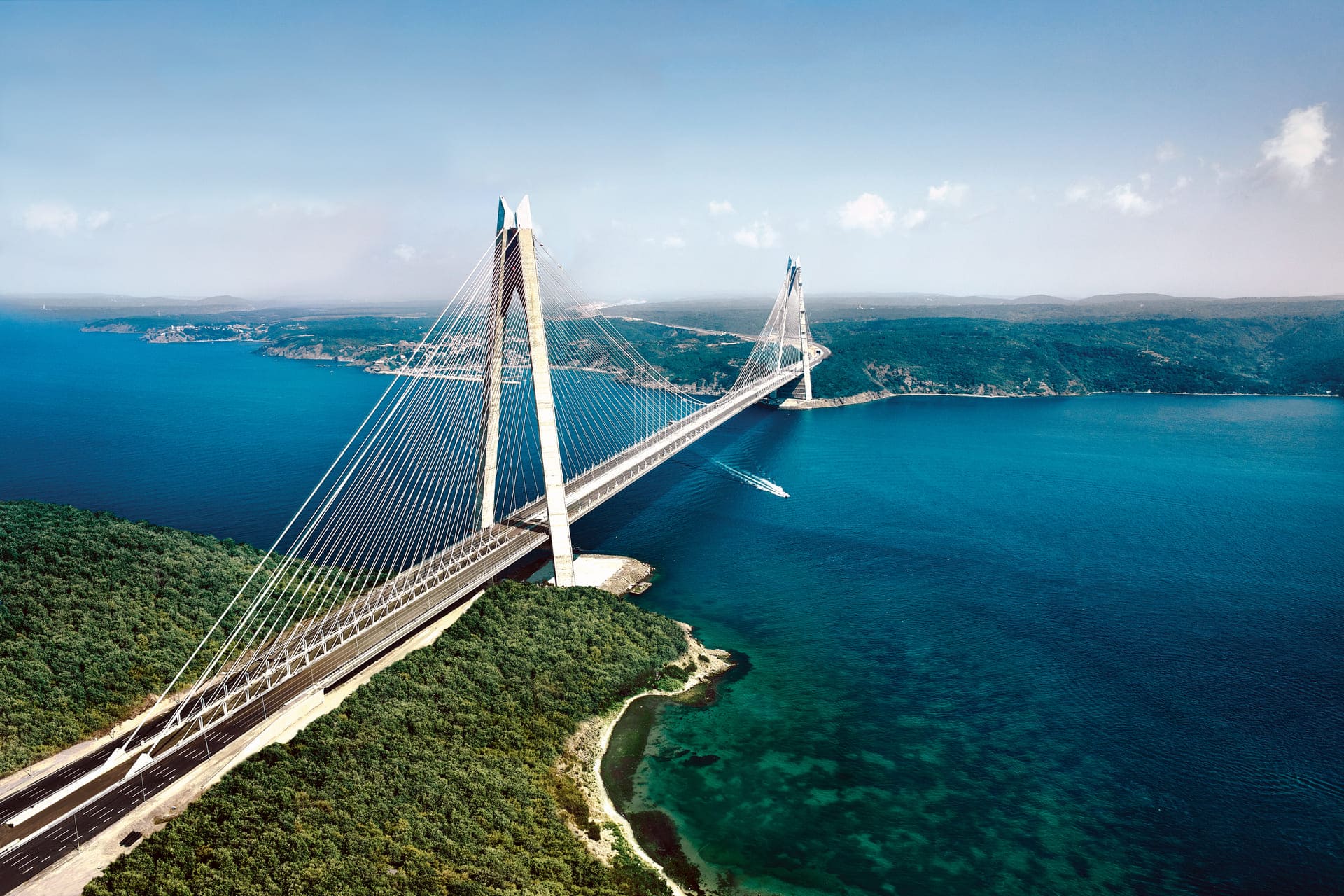
 Third Bosphorus Bridge, Turkey
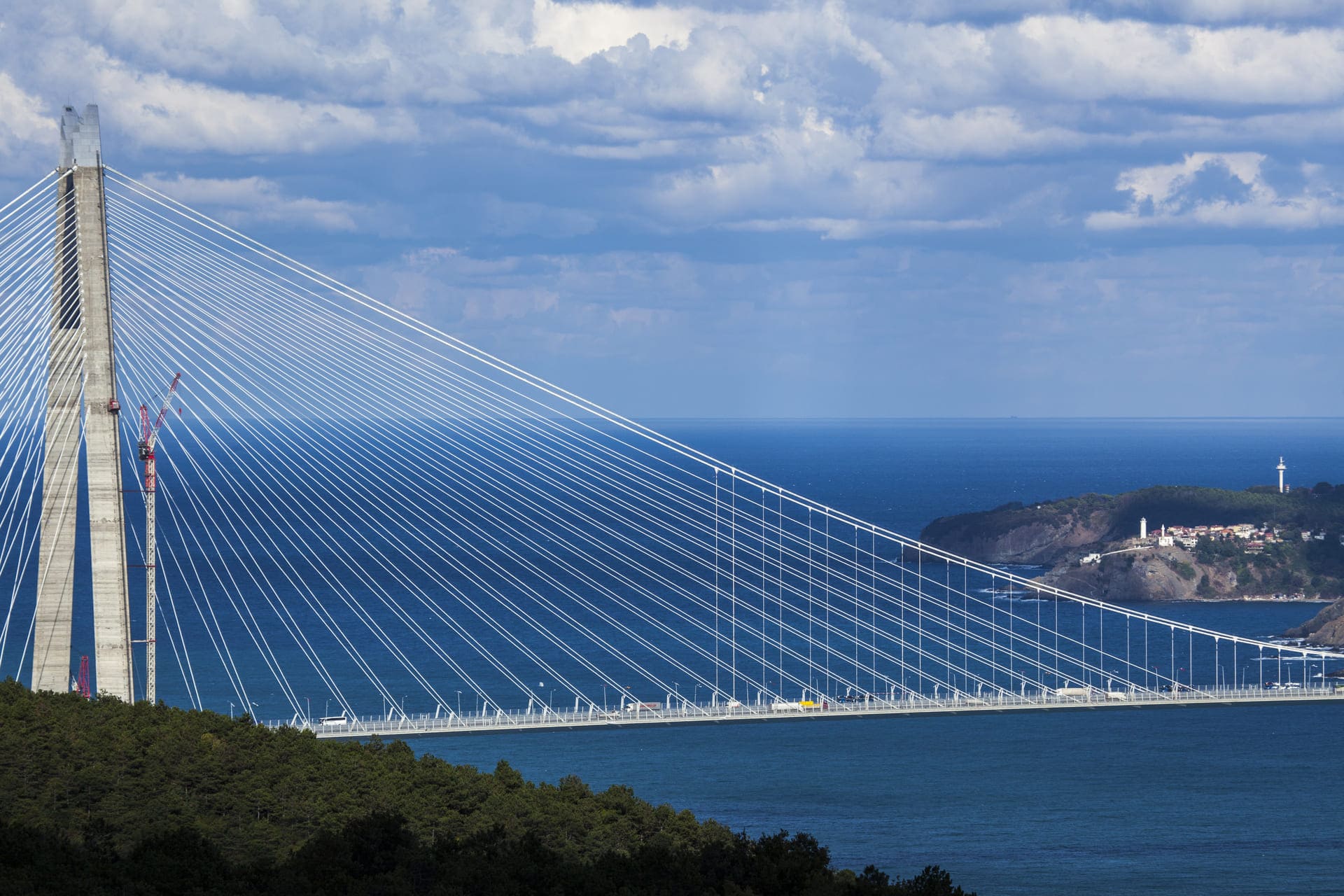 Third Bosphorus Bridge, Turkey
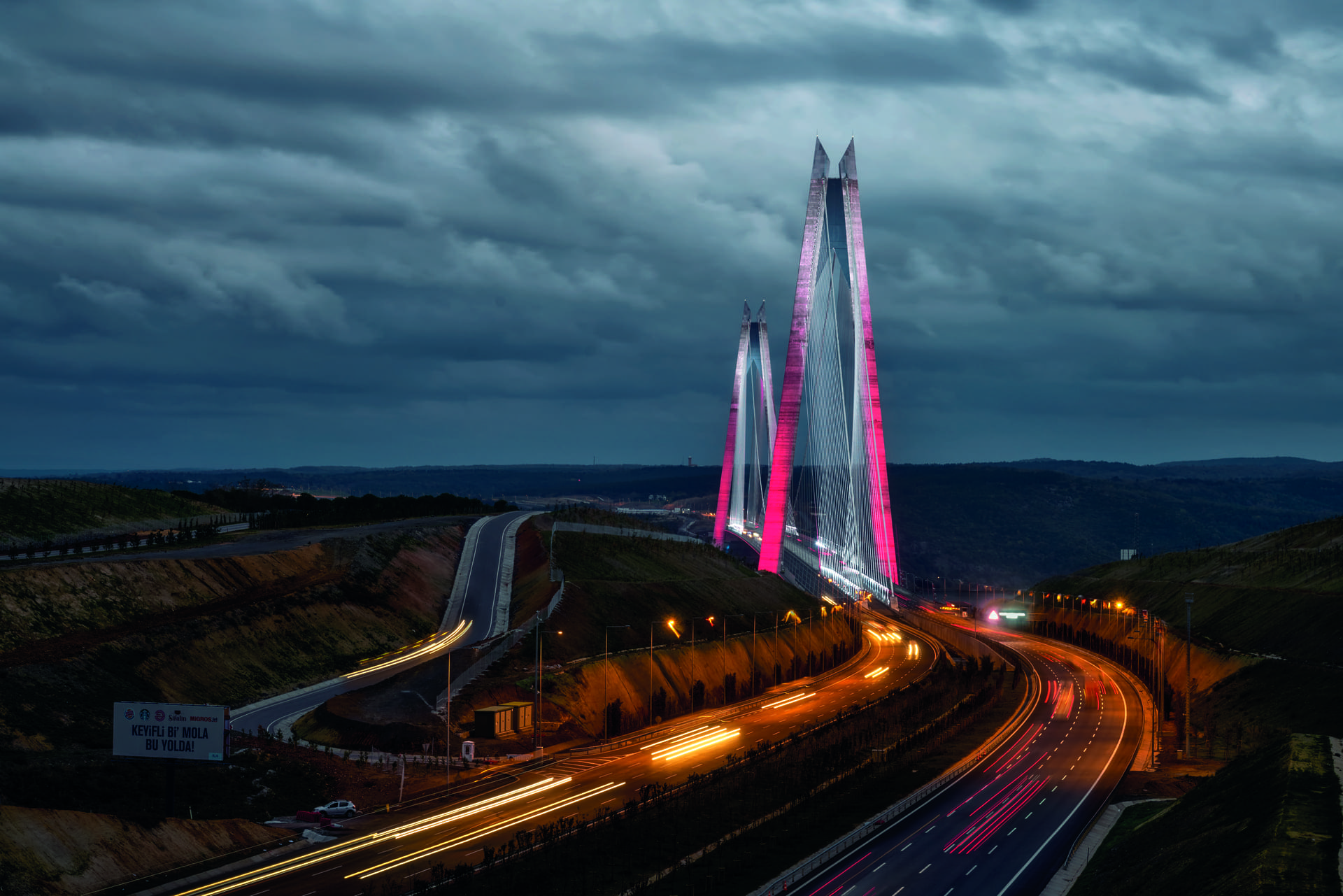 Third Bosphorus Bridge, Turkey
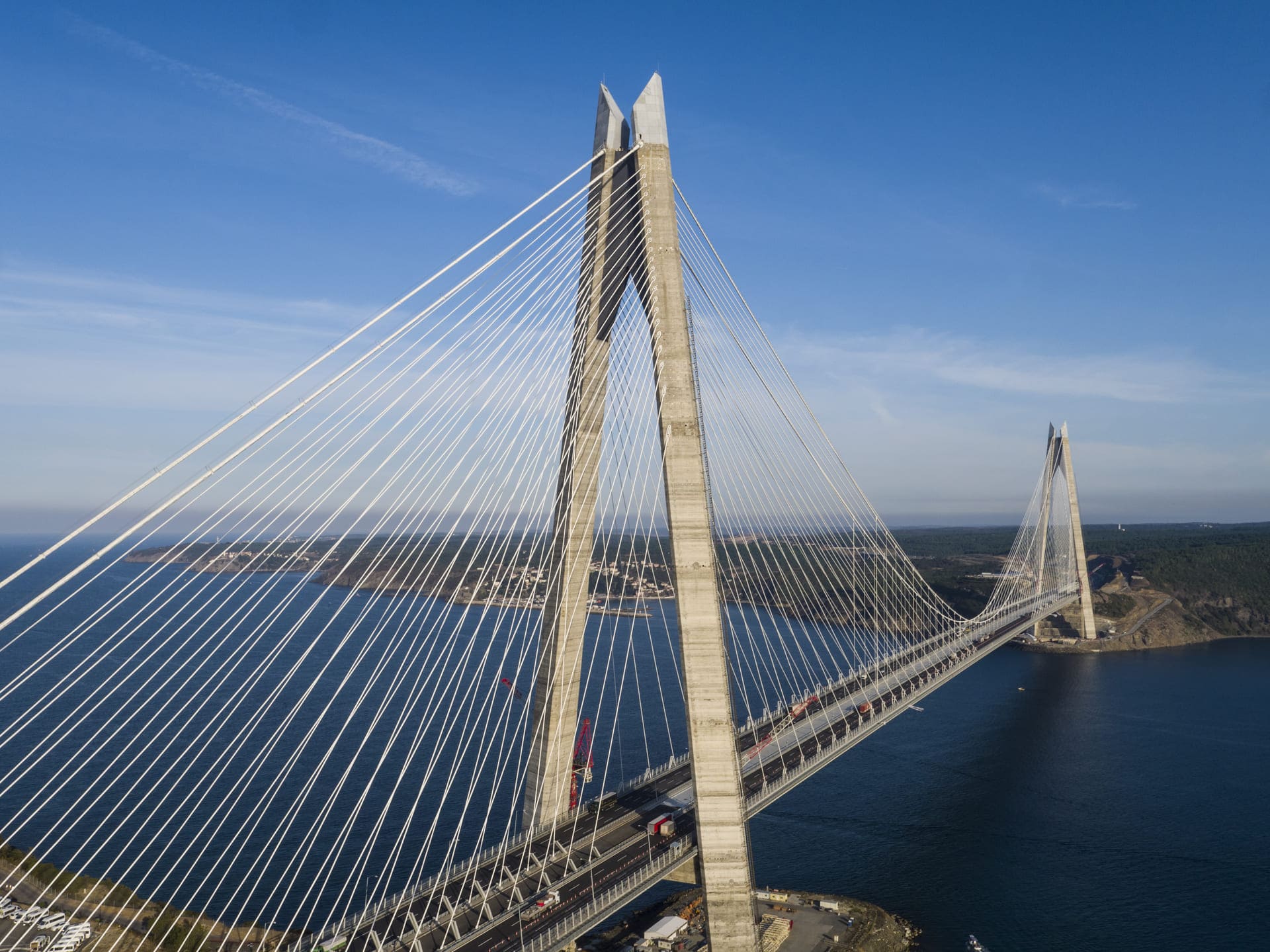 Third Bosphorus Bridge, Turkey
 Third Bosphorus Bridge, Turkey
 Third Bosphorus Bridge, Turkey
 Third Bosphorus Bridge, Turkey
 Third Bosphorus Bridge, Turkey
 Third Bosphorus Bridge, Turkey
 Third Bosphorus Bridge, Turkey
 Construction phases of the Third Bosphorus Bridge, Turkey
 Construction phases of the Third Bosphorus Bridge, Turkey
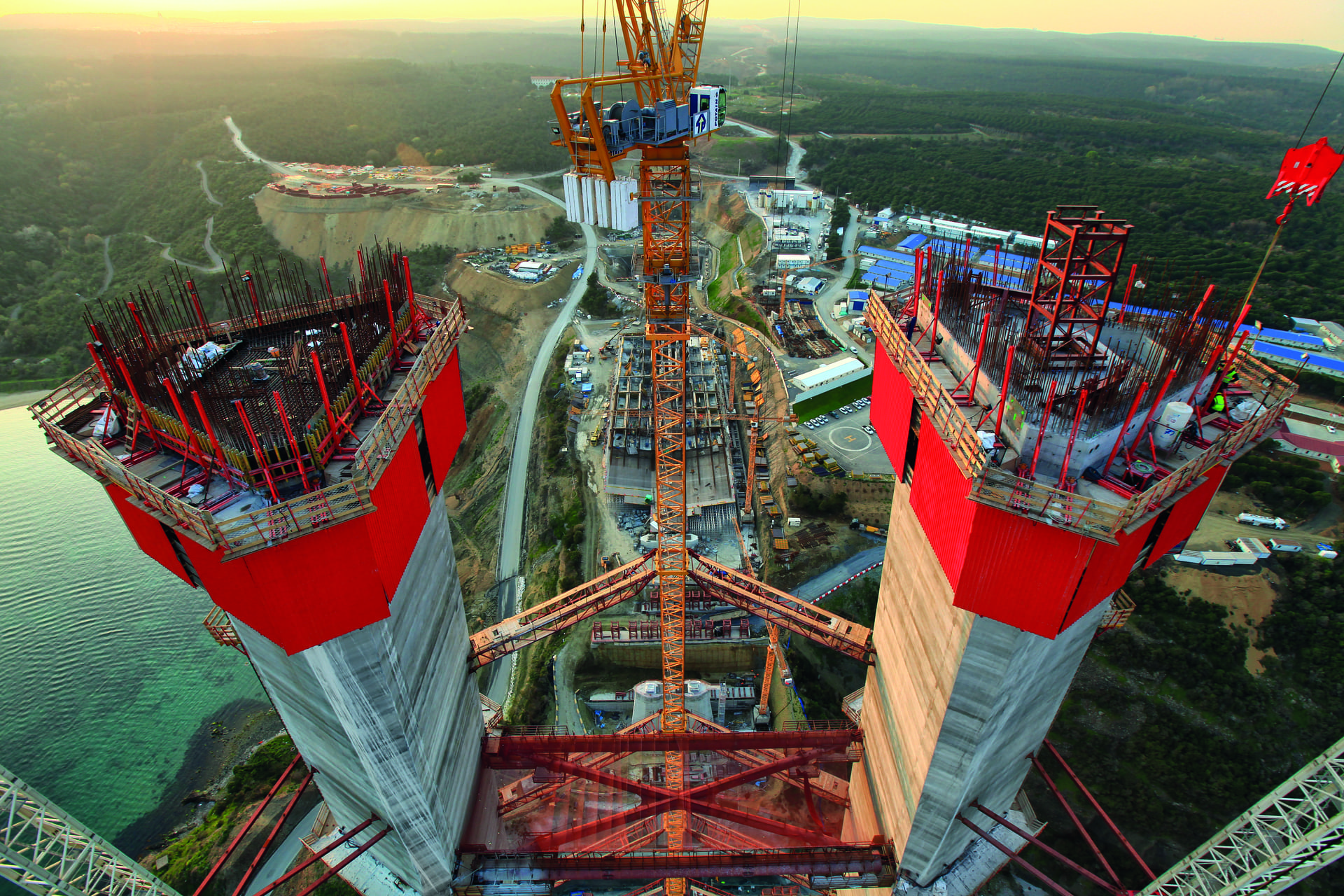 Construction phases of the Third Bosphorus Bridge, Turkey
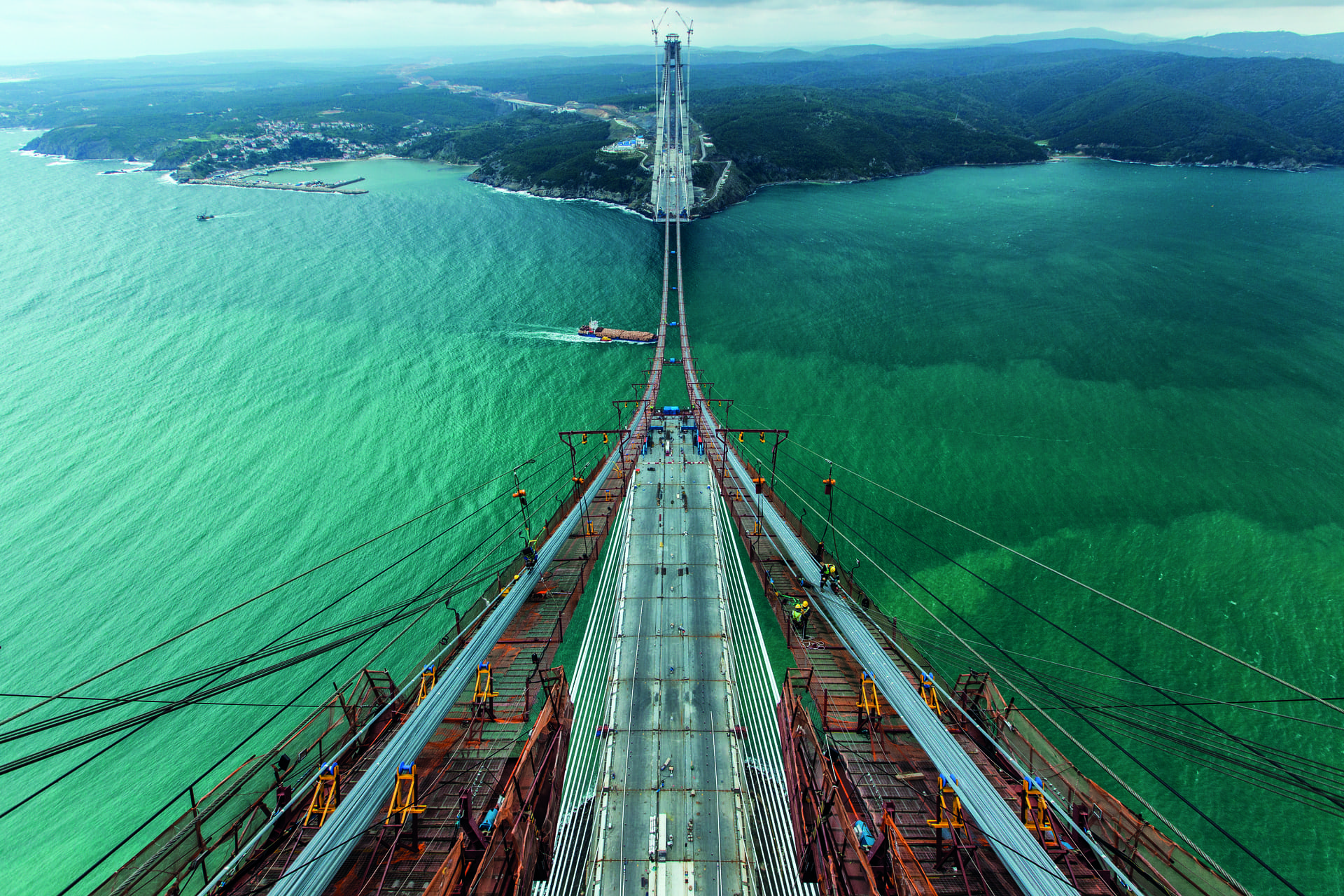 Construction phases of the Third Bosphorus Bridge, Turkey
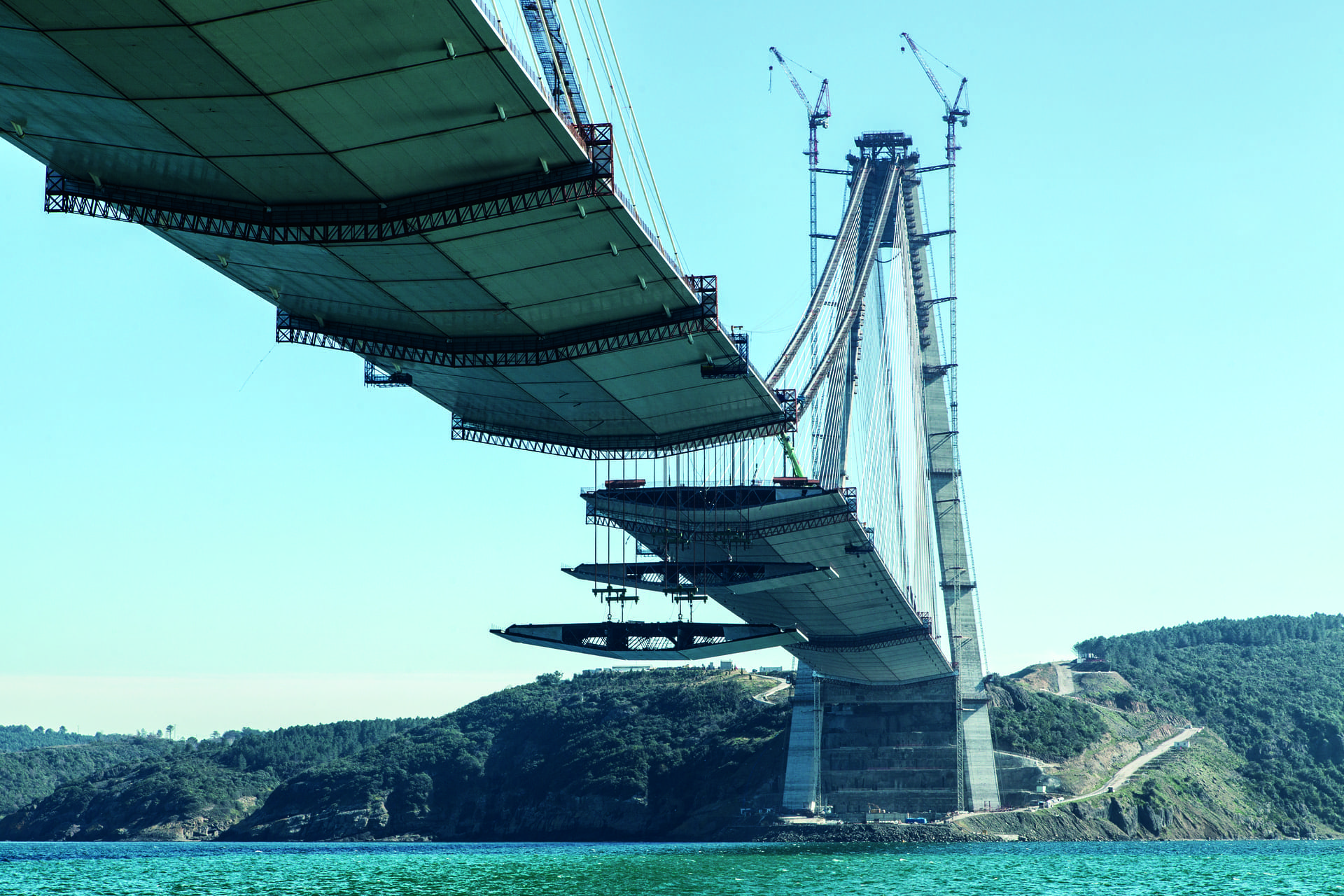 Construction phases of the Third Bosphorus Bridge, Turkey
- Turkey is set to embark on a railway project that would have trains run across the Yavuz Sultan Selim Bridge, or the Third Bridge over the Bosphorus Strait
- The project is called the Istanbul North Rail Crossing, or INRAIL, which would connect the city’s two biggest airports by bypassing the metropolitan area
- At 127 kilometres, INRAIL would connect Europe and China, using the rail bridge as the first overland rail link across the Bosphorus
- INRAIL would improve Turkey as a regional transit hub and logistics hub, especially for the Trans-Caspian International Transport Route (also known as Middle Corridor)
- Built by a consortium with a company that has since joined the Webuild Group, the Third Bosphorus Bridge is one of the widest and longest bridges in the world, with imposing towers 322 metres high


It might have taken a decade to prepare for it, but Turkey will finally be using to its full potential the Yavuz Sultan Selim Bridge, or the Third Bosphorus Bridge, one of the longest bridges in the world, as well as one of the widest.
When it was inaugurated in 2016, this hybrid of a cable-stayed bridge and a suspension bridge opened to cars and trucks — but not to the railway. It left unused a corridor running down the middle of the deck that had been specifically designed for a double-track rail line.
The bridge over the Bosphorus Strait was, in fact, the first in the world designed to carry cars, trucks, and trains simultaneously—a major innovation introduced by the international consortium that built it, which included a company that is now part of the Webuild Group, Italy’s largest civil engineering group.
INRAIL: The Northern Istanbul Railway Financed by the World Bank
Ten years later, however, Turkey appears set to prepare the bridge for the installation of a set of rails, turning the Yavuz Sultan Selim Bridge into a crucial section of a new major project: the Istanbul North Rail Crossing (INRAIL).
In March, Turkey came a step closer to launching INRAIL when the World Bank announced it would contribute $2 billion (€1.75 billion) to the project’s financing.
At an estimated total cost of more than $8 billion (€7 billion), INRAIL is a 127-kilometre high-capacity railway that will bring Europe and Asia closer together. It will run between the Istanbul Airport on the European side and the Sabiha Gökçen Airport on the Asian side, bypassing the Istanbul metropolitan area altogether. It will also connect to the country’s high-speed railway network.
Middle Corridor: Turkey as a Strategic Freight Transport Hub Between Europe and China
By connecting the two continents with the first overland railway across the Third Bosphorus Bridge, INRAIL will bolster Turkey’s role as a regional transit and logistics hub, especially when it comes to the Trans-Caspian International Transport Route.
Also known as the Middle Corridor, it is being developed to increase trade between Europe and Asia. It runs from Southeast Asia and China, through Kazakhstan, the Caspian Sea, Azerbaijan and Georgia before arriving in continental Europe.
Fewer Emissions and Greater Sustainability in Urban Mobility
In addition to improving trade flows, INRAIL will be a benefit to the environment, helping reduce air pollution, according to a translation of the website of Turkey’s Ministry of Transport and Infrastructure. “The project …aims to improve urban mobility, reduce road-based emissions… and support (Turkey’s) long-term economic development and climate goals.”
In its statement announcing financing for the project in March, the World Bank was just as emphatic about the improvements INRAIL would bring to Istanbul. “The crossing would …generate significant benefits to urban mobility and livability,” it said. “By helping take heavy truck traffic off the roads that traverse the metropolitan area and incentivizing public transit adoption, (it will reduce) congestion and associated emissions of greenhouse gases and local pollutants from road vehicles, reducing wear-and-tear of local roads and motorways, and improving road safety.”
Railway Under the Bosphorus Strait: The Marmaray Bottleneck
At the moment, the only rail connection between Europe and Asia is the Marmaray tunnel that runs under the Bosphorus. Open since 2013, it has proven to be a major bottleneck, however.
As the World Bank explains in an August 2025 document about INRAIL, freight trains can only use it for a few hours a day because the tunnel was conceived primarily for commuter and inter-city rail services.
Another impediment is Marmaray’s location in Istanbul proper. Since freight terminals are situated in the surrounding area, they are unable to expand, further limiting the amount of freight that can pass through the tunnel.
“(It) is the textbook definition of a logistics infrastructure chokepoint,” says the World Bank.
The problem is such that transport companies avoid the tunnel altogether, preferring to transfer their freight from the railway to trucks on either side of the Bosphorus and have it cross one of the bridges over the strait. They then transfer the freight back to rail on the other side before sending it off to its final destination.
“This transshipment is highly inefficient, increases logistics costs, and makes (Turkey’s) railway corridors less competitive,” it says. “It also generates congestion and other negative externalities in Istanbul.”
Third Bosphorus Bridge: One of the Most Impressive Infrastructure Projects in the World
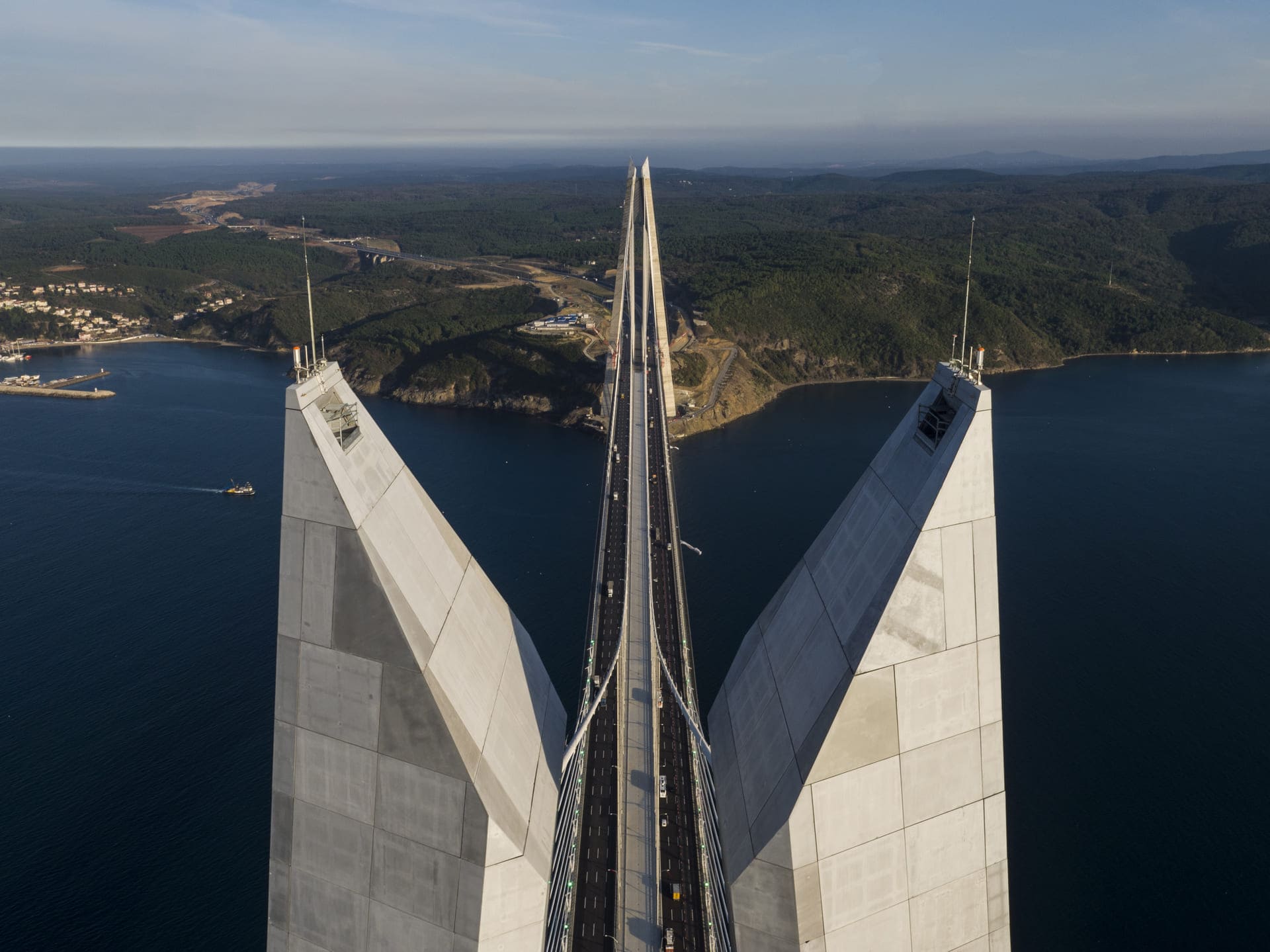
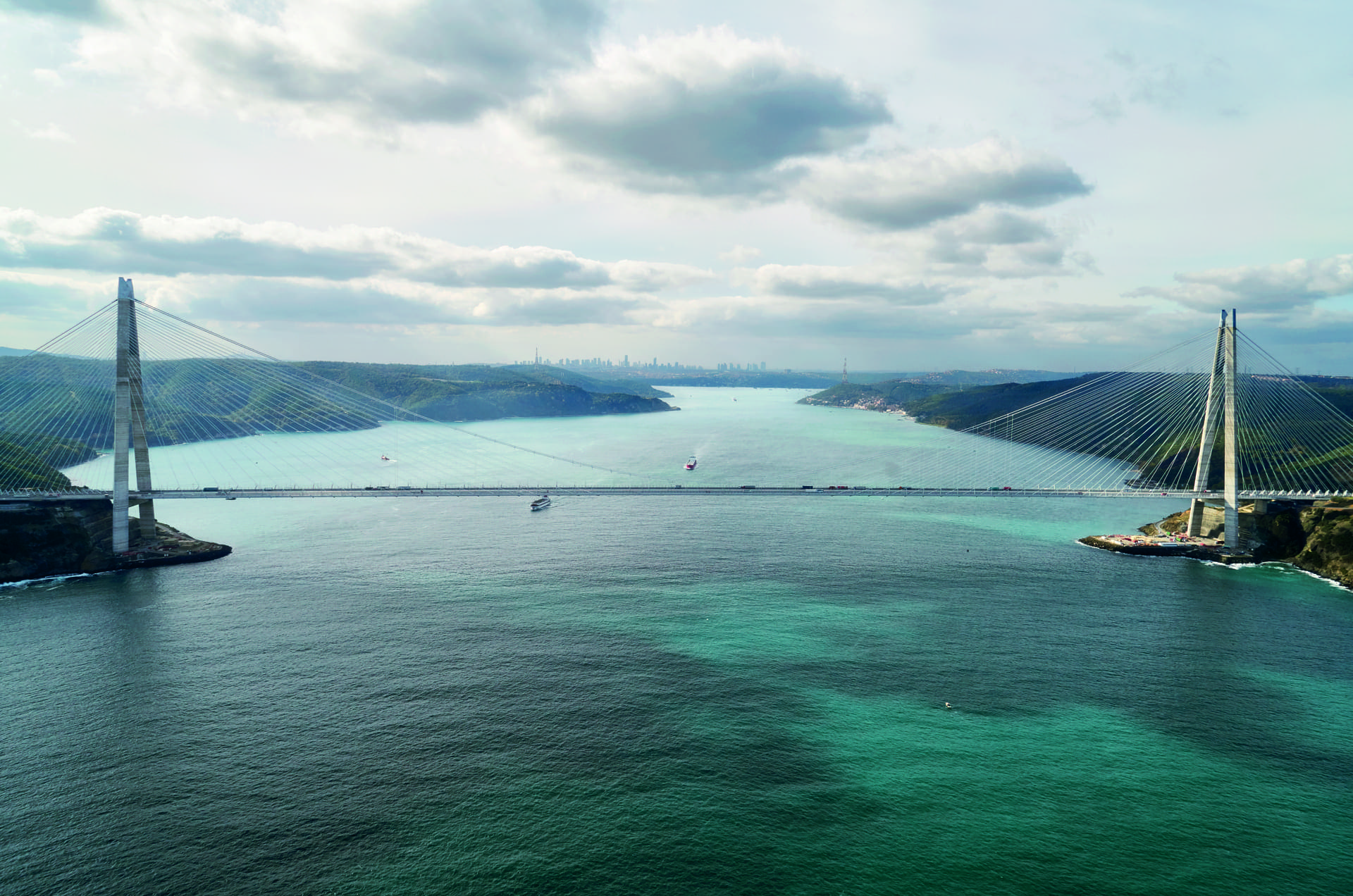
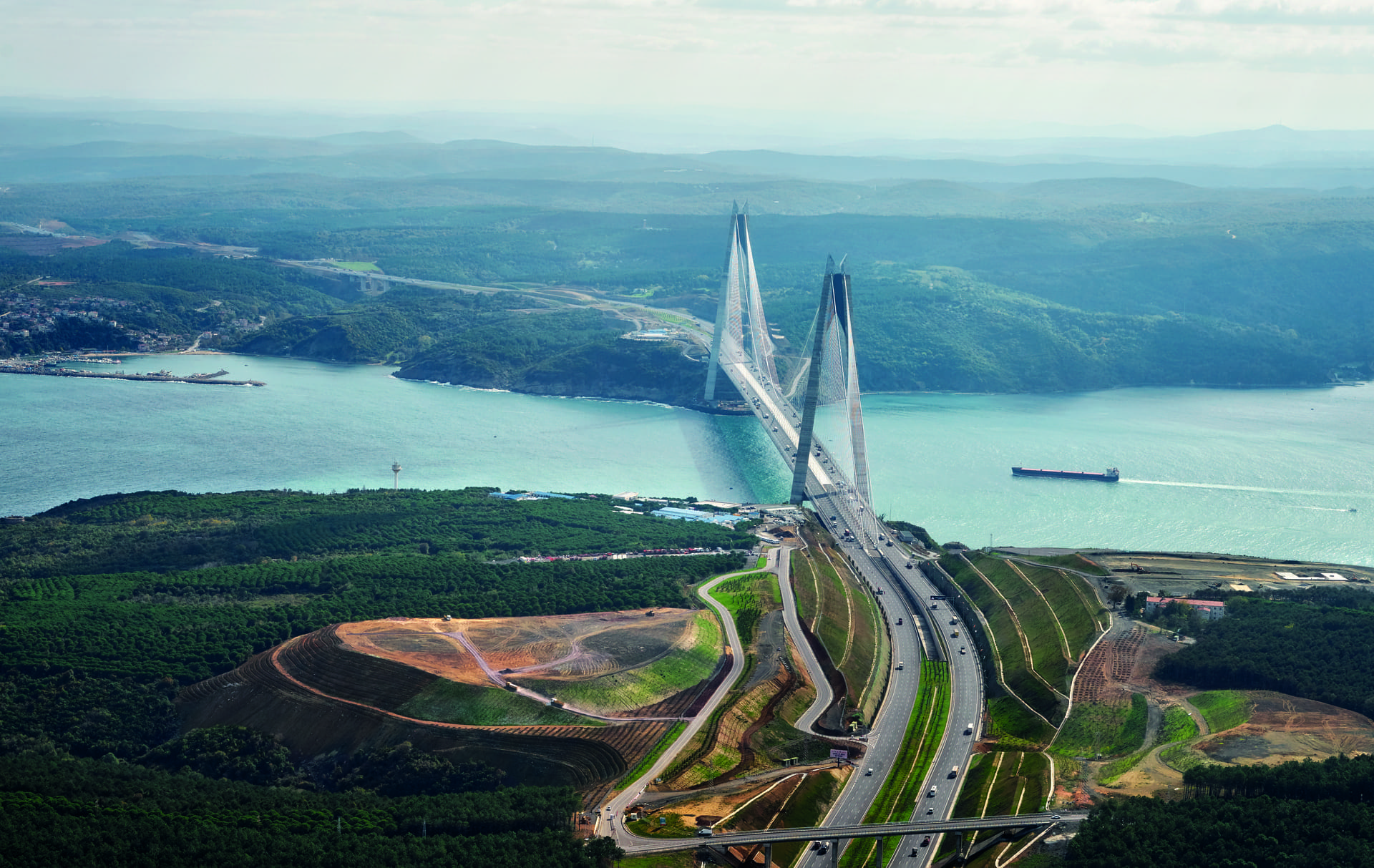
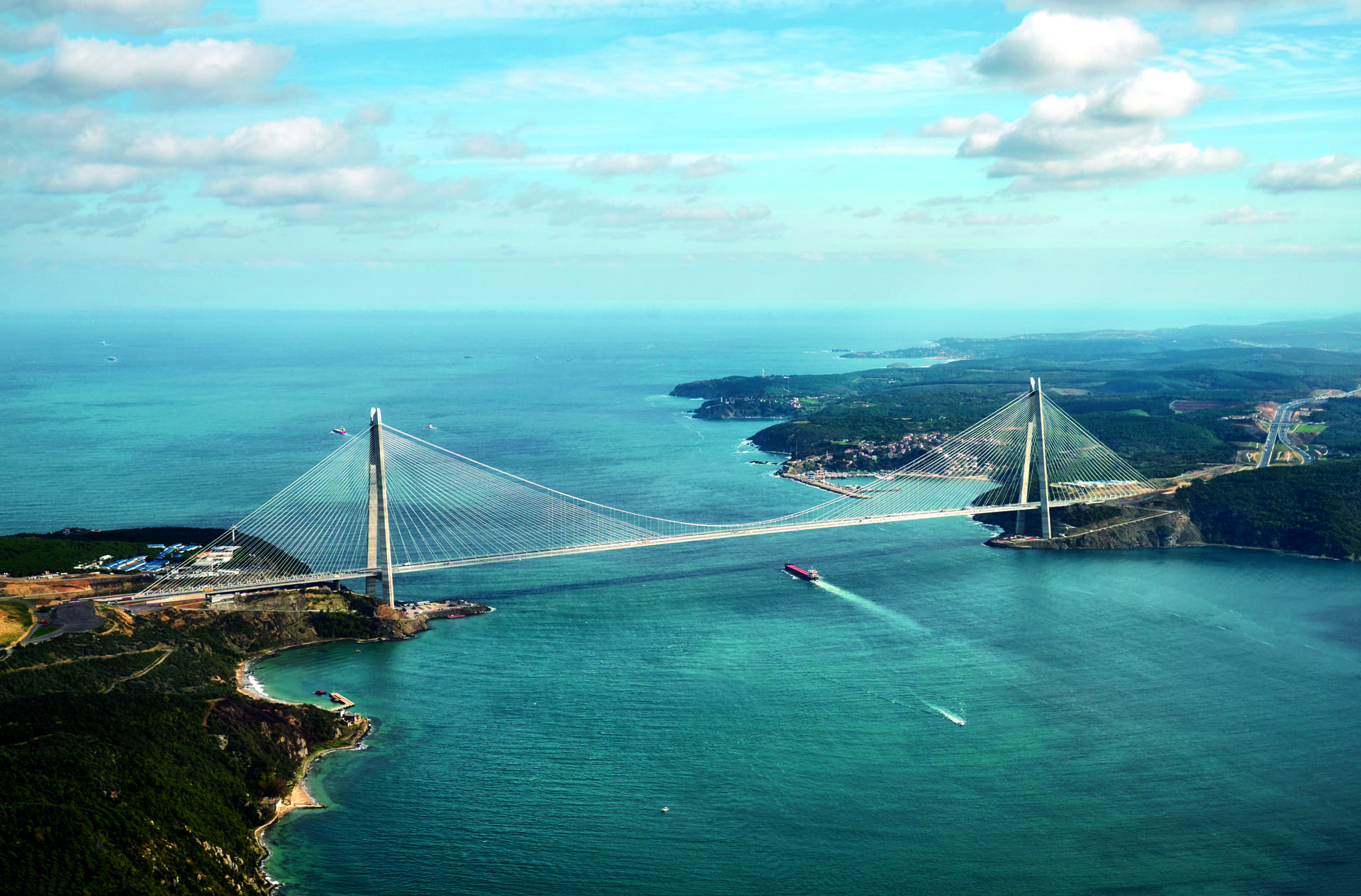
Located between Garipçe and Sarıyer on the European side and Poyrazköy and Beykoz on the Asian side, the Yavuz Sultan Selim Bridge is an imposing structure. Its towers on either side of the Bosphorus Strait are 322 metres high, among the tallest in the world.
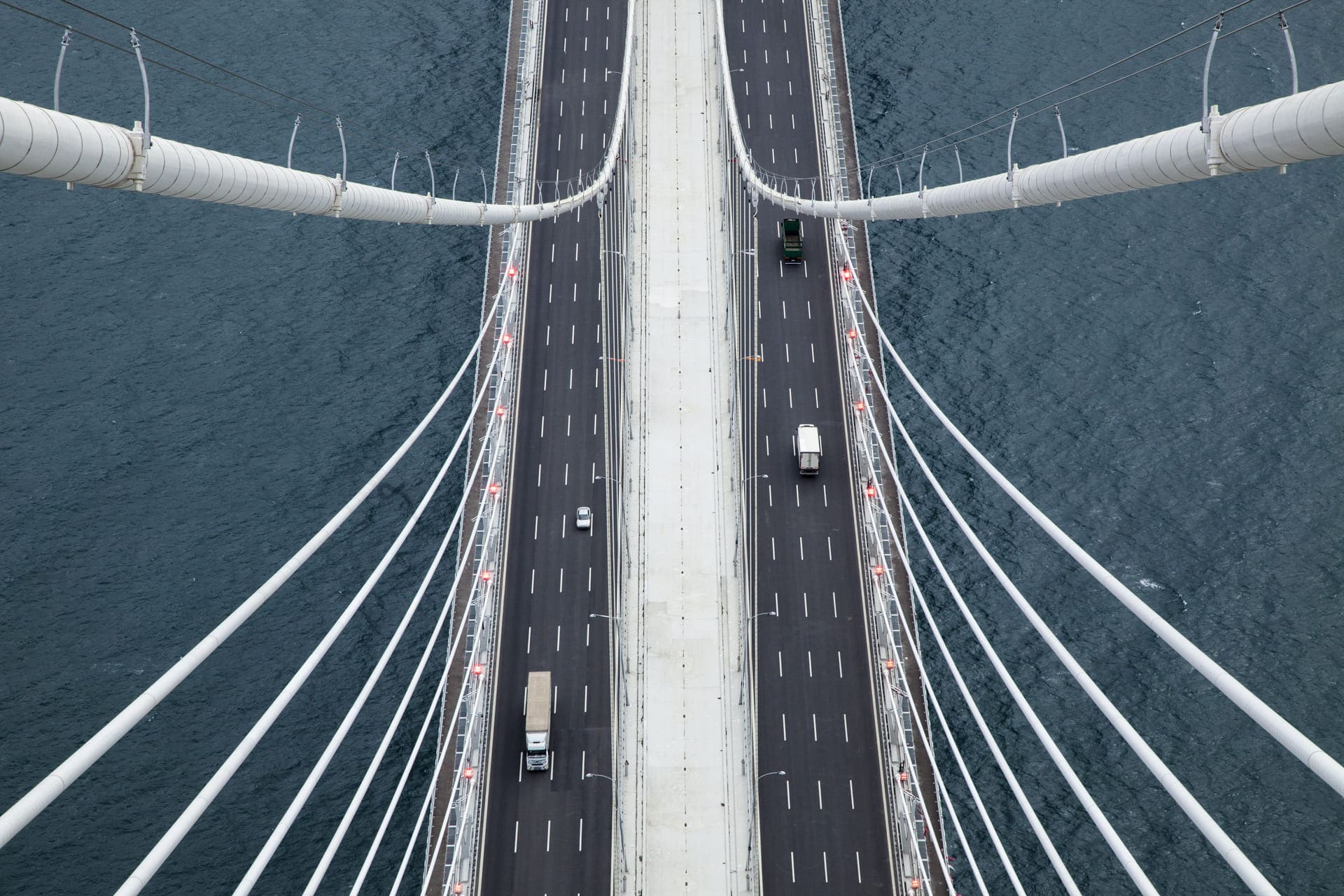
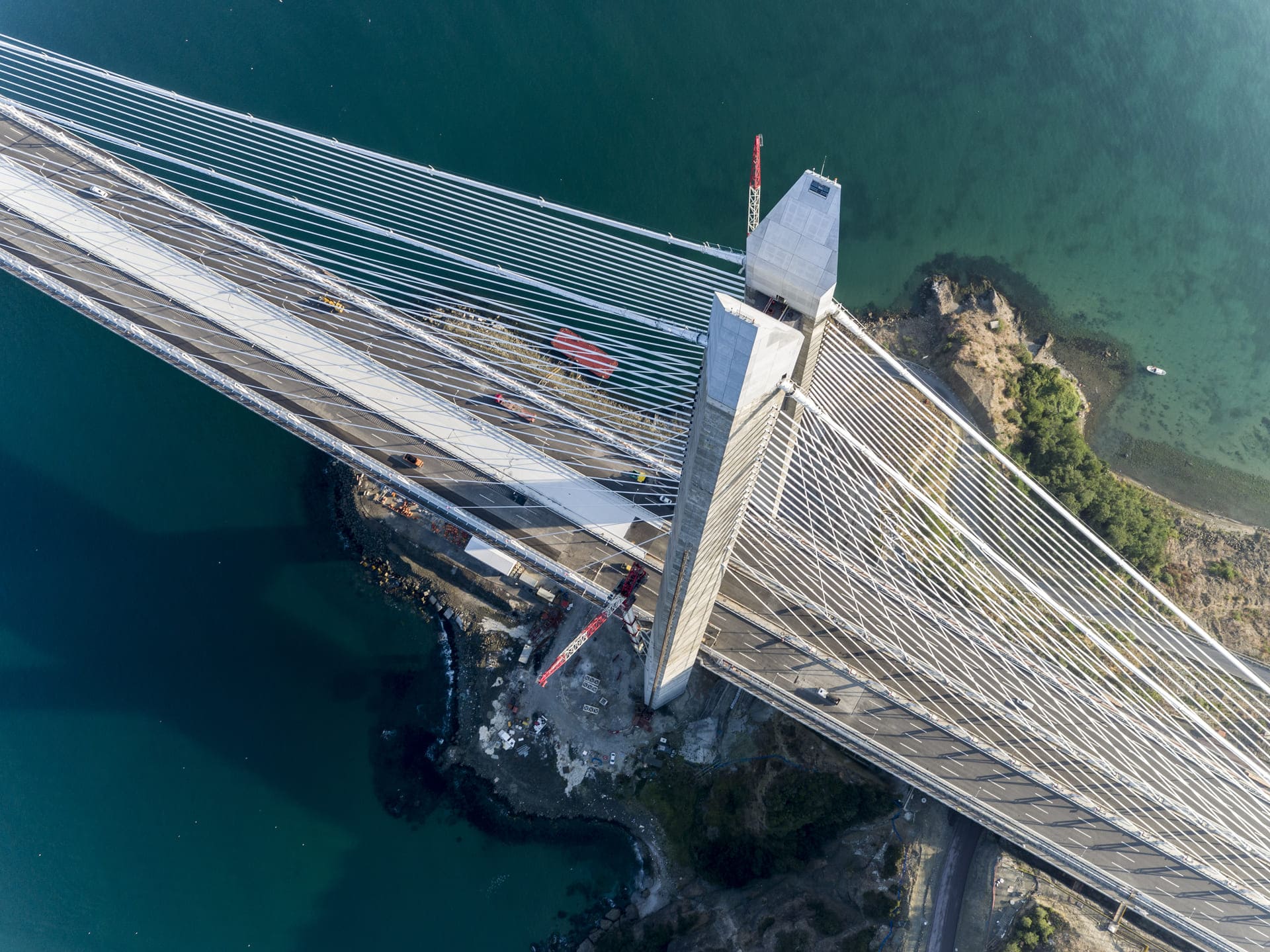
Its width of 59 metres allows for eight lanes of traffic – four for each direction – the corridor for the future rail line, and two pedestrian paths, primarily intended for the maintenance and monitoring of the structure. With a main span of 1,408 metres, its total length is 2,164 metres.