


- The new SBB facility will be dedicated to the maintenance of 114 rail vehicles and approximately 100 locomotives
- The complex will have a volume of 850,000 cubic meters and will be powered by renewable energy
- On the roof, 15,100 square meters of solar panels will be installed, with a total capacity of 3.6 MWp
- The job site currently employs around 250 people and uses drones, BIM, and digital tools to monitor construction progress
- At full capacity, the new hub will provide over 360 jobs and 80 apprentice positions


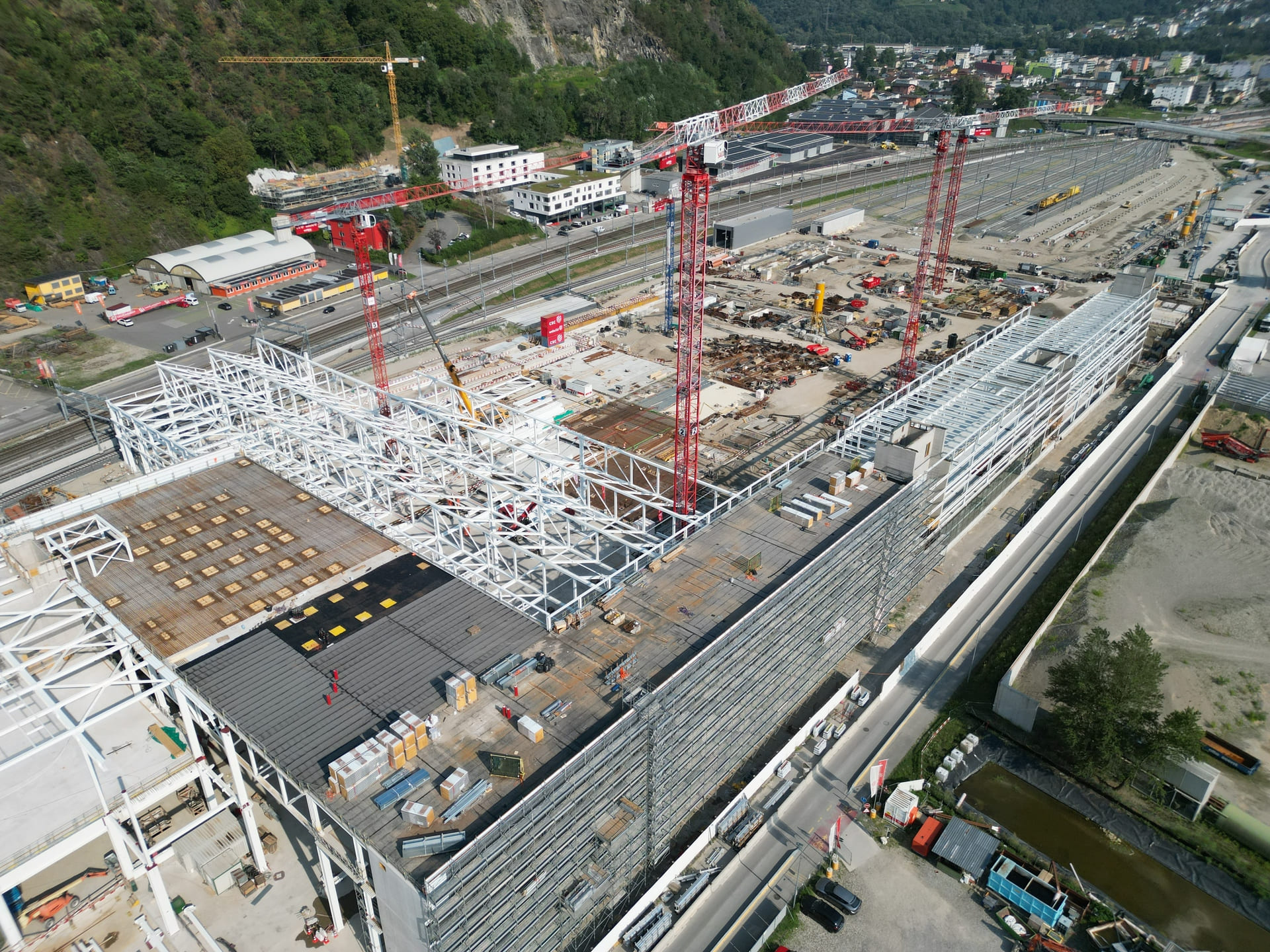
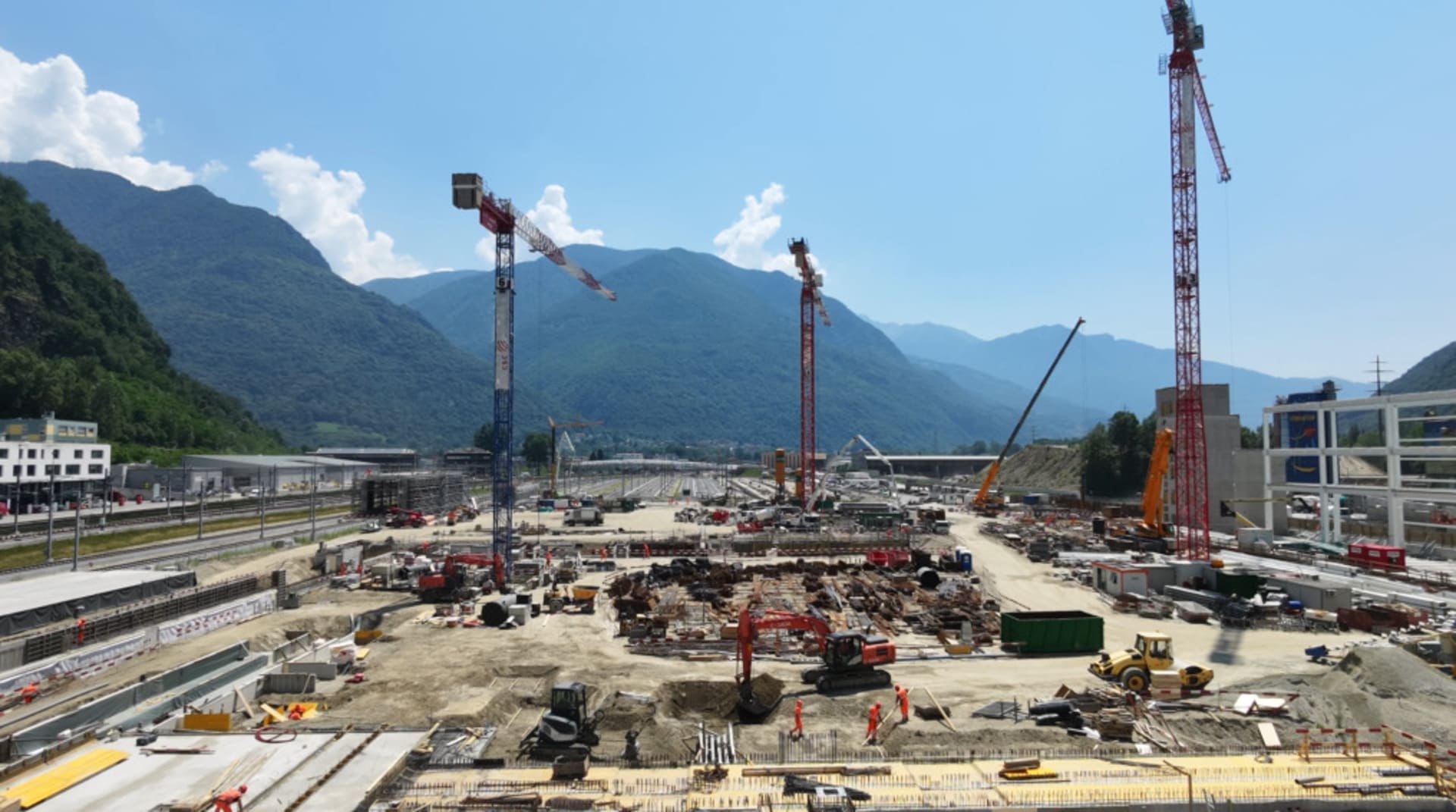
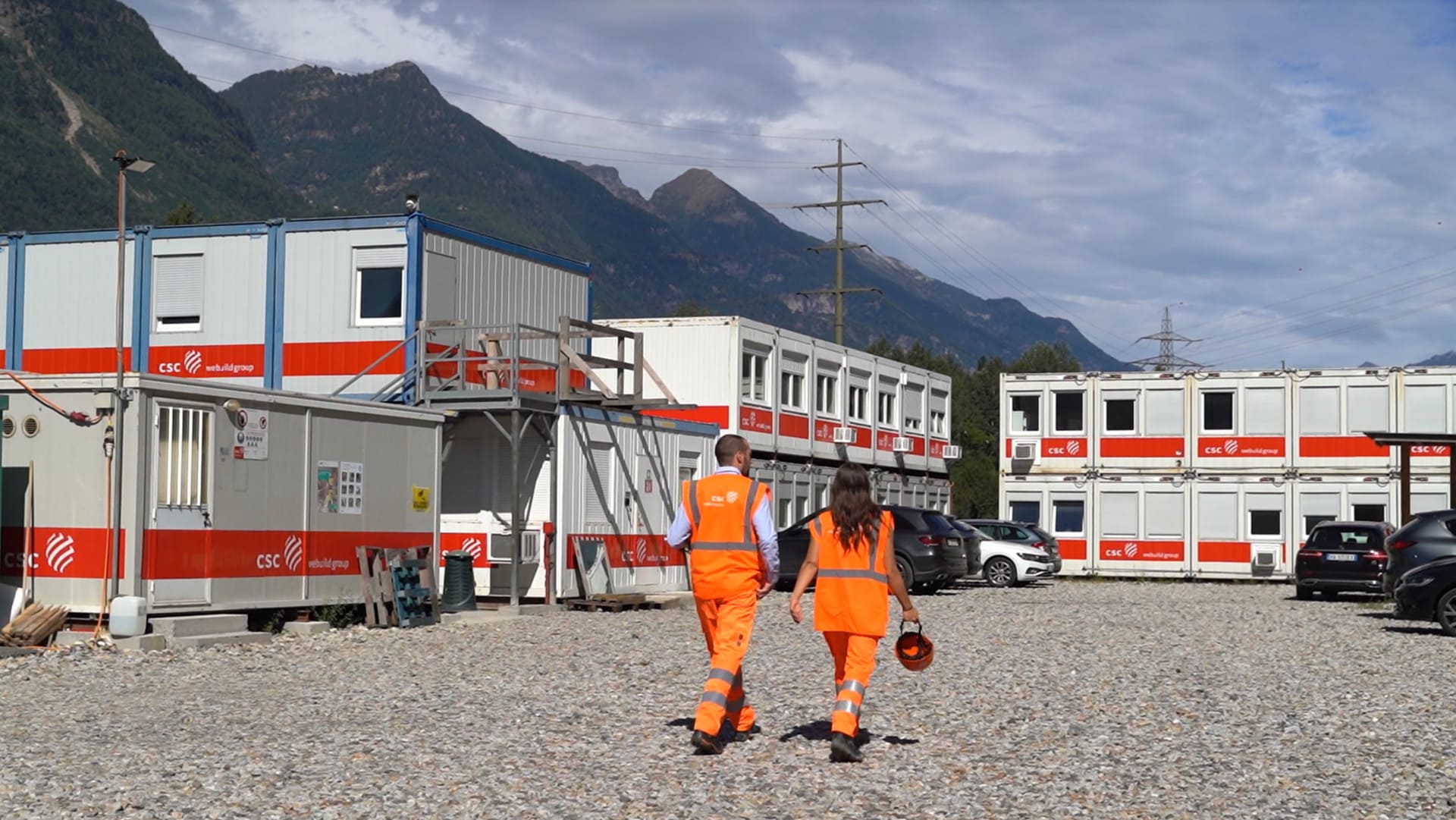
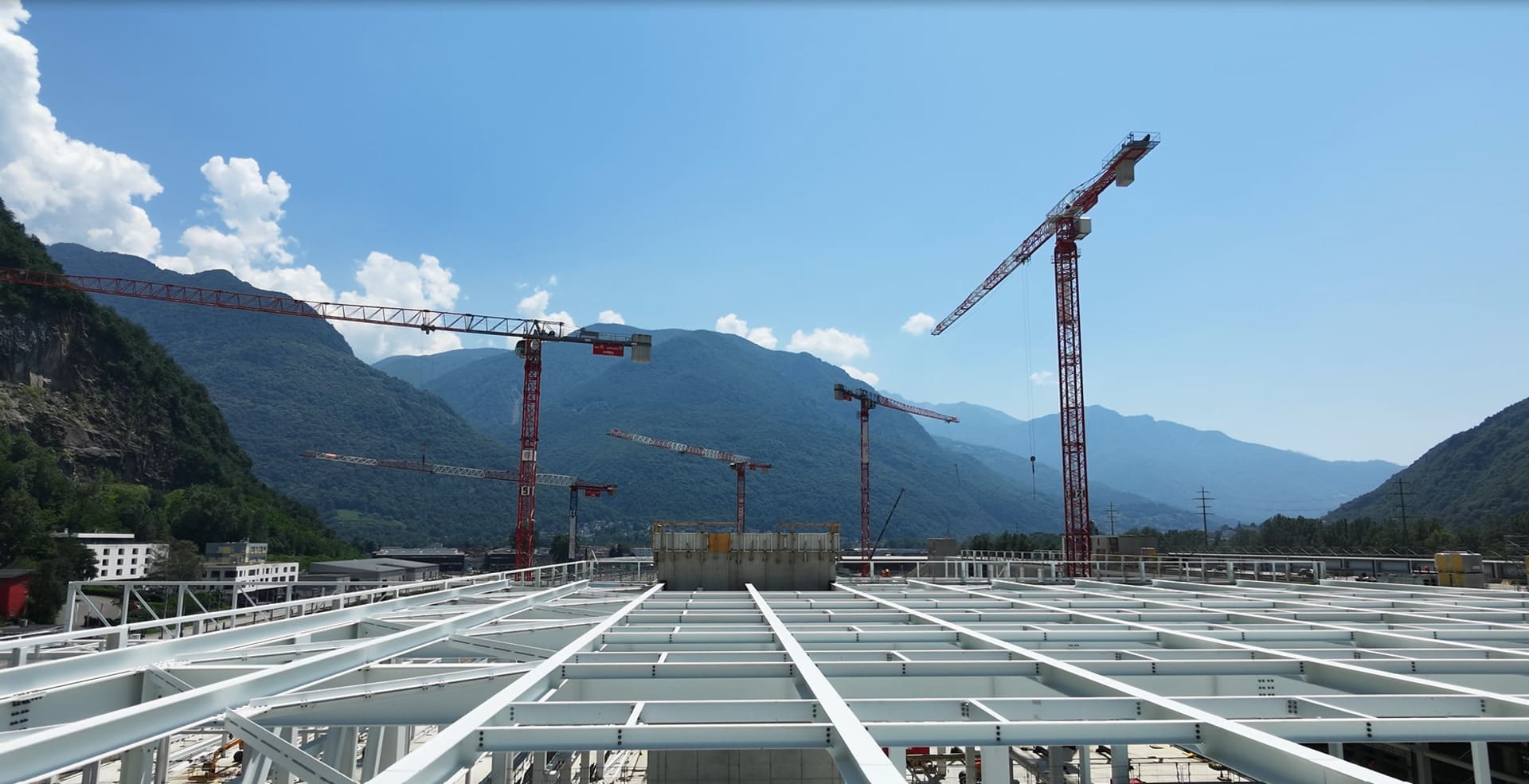
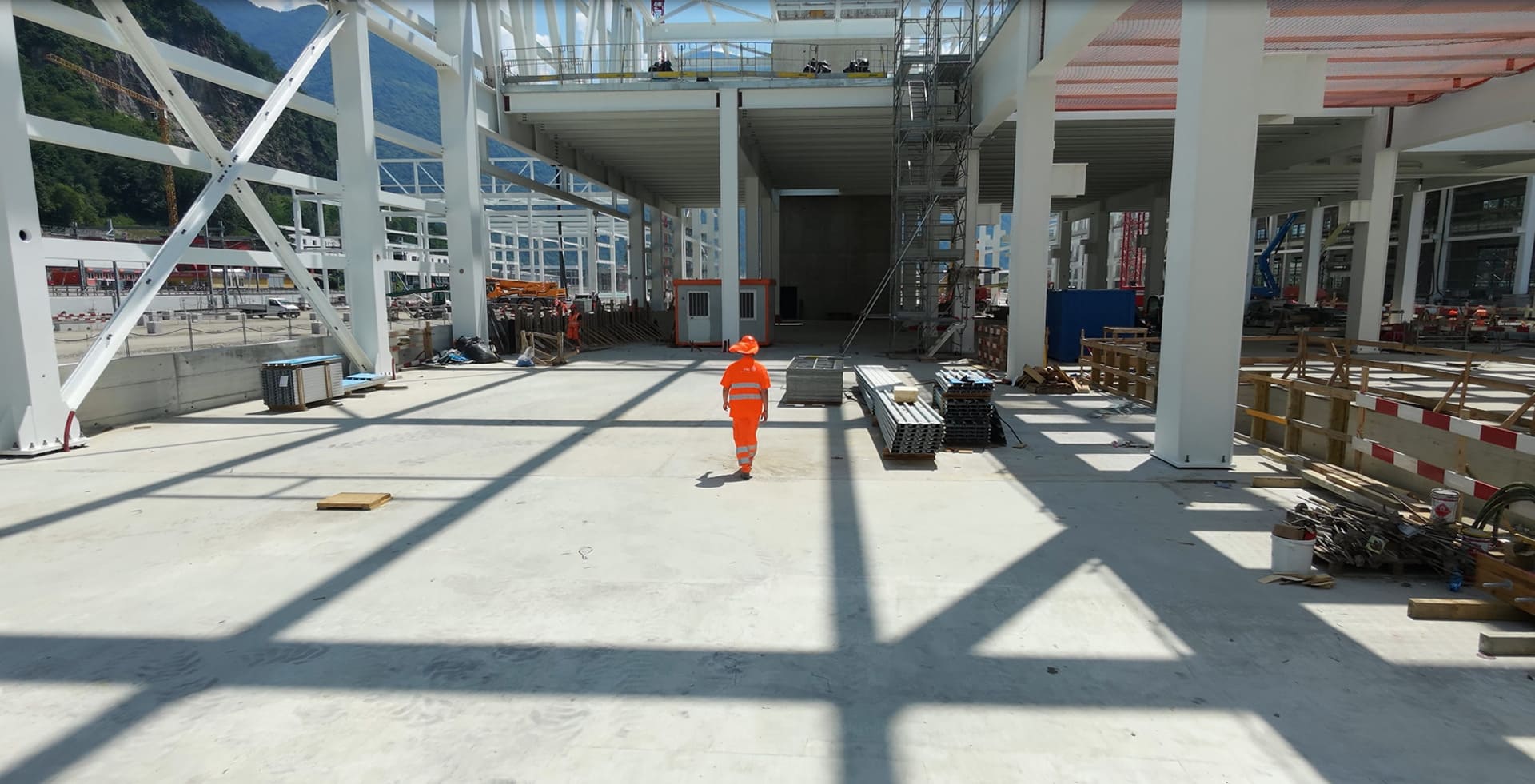
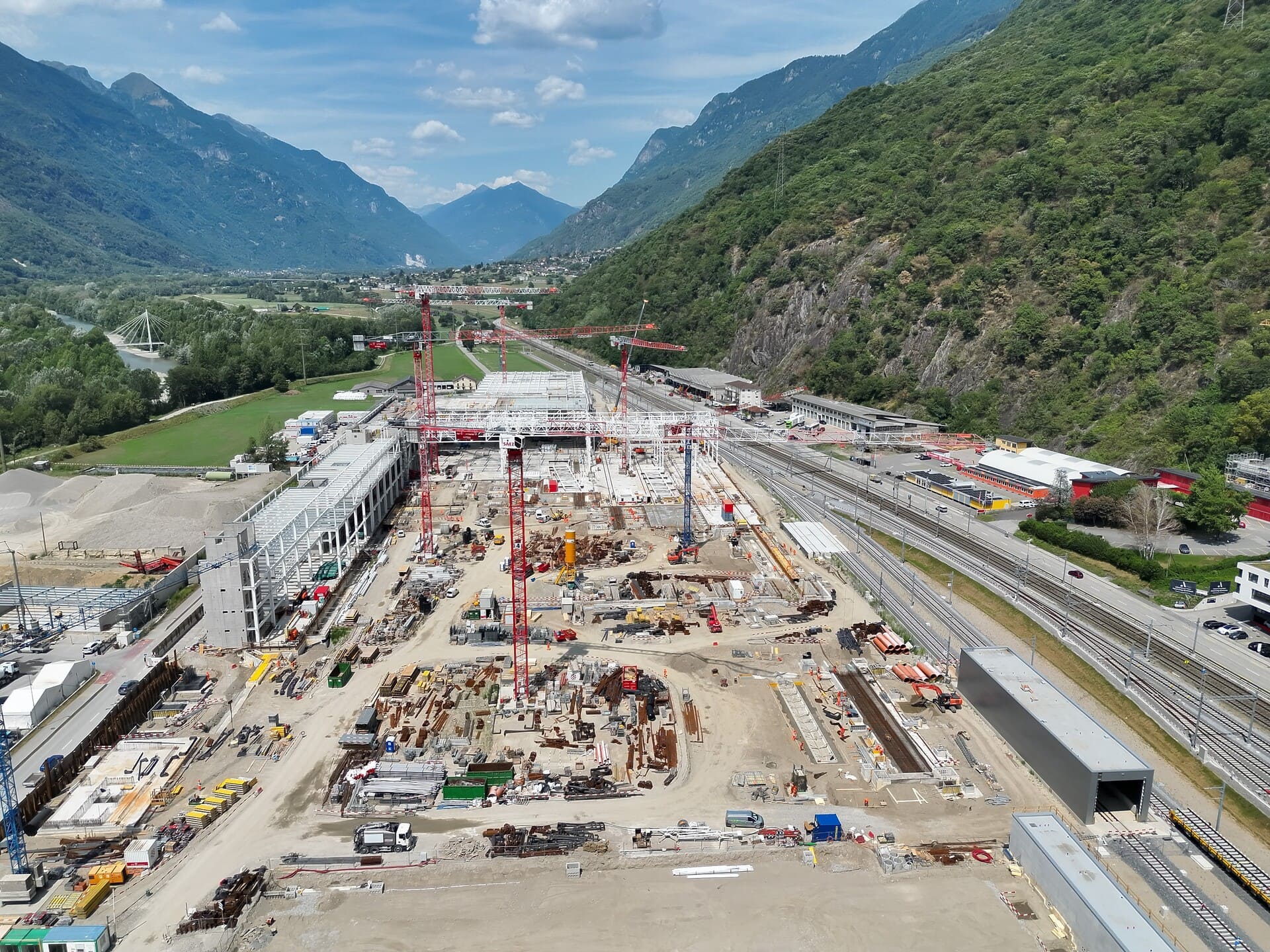
In Arbedo-Castione, a few kilometers north of Bellinzona, the future of the Swiss railway system is not yet running on tracks, but taking shape amidst cranes, lattice trusses, concrete structures, lattice girders and facades that are beginning to outline the profile of a massive industrial building. Every day, around 250 people work here on the construction of the Swiss Federal Railways’ New Railway Industrial Facility (NSIF), which is set to become one of the country’s most advanced hubs for electric trains and locomotive maintenance
The construction of the industrial section of the building began in 2025, with operational startup planned for the beginning of 2028, but to understand what is emerging in Arbedo-Castione, one must look beyond the label of a mere “facility.” Indeed, the NSIF will be a factory serving the railway—a place where trains arrive to be inspected, repaired, and quickly returned to service, while behind the scenes, data and renewable energy help organize the workflow. It will be a vital industrial infrastructure, as its position along one of Ticino’s major rail traffic corridors—and the Chiasso–Zurich–Basel lines—makes Castione a strategic node.
An 850,000-Cubic-Meter Factory, one-third the size of the Pyramid of Cheops
The dimensions convey the scale of the project, as the new complex will have an overall volume of approximately 850,000 cubic meters (one-third the size of the grand Pyramid of Cheops) and will be designed to handle the maintenance of a total of 114 vehicles, and about a hundred locomotives. The facility’s roofs will span 46,400 square meters, featuring 17,400 square meters of green roofs, 15,100 square meters of solar panels (an area as large as 150 tennis courts) with a peak power capacity of 3.6 MWp, and 3,000 square meters of green areas.
These numbers help explain why Castione is not simply the relocation of a workshop, but the construction of a true industrial rail infrastructure. The underlying principle is to concentrate and optimize maintenance operations for electric multiple units and locomotives—reducing turnaround times and increasing rolling stock availability. It is an organizational engine built around a simple goal: ensuring trains spend less time in the workshop and more time on the rail network.
At full capacity, the new hub will create a pool of technical expertise for the railway industry in Ticino.
Innovative Technologies Serving Mobility
One of the most fascinating aspect of the project, however, is almost invisible. While the physical structure rises, a digital twin of the construction site takes shape in the digital world through an integrated design process using BIM methodology. But it doesn’t stop at BIM’s third dimension—this project goes further. The entire design process and document-sharing workflow are fully digitized and managed through a shared platform accessible to all project stakeholders.
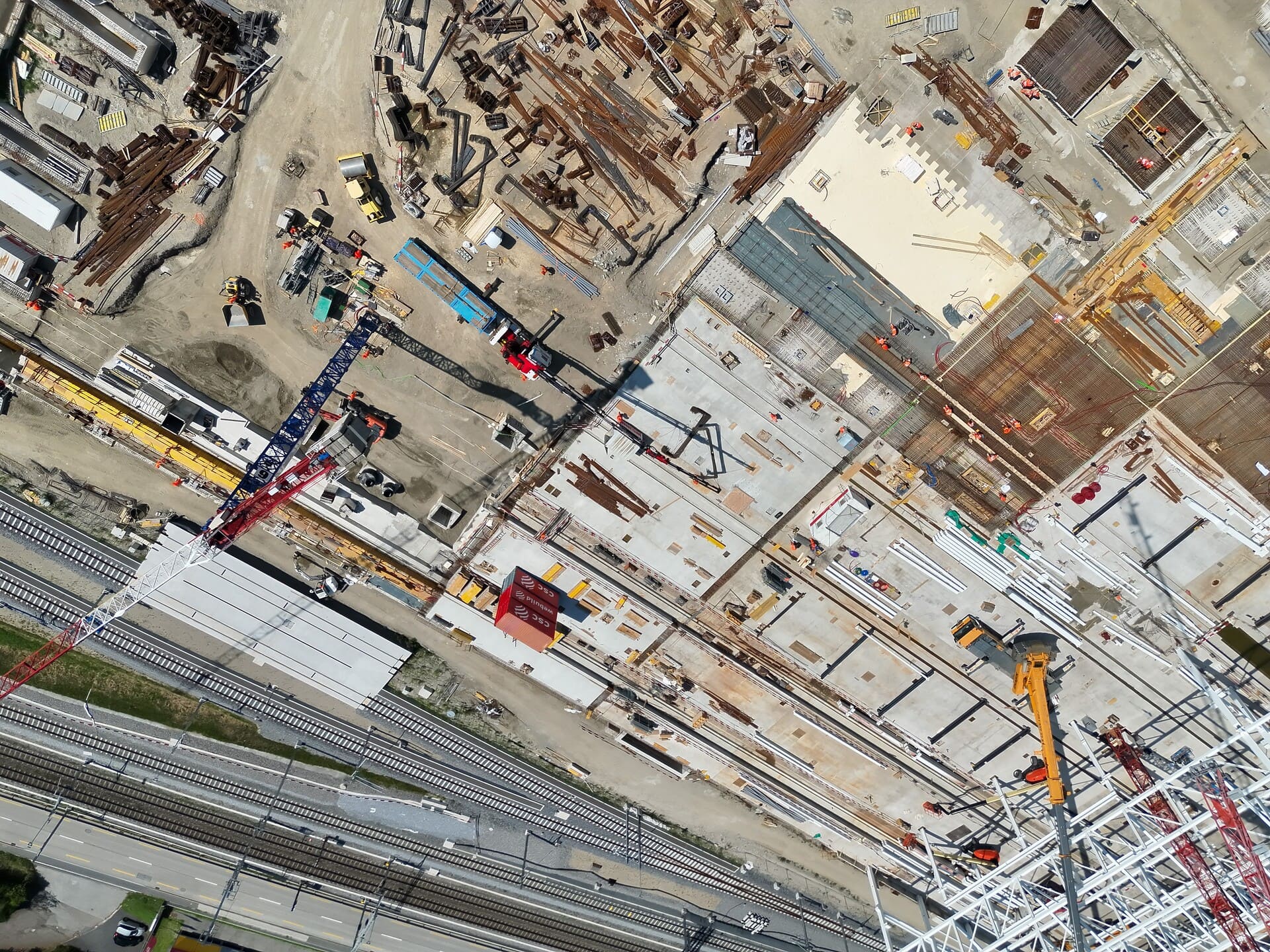
In Castione, a drone conducts scheduled flights over the construction site, capturing images and data on the project’s progress. These surveys are converted into three-dimensional models and cross-referenced with the BIM, making it possible to verify that what was designed aligns precisely with what is being built.
From there, digitalization extends even into daily operations. Since November 2025, CSC Costruzioni has spearheaded the digital transformation of the site site logbook—the tool that records day-to-day activity on site. Completed works, attendance, site events and the photographic documentation no longer sit in isolated documents; instead, they become structured data organized by subcontractor and operational zone. To date, digital entries have already surpassed 1,500.
This same approach governs quality control, site safety, and non-conformity management. Data collected on the ground flows into Business Intelligence tools, enabling management to monitor operational trends and pinpoint potential issues. All information gathered in the field thus transforms into a practical operational tool, essential for guiding decisions and optimizing the management of a complex project.
The Railway’s Green Roof
Sustainability and environmental protection lie at the very core of both the project and the facility’s future. The NSIF was designed to run entirely on renewable energy—integrating photovoltaics, green roofs, and energy-efficiency solutions—a choice fully aligned with the building’s purpose: constructing the infrastructure to keep trains running efficiently means optimizing one of the key gears driving rail mobility, which enables SBB to transport over 1.39 million passengers and 170,000 tons of freight every single day. Heating for the entire building will rely fully on wood chips via a wood chip heating plant. Castione thus becomes the infrastructure behind the infrastructure—not a station bustling with passengers, nor a new rail line drawn on a map, but the essential engine keeping that entire network running.
CSC Costruzioni: Sixty Years of Construction in Switzerland
Building the new industrial section of the building is the Consorzio Officine Ticinesi (OFT), led by CSC Costruzioni alongside Swiss firm Sottas, which specializes in steel structures and high-tech facades.
For CSC Costruzioni, the Castione project adds to a Swiss legacy spanning over sixty years. The Webuild Group company specializes in executing highly complex, multidisciplinary projects, having worked in recent years on a wide array of developments.
In Geneva, the company worked on the renovation of a historical building designed to host international delegations; in Gland, in the Canton of Vaud, it built the expansion of a Data Center for Stack Infrastructure; in Geneva, it completed three buildings on Rue des Maraîchers, a green building project that won the 2025 Best Romandie Realization award in the rental housing category; in Orbe for the Rive Droite project, involving the construction of two buildings with 80 senior apartments and a medical center, certified under SEED “Next-Generation Living” (a certification developed by the Swiss Association for Sustainable Neighborhoods based on the “One Planet Living (OPL)” approach by Bioregional and WWF International).