

Some stadiums transcend their sporting function to become powerful symbols of the places they inhabit. They are more than just arenas where matches are played; they are spaces where history, culture, community, and visions for the future converge.
From venues that witnessed the birth of major sporting movements to state-of-the-art facilities designed to host global events, every stadium reflects the character of the region that surrounds it.
Through their architecture, their ability to bring together tens of thousands of spectators, and their deep connection with their cities, these landmarks become shared points of reference, places where a sense of belonging takes shape and where sport is woven into the identity of entire communities.
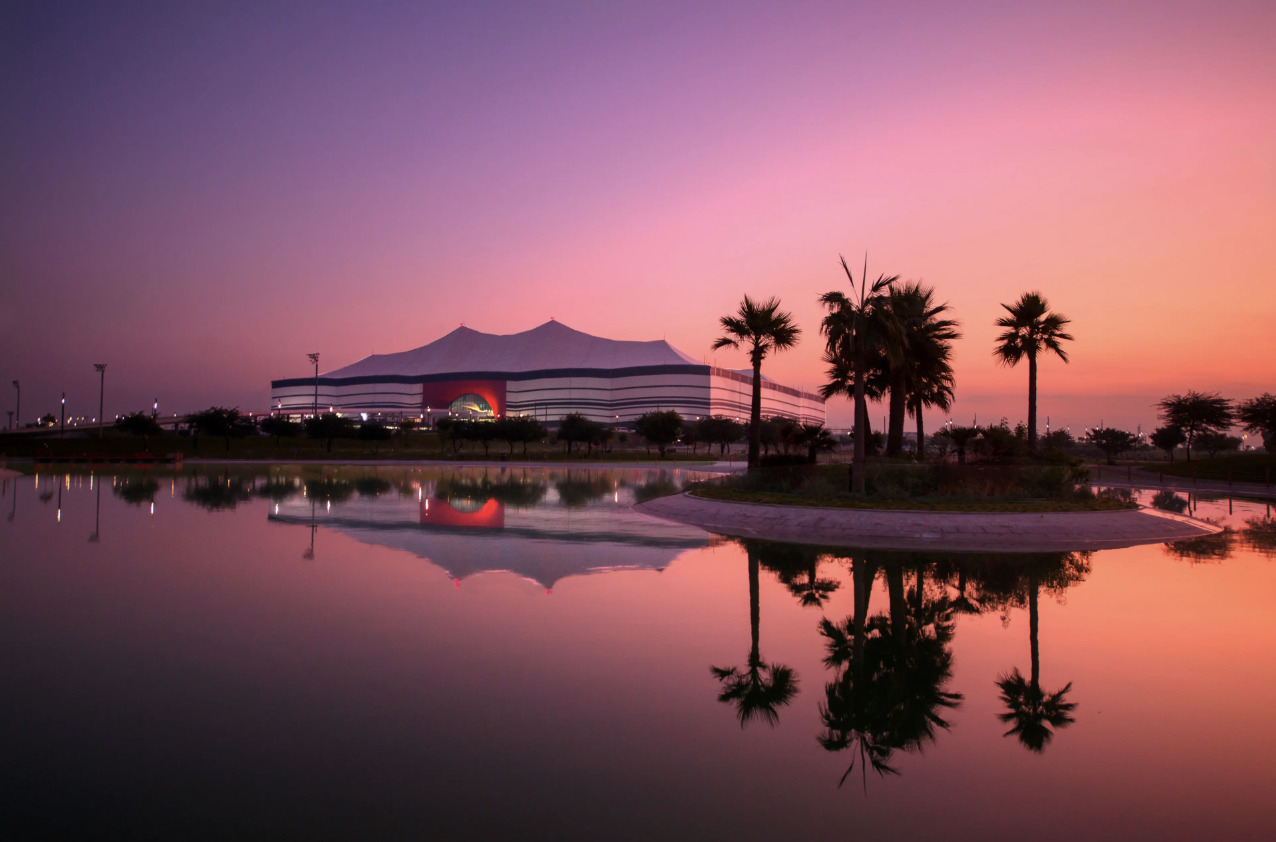
1 – Al-Bayt Stadium, Doha, Qatar
In the Qatari desert, one stadium tells a story that brings together sport, identity, and local culture. Built by the Webuild Group for the 2022 FIFA World Cup, Al-Bayt Stadium in Al Khor is one of the world’s most innovative sporting venues, with a capacity of 60,000 spectators.
Its design is inspired by the traditional Bayt Al Sha’ar tent, a symbol of Qatari hospitality, turning the architecture itself into an expression of the local landscape and culture.
Beyond its symbolic significance, the stadium of the World Cup 2022 incorporates advanced sustainable technologies, including an innovative cooling system and energy-efficient features designed to reduce consumption, demonstrating how a major sports venue can become a meeting point between cultural heritage, innovation, and the future.
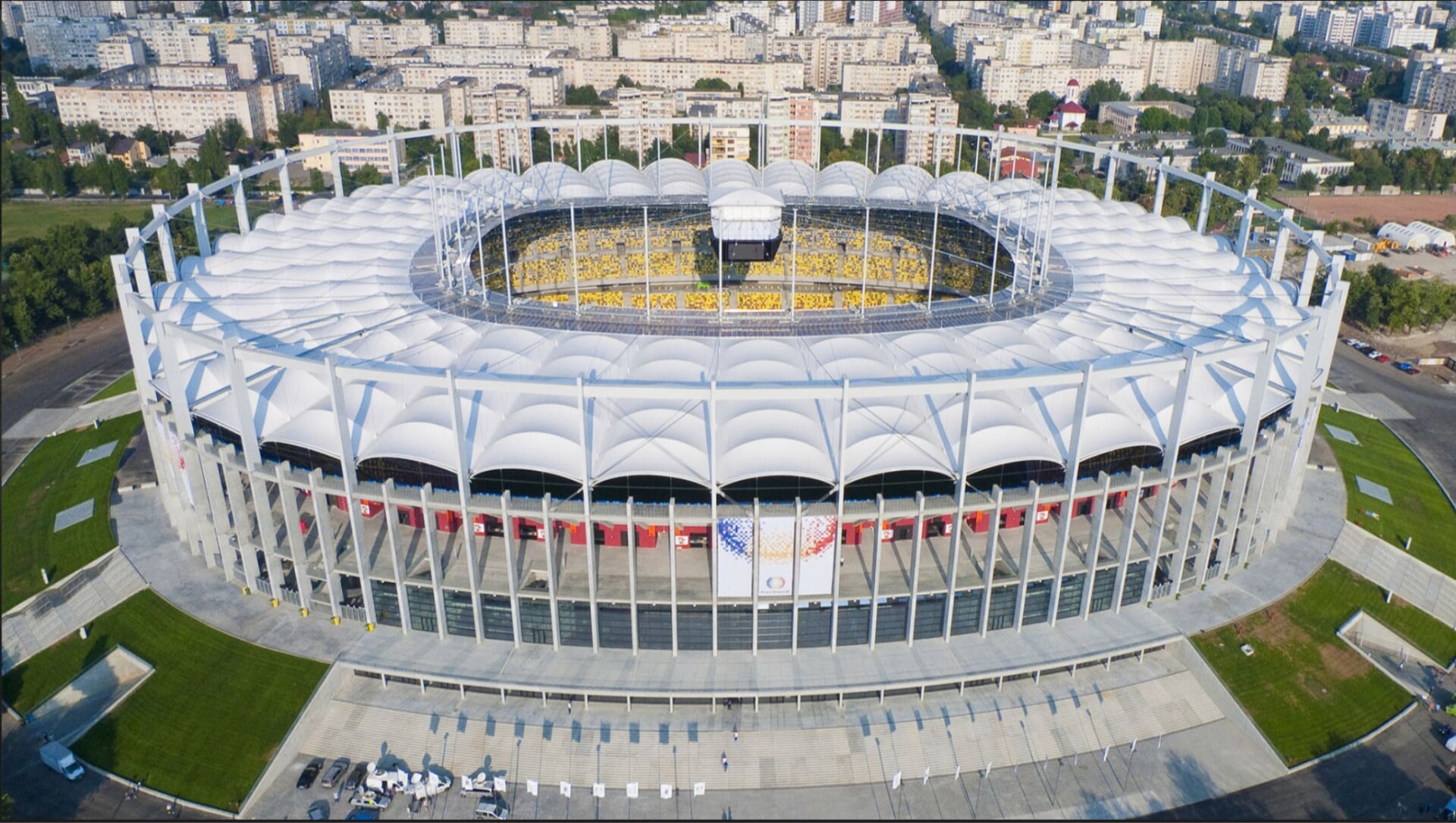
2 – Arena Națională “Lia Manoliu”, Bucharest, Romania
In the heart of Bucharest, the Lia Manoliu National Arena stands as a symbol of modern Romanian sport and of the city’s evolving urban identity.
Rebuilt between 2007 and 2011 on the site of the original 1953 stadium, the sports venue was delivered with the contribution of Astaldi, now part of the Webuild Group, and has a seating capacity of more than 55,000.
With its contemporary architecture, retractable roof, and design tailored to host both sporting and cultural events, the stadium has become an icon of the new Bucharest. It is not only the home of Romania’s national football team but also a major venue for concerts and international events.
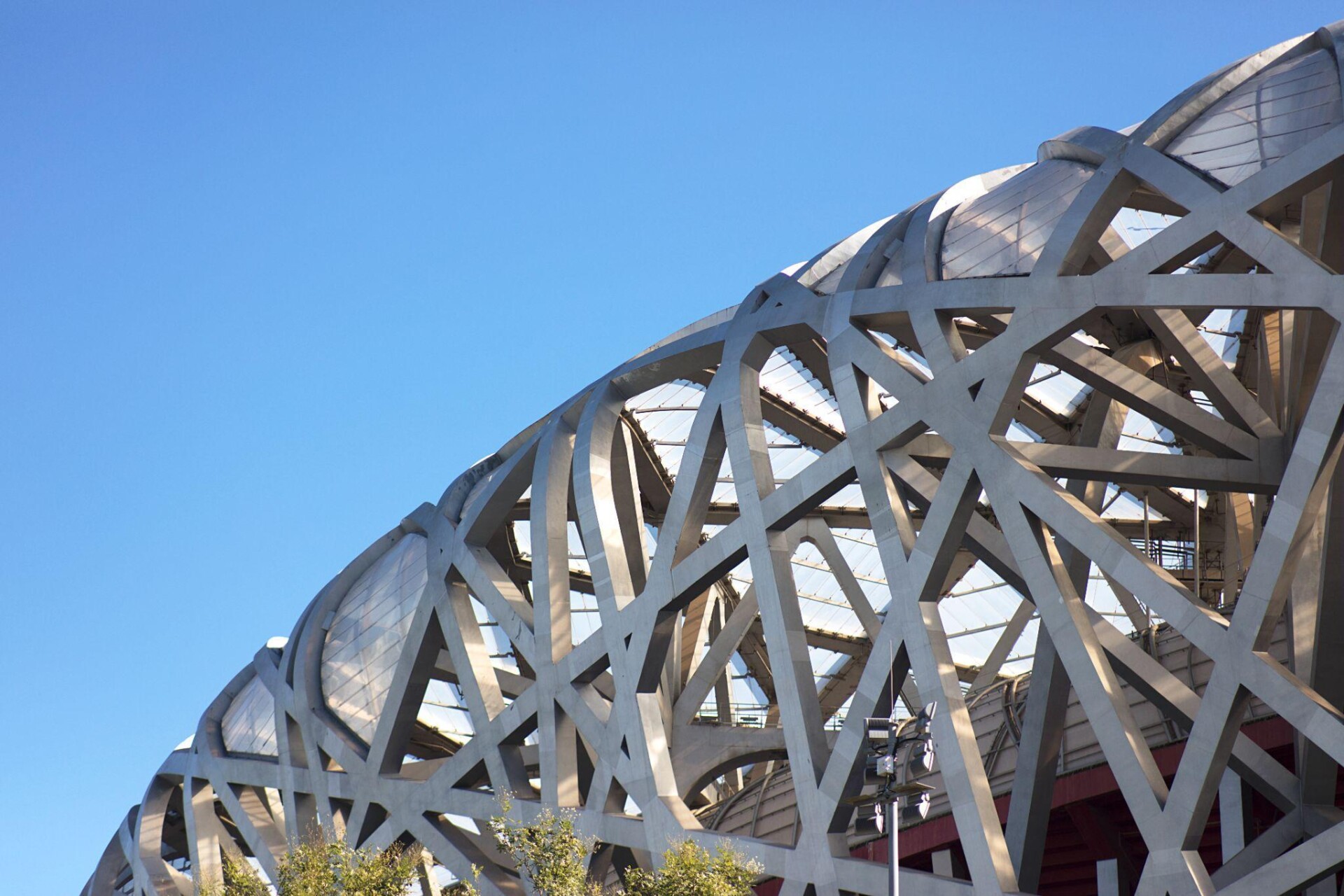
3 – Beijing National Stadium (Bird’s Nest), China
In Beijing, the National Stadium, known around the world as the Bird’s Nest, has become one of the most recognizable landmarks of contemporary sports architecture. Built for the 2008 Olympic Games, it is distinguished by its striking steel lattice structure, designed to evoke the interwoven form of a bird’s nest.
With a capacity of more than 90,000 spectators during the Olympics, the Beijing National Stadium has transcended its sporting function to become an icon of Beijing’s renewed international image. Its architecture, poised between engineering and art, demonstrates how a sports venue can evolve into a cultural landmark that embodies the identity and aspirations of an entire city.
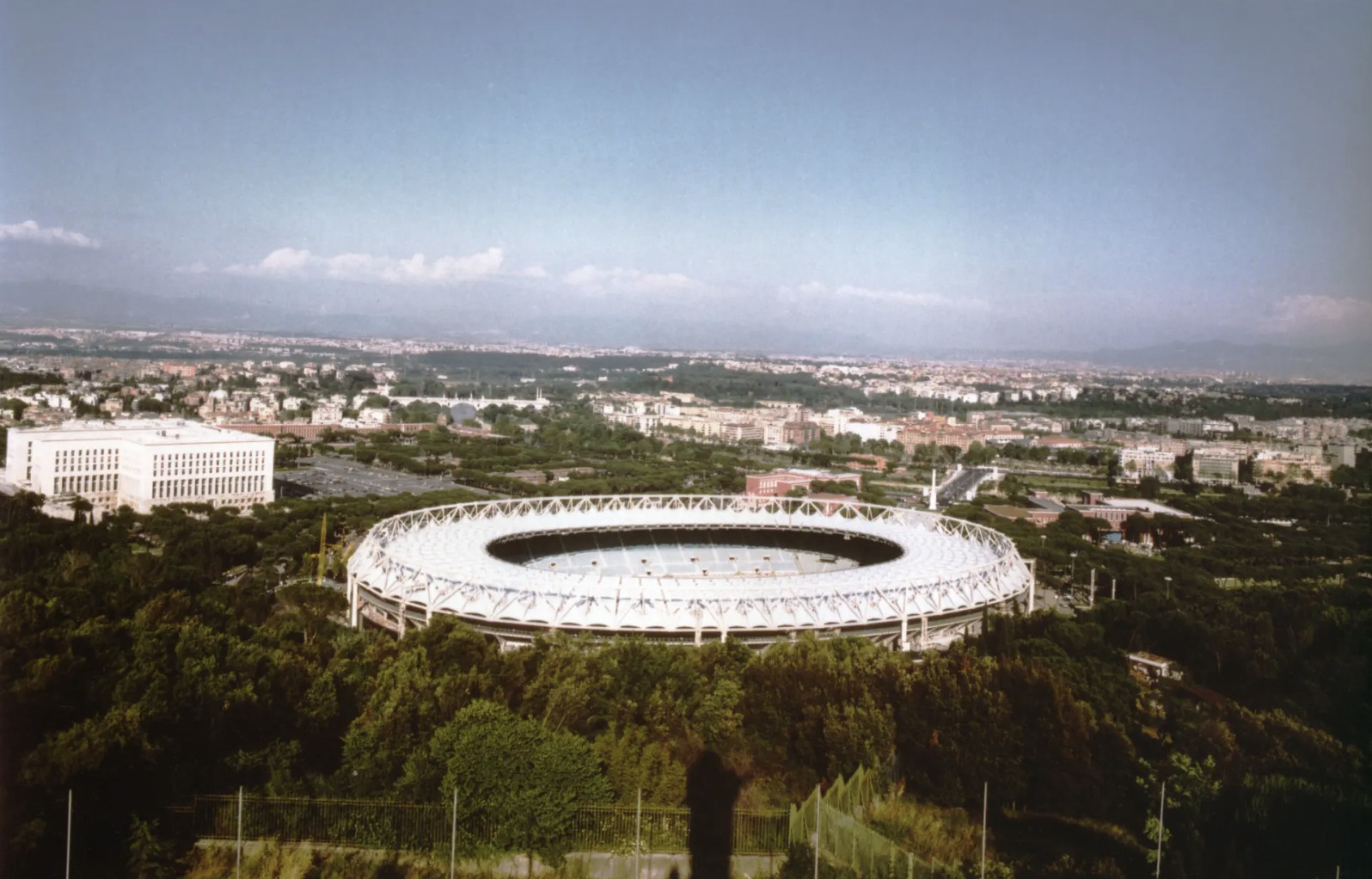
4 – Stadio Olimpico, Rome, Italy
At the heart of the Foro Italico stands one of Europe’s most iconic sports venues. Renovated by the Webuild Group for the 1990 FIFA World Cup, Rome’s Olympic Stadium transformed a symbol of Italian sport into a modern facility that seamlessly combines innovation, functionality, and architectural identity.
Its reinforced concrete reconstruction, the redesign that brought the stands closer to the pitch, and its distinctive white roof redefined the spectator experience, establishing Rome’s Olympic Stadium as a benchmark for football, athletics, and rugby, as well as the stage for the capital’s most prestigious sporting events.
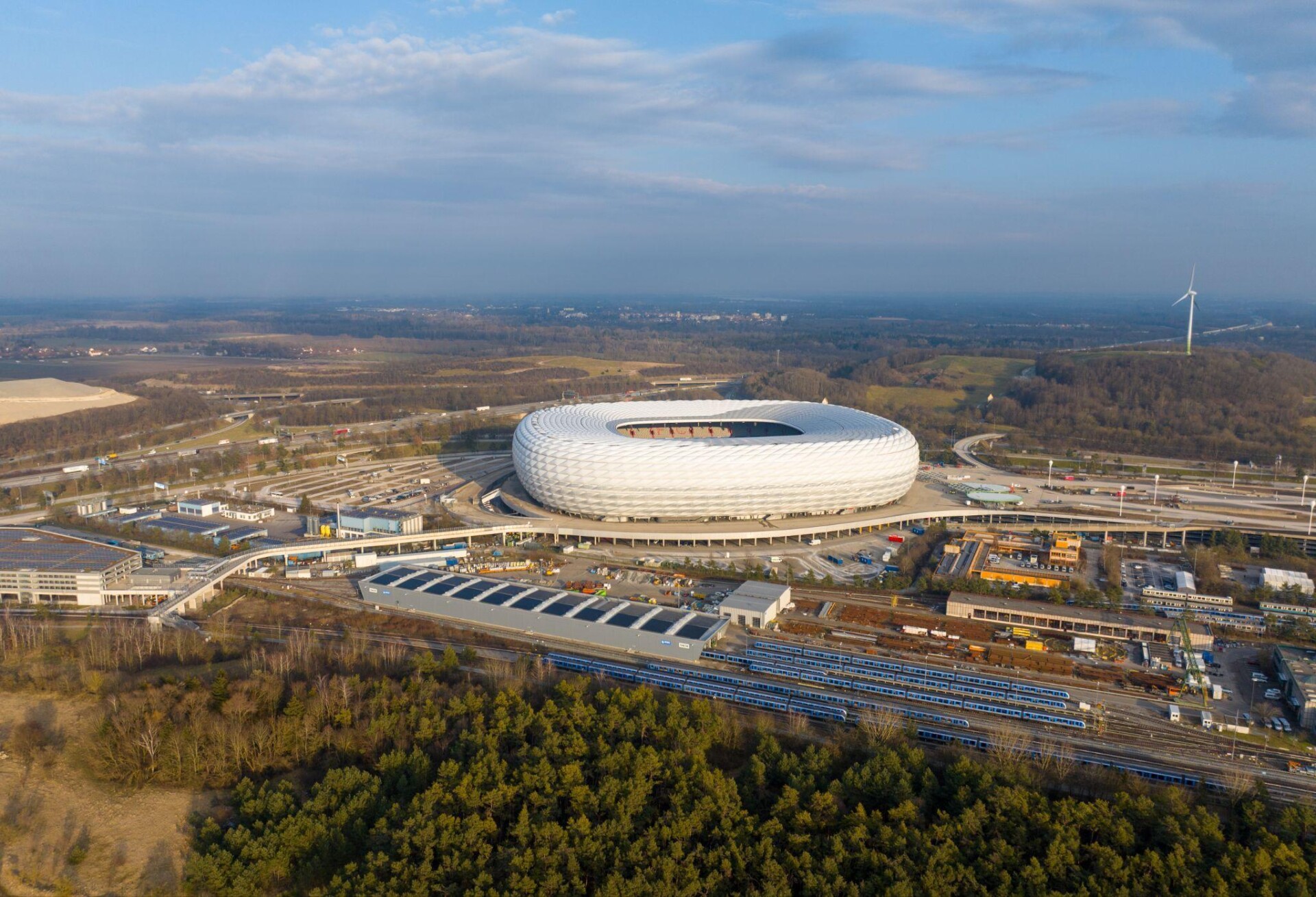
5 – Allianz Arena, Munich, Germany
In Munich, the Allianz Arena has redefined the stadium as a globally recognized architectural landmark. Opened in 2005, the sports venue is distinguished by its façade of thousands of ETFE membrane panels, which can be illuminated in different colors to create a dynamic appearance that changes with the events it hosts.
With a capacity of around 66,000 spectators, the Allianz Arena has become much more than just a home for Bayern Munich. It is a defining feature of the urban landscape and a compelling example of how architecture can transform a sports venue into a powerful symbol of collective identity.