


 Kansas City, Missouri, USA
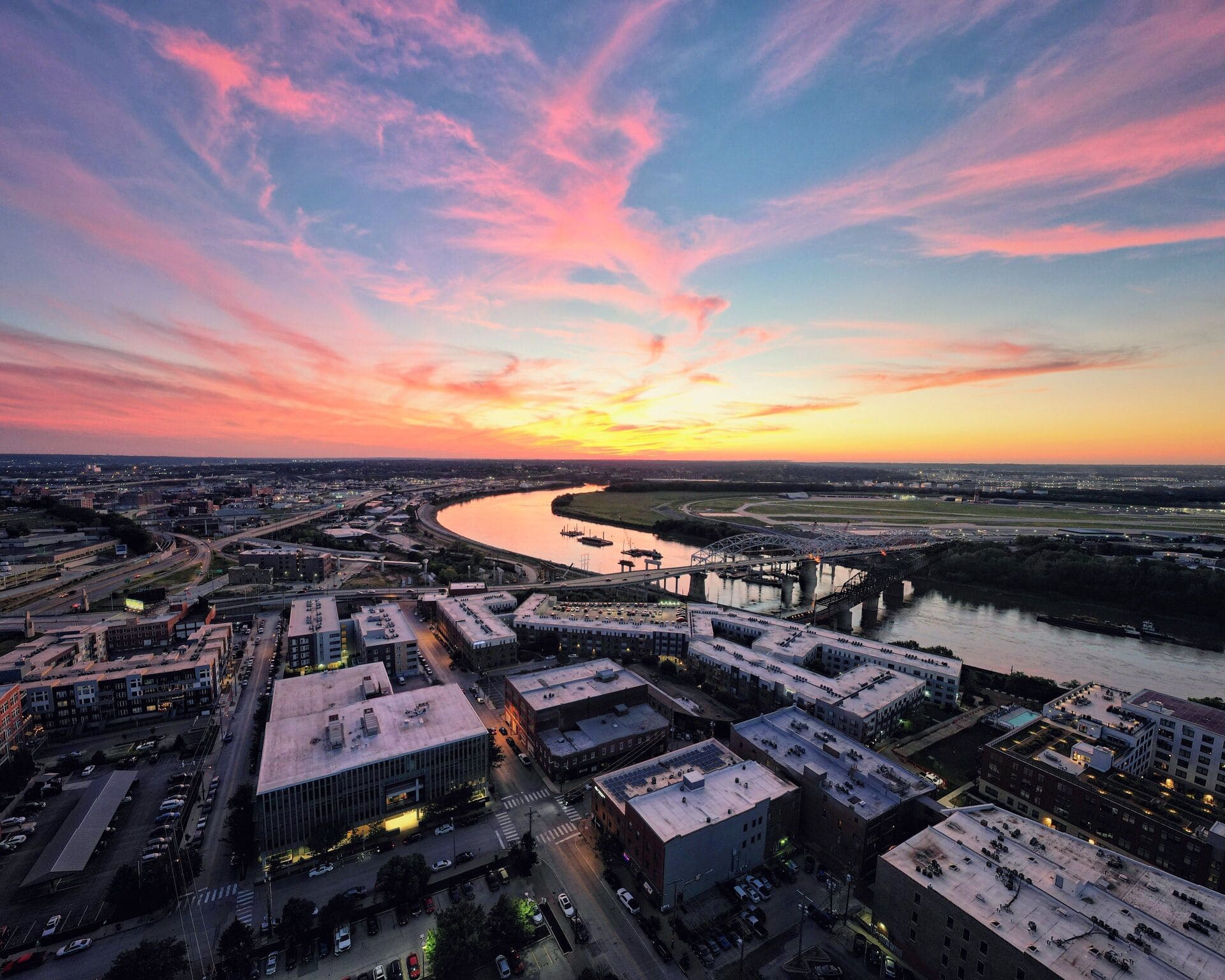 Kansas River flowing through Kansas City
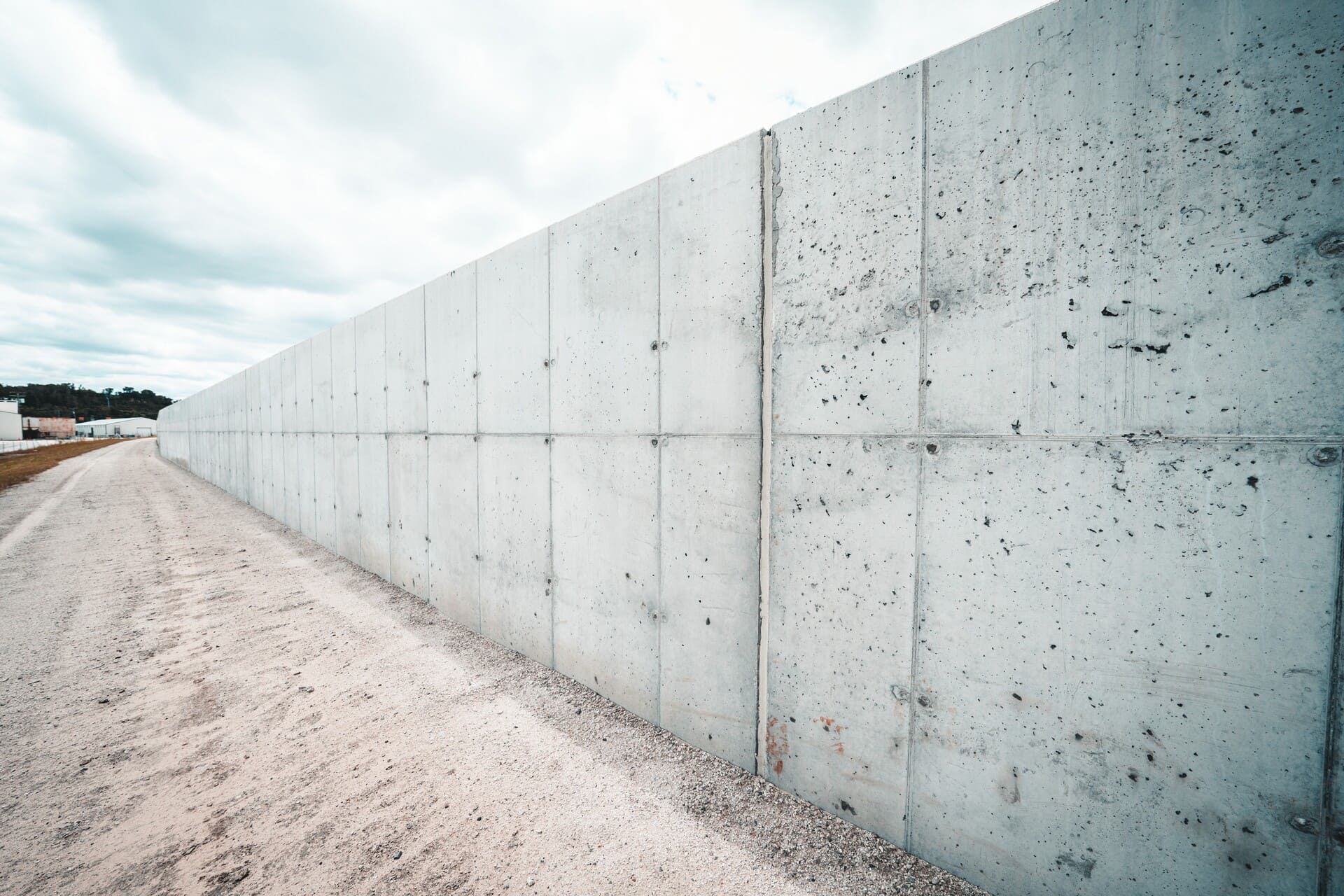 Kansas City Levees Flood Risk Management Project, Missouri (USA)
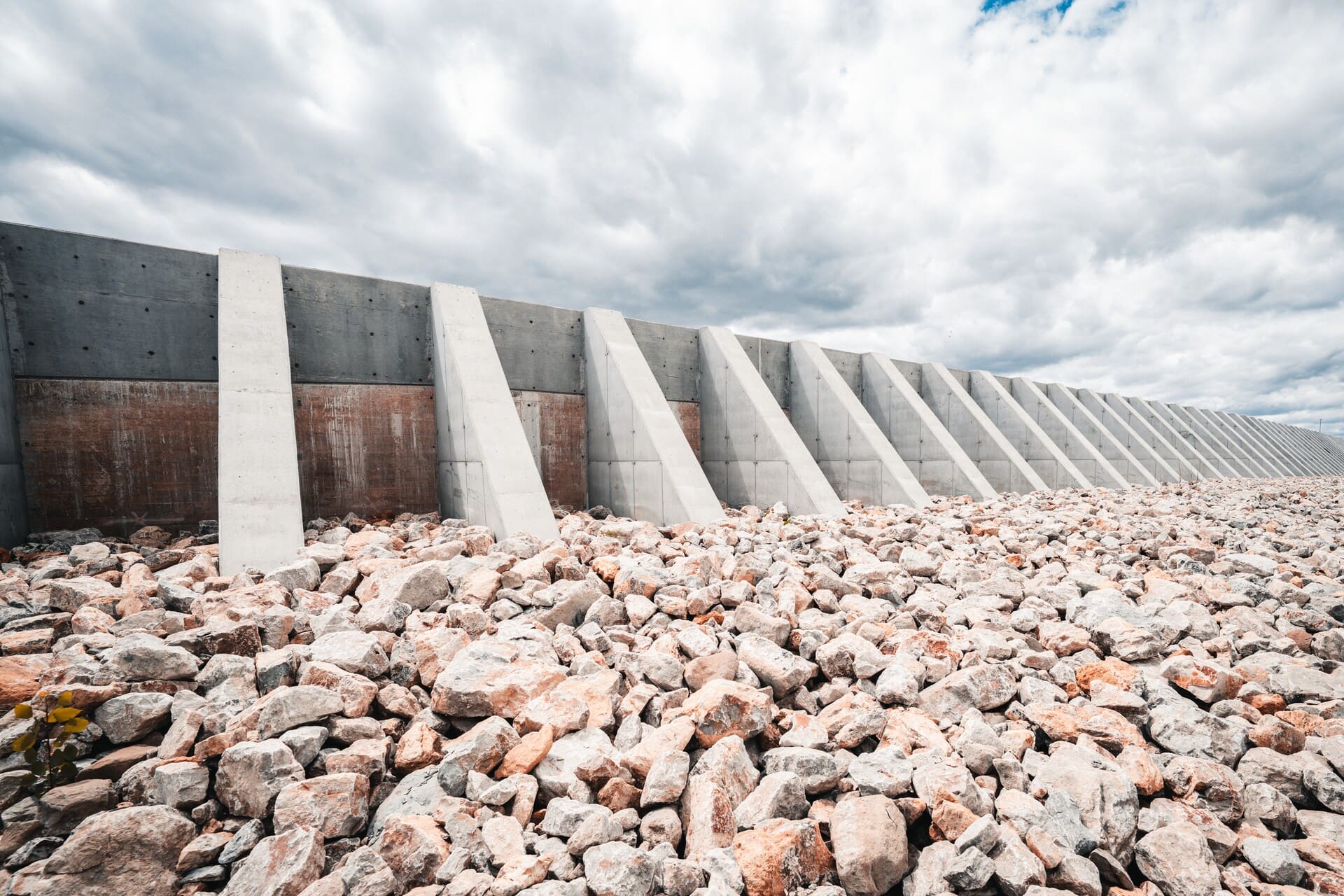 Kansas City Levees Flood Risk Management Project, Missouri (USA)
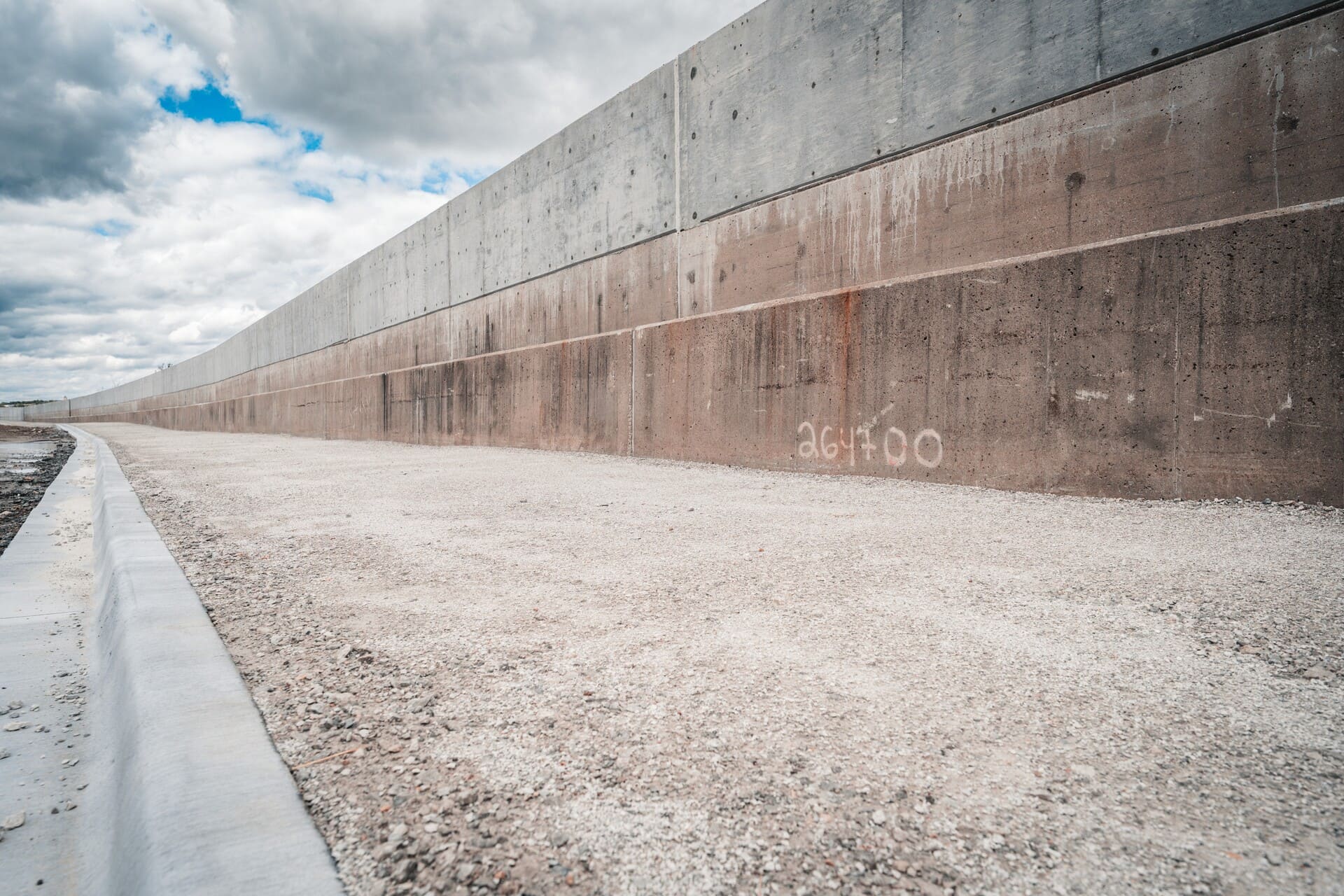 Kansas City Levees Flood Risk Management Project, Missouri (USA)
 Kansas City Levees Flood Risk Management Project, Missouri (USA)
 Kansas City Levees Flood Risk Management Project, Missouri (USA)
 Kansas City Levees Flood Risk Management Project, Missouri (USA)
 Kansas City Levees Flood Risk Management Project, Missouri (USA)
 Kansas City Levees Flood Risk Management Project, Missouri (USA)
- In September, the Kansas City Levees Flood Risk Management Project, delivered by Lane Construction for the U.S. Army Corps of Engineers, was completed.
- The project encompassed over 25 kilometers of levees and flood protection structures between Kansas and Missouri.
- The new infrastructure helps protect more than 27,000 residents, 2,700 businesses, and safeguards nearly $10 billion in facilities and assets.
- The U.S. Army Corps of Engineers, founded in 1775, marks more than 250 years of operations building infrastructure and protecting American territory.
- From Kansas City to Seattle and Pittsburgh, Lane contributes to the development of strategic infrastructure for water management and urban resilience.
read more

In the summer of 1993, after months of relentless rain, the Missouri River swelled to levels never before recorded along its lower course. In Kansas City, where the longest river in the United States meets the Kansas River, the water came within inches of the crest of the levees protecting the heart of the city. These were weeks of fear during one of the most devastating floods in United States history.
The Great Flood of 1993 was not the first time the city had faced disaster. Back in 1951, a flood of exceptional proportions had submerged entire industrial and residential districts, searing into the collective memory images of homes, rail cars, and industrial plants engulfed by water. For Kansas City—a city born and raised at the center of the world’s largest prairie river system—the very water that had driven its commercial development also represented a recurring threat.
Out of that long history of flooding arose one of American engineering’s greatest challenges: learning to coexist with water by building infrastructure capable of protecting cities without halting their growth.
It is a challenge that has long defined the U.S. Army Corps of Engineers, established on June 16, 1775, even before the Declaration of Independence. Founded to design fortifications and military infrastructure during the Revolutionary War, over the course of more than 250 years it has progressively expanded its remit to river navigation, water resource management, flood protection, and community safety.
The Major Project Behind Kansas City Flood Defense
Water’s role in the development of the United States has, after all, been fundamental. Major rivers opened the first trade routes into the continent’s interior, fostered the rise of cities, and sustained industrial expansion. Yet the urbanization of floodplains has also multiplied the economic value of areas exposed to inundation.
Today, flood control is not merely about river levees. It means protecting homes, businesses, energy infrastructure, and transportation networks from the impacts of extreme weather events. This necessity is especially evident in a country where the continuity of industrial and logistics operations also hinges on the capacity to manage water-related risks.
Against this backdrop comes the completion of the Kansas City Levees Flood Risk Management Project, delivered by Lane Construction, the American subsidiary of the Webuild Group, on behalf of the U.S. Army Corps of Engineers.
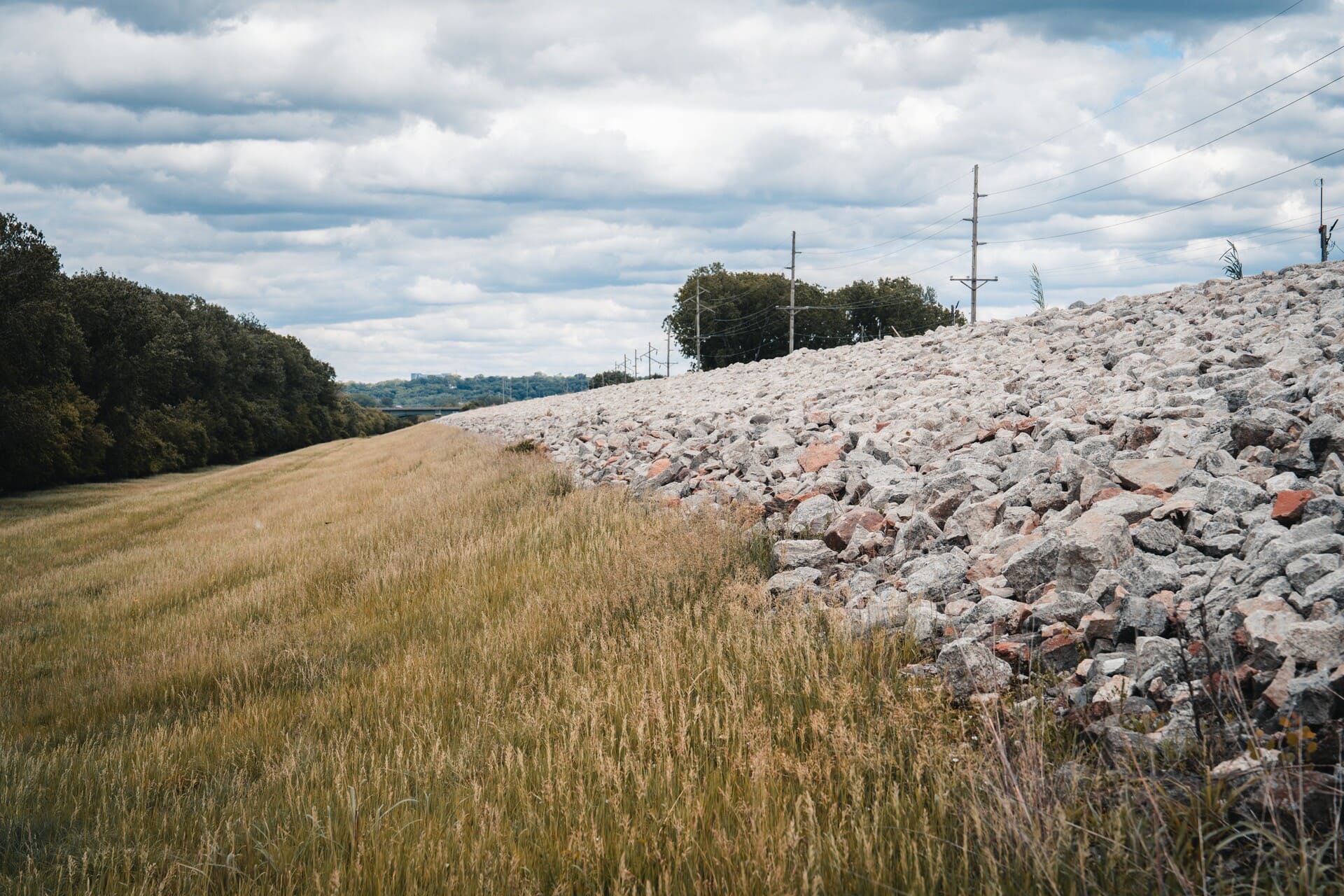
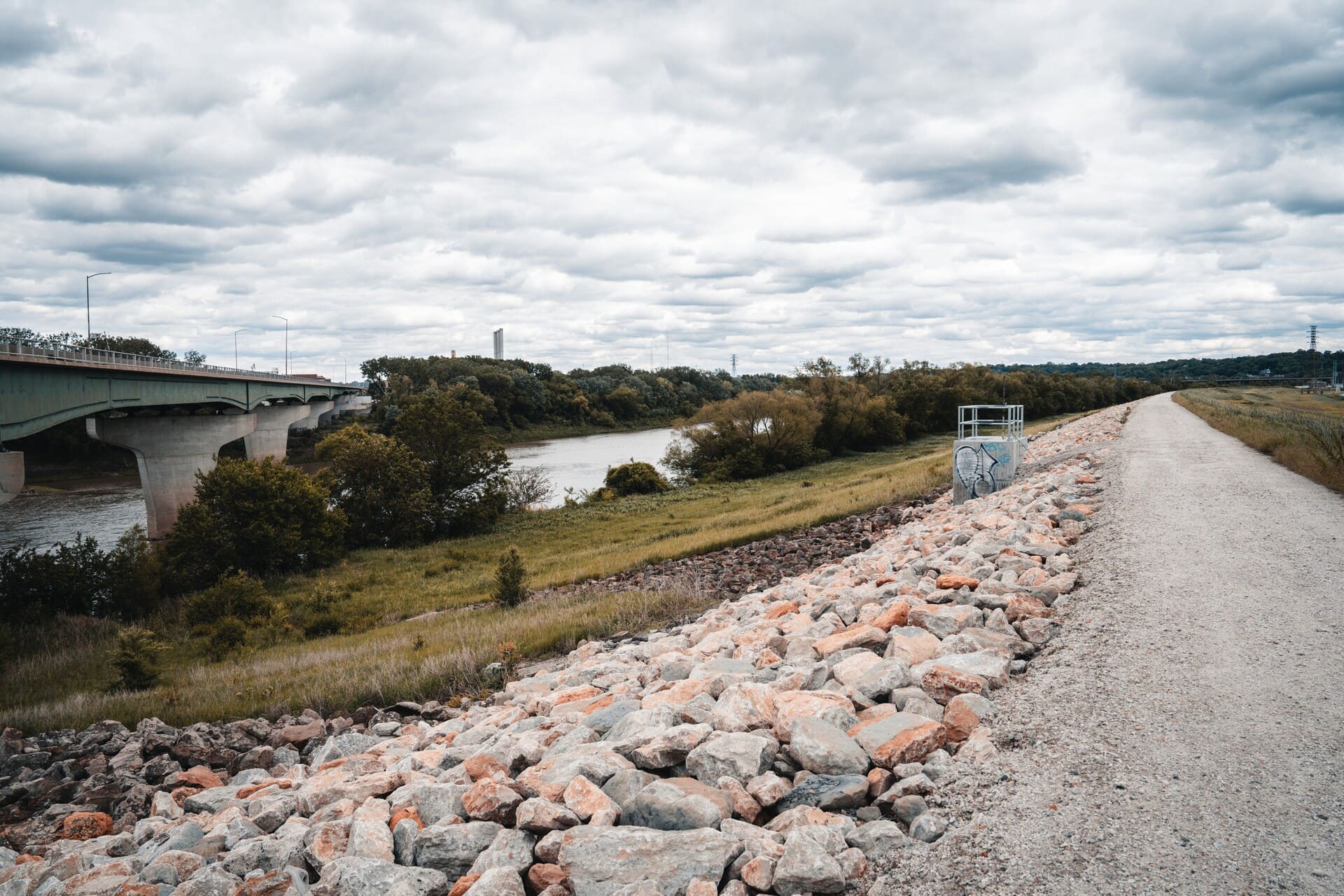
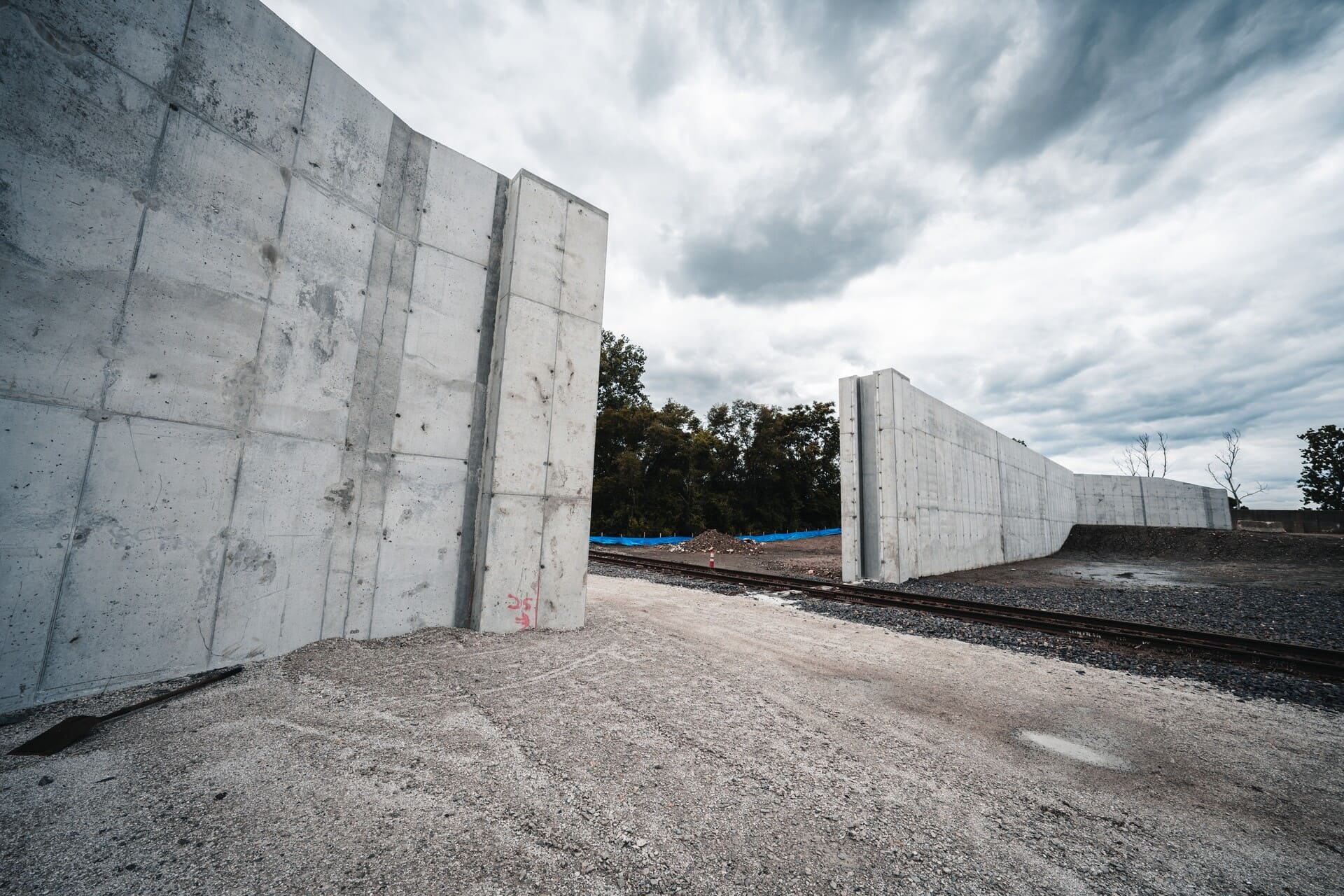
The project, launched in July 2021 and completed in September 2026, covered more than 25 kilometers of levees and flood defense structures across the industrial and commercial districts of Argentine, Armourdale, and the Central Industrial District, spanning Kansas and Missouri.
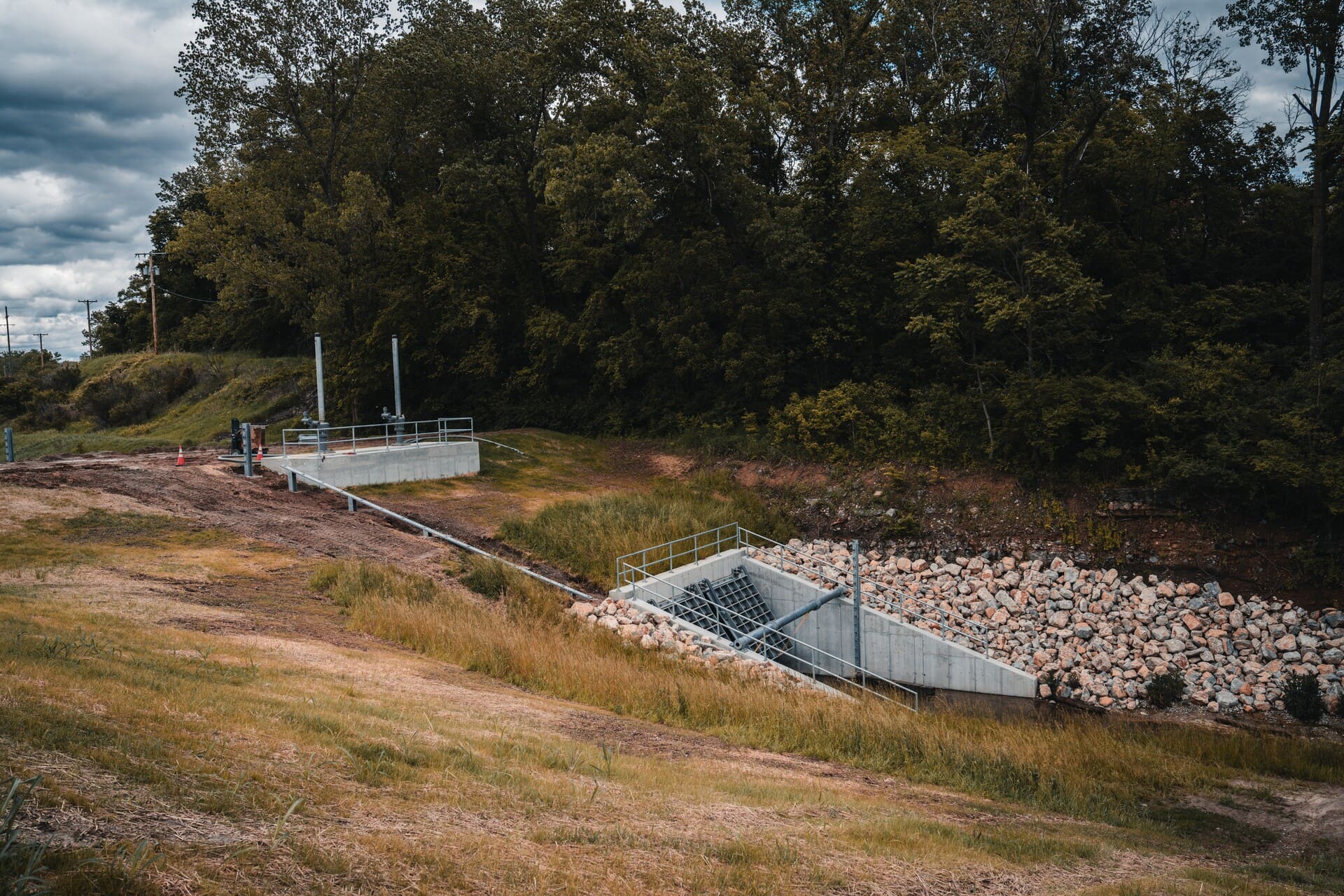
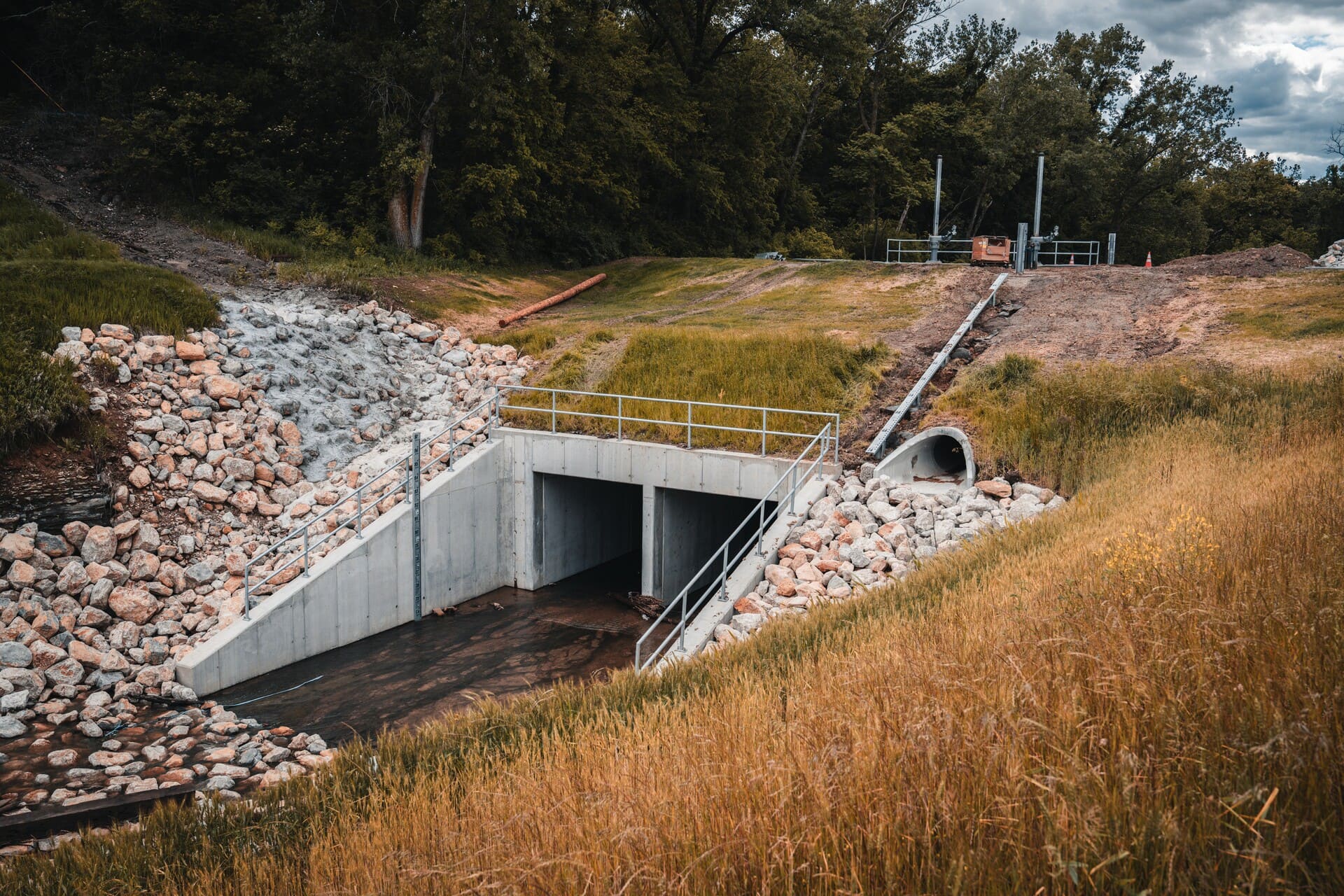
The scope of work entailed moving over 760,000 cubic meters of earth, constructing more than 7.6 kilometers of new concrete floodwalls (part of the 25 km constructed, comprising concrete floodwalls and protective levees), installing 120 relief wells, and replacing 12 closure structures at railroad crossings. In addition, 175 utility lines were modified.
A suite of works designed to enhance flood protection for more than 27,000 residents and 2,700 businesses and facilities, safeguarding properties and infrastructure with an aggregate value of nearly $10 billion.
Protecting One of the United States’ Great Trade Hubs from Flooding
The value of the infrastructure project delivered goes beyond defending individual communities. Kansas City is one of the major hubs of American logistics, where key rail links, industrial plants, warehouses, and distribution centers converge. A major flood could therefore disrupt not only local operations, but also the transit of goods and raw materials along the United States’ primary commercial corridors.
The construction of protective structures at railway tracks was especially complex, where mobile closure barriers can be deployed to seal openings during high-water events. The entire job site required close coordination among federal and local authorities, railroad operators, and utility managers, ensuring that existing infrastructure remained fully operational throughout construction.
This organizational capability was also recognized by the U.S. Army Corps of Engineers, which highlighted the project’s efficiency and speed of execution, completed in full compliance with the contractual schedule.
Beyond Kansas City: From Seattle to Pittsburgh, Water Management as a National Challenge
Kansas City reflects just one of the forms that the American water challenge takes today. While in the Midwest the priority is flood defense, in densely urbanized metropolitan areas the issue is frequently wastewater and stormwater management — handling rising volumes of runoff and keeping heavier downpours from overwhelming the sewer system.
In Seattle, Washington State, Lane Construction contributed to delivering the Ship Canal Water Quality Project, a major underground storage tunnel designed to temporarily hold combined sewage and stormwater during heavy rains, curtailing pollutant discharges into local waterways.
In Pittsburgh, Pennsylvania, the new Ohio River Tunnel, awarded to Lane, addresses a similar need: upgrading wastewater management and safeguarding the water quality of the three rivers running through the city.
These water management projects differ in scale, technologies, and local geographic features, yet they embody a shared principle: water infrastructure does not merely serve to control water, but protects public health, preserves natural resources, and underpins the economic continuity of cities.
The completion of the Kansas City levees thus fits into a broader transformation across American engineering, in which resilience is no longer simply an emergency response, but a fundamental condition for the future development of territories.