


 Capodichino Station construction site, Line 1
 Capodichino Station construction site, Line 1
 Capodichino Station construction site, Line 1
 Capodichino Station construction site, Line 1
 Capodichino Station construction site, Line 1
 Capodichino Station construction site, Line 1
 Capodichino Station construction site, Line 1
 Capodichino Station construction site, Line 1
 Capodichino Station construction site, Line 1
 Capodichino Station construction site, Line 1
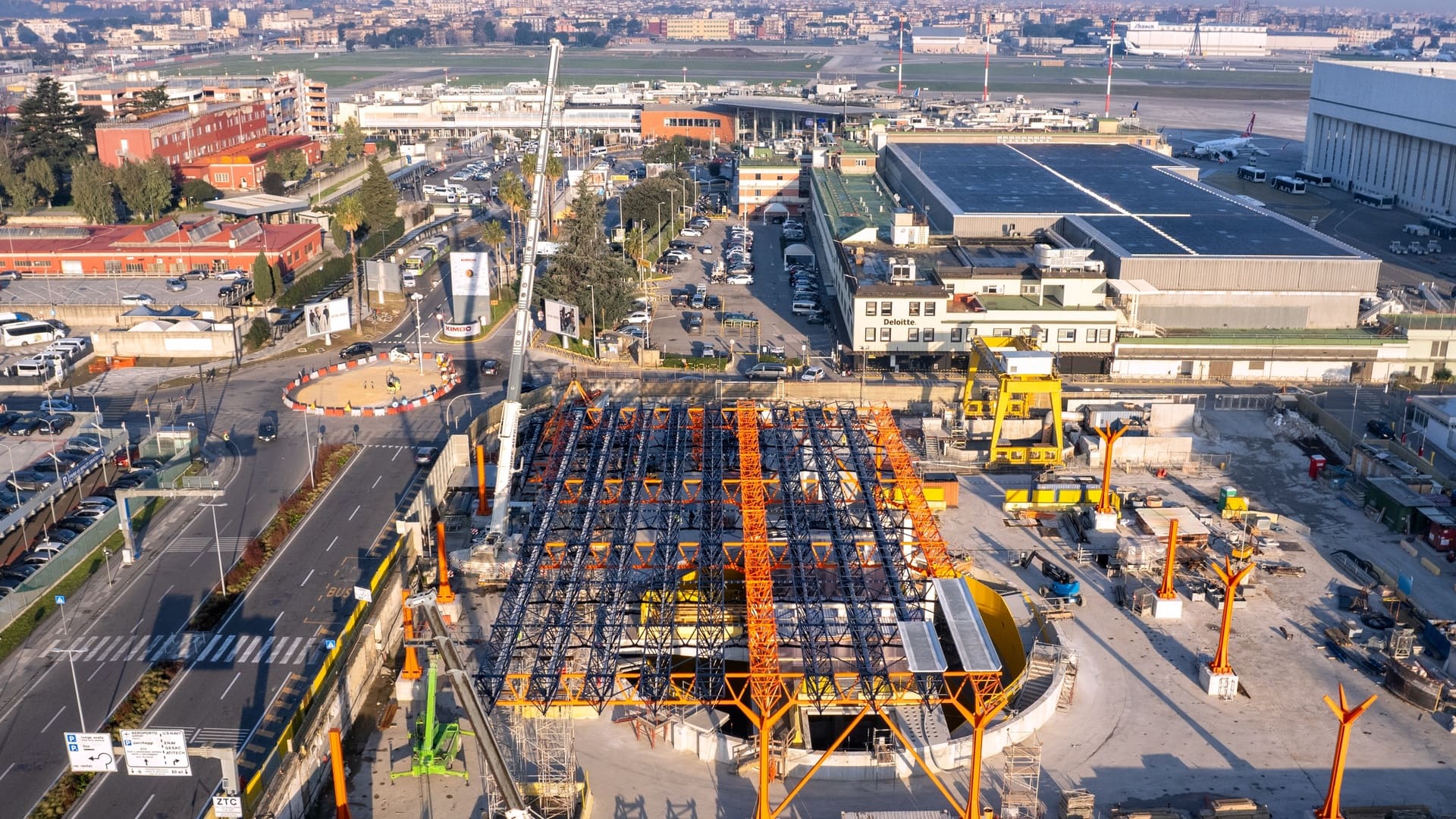
- The Capodichino station is conceived as the first urban experience for those arriving in Naples: a contemporary gateway between airport and city
- Ivan Harbour and the RSHP practice deliver a project that combines international vision with Neapolitan character
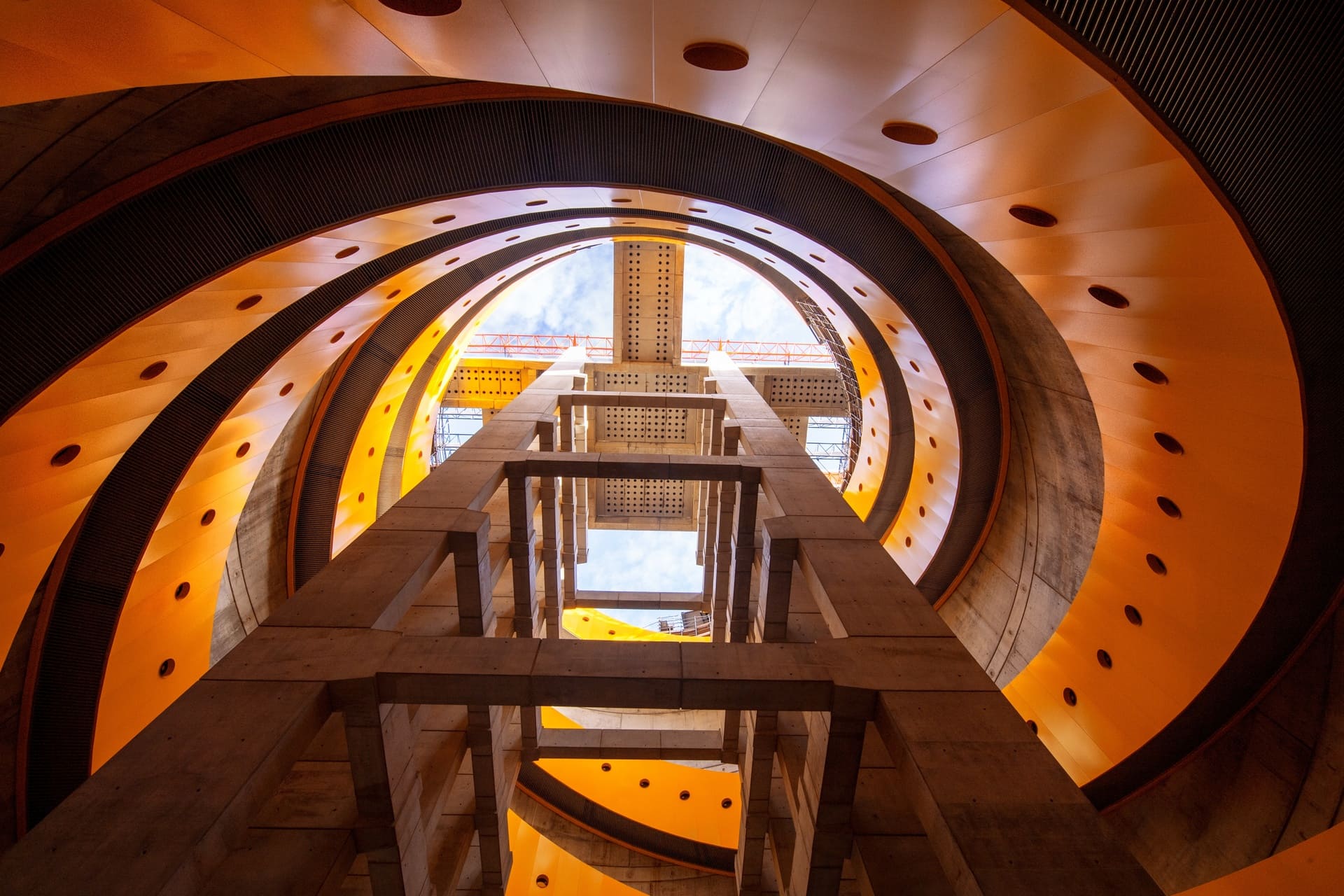
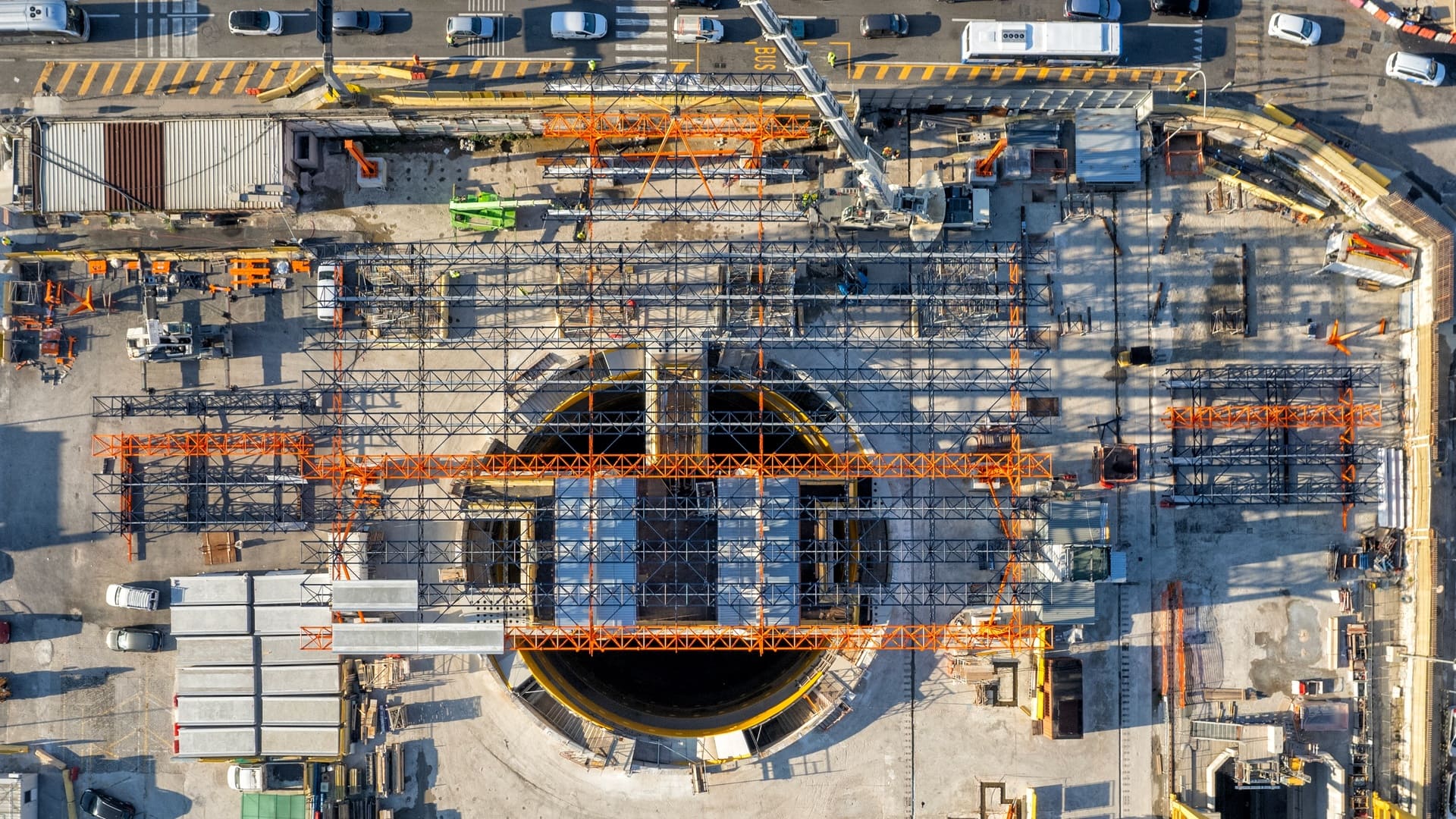
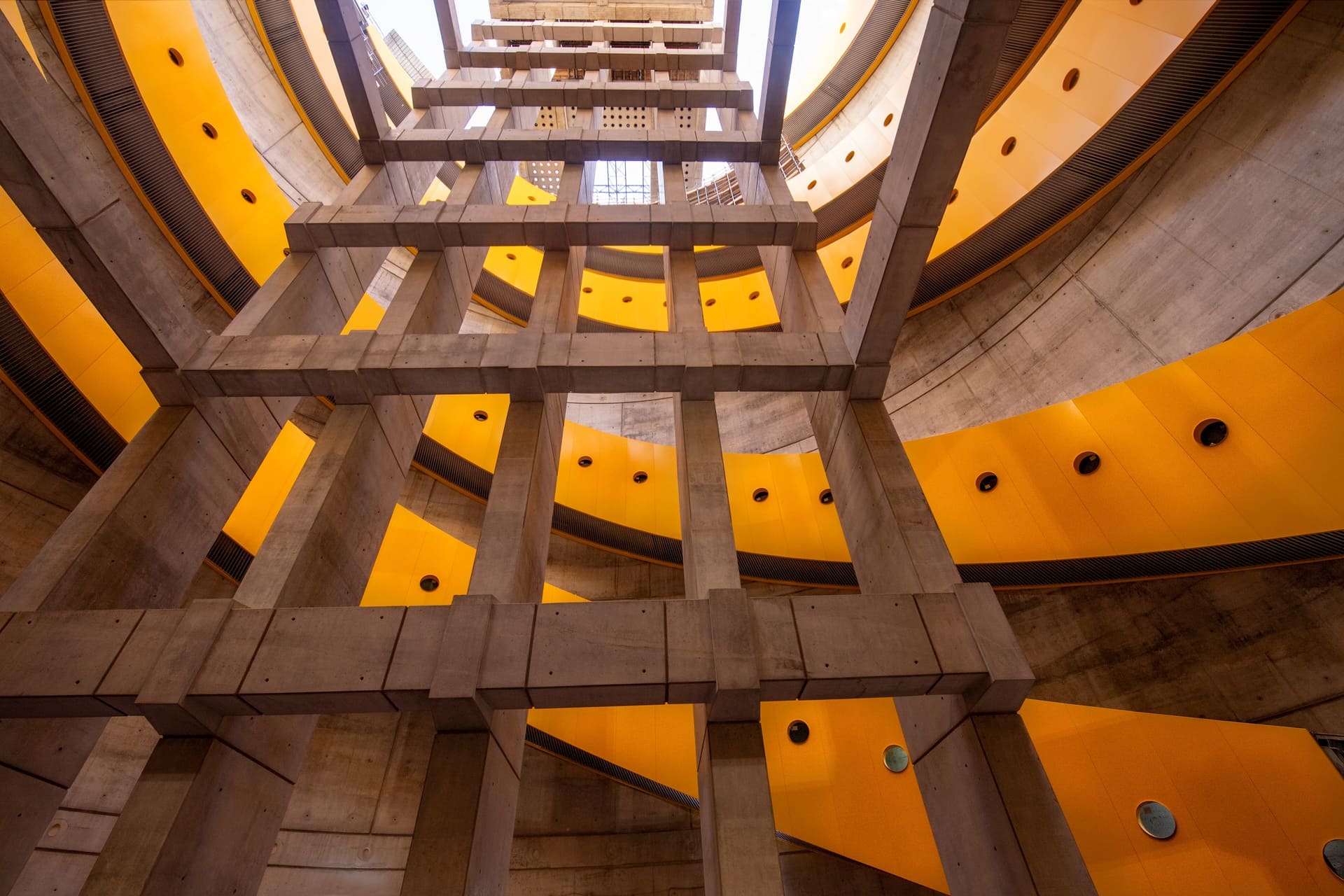
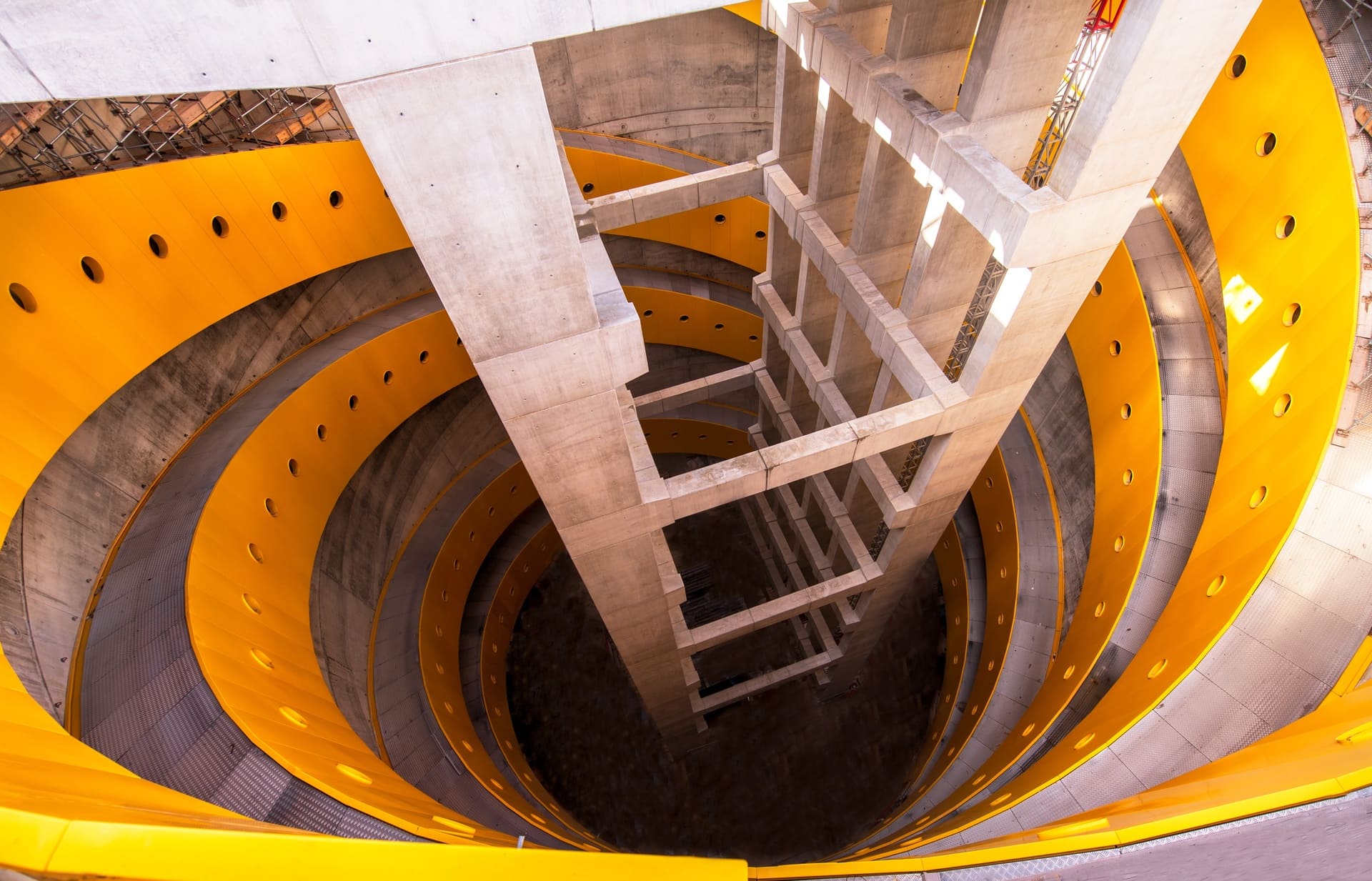
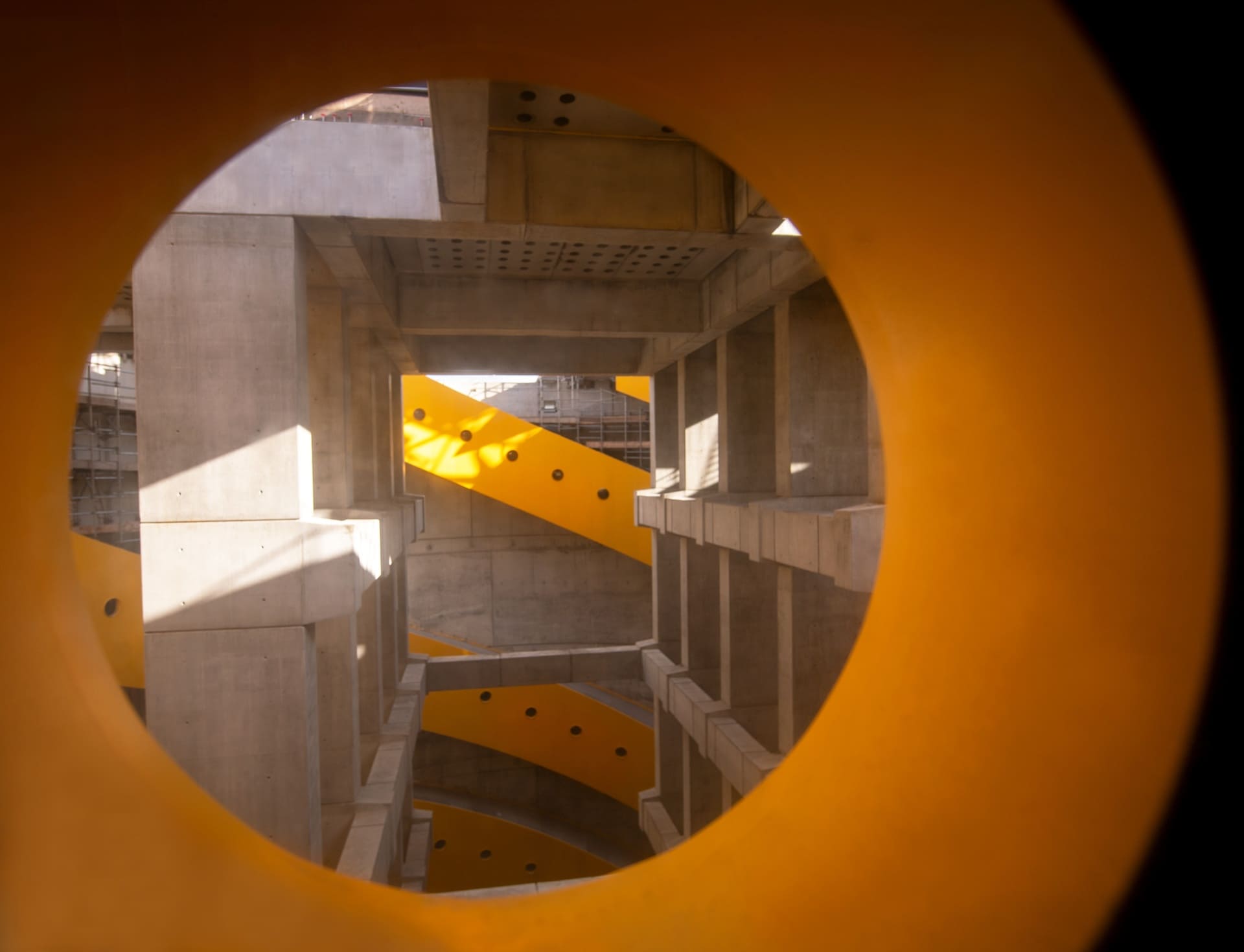
- A 50-metre vertical void transforms the descent into a narrative: from the light of the sky to the depths of the earth
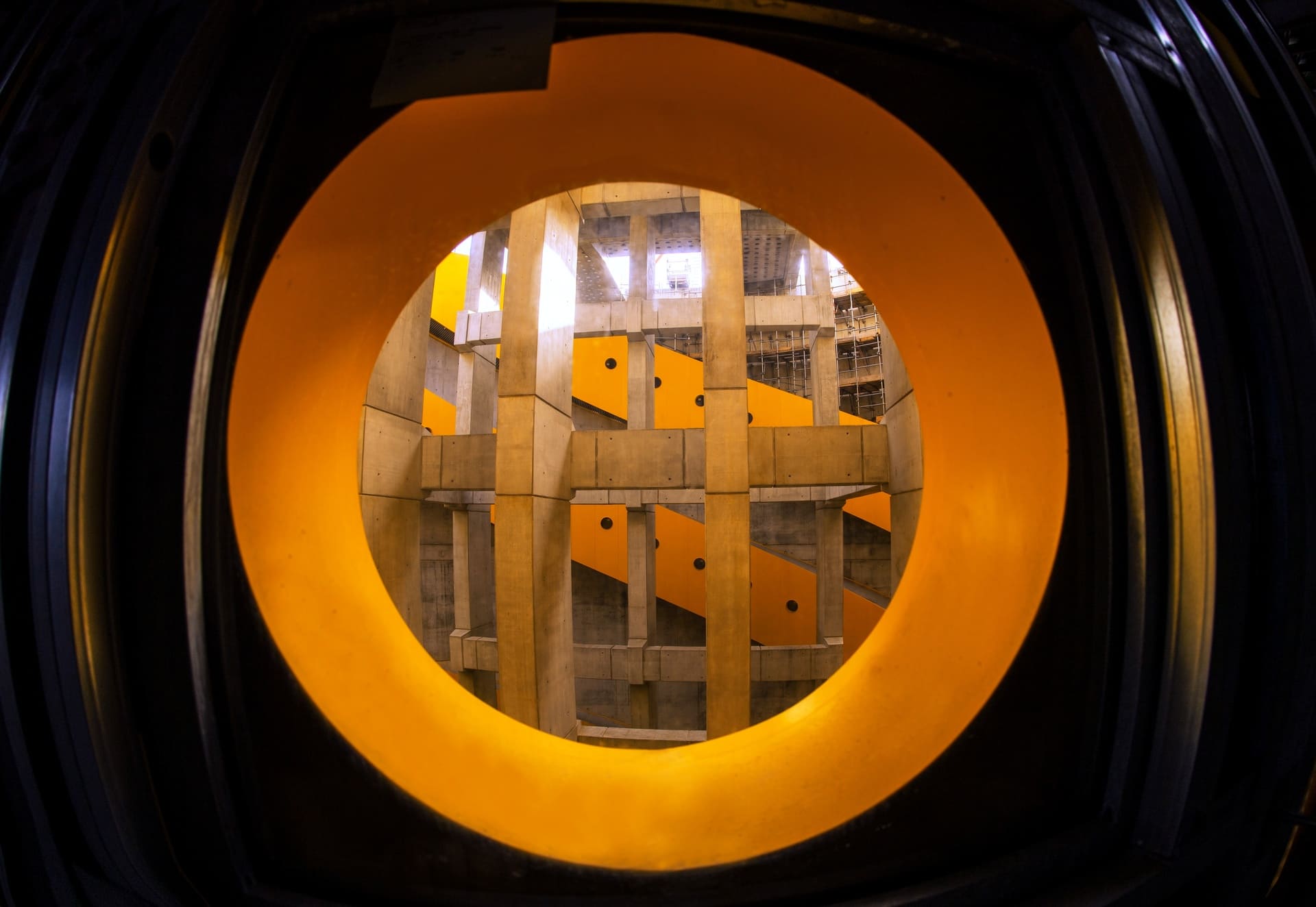
- The four helical staircases, created for evacuation needs, become the station’s iconic and sculptural feature
- Capodichino becomes part of the art stations system as an evolution: a total work that fuses engineering, architecture and urban identity, also thanks to the contribution of Webuild
read more

There is a precise moment, in the journey of those arriving in Naples, when the city reveals itself for the first time. It is at that instant that the new Capodichino metro station takes its place, destined to become the city’s true contemporary threshold, the connection between the airport and the centre.
It was conceived by Ivan Harbour, architect at the RSHP practice, one of the most authoritative names in contemporary global architecture, heir to the vision of Richard Rogers and a leading figure behind some of the most iconic projects of recent decades. With Harbour, architectural design returns to being a cultural gesture, a space that engages in dialogue with people, but also a complex machine capable of integrating technique, civil engineering and perception.
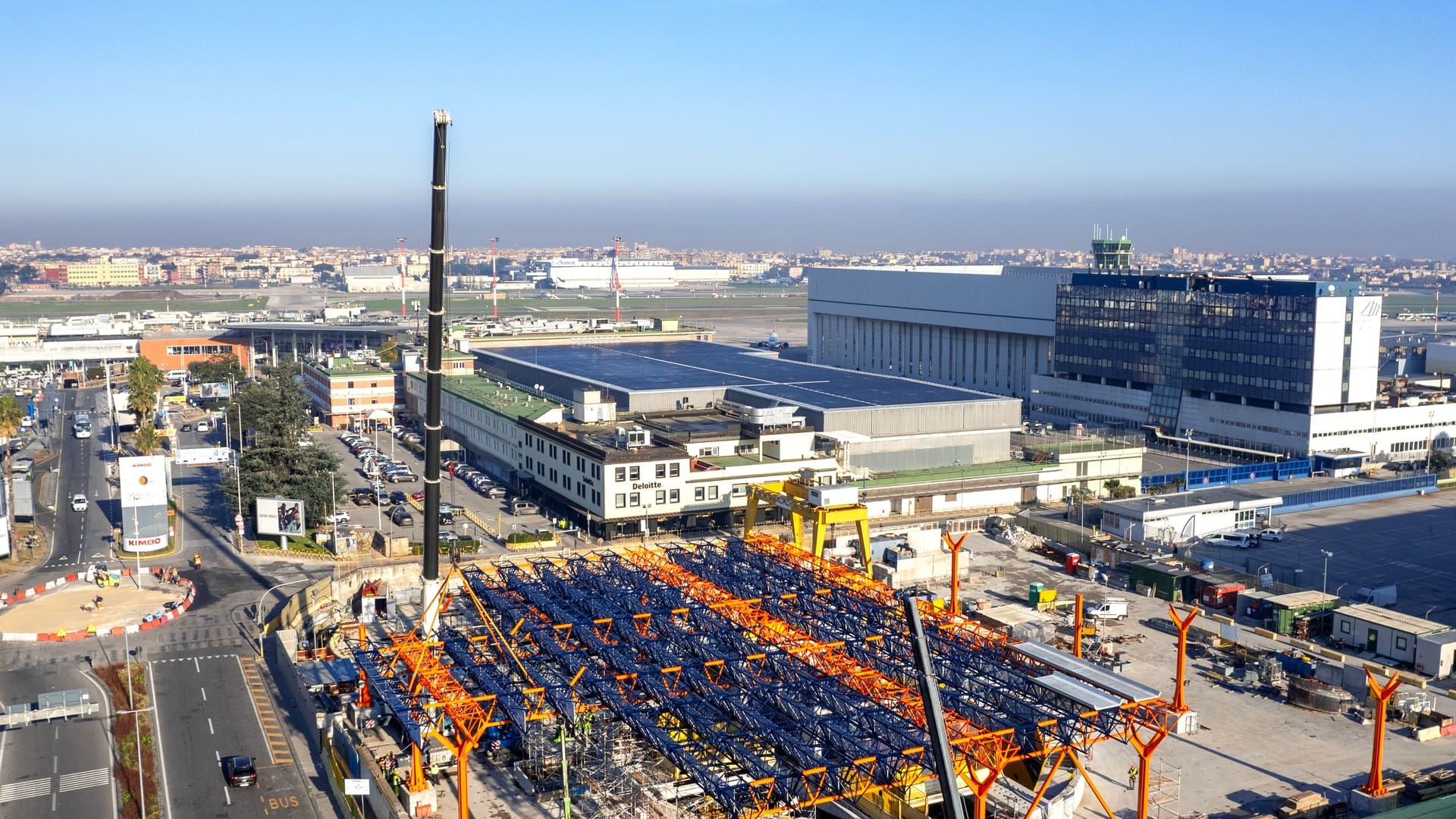
The Capodichino metro station, built by the Webuild Group, emerges precisely from this tension: not only to connect Naples airport to the heart of the city, but to transform that passage into a memorable experience. It is an urban gateway in the fullest sense of the term, designed for millions of travellers who, having just stepped off a plane, will find themselves performing an opposite and symbolic gesture: descending into the depths of the earth.
It is here that the design intuition takes shape. The descent becomes a narrative. The vertical void – a large “tube” approximately 50 metres deep – is transformed into a scenographic space, where natural light filters from above and accompanies the movement of passengers. The four helical staircases, coiling around themselves like dynamic spirals, are not merely a response to safety and evacuation requirements, but become a defining architectural feature, almost sculptural. A functional device that becomes form, rhythm, experience.
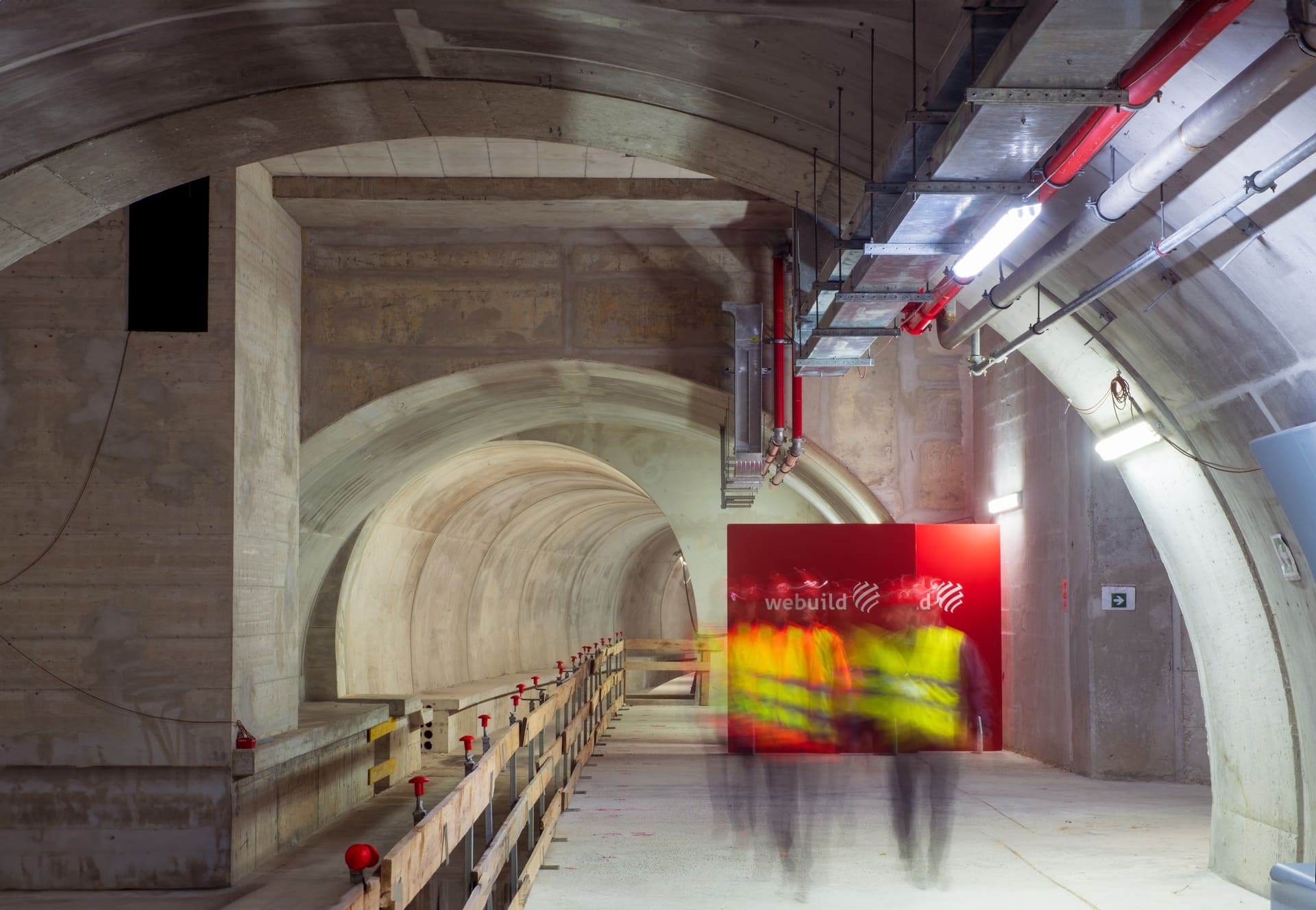
Within this dialogue between depth and light, between technique and perception, the contribution of Webuild is fully embedded, having transformed a complex vision into tangible infrastrucure by integrating advanced engineering solutions with a strong focus on spatial quality. It is precisely in this synergy between architectural design and construction that the station finds its balance: a place where civil engineering and architecture do not stand apart, but enhance one another.
Capodichino thus becomes part of Naples’ celebrated “Art Stations”, while also representing an evolution of them. It is not merely a place decorated or enriched by artistic interventions, but a work that is itself an artistic experience.
An “underground cathedral”, as Harbour defines it, capable of reflecting the character of the city: monumental yet intimate, theatrical yet welcoming. In the end, what this Naples metro station offers is far more than a mobility service. It is an urban narrative, a declaration of identity, a way of saying to the travellers: this is Naples. And the journey begins here.
What was the spark that inspired you when you began working on the Capodichino project?
«I believe that one of the most exciting aspects for us was the idea that, for many people – for visitors to Naples – this would be their first impression of the city. A metro station as the gateway to a city is a truly unique situation«.
«When people reach this station, most of them are coming from the airport, so they have just flown. They have been in the air, they have landed, and the next step is to descend underground. We wanted it to be an experience almost mirroring the upward journey of flight, with the same intensity and drama, but in reverse. The sky, the daylight, the beautiful sunlight that you find here in Naples – all these elements lift us upwards. The experience of descent, the perception of volumes and the change of light from above downwards are part of this dramatic dimension. It is almost like entering a cathedral… but upside down».
The helical staircases recall the structure of St Patrick’s Well. Was this your inspiration?
«In fact, when I first began working on this project, I was not familiar with St Patrick’s Well. But what is interesting is that the similarities are evident: in both cases you must descend very deep to reach the objective. In St Patrick’s Well, you descend to find water; here, you descend to reach the trains».
«In developing the simple idea of a tube descending to a depth of 50 metres, one of the most complex and significant aspects was addressing the issue of how to exit in an emergency. Railway and metro stations are, above all, a matter of safety, and safety requirements are an integral part of the design. And, when you look closely, the fundamental requirements are few: getting people in and out, and ensuring rapid evacuation when necessary. From this need came the idea of the four helical staircases, each connected to one of the exits from the tunnels to the platforms, each developing by spiralling to the right until reaching ground level».
What role did natural light play in the development of your infrastructure project?
«I believe that, for an architect, there are certain elements one always works with: natural light, the perception of light, but also smell, sound, touch. All the senses. And natural light, in a metro system, when you go underground, becomes a central element that must be addressed».
«Expanding the possibilities of natural light, creating the idea of an open metro, not closed, open to the sky, maximising light, and at the same time, here in Naples, protecting against the intensity of the sun: all of this becomes a fundamental part of the design definition».
How important was the synergy between you as designers and the Webuild Group that constructed the project?
«We do not believe in the separation between engineering and architecture as distinct disciplines. We believe instead that they must work together, feeding off each other’s requirements.
Here, essentially, this is an art: the art of engineering and architecture united. And part of this process is also the pleasure of the engineering experience, of problem-solving, experienced by the architect».
Can we say that the Capodichino metro station fits within the tradition of Naples’ Art Stations?
«Engineering is an art. Architecture is an art. But architecture is also a science, just as engineering is. Within the context of Naples’ Art Stations, this balance works perfectly: it is a group of architects and engineers creating an artistic work».
What is the strongest message you want to convey with this project?
«Naples is an immensely grand city. The buildings are imposing, monumental, yet there is also an intimacy that seems to play in contrast with this monumentality. This metro station nurtures that sense of intimacy. It is, in a sense, another cathedral. We have built a cathedral, but hidden underground».
What do you hope for this public transport infrastructure?
«I hope that this project will succeed in conveying the soul of the city of Naples at its 21st-century gateway, which is the airport, and that it may therefore become a connection between Naples and the world».