


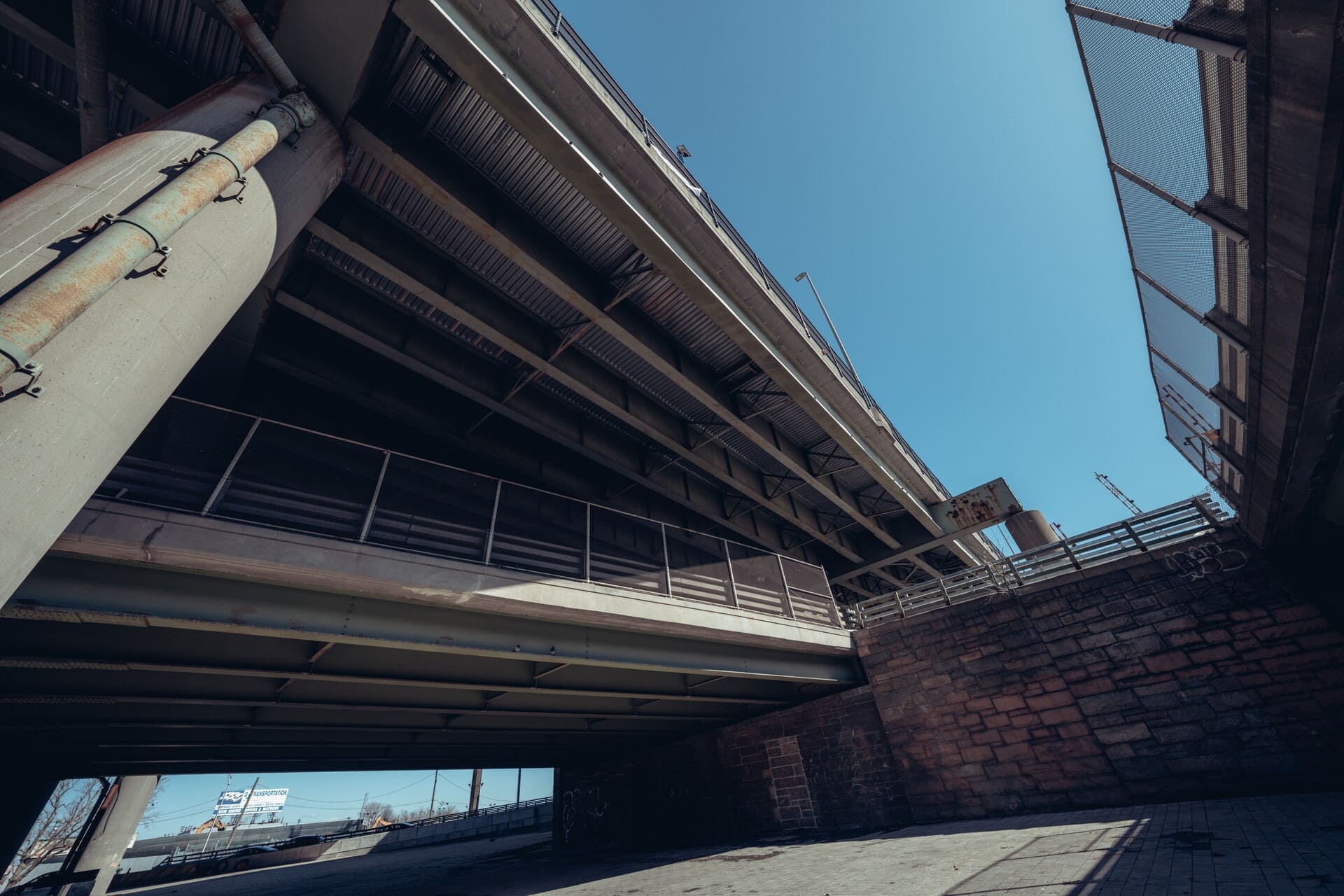
 Unionport Bridge. New York City
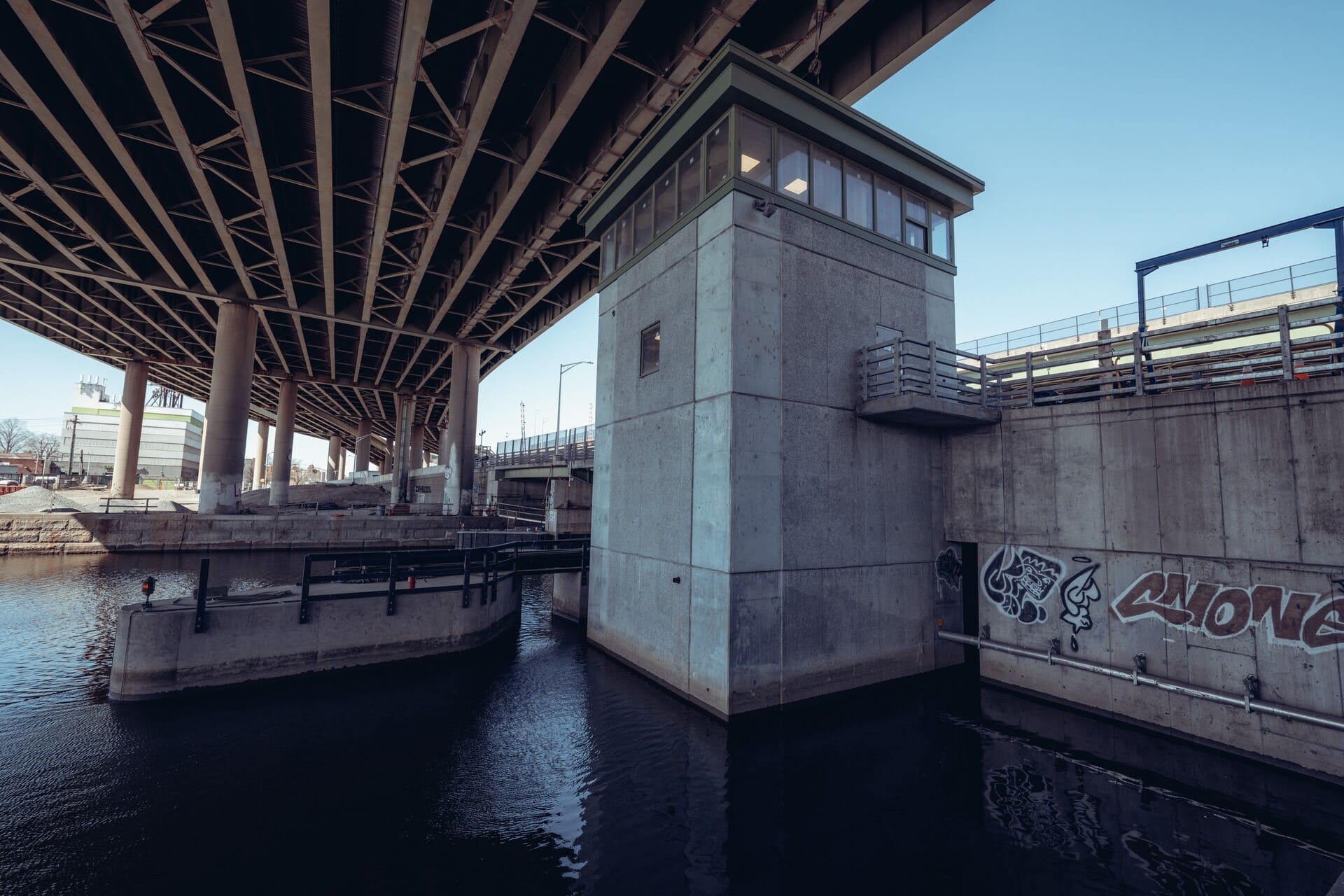 Unionport Bridge. New York City
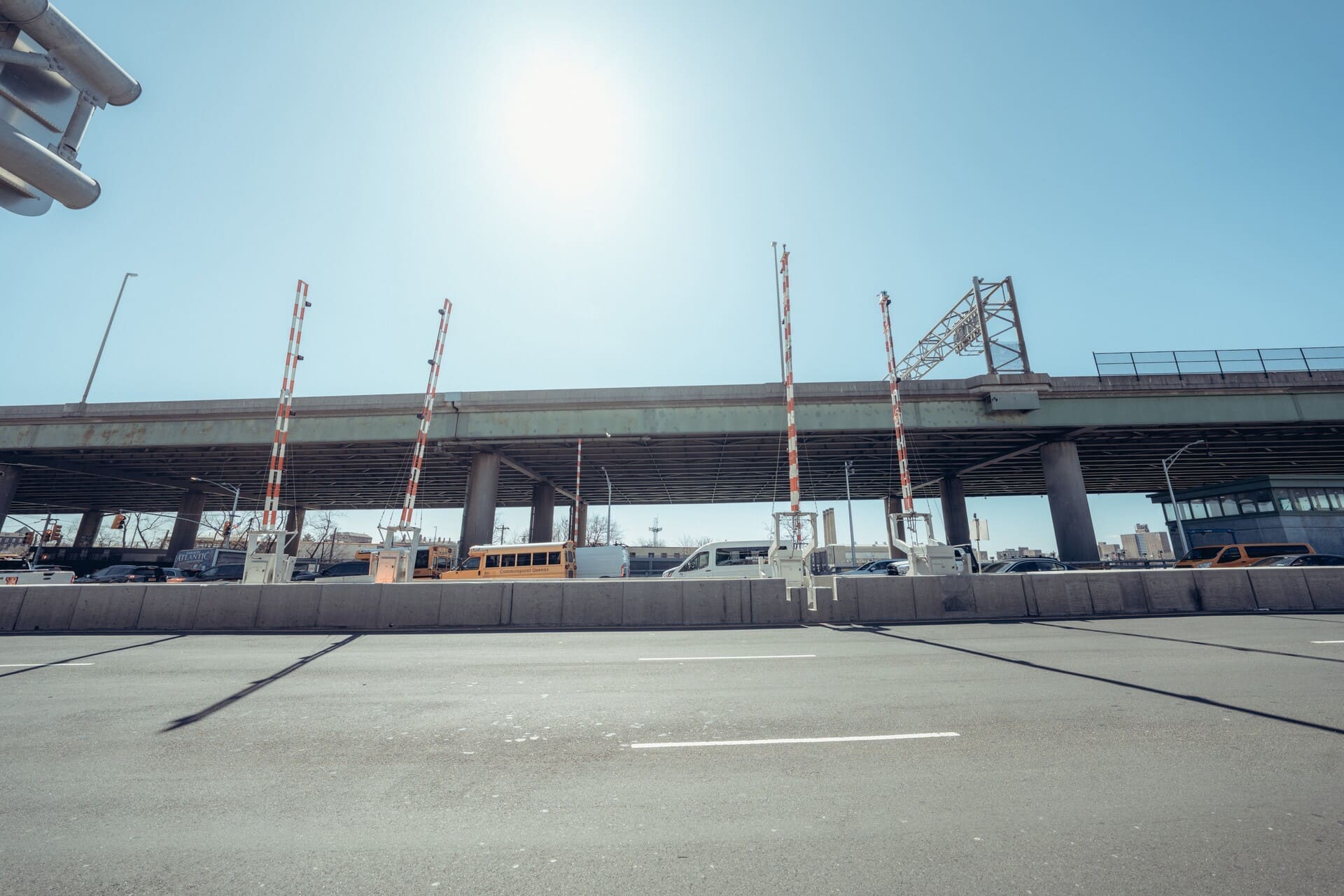 Unionport Bridge. New York City
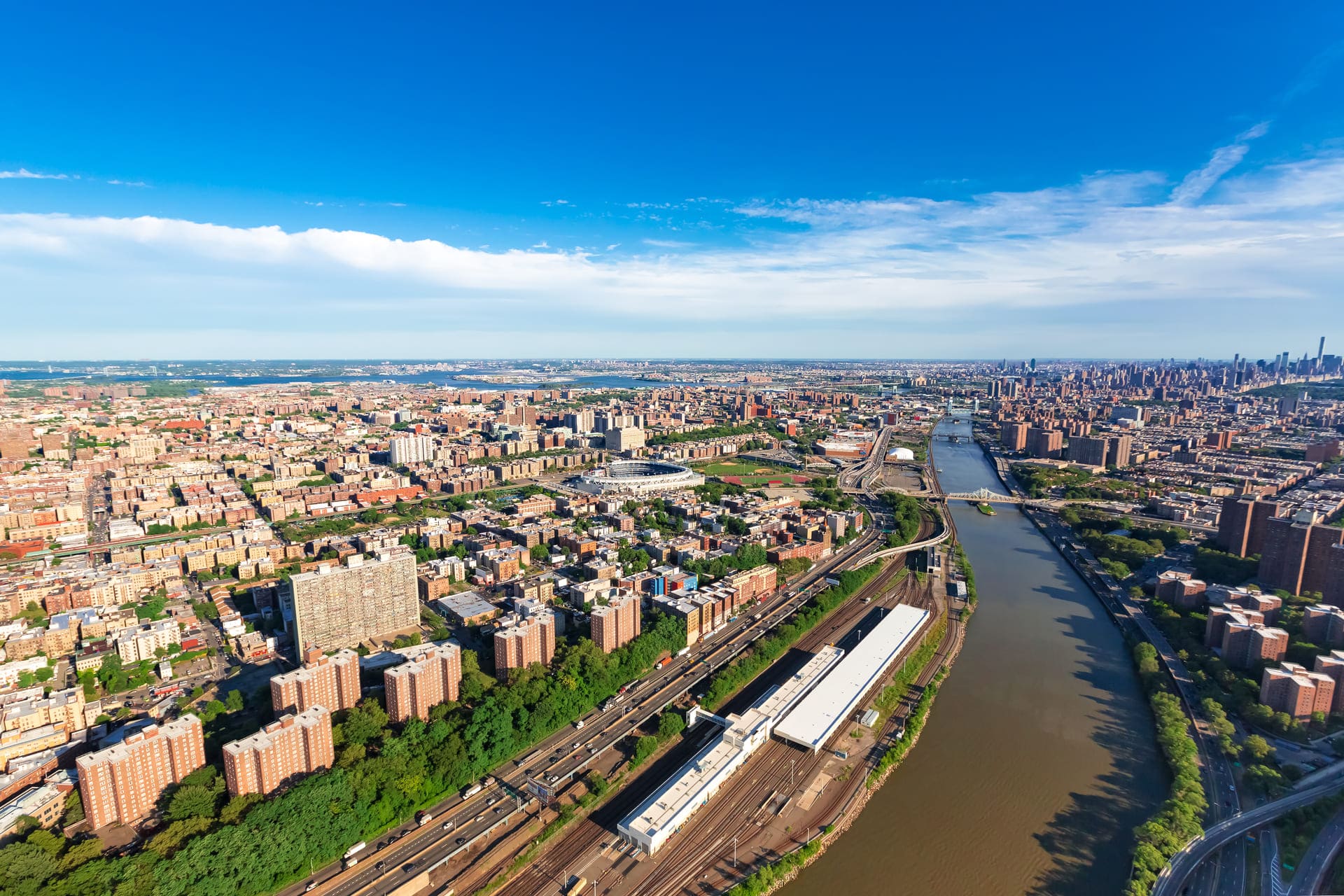 Aerial view of the Bronx, New York City
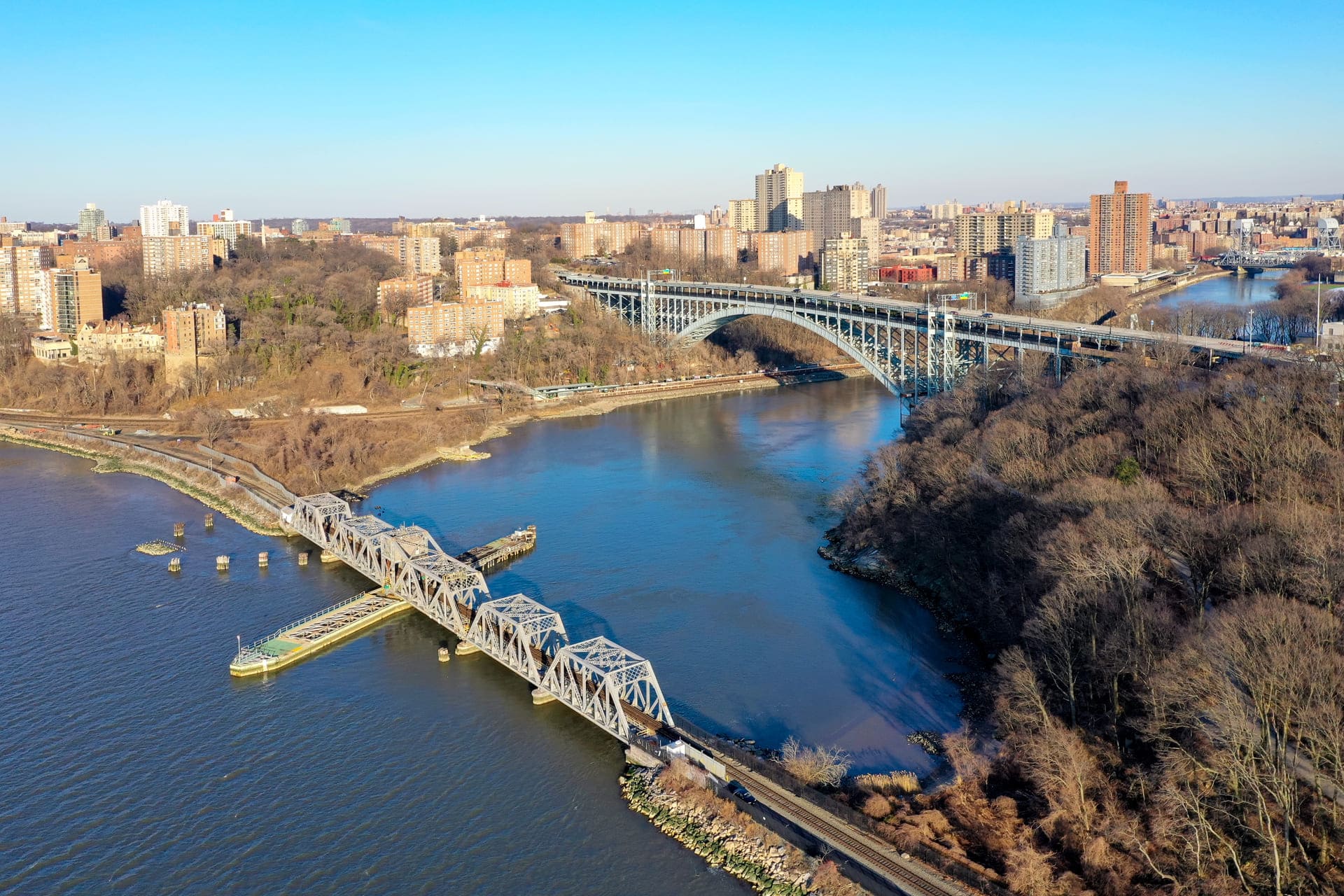 Henry Hudson and Spuyten Duyvil Bridges, New York City
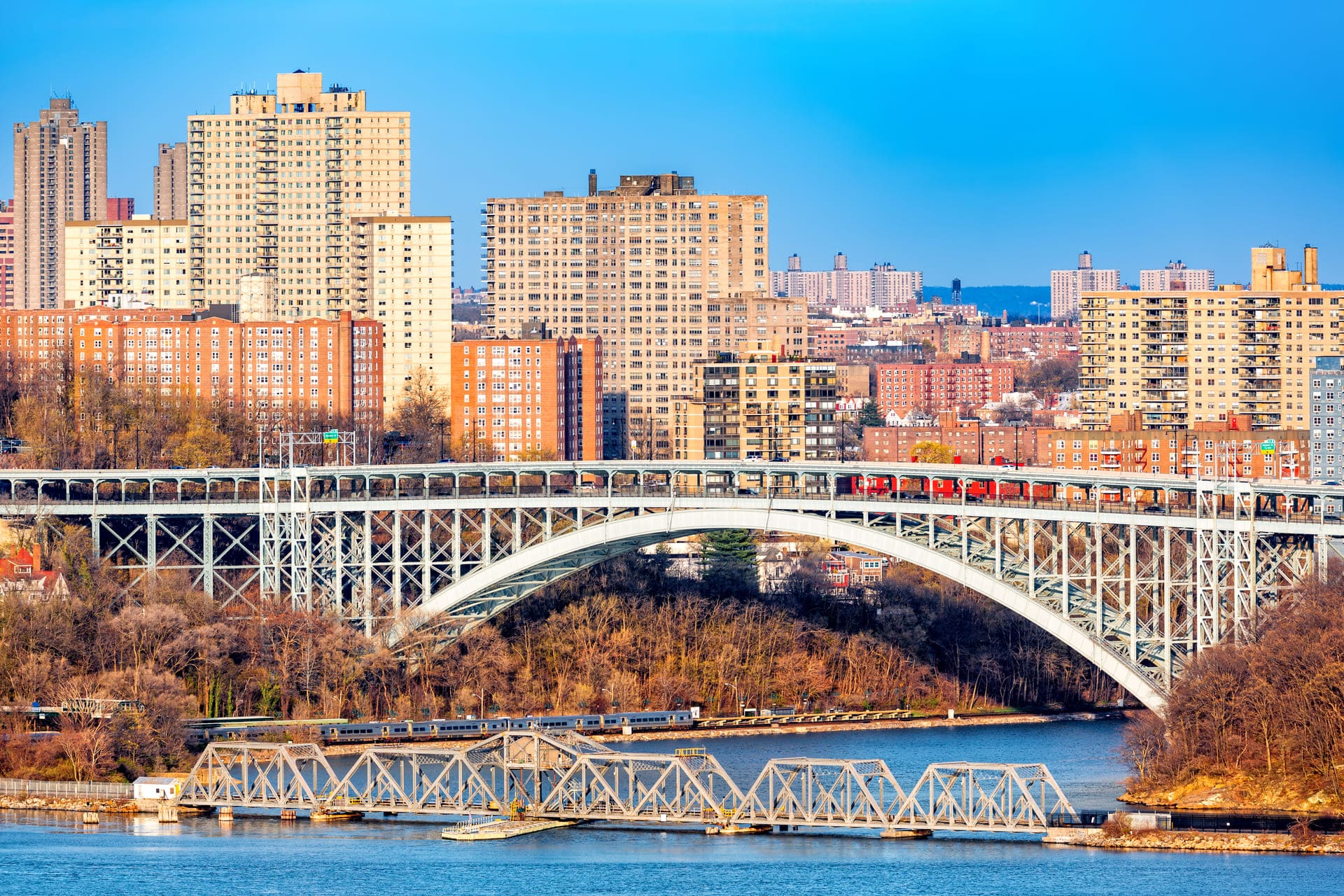 Henry Hudson and Spuyten Duyvil Bridges, New York City
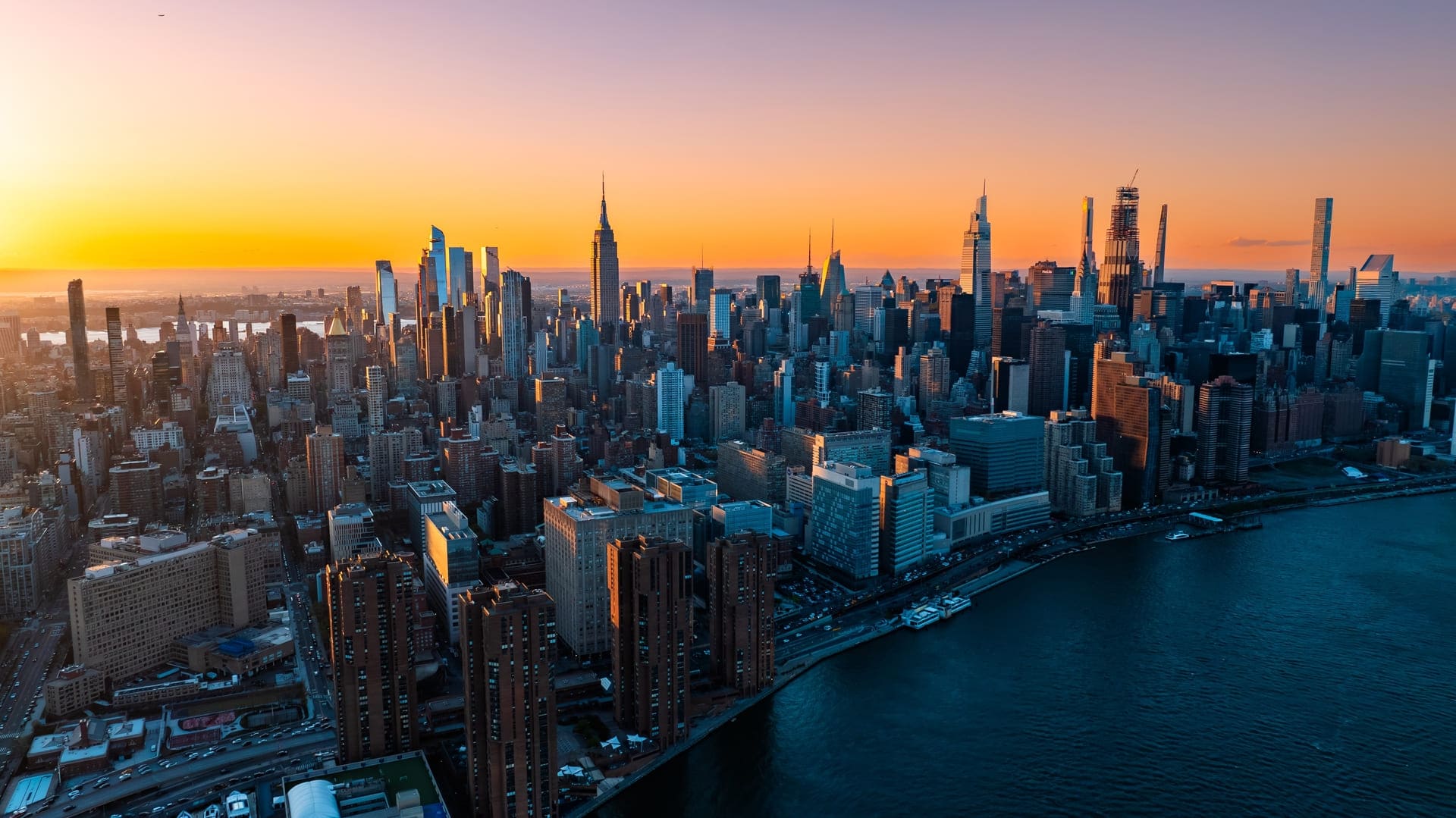 Aerial view of the Bronx, New York City
- Lane Construction, the US subsidiary of the Webuild Group, completes construction of the Unionport Bridge in the Bronx
- The new bascule bridge over Westchester Creek replaces the 1950s infrastructure and ensures smoother traffic, faster lifts and safer connections between Bronx neighbourhoods
- The new bridge consists of two side-by-side spans, six lanes, a cycle path and a pedestrian walkway
- Built in phases without stopping road or maritime traffic, the new bridge demonstrates the complexity of urban construction sites in one of the most dynamic metropolises in the world
- With the Unionport Bridge, the Webuild Group consolidates its leadership in the construction of complex bridges, following iconic works in California, Turkey and Australia
read more

New York always wakes up a little earlier than everyone else. In the Bronx, at the junction between the Bruckner Expressway and the Westchester Creek, the sound of lorries begins echoing off the brick façades of the buildings even before dawn. Here, where tens of thousands of commuters pass each day on their way to Manhattan, Queens or Westchester County, the city is not just an icon but a living organism, hungry for transportation infrastructure that works.
For this reason, the completion of the Unionport Bridge represents a strategic step for New York’s urban mobility, a necessary piece in a metropolis that continues to grow, change and move.
The new bridge – built by Lane, the US subsidiary of the Webuild Group – is a state-of-the-art bascule bridge located along one of the most complex bottlenecks in the Bronx road system. It replaces the old bridge from the 1950s and features two independent spans, each with three lanes.
This creates a backbone that connects the Cross Bronx Expressway, the Bruckner Expressway and the Hutchinson River Parkway, three of the busiest arteries on the entire East Coast.
Bronx Bridge: The New York Bridge that Tells the Story of a Neighbourhood
Those familiar with this part of New York know that the Unionport Bridge is more than just a crossing. Not far from the structure lie Castle Hill, Parkchester, Unionport and Throgs Neck: working-class neighbourhoods, rich in history, crossroads of diverse communities and small-scale economies that depend on daily mobility.
For residents, this New York bridge has always been an essential passage: students heading to the Bronx charter schools; workers at LaGuardia Airport; MTA bus drivers; small business owners travelling each day to local markets.
Over the years, however, the old bridge had begun showing its vulnerabilities. Slow openings, complex maintenance, constant bottlenecks. Queues could stretch for kilometres, while Westchester Creek remained a transit corridor for dozens of commercial vessels.
The new Bronx bridge addresses a challenge no city knows better than New York: ensuring the always difficult coexistence between road traffic and maritime traffic. For this reason, Lane and Webuild installed advanced mechanical and electrical systems capable of lifting the span quickly to allow navigation, without disrupting urban transport more than necessary.
A Construction Site That Could Not Block Urban Mobility
In New York, shutting down urban mobility is not an option. For this reason, the construction took place in phases, keeping both vehicle traffic and maritime traffic active, in line with the objectives of the NYC Department of Transportation. Temporary diversions, controlled lifts, night-time assemblies to avoid disrupting daily flows were standard practice throughout the construction process.
In this sense, Lane, together with partner Schiavone Construction Co. LLC, now SPC Construction Co. LLC, led one of the most delicate logistical operations of recent years in the Bronx, coordinating land and marine worksites, cranes positioned on barges and a rotation of technicians specialised in mechanics, structures and safety.
The result is a structure designed to last at least 75 years, equipped with a cycle path and a protected pedestrian walkway, in line with the Vision Zero programme through which New York aims to drastically reduce road accidents. Enhanced lighting and signage complete an infrastructure that looks to the future and to more sustainable transportation.
Sustainable Mobility and Urban Regeneration: The City That Changes, One New Bridge at a Time
To tell the story of the Unionport Bridge is to tell the story of New York as it truly is: a metropolis that constantly reinvents itself through infrastructural development.
From the new terminal at LaGuardia Airport to the Gateway Tunnel works between New York and New Jersey, from the restyling of the BQE viaducts to coastal resilience plans in Queens and Manhattan, the city is experiencing a period of transformation that puts major works back at the centre.
Within this broader plan, the Bronx—often perceived as peripheral—is becoming one of the most interesting laboratories. In recent years the borough has seen the opening of new parks along the Hutchinson River, investments in public urban transport and an increasing number of private construction sites.
In this context, the Unionport Bridge is a piece of transportation infrastructure, but also a symbol of urban redevelopment.
A Piece in Webuild’s Global Network of Bridges
For Webuild, the completion of the Unionport Bridge confirms the Group’s leadership in the field of complex bridges: over 1,000 km built worldwide and a legacy of iconic works such as the Long Beach International Gateway Bridge in California, the Second Bosphorus Bridge in Istanbul and the skytrain viaduct of Sydney Metro Northwest in Australia.
The New York infrastructure also strengthens Lane’s role in the United States, a strategic market in which the Group continues to grow thanks to its ability to operate in complex urban environments.