


 Roboplant Plant, Italy
 Roboplant Plant, Italy
 Roboplant Plant, Italy
 Roboplant Plant, Italy
 Roboplant Plant, Italy
 Roboplant Plant, Italy
 Roboplant Plant, Italy
 Laboratory at GERD, Ethiopia
 Laboratory at GERD, Ethiopia
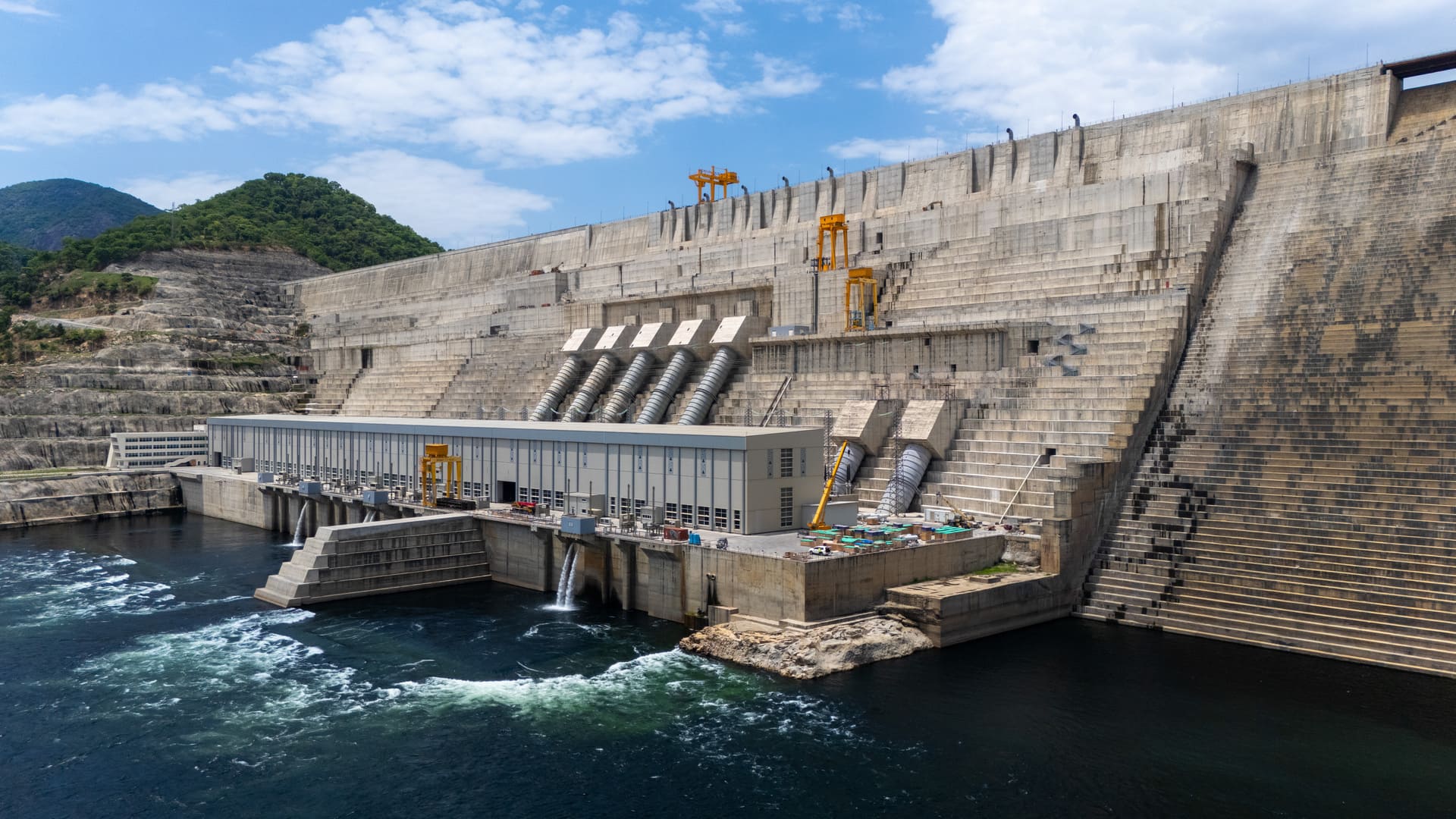 GERD Hydroelectric Plant, Ethiopia
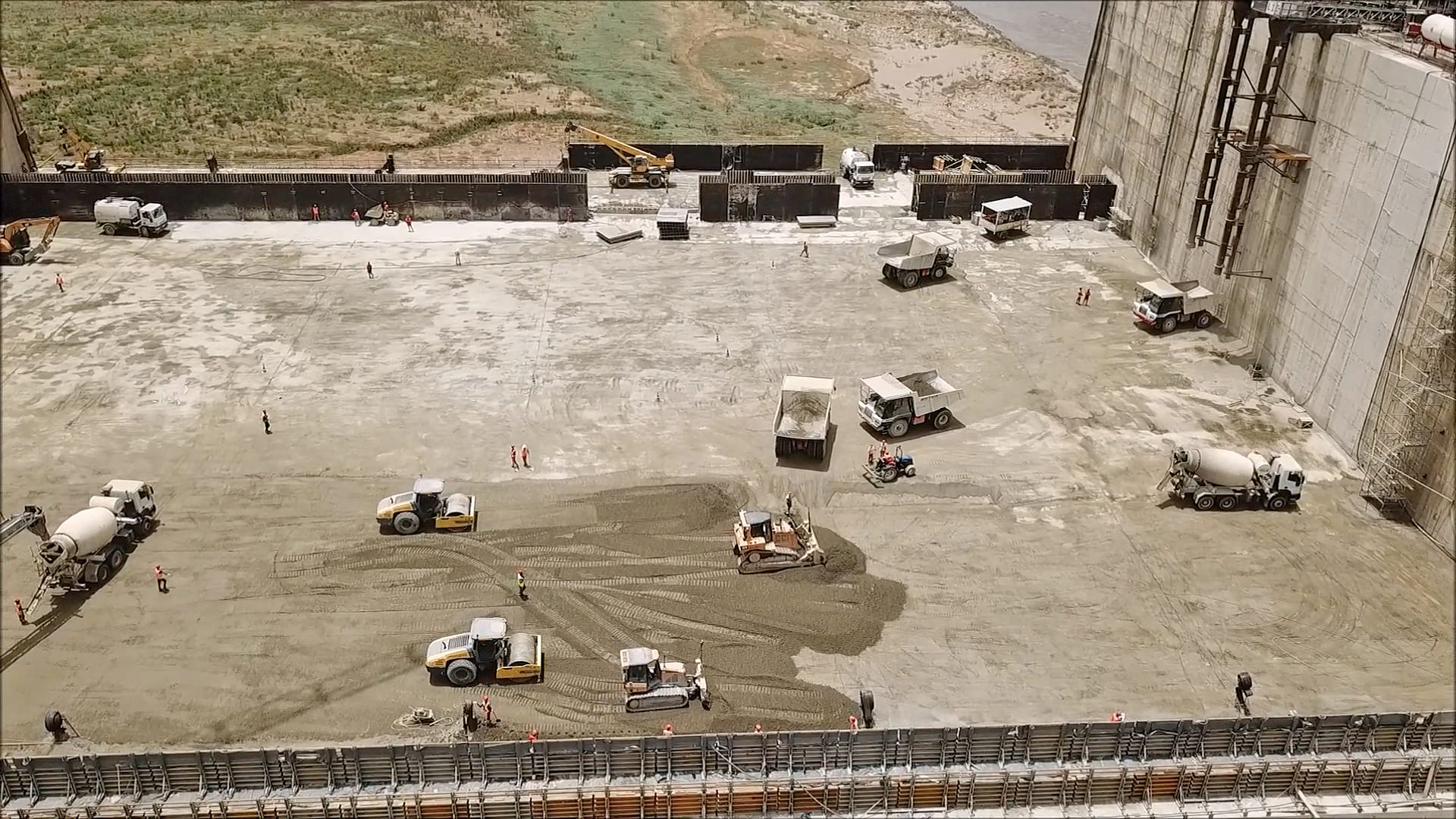 Construction of the GERD Plant, Ethiopia
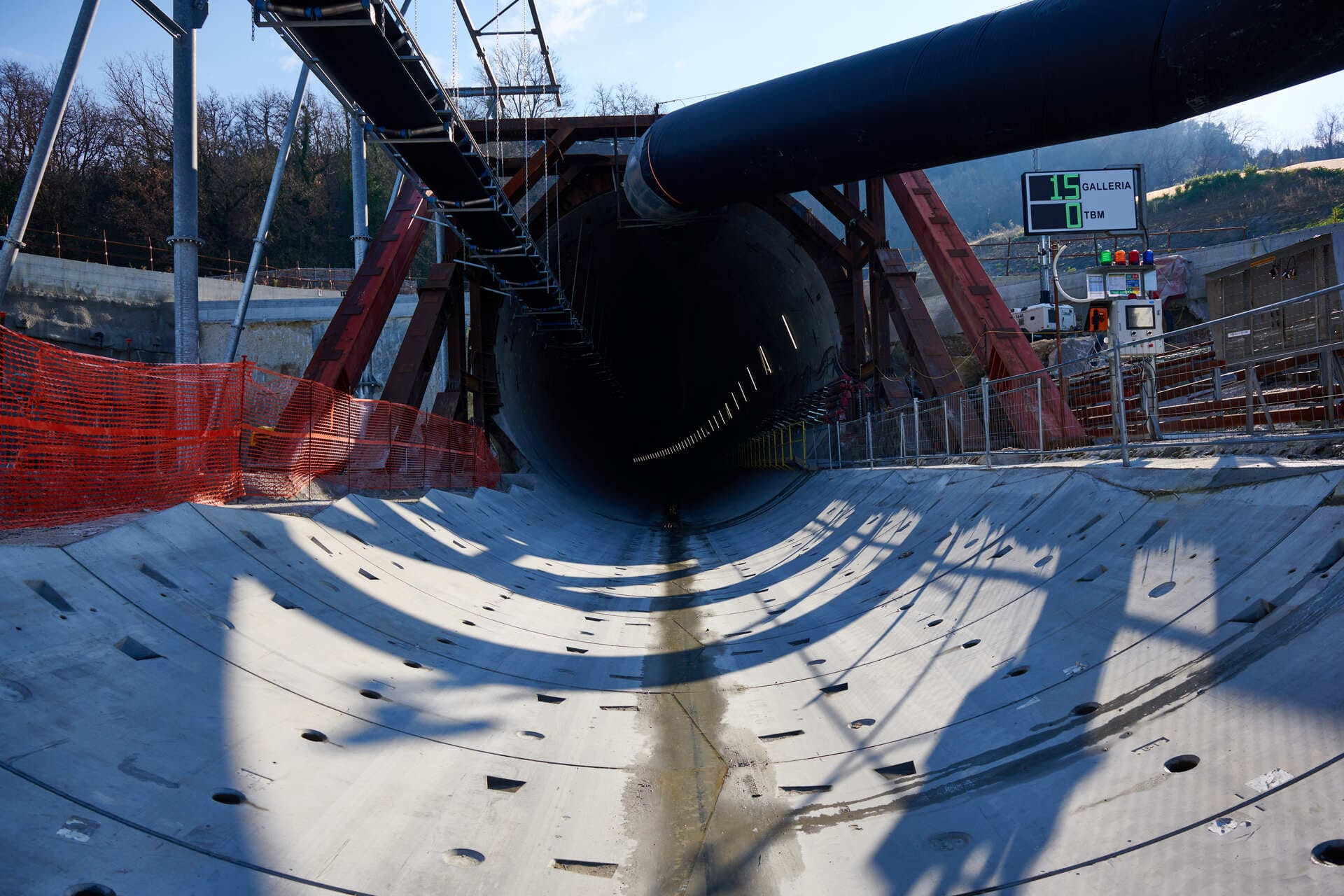 Naples-Bari High-Speed Railway Construction Site
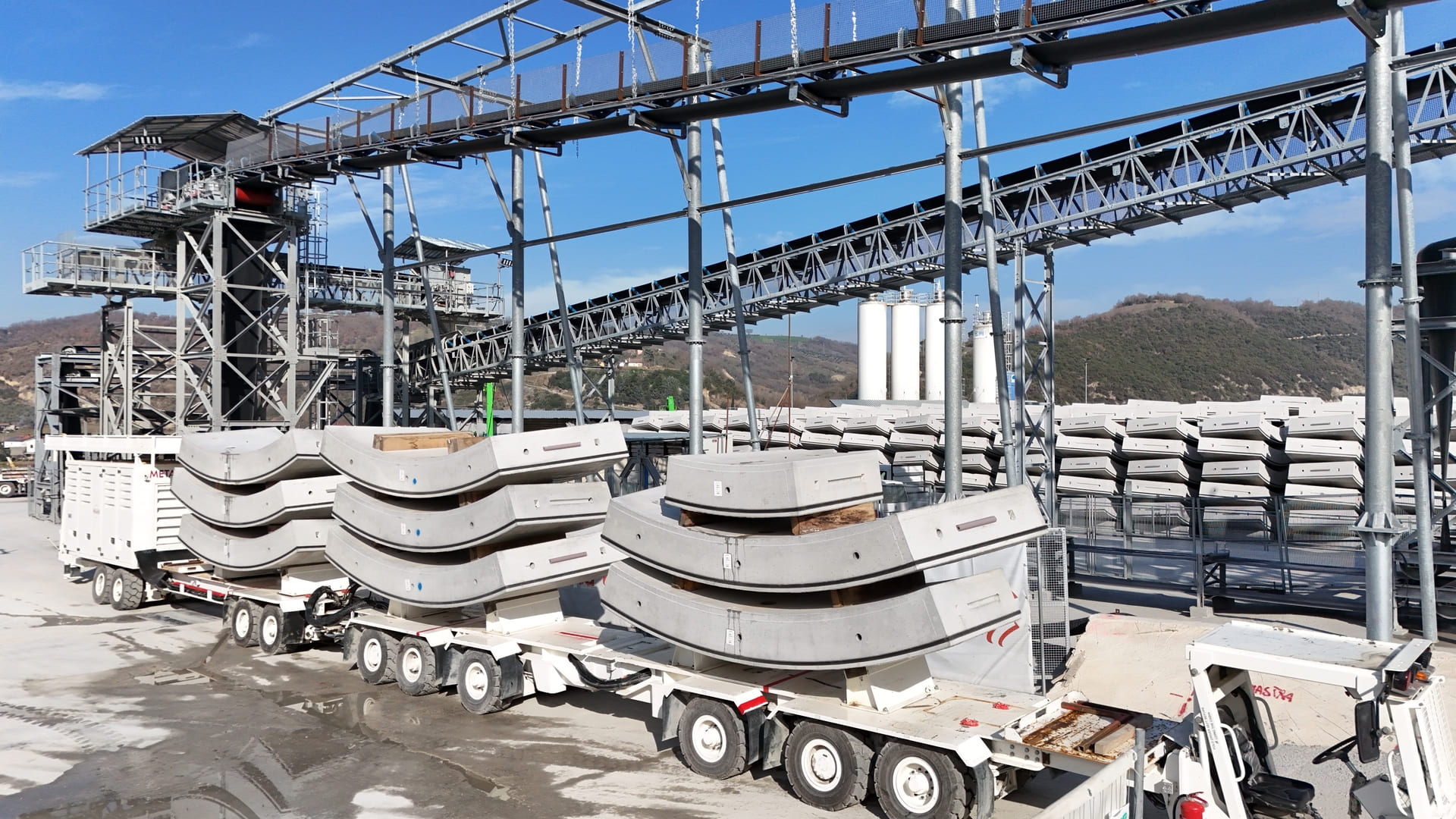 Naples-Bari High-Speed Railway Construction Site
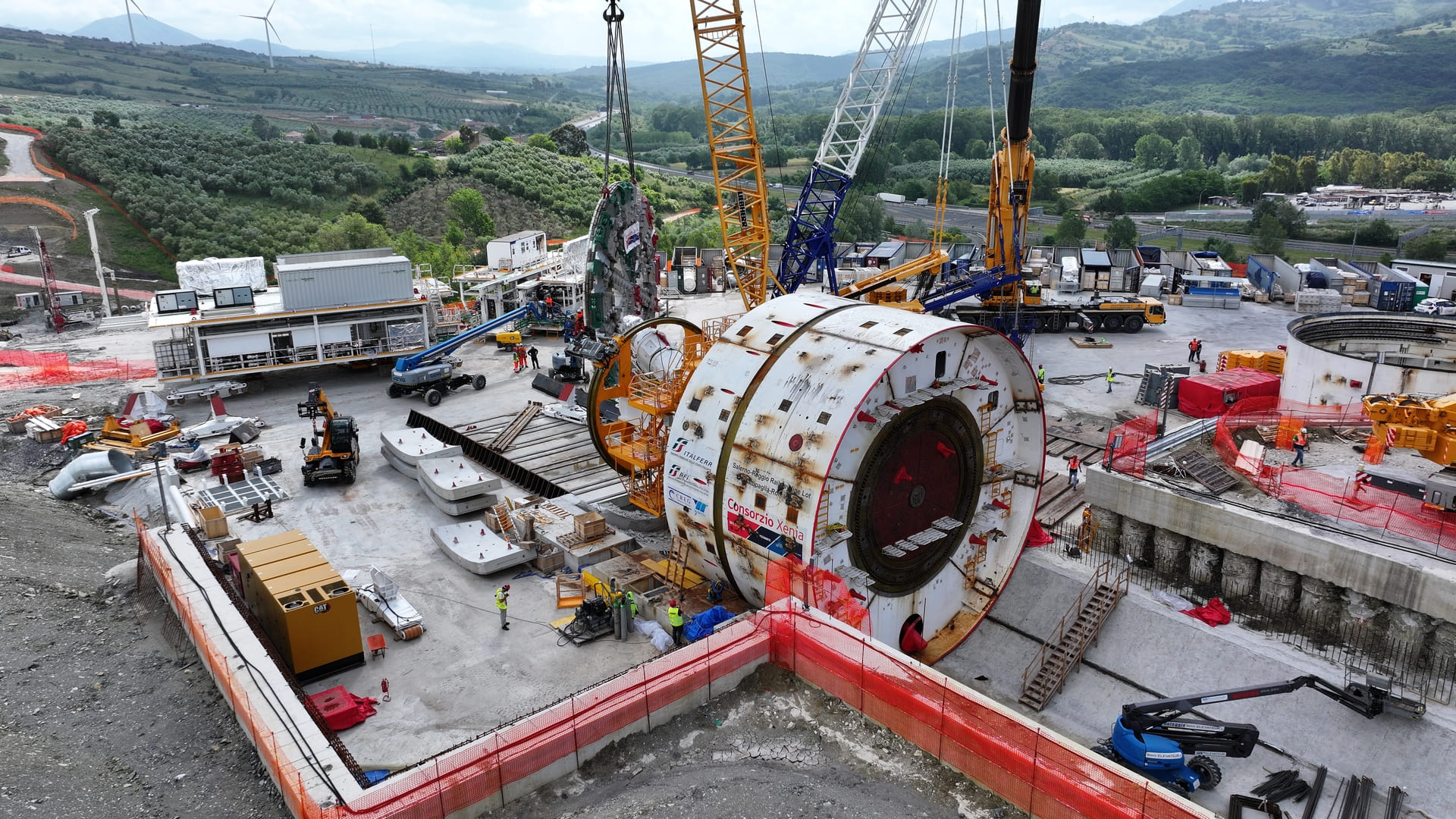 TBM operating at the Salerno-Reggio Calabria High-Speed Railway Construction Site
- An invisible revolution is transforming the construction world: innovative materials that make once-unthinkable megaprojects possible
- From high-performance concrete to advanced composite materials, material innovation is redefining the design of major infrastructure
- Webuild tests special compounds for extreme works such as the GERD, where concrete becomes industrial technology
- With Roboplant, the Group introduces a robotised segment factory that raises standards, quality and speed in the most complex tunnels
- The real revolution in construction runs silently through materials: what cannot be seen, yet guarantees safety, durability and progress
read more

There is a revolution taking place that makes no noise. A revolution made of molecules, algorithms, alloys and compounds: the revolution in innovative materials. Without the profound transformation that over the past thirty years has changed the way we imagine and construct the world, many of the infrastructures we now take for granted simply would not exist.
The growth of global infrastructure—from High-Speed rail networks to major energy hubs, from vertical metropolises to monumental hydraulic works—has not been driven solely by new construction techniques or more powerful machines, but above all by the materials advances.
New high-performance concretes, able to withstand pressures and life cycles unimaginable even twenty years ago, have made it possible to build ever-higher dams, slimmer bridges, and tunnels carved through extreme geological conditions. Ultra-high-strength steels have given shape to lighter yet more robust beams, pushing architects and engineers beyond the limits of what was once thought possible. Composite materials—from carbon fibres to hybrid structures—have introduced the ability to absorb stresses and vibrations, opening new horizons for the rail sector and large suspended decks.
According to the latest Global Construction 2040 report, more than 60% of strategic infrastructure in the coming decade will use advanced materials that today are still experimental, while the push towards decarbonisation is accelerating the adoption of low-carbon cements, recycled additives, low-energy alloys and automated industrial processes.
What is happening, in other words, is not a simple technological innovation: it is a new grammar of infrastructure construction.
Advanced Materials, New Technologies: The Evolution Shaping Major Infrastructure
Engineers describe this transition as a change of paradigm in infrastructure development. Once the material was adapted to the project, today megaprojects are designed starting from the material. It is a fundamental difference, which also has an impact on construction systems and technological advancements.
New hydroelectric power plants, ultra-deep underground metros, bridges that defy oceans and hurricanes are born from an extremely sophisticated balance between material composition, production processes and performance. In the past, an “impossible” infrastructure was one that exceeded a physical limit. Today, it is one that maximises the potential of materials that did not exist until yesterday.
In this global context, Webuild has made material innovation an integral part of its industrial DNA. The megaprojects the Group delivers worldwide are often the most advanced demonstration of how new compounds, new technologies and new processes can become real infrastructure.
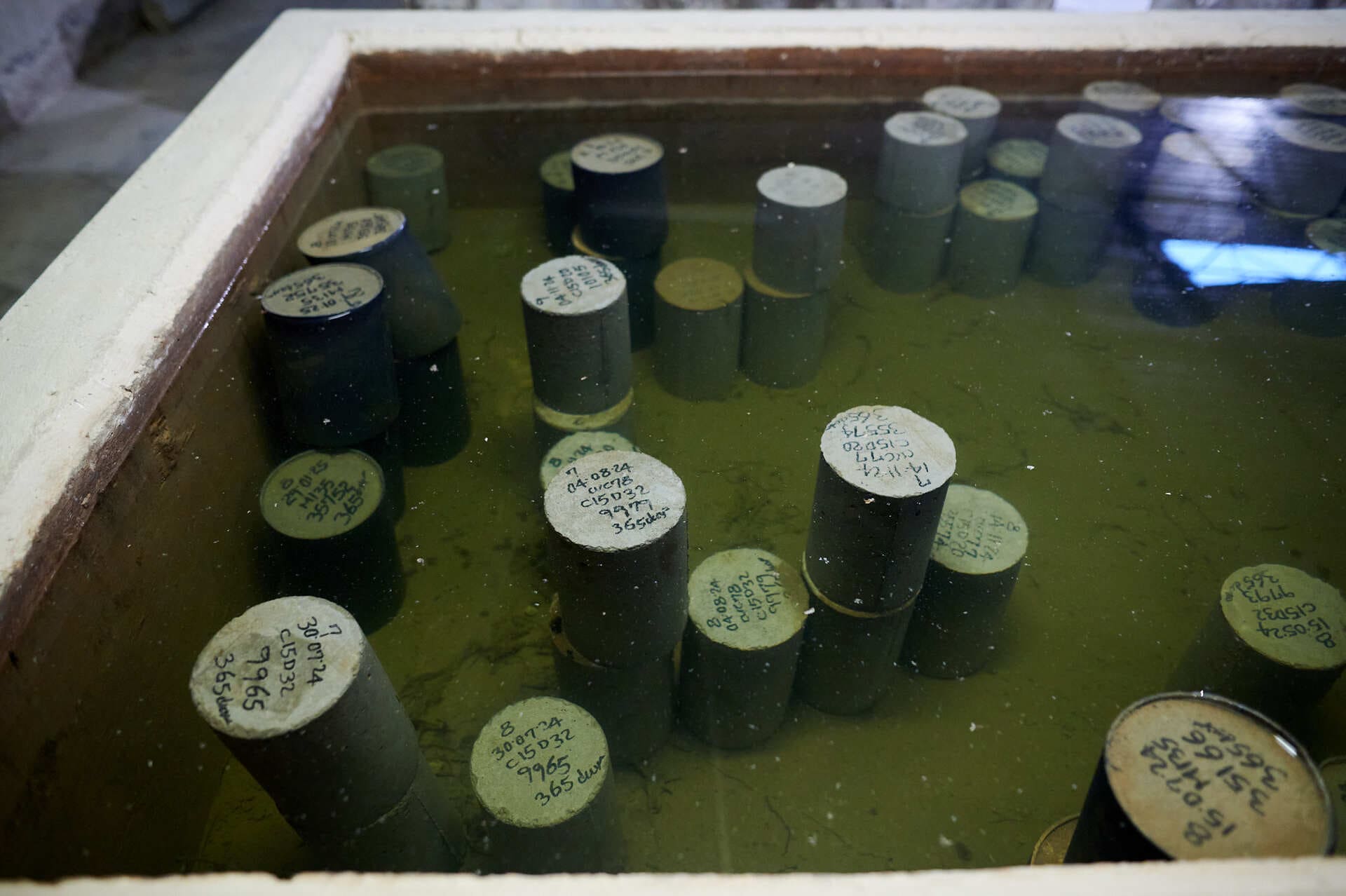
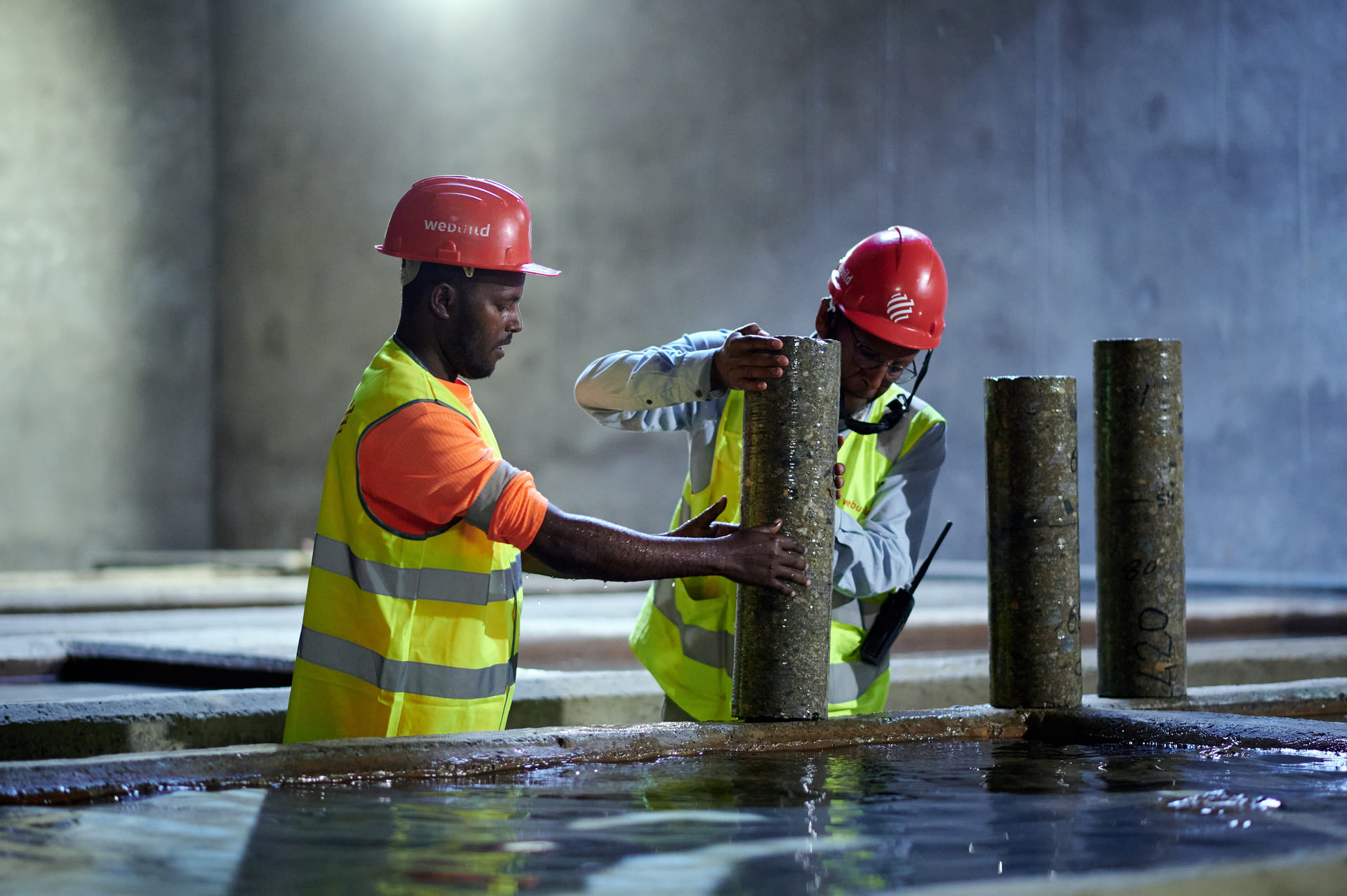
In major hydroelectric projects, such as the Grand Ethiopian Renaissance Dam (the dam inaugurated in Ethiopia in September), the concrete used by Webuild was monitored, studied and selected within a Laboratory where up to 300 people worked. Every mix, every pour, was the result of laboratory analysis, simulations and continuous quality checks, which continued even after construction to keep monitoring the behaviour of the RCC used.
Roboplant: The Factory of the Future, Combining Technological Advancements and Sustainability
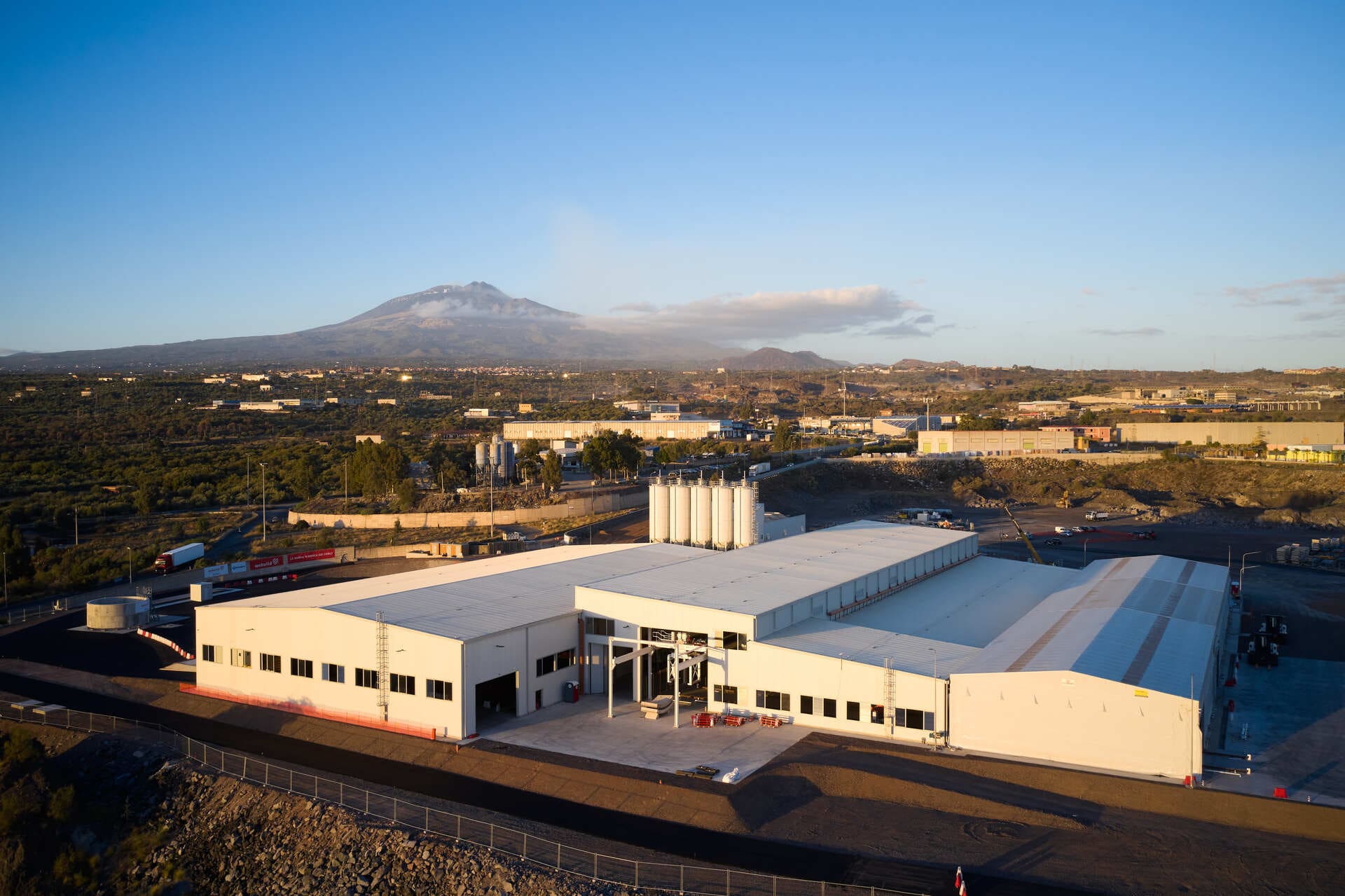
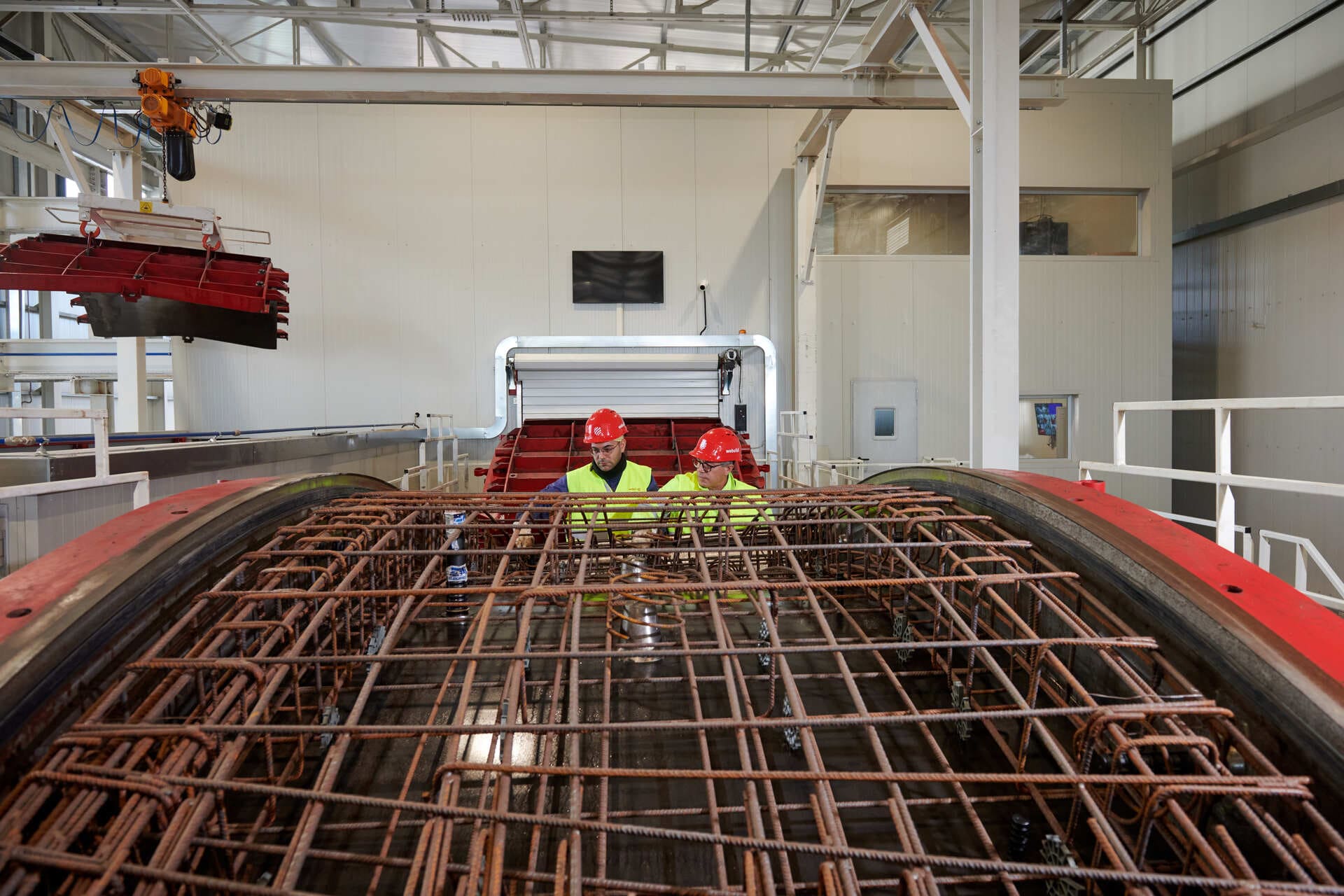
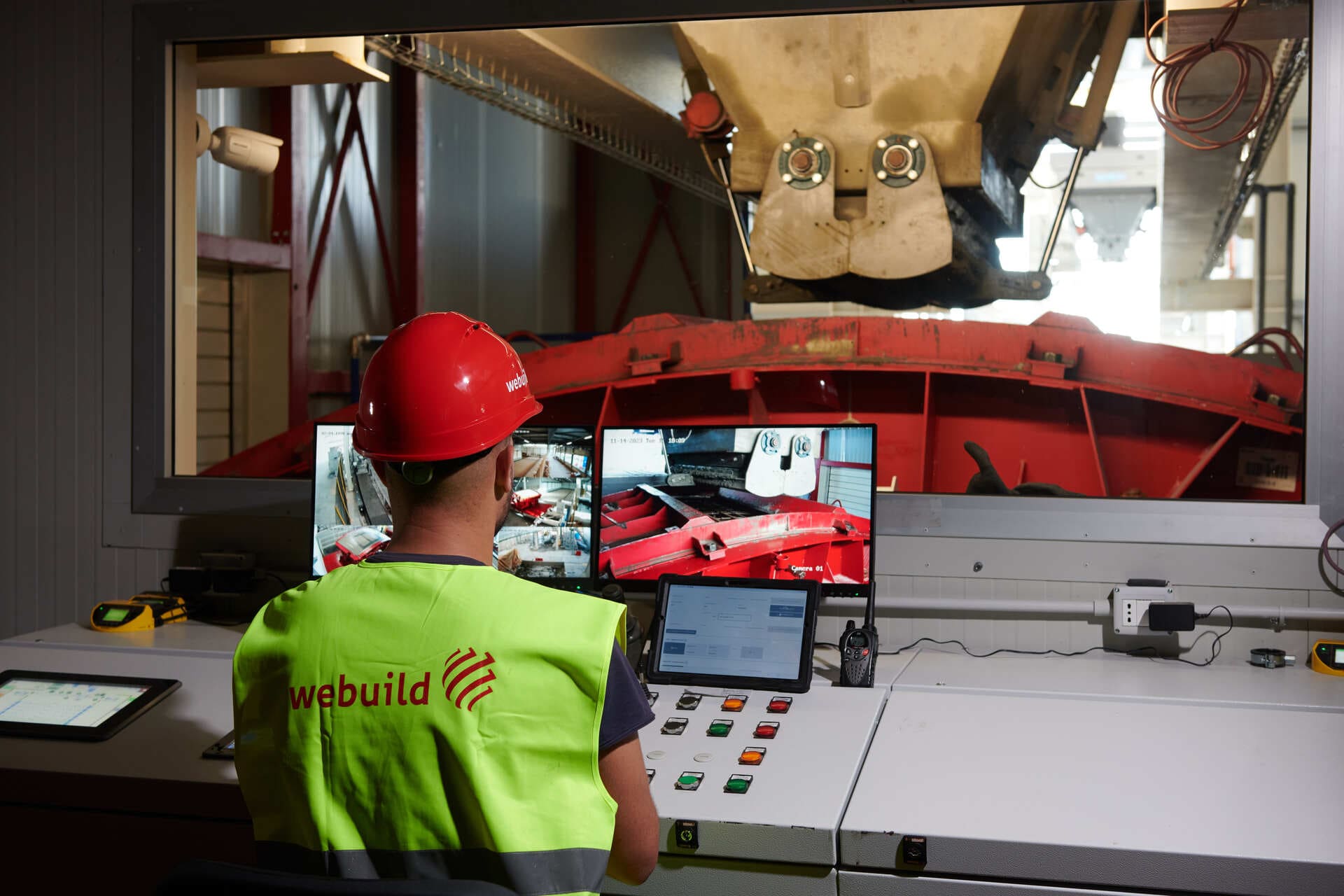
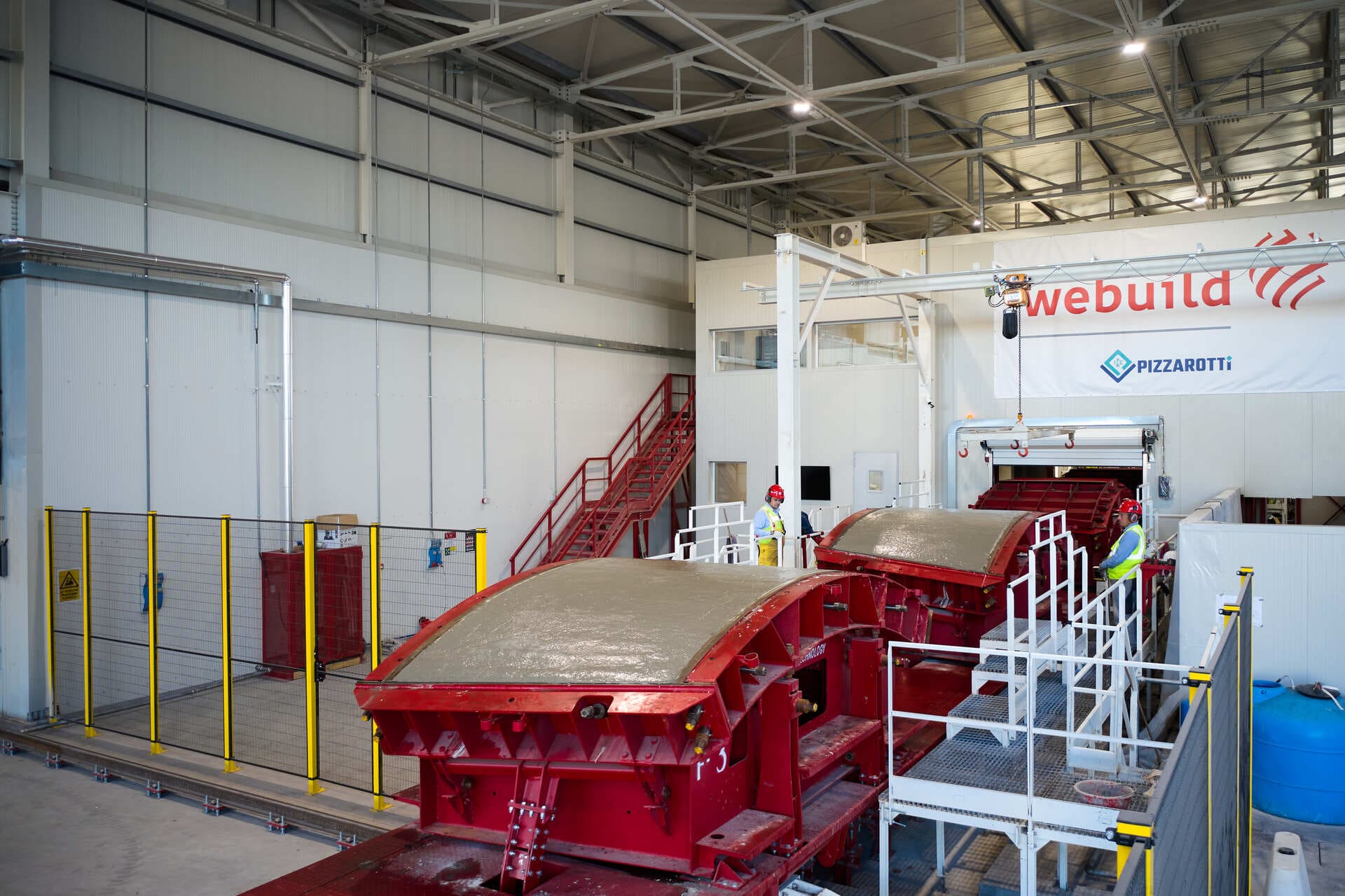
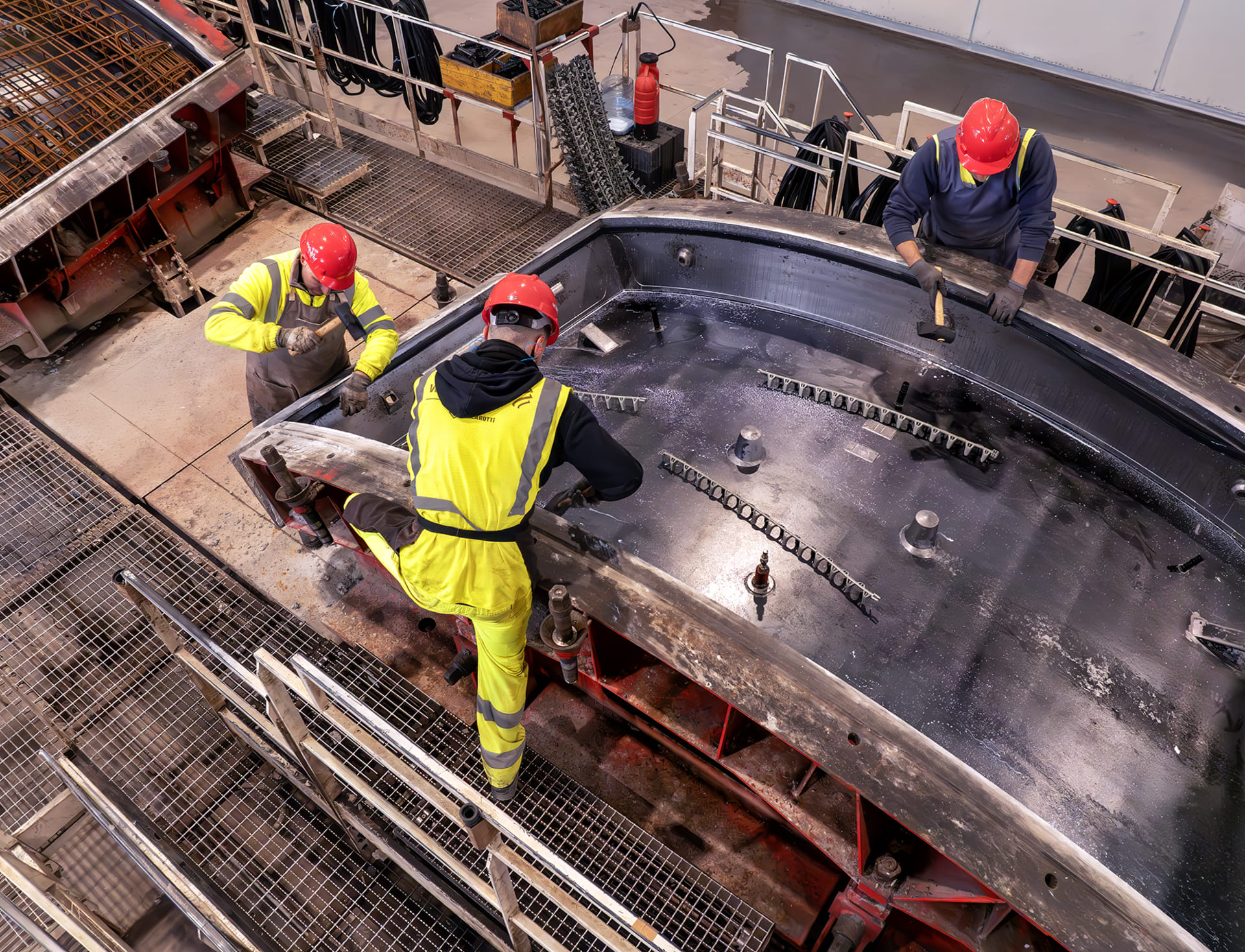
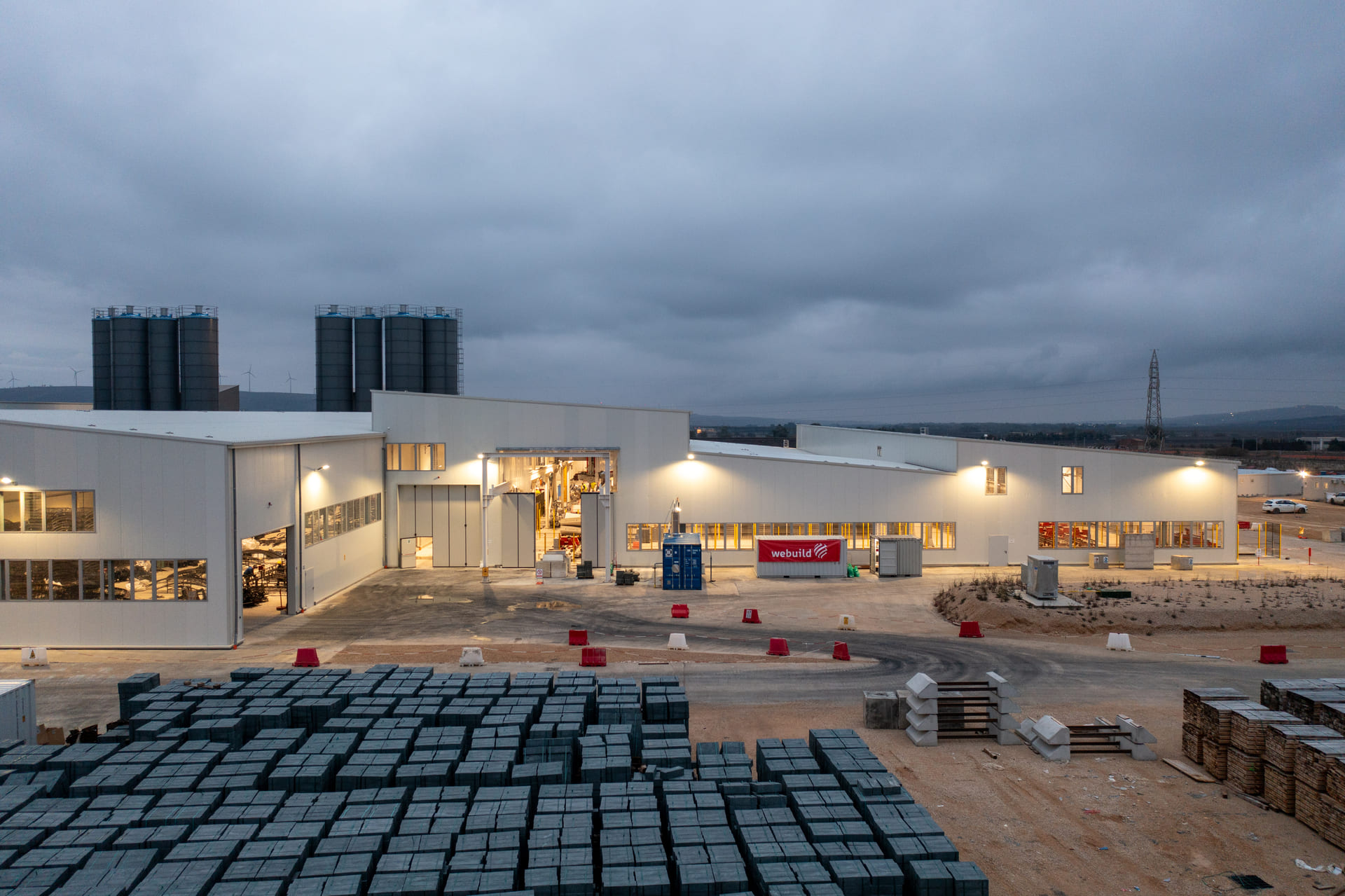
Material innovation, however, is also a matter of industrial processes. Roboplant is a highly innovative technological, robotized, safe, and green factory, developed by Webuild to produce the concrete segments destined for the Tunnel Boring Machines (TBMs) for creating the lining of complex tunnels.
It represents in this respect a generational leap that combines fully robotised production with integrated quality control across the entire production cycle, along with cementitious compounds optimised for strength, durability and millimetric precision.
Roboplant, whose first facility opened in Belpasso in Sicily, does not simply produce segments. It produces a new industrial standard capable of reducing waste, speeding up construction and guaranteeing superior mechanical performance—crucial when working tens of metres underground in tunnels designed to last more than a century.
This is why every major project delivered by the Group—from the metro systems of Milan, Copenhagen and Paris to the new American infrastructures, from East Africa’s dams to suspended viaducts—carries with it a story of reinvented, advanced materials.
Because many of the infrastructures of the future will not be remembered for an audacious arch or a soaring tower, but for what cannot be seen: the concrete that does not crack, the steel that does not deform, the segments that behave as a single structure. In other words, the materials that, silently, enable the world to grow.