


 View of the city of Palermo
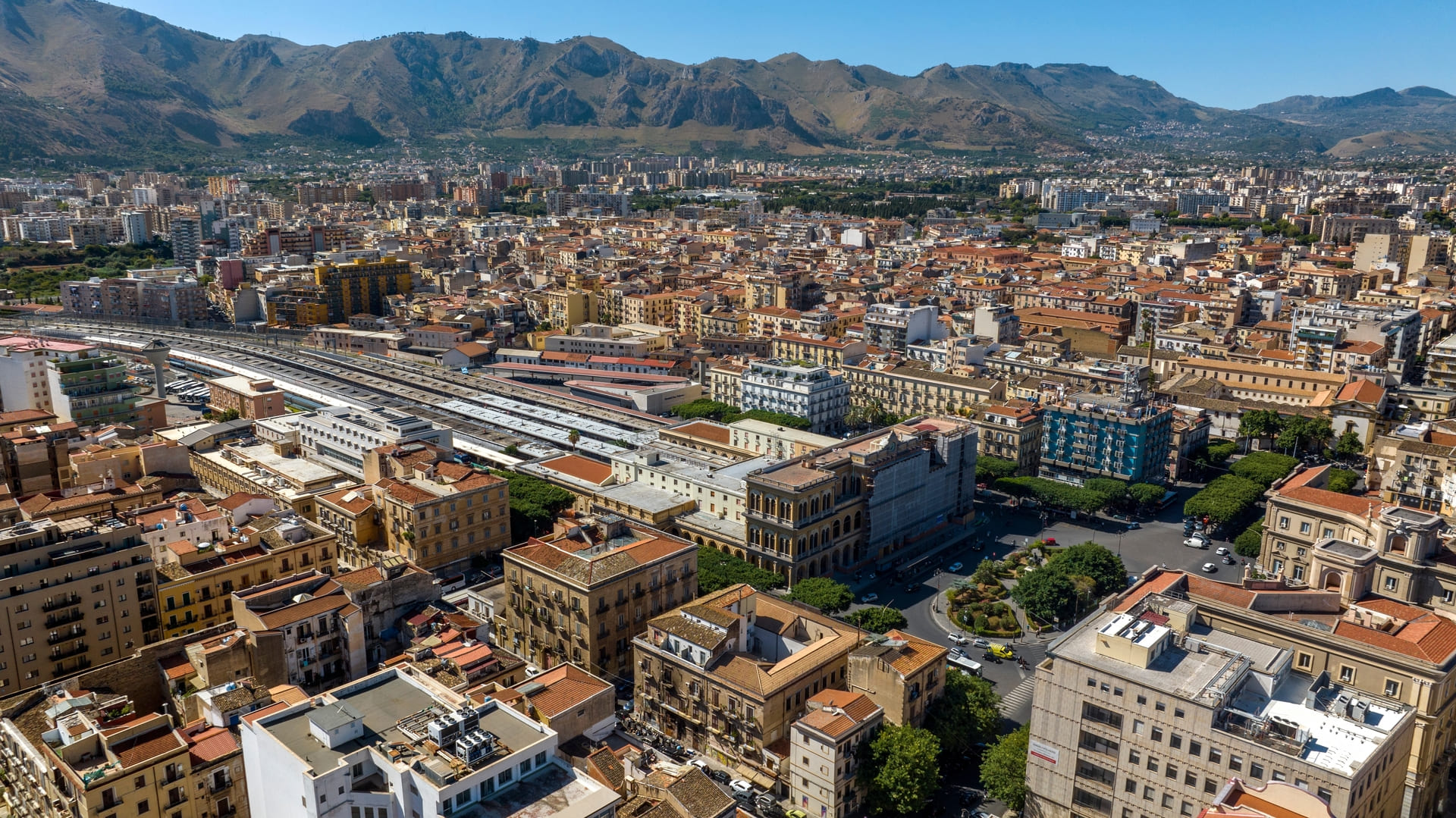 Palermo Central Station
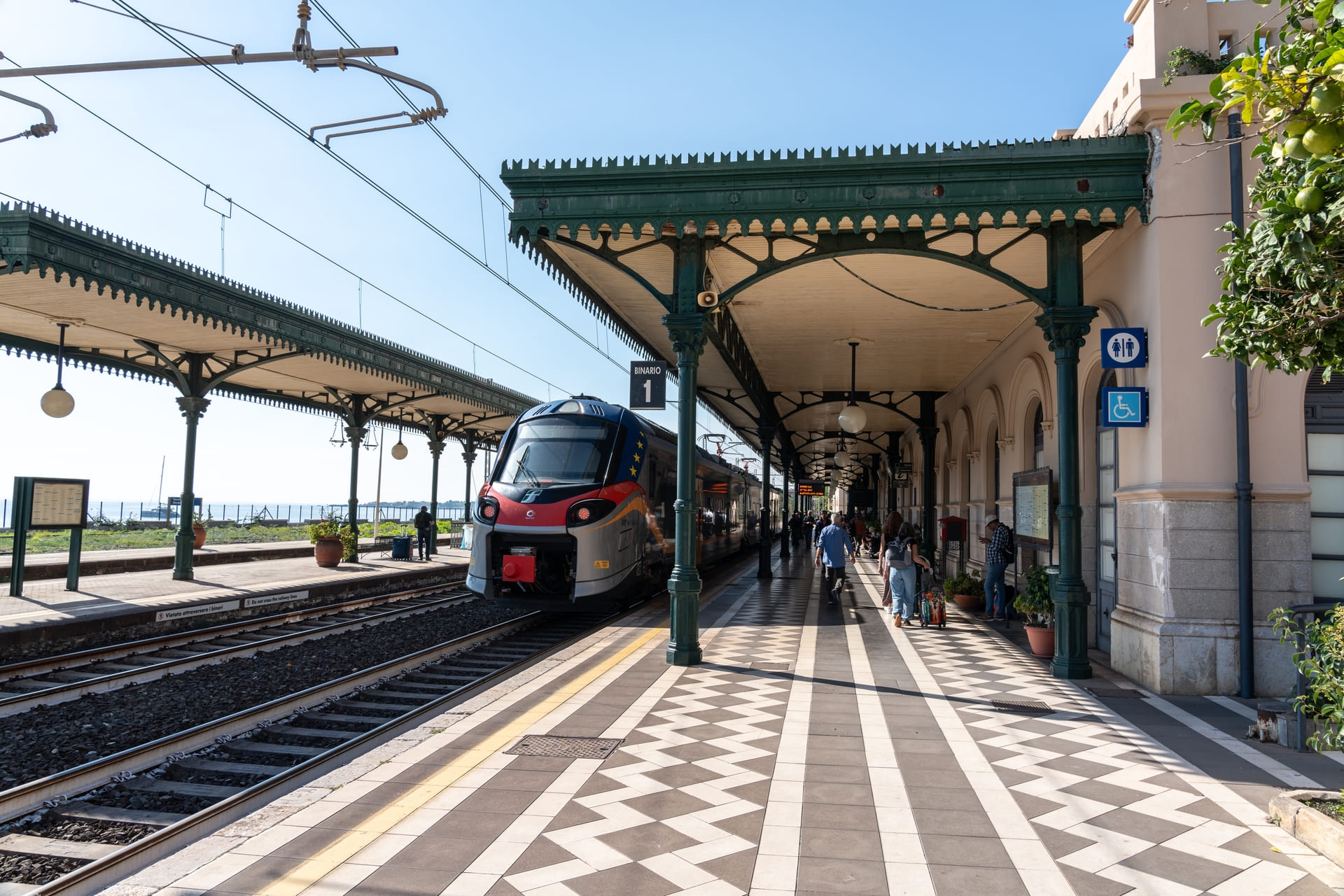 Taormina Station
 Messina, Sicily
 Catania, Sicily
 Messina-Catania High-Capacity Railway, Lot 2 construction site – Forza d'Agrò
 Messina-Catania High-Capacity Railway, Lot 2 construction site – Forza d'Agrò
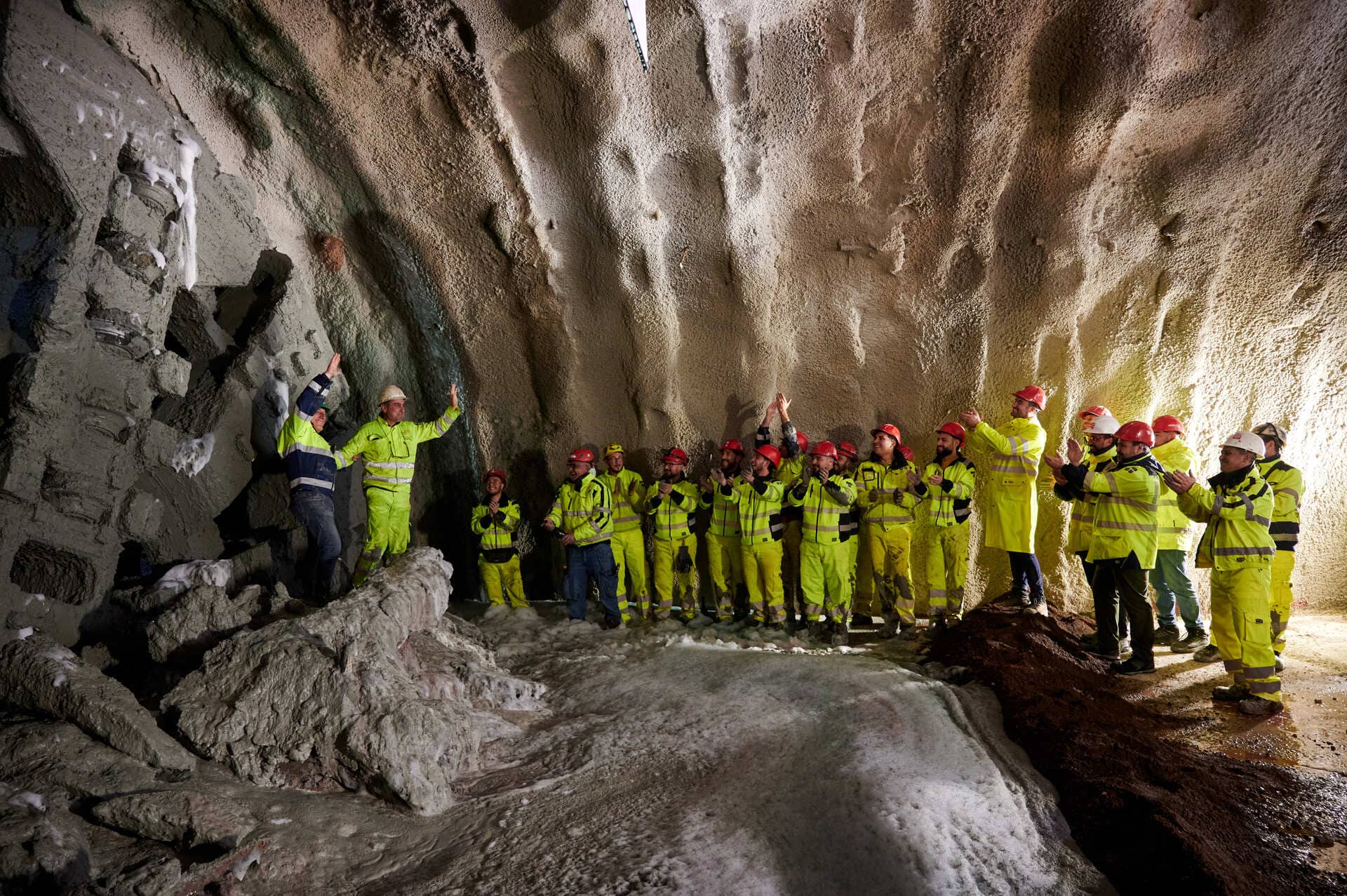 Messina-Catania High-Capacity Railway, Lot 2 construction site – Forza d'Agrò
 Messina-Catania High-Capacity Railway, Lot 2 construction site – Forza d'Agrò
 Palermo-Catania High-Capacity Line
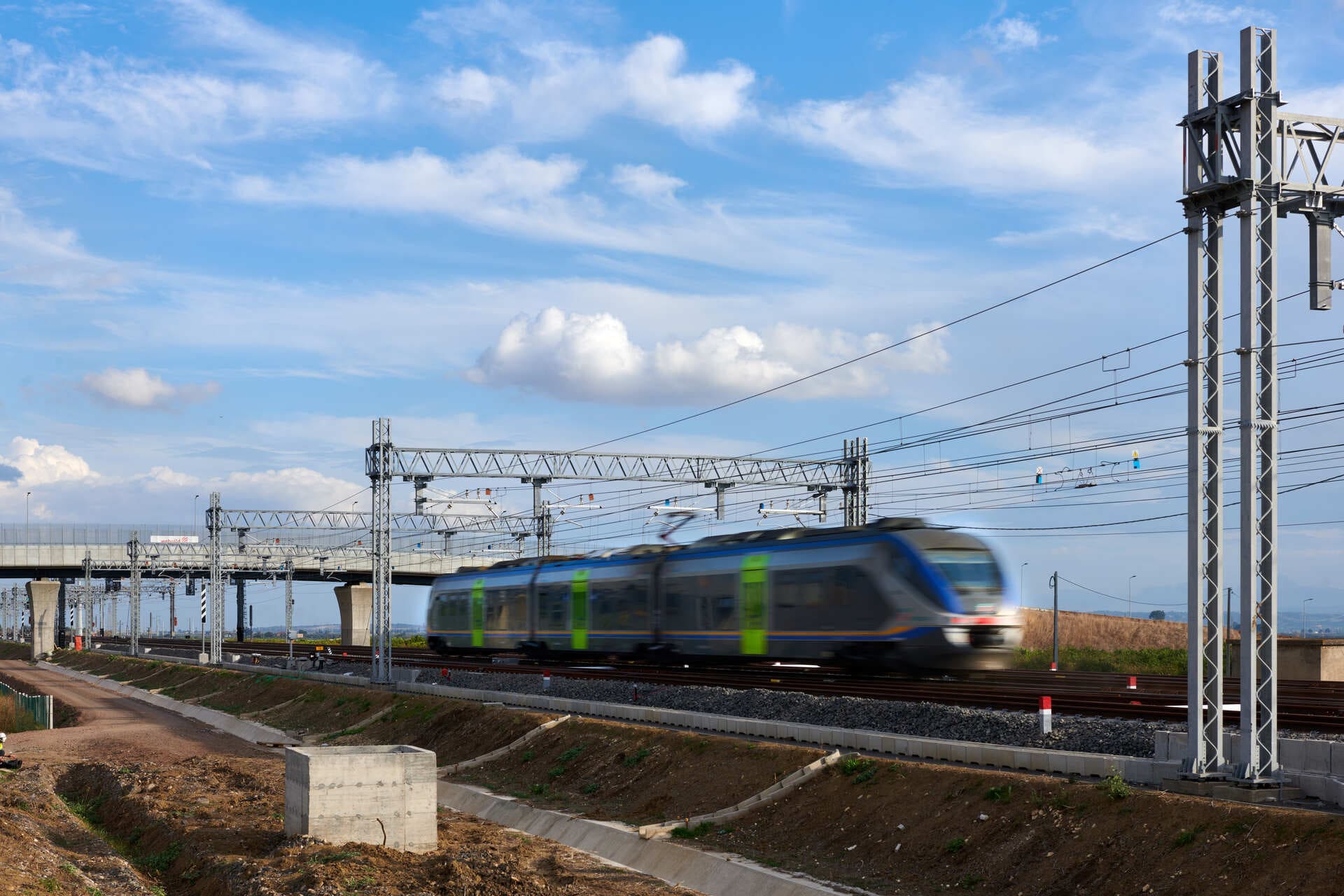 Palermo-Catania High-Capacity Line
 Palermo-Catania High-Capacity Line
 Messina-Catania section, Lot 1 construction site
 Messina-Catania section, Lot 1 construction site
 Messina-Catania section, Lot 1 construction site
 Messina-Catania section, Lot 1 construction site
 Messina-Catania section, Lot 1 construction site
- With completion of the Forza d’Agrò tunnel, construction of the fast Palermo–Catania–Messina line moves into full swing.
- The new line will allow travel between Messina and Catania in 45 minutes and between Palermo and Catania in around two hours – up to 60 minutes less than today.
- Between Fiumefreddo and Giampilieri lies one of the most complex segments of the project: six twin-bore tunnels, two single-bore tunnels and seven viaducts.
- Inserted into the Scandinavian–Mediterranean Corridor, the railway axis projects the island into Europe’s strategic network.
- The project involves more than 10,200 people and 7,500 supply-chain companies across southern Italy.
read more

The final diaphragm fell on a February morning. In Forza d’Agrò, beneath a hill overlooking the Ionian Sea and the temples of Taormina, the mechanical Tunnel Boring Machine (TBM) “Alessia” completed excavation of the first tunnel on the new high-capacity Messina–Catania railway line, the infrastructure project being built by the Webuild Group, commissioned by RFI – Gruppo FS Italiane: a tunnel of around 2.5 kilometres, the first piece of a doubling scheme set to transform the way people travel in eastern Sicily and, more profoundly, the island’s economic geography.
The milestone marks both a symbolic and a technical turning point: progress on the Taormina/Letojanni–Giampilieri lot, an integral part of the Palermo–Catania–Messina axis and of the Scandinavian-Mediterranean Corridor of the European Trans-European Transport Network (TEN-T), is not merely a railway line project but the ignition of a system that promises to reshape everyday life across an entire region.
Messina-Catania: Inside the Mountain, Beyond the Historic Railway Line
The new infrastructure is founded on a clear premise: to shift the alignment inland from the historic coastal line, vulnerable and winding, and to build a resilient railway line capable of guaranteeing speed and reliability over the long term.
The construction site between Fiumefreddo (Catania) and Giampilieri (Messina) extends for more than 42 kilometres, of which 28.4 lie within the Taormina/Letojanni–Giampilieri lot alone. The plans provide for six twin-bore tunnels, two single-bore tunnels and seven viaducts. Among the major infrastructures, the Sciglio tunnel stands out at over nine kilometres, destined to become the longest across the entire segment.
The TBMs in operation work in “dual mode” to adapt to geologically heterogeneous ground conditions, with monitoring systems that read soil behaviour in real time as excavation advances. It represents a technological leap from the nineteenth-century railways that cut across the island along the coast and through valleys, when the priority was to connect ports to agricultural and mining markets.
Today the objective is different: to integrate Sicily into the heart of the European transport network.
Behind the Forza d’Agrò tunnel lies a broader productive engine. The Palermo–Catania–Messina doubling forms part of the 20 projects that the Webuild Group is delivering in southern Italy, employing 10,200 people and involving 7,500 supply-chain companies since the start of works.
In Sicily, high-innovation factories have been established in Belpasso and Dittaino to produce tunnel segments, alongside a practical training centre to prepare specialised operators, including through Tunnel Boring Machines simulators. It is not simply a construction site, but a laboratory of skills that will remain rooted in the territory.
Redesigning the Island's Timetable with Infrastructure Development
Once completed, the doubling will make it possible to travel between Messina and Catania in 45 minutes – 30 minutes less than today – and between Palermo and Catania in around two hours, a saving of 60 minutes. Translated into daily life, these figures mean new habits.
Messina will no longer be merely the port of the Strait, but a rail gateway projecting towards the mainland. Catania, with its international airport and Etna technology district, will strengthen its role as the hub of the south-east. Palermo, the administrative and cultural capital, will increasingly become the fulcrum of an island finally stitched together. The railway line is not intended solely for commuters or tourists. It shortens distances between university centres, industrial areas, commercial ports and inland territories.
TEN-T: Sicily in the Scandinavian-Mediterranean Corridor
The Palermo-Catania-Messina railway line forms part of the Scandinavian–Mediterranean Corridor of the Trans-European Transport Network, the axis linking northern Europe to the Mediterranean basin. On this map, Sicily is no longer just an island in Southern Italy but a strategic terminus, because TEN-T is not merely an European transport network: it reflects a European industrial policy aimed at harmonising standards, speeds and interoperability.
For the island, this means direct access to flows descending from Germany, Austria and Scandinavia towards Italian and Mediterranean ports.
From this perspective, the new railway line is not an isolated work but a segment in a chain that crosses Alps, plains and seas, the natural continuation of the Salerno–Reggio Calabria high-speed rail line (currently under construction) and of the great northern corridors.
Fast Trains in Sicily: A Legacy That Comes From Afar
The new line also breaks with a long tradition of infrastructural backwardness in Sicily’s railways. The first lines were inaugurated in 1863 with the Palermo-Bagheria connection. In the decades that followed, tracks spread across the island linking sulphur mines, citrus groves and ports, yet the system remained fragmented, with slow, winding single-track lines.
The planned doubling of the Catania-Palermo line marks a definitive break with that model. No longer a railway that follows the coastal morphology, but one that overcomes it with deep tunnels and viaducts, designed to sustain both regional and long-distance traffic.
A historic transition comparable in scale to post-unification infrastructure construction. Then, the aim was to unite the island with the new State. Today it is to integrate it fully into the European space.