


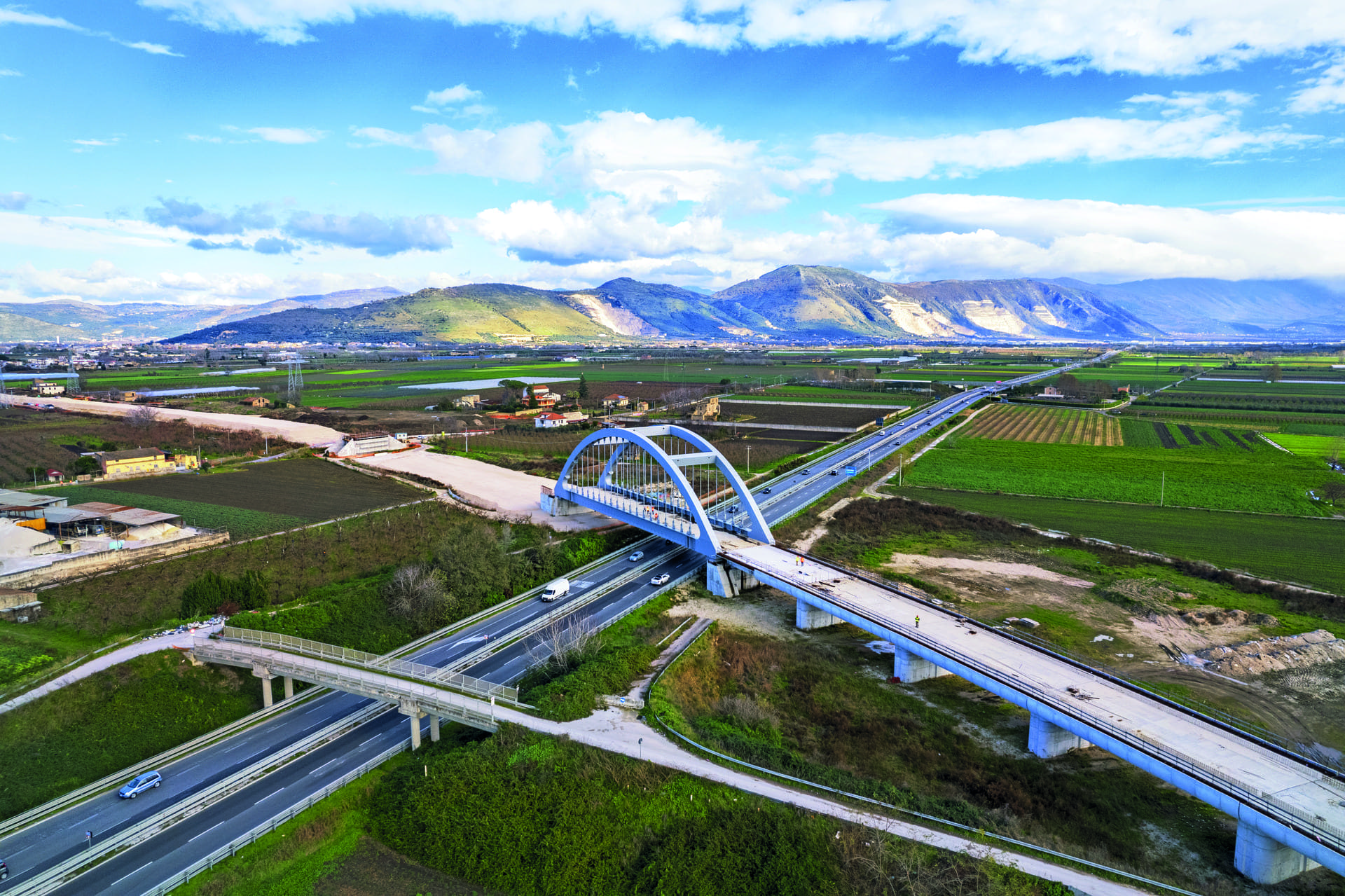
 Construction site of the Napoli-Bari High Velocity railway
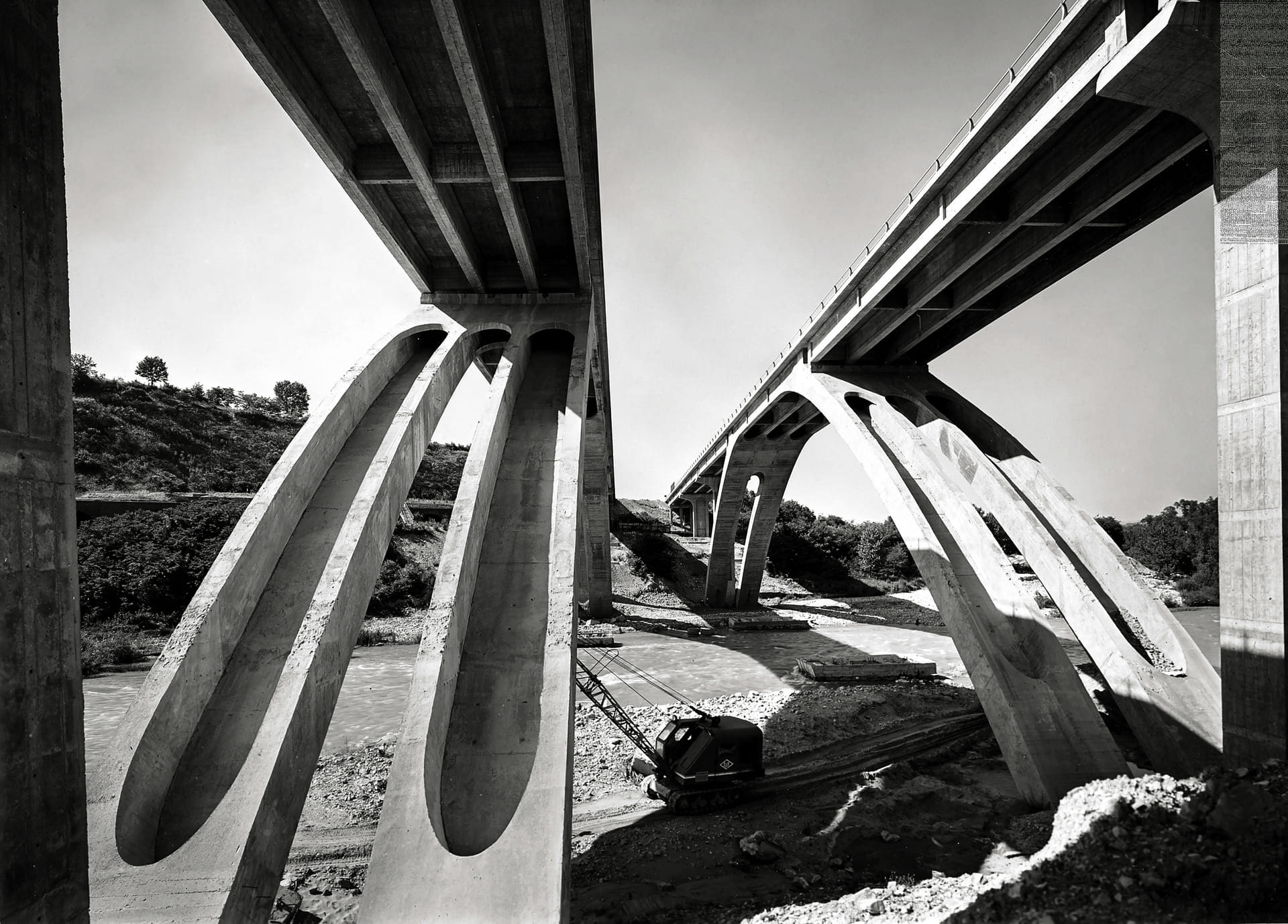 Autostrada del Sole, Incisa Valdarno section, Italy, 1964
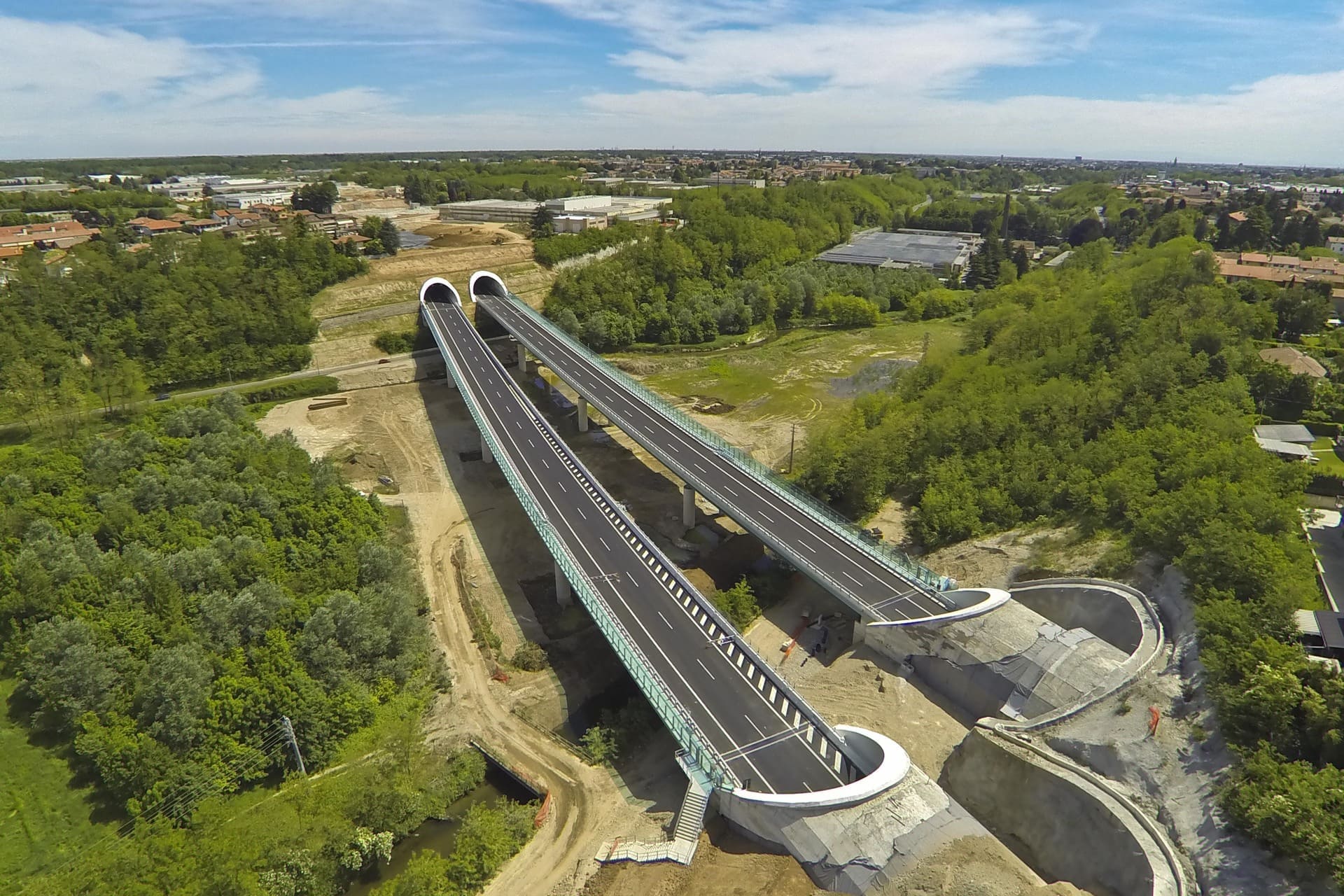 Pedemontana Motorway, Italy, 2017
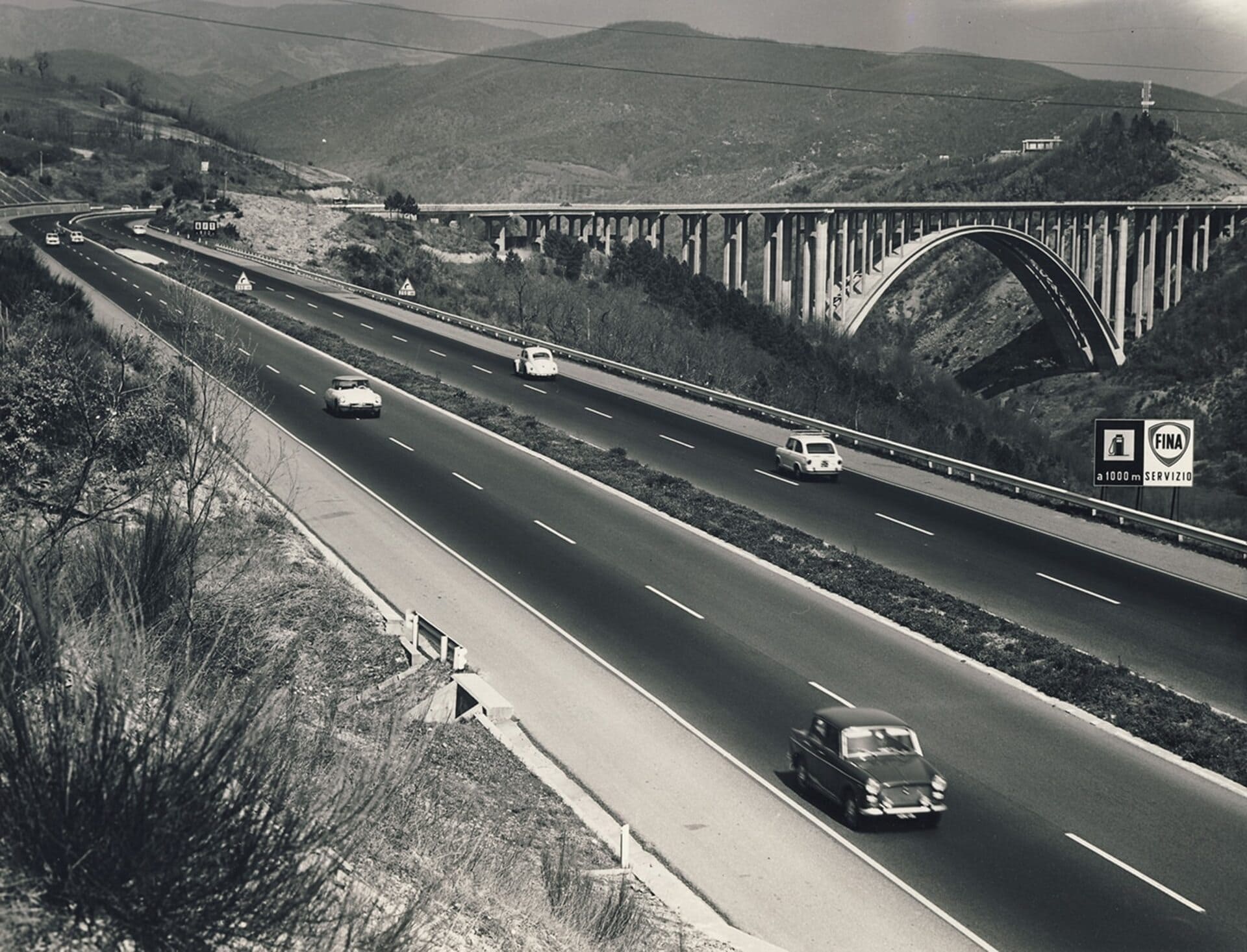 Autostrada del Sole A1, Italy, 1964
 Recco railway, Italy, 1945
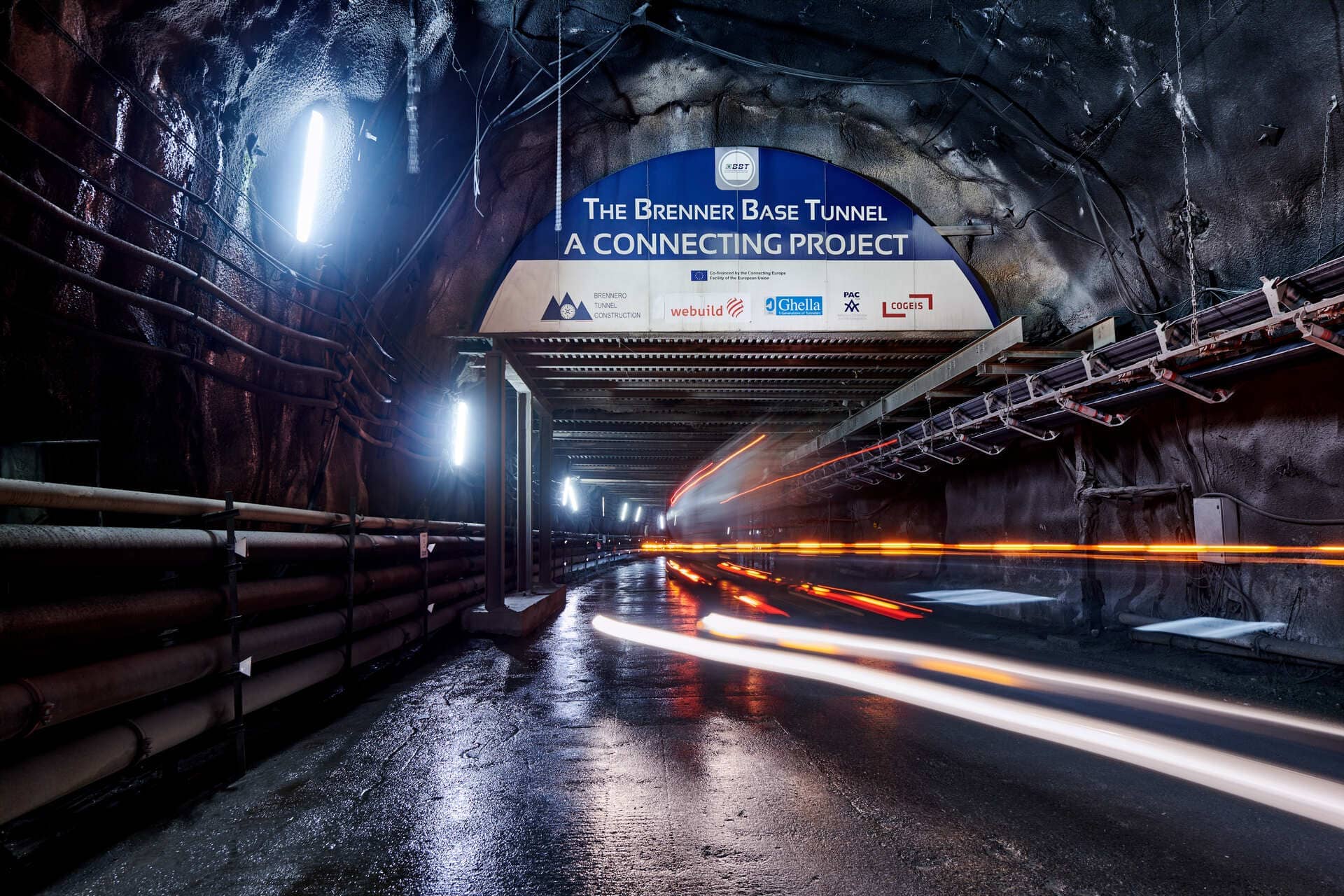 Construction site of the Brenner Base Tunnel, Italy
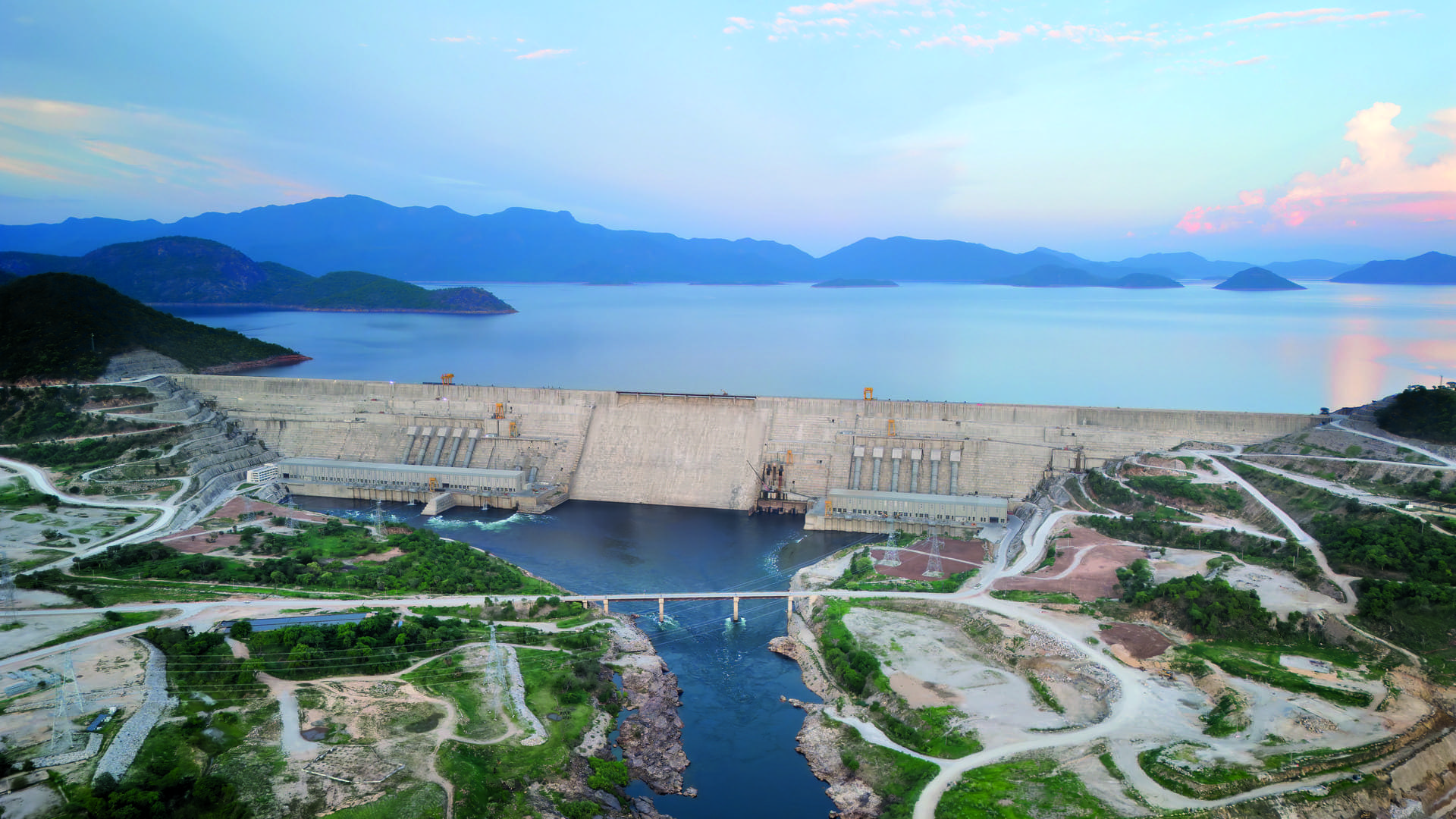
 GERD Hydroelectric Project, Ethiopia, 2025
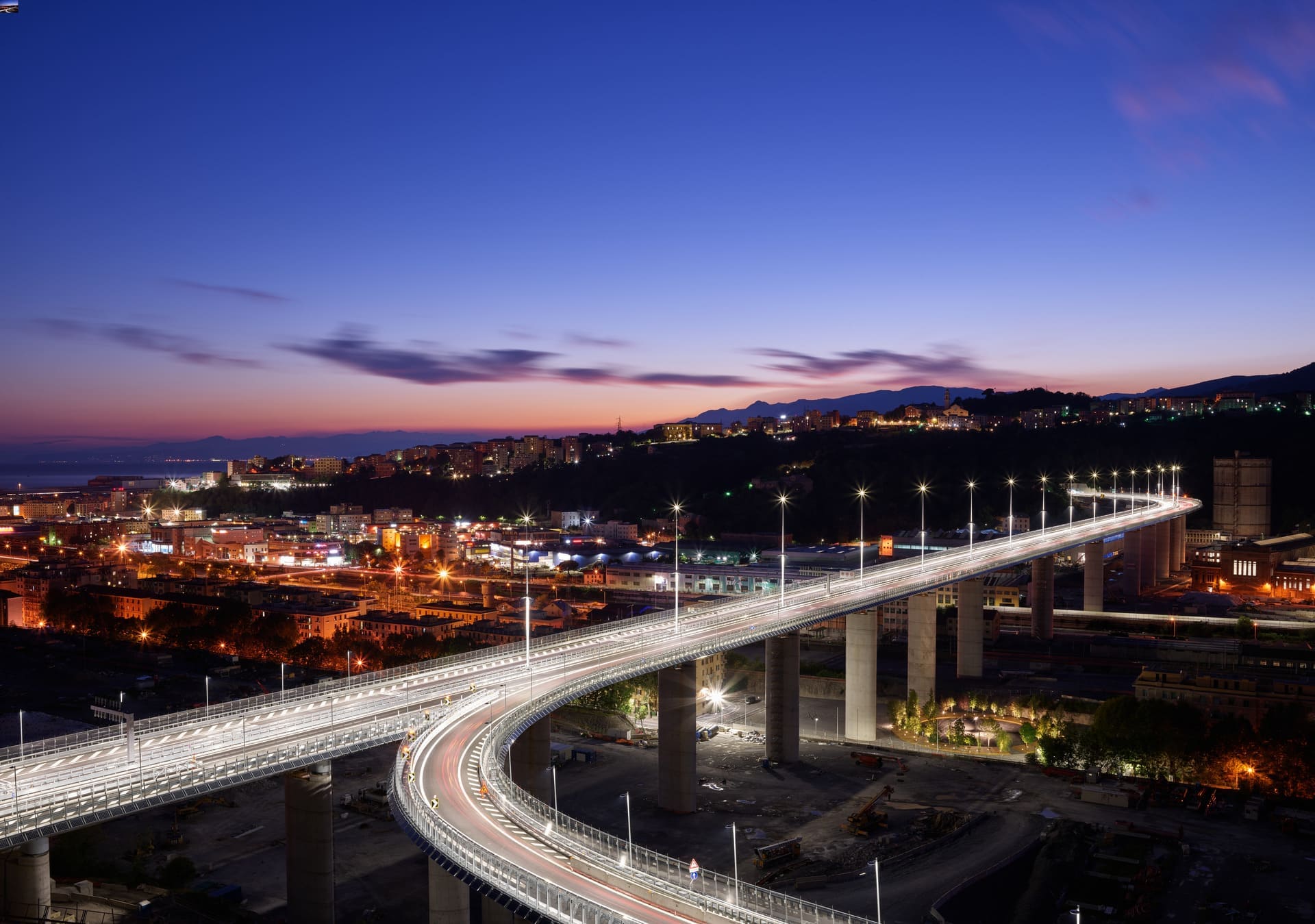 San Giorgio Bridge, Genoa
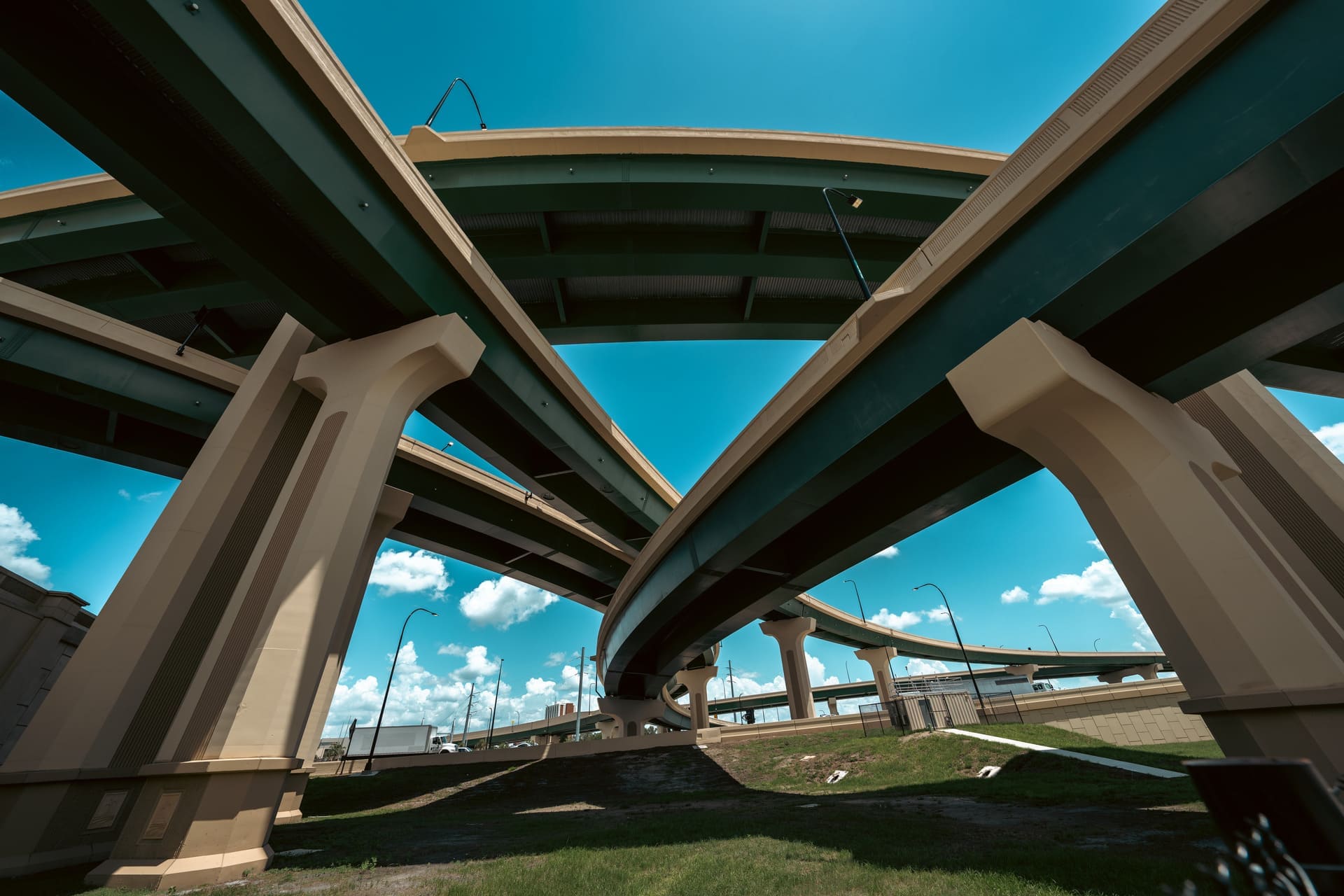
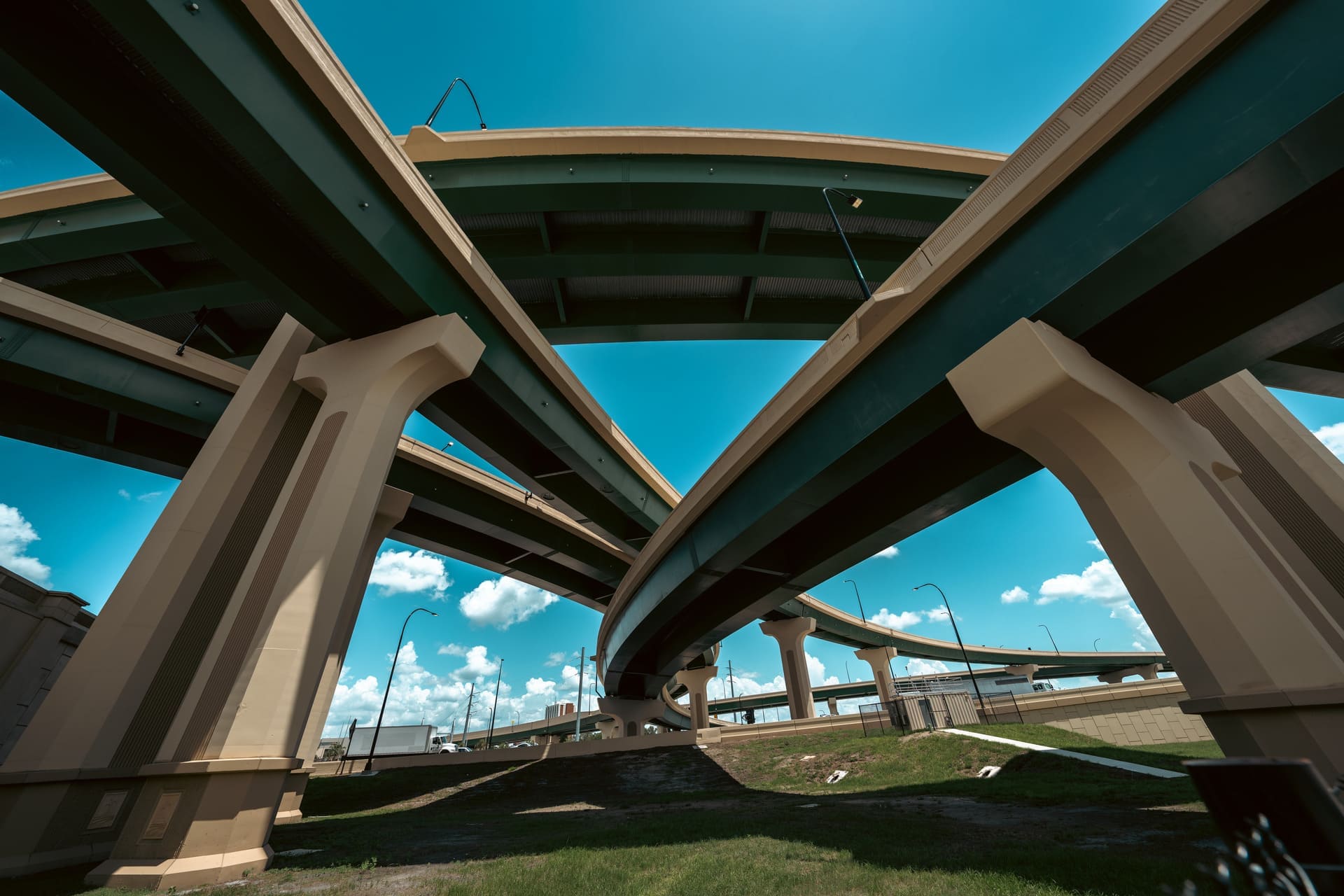 I-4 Ultimate Improvement Project, Florida
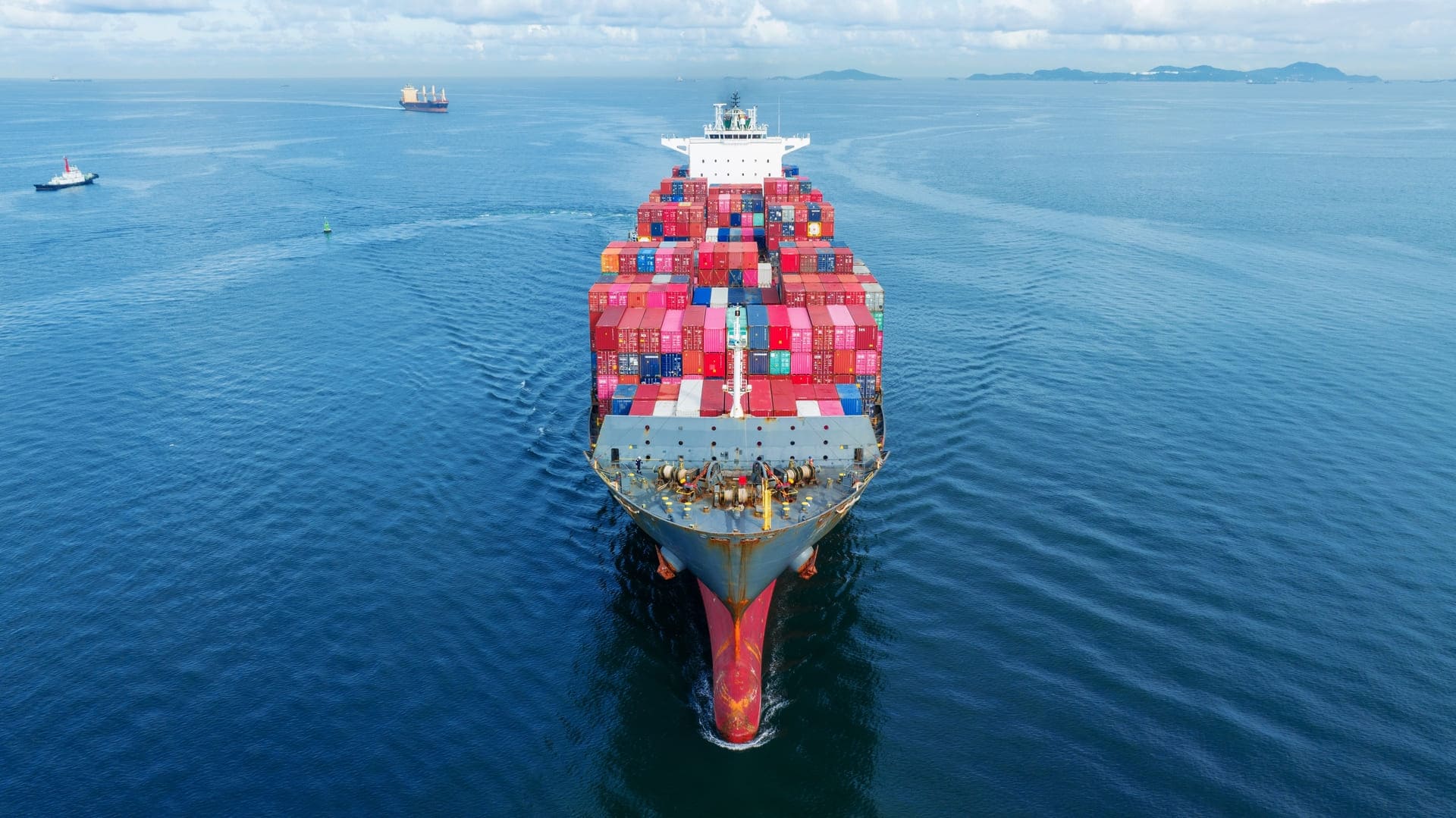 Cargo Container Ship
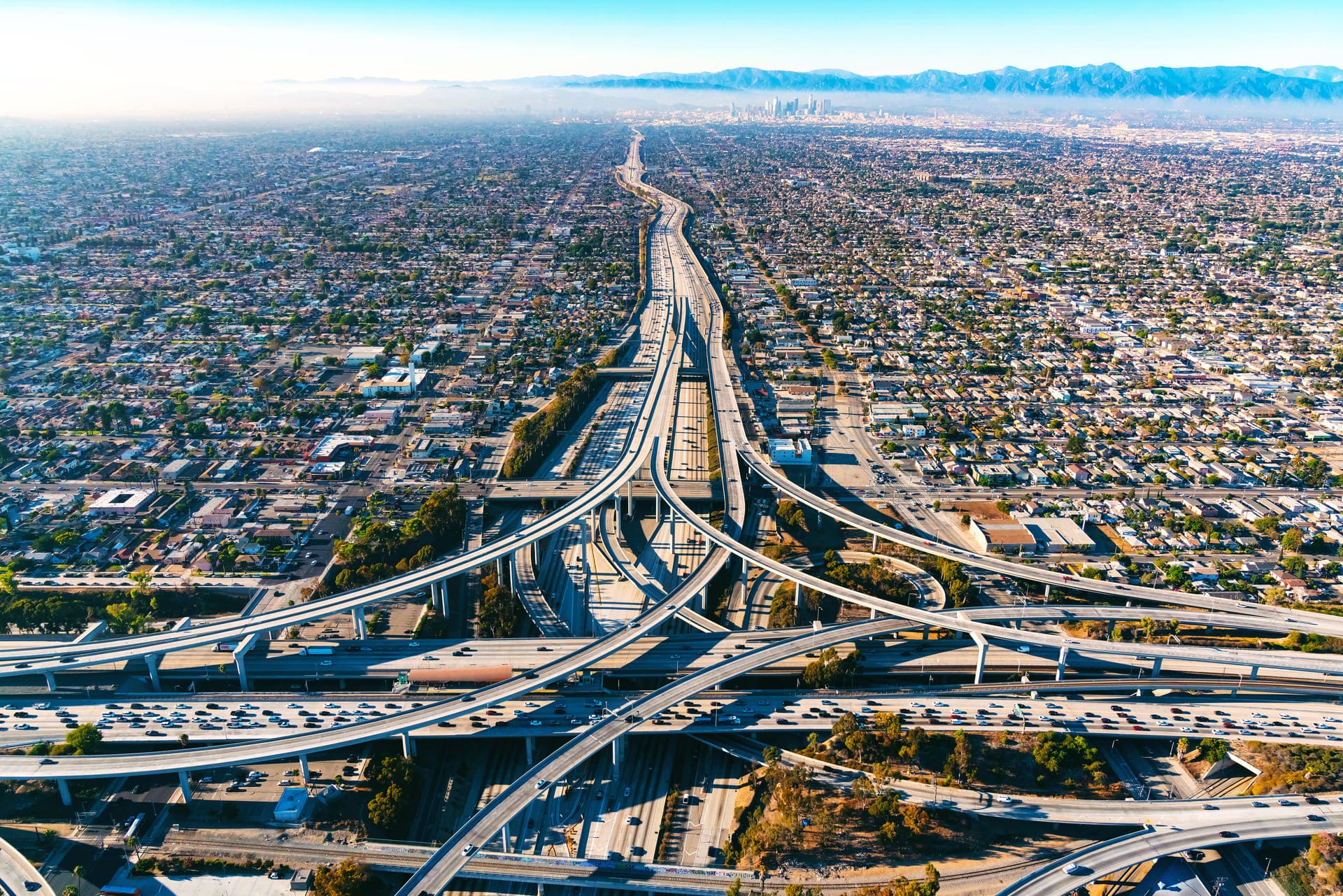 Los Angeles, USA
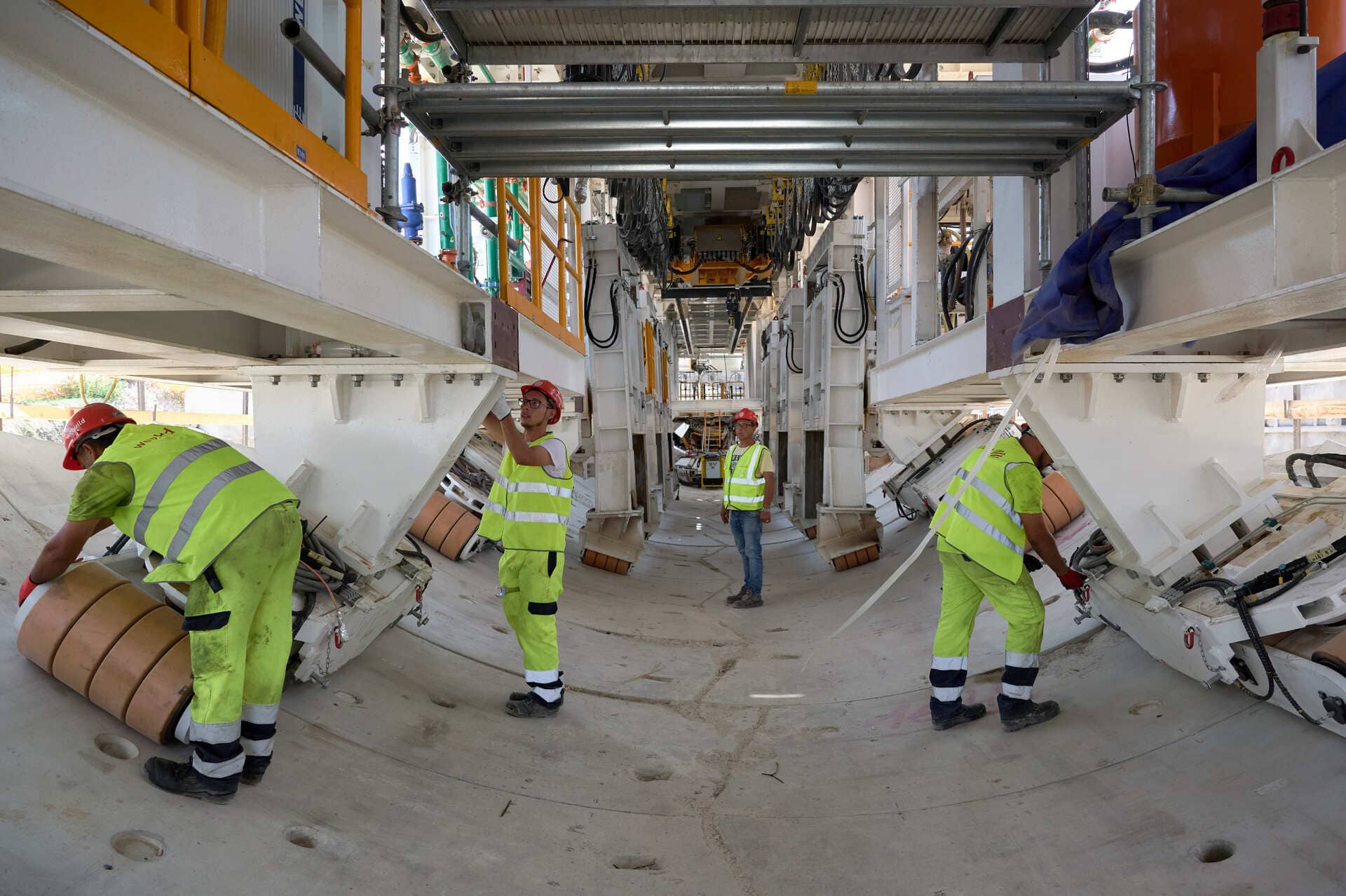 Construction site of the Napoli-Bari High Velocity railway
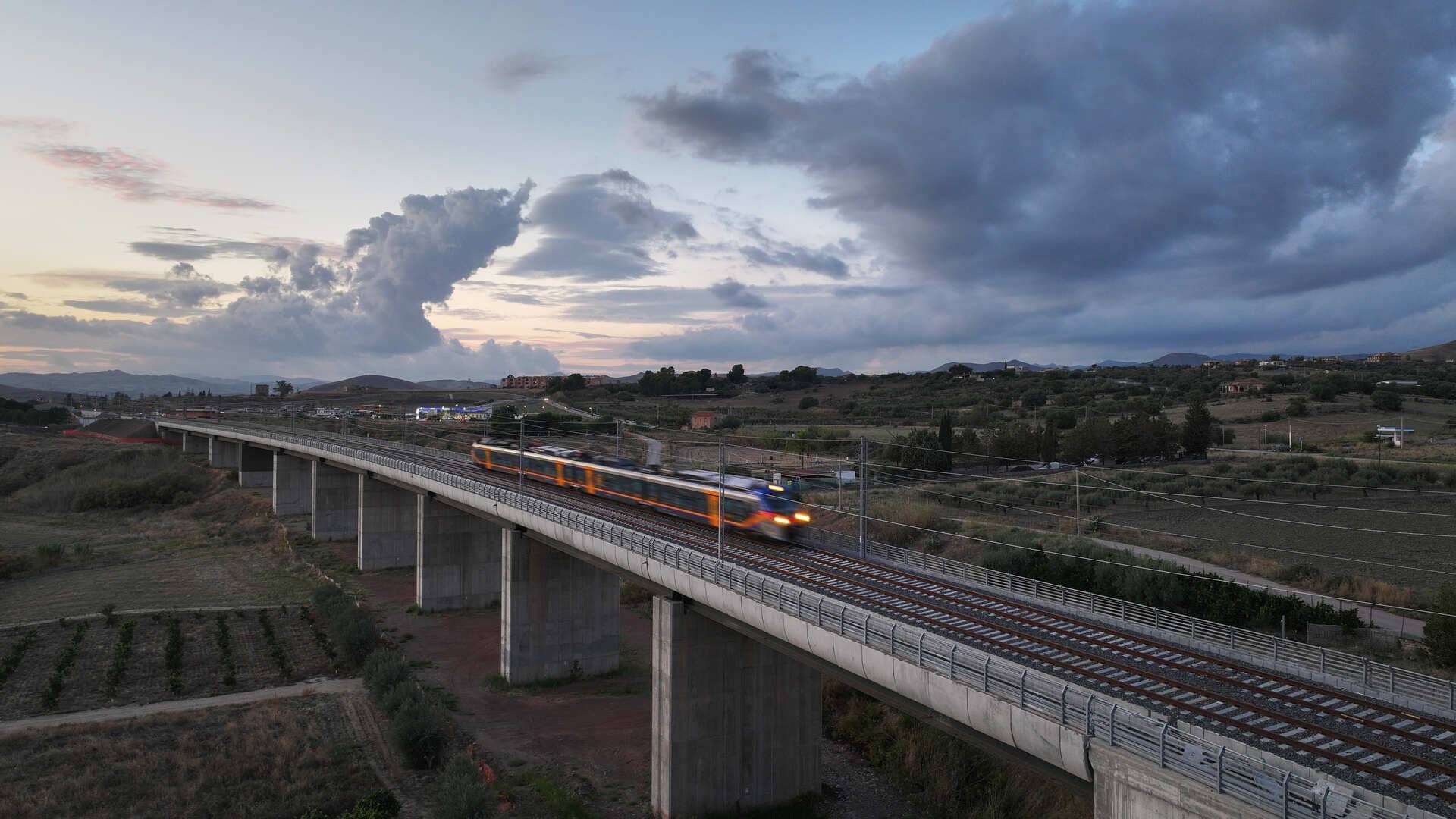 Bicocca-Catenuovanuova railway, Sicily
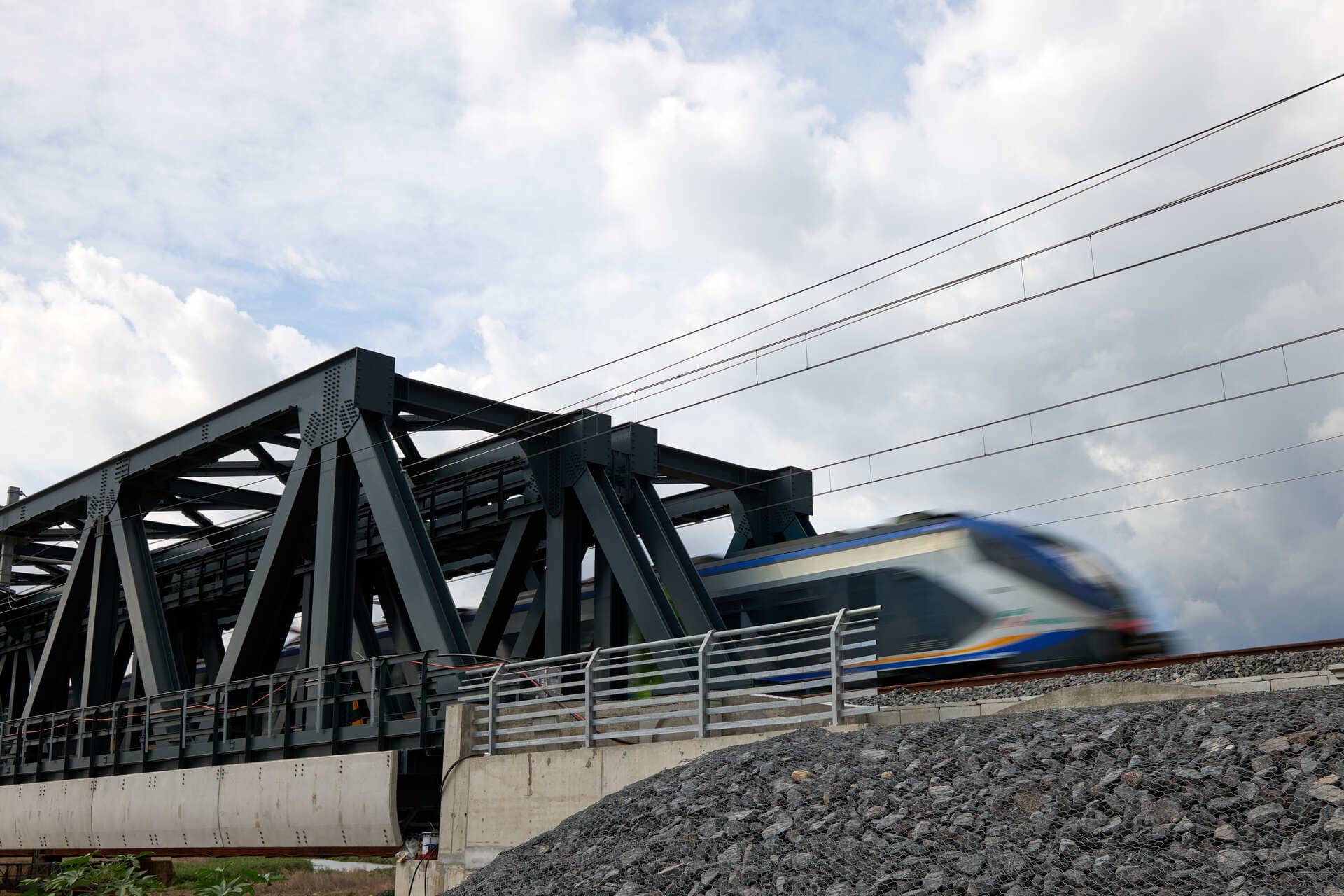 Bicocca-Catenuovanuova railway, Sicily
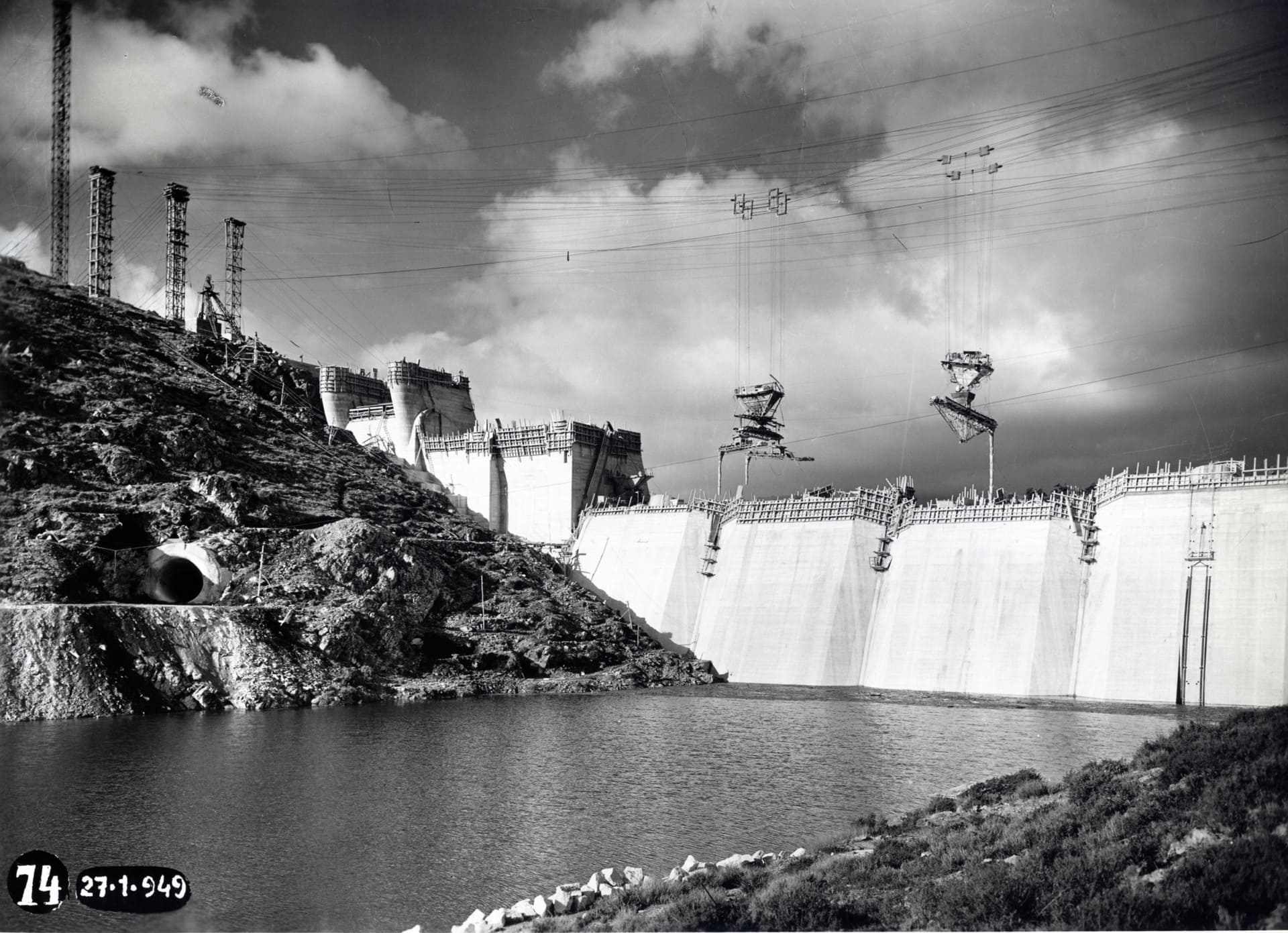 Flumedosa Bau Muggeris Dam, Sardinia, 1949
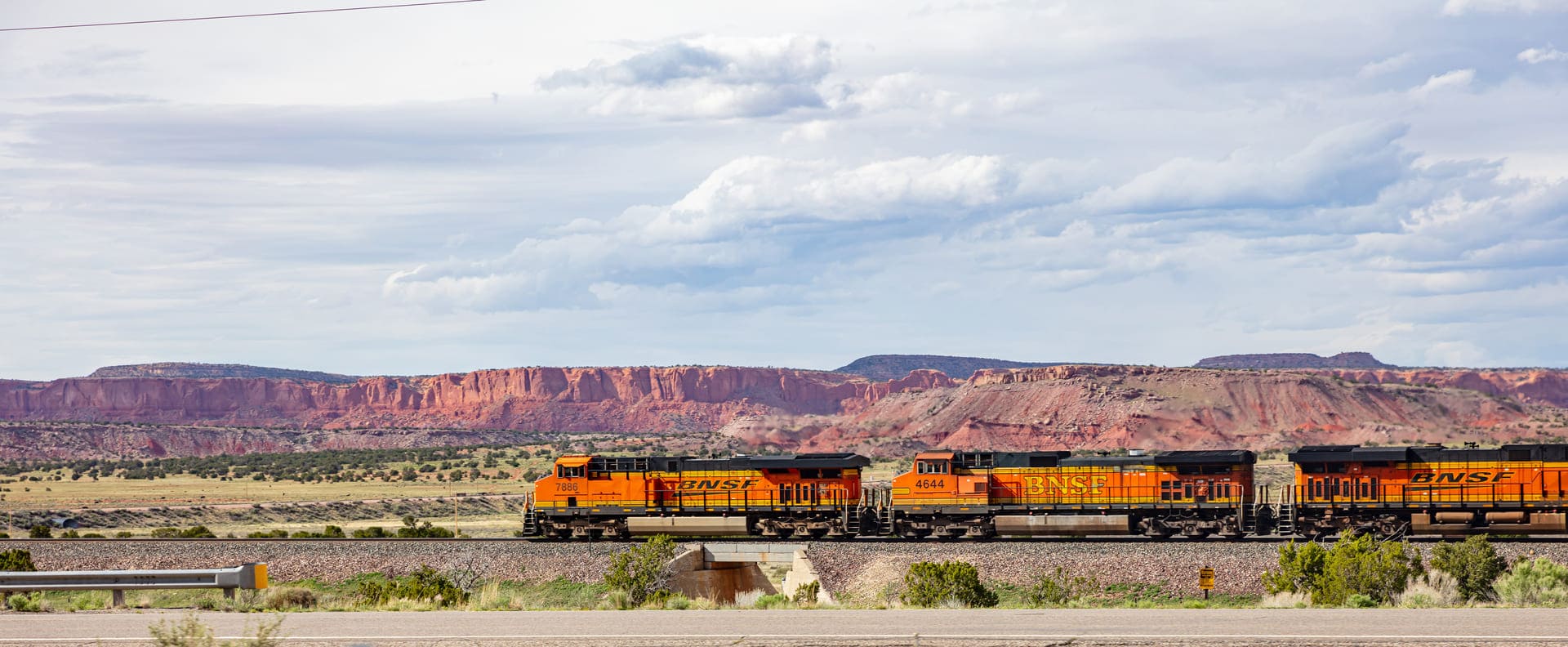 BNSF train in Chinle, Arizona
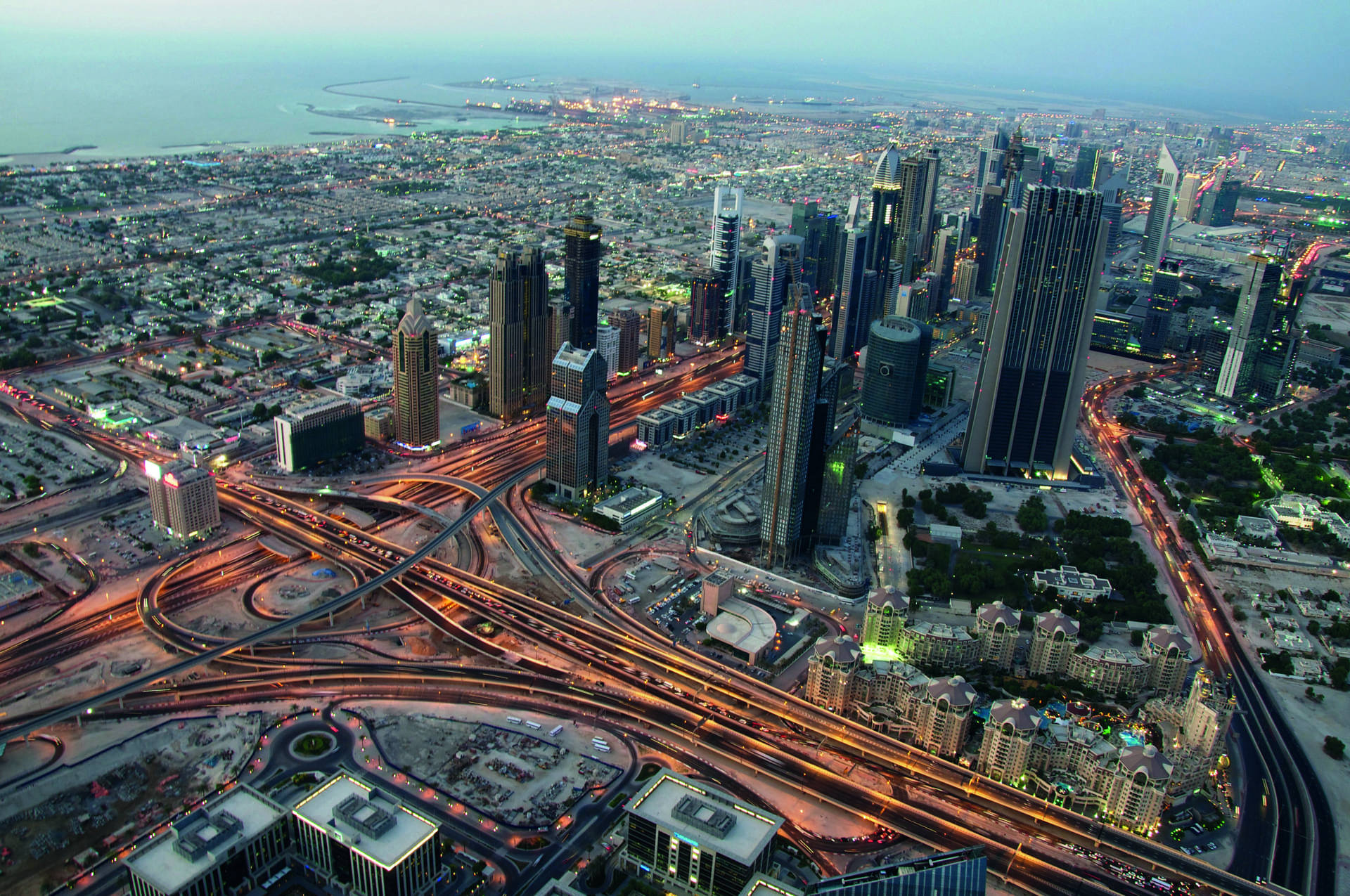 Ras Al Khor, United Arab Emirates
- Italian history demonstrates the link between infrastructure construction, economy development and social mobility, from post-war reconstruction to the economic miracle.
- In his contribution published in the book Evolutio, Massimiliano Valerii describes critical infrastructure as a social device capable of generating trust, cohesion and collective imagination.
- Major projects are not only economic levers: they activate employment, innovation and private capital, but also produce a “social dividend” that strengthens territories and communities.
- The slowdown in infrastructure investment has contributed to widening territorial gaps, particularly between the North and the Mezzogiorno.
- Today, infrastructure is central to addressing the challenges of the energy, digital and climate transitions, once again becoming acts of hope and vision for the future.
read more

Instruments of social growth, drivers of economic development, forces of cultural integration. Critical infrastructure has been—and continues to be—all of these things. In the past as in the present, its role is not merely to meet a need (mobility, electricity, water supply, and so on), but also to act as an accelerator of collective growth.
A less visible, yet more decisive dimension, accompanying every major project in the territory. This is the thread running through the contribution by Massimiliano Valerii, sociologist and Director General of Censis, published in the volume Evolutio. Building the future for the last 120 years.
The book, released by Rizzoli and promoted by Webuild Group, recounts how the major civil works carried out by the Webuild Group over more than a century of history have contributed to the growth of societies, and accompanies the launch of ‘Evolutio – For 120 years we have been building infrastructure for the future,’ an exhibition promoted by Webuild, opening on February 11 at the Leonardo da Vinci National Museum of Science and Technology in Milan and running until April 7.
In his essay, Valerii shifts the perspective: infrastructure as a lever of economic growth, but also as a device of collective trust, capable of shaping a country’s imagination and its ability to look ahead. “Infrastructure connects people: it is the realisation of their dreams,” Valerii writes, pointing to an interpretative key that goes beyond technique and touches the deeper dimension of living together.
This message is also captured within the Evolutio Digital Museum (www.evolutio.museum), one of the world’s first digital museums dedicated to the infrastructure sector. The platform offers access to the Webuild Group’s extensive historical archive, illustrating how major engineering projects have contributed to the development of society, both in Italy and abroad.
From Fear to Progress: When Public Works Unite
Valerii opens his argument with a historical paradox: even infrastructure projects can be accused of having sparked conflict, as happened with the Berlin–Baghdad railway on the eve of the First World War. But the real lesson, he observes, lies elsewhere. It is not public works that generate conflict, but human fears. Critical infrastructure, on the contrary, is born to unite, not to divide.
This narrative has its roots in myth. Like Prometheus stealing fire from the gods to give it to humankind, human ingenuity manifests itself in the ability to overcome limits, to turn risk into possibility. Great civil works, Valerii writes, renew this modern mythology: “a boundary line to be continually pushed forward”, a permanent tension towards emancipation.
As a result, the frontier is no longer an impassable margin, but a threshold to be crossed. This is true of the conquest of the American West, made possible not only by ambition but also by the railway tracks cutting across vast territories. It is true of land reclamation in Italy’s marshy areas, where infrastructure construction wrested land from malaria and abandonment, transforming inhospitable places into spaces for life and work.
“Prometheus and Ulysses together: knowledge and journey,” Valerii writes. Perhaps the most effective synthesis of the deeper meaning of infrastructure development: to materialise, in a road, a bridge, a tunnel carved into rock, that which defines the human condition.
Infrastructure Development: The Invisible Multiplier of Economic Growth
That infrastructure development constitutes the backbone of the modern economy is an established fact, but Valerii insists on a frequently underestimated aspect: its multiplier effect. Public works activate production chains, create employment, stimulate technological innovation and attract private capital. Once operational, they reduce transport costs, make logistics chains more efficient and strengthen business competitiveness.
But there is more. Road, rail and digital networks are essential tools of social and territorial cohesion. They counter depopulation in peripheral areas, support local development, and build a connective fabric made up of short links and long axes. It is here that what Valerii defines as the true “social dividend” of infrastructure investment is generated.
The Italian Experience: Country’s Development, Inclusion, Social Mobility
This dynamic is written into Italy’s history. From post-war reconstruction to the economic miracle of the 1950s and 1960s, the intense infrastructure development of the territory accompanied an extraordinary trajectory of economic growth and social inclusion.
In those years, Valerii recalls, the social lift truly began to operate: the promise that children would be better off than their parents seemed to be kept. Schools, hospitals, water and energy networks, maritime and air transport: without this vigorous infrastructural expansion, the country’s modernisation would not have been possible. Yet in subsequent decades, the pace of investment slowed, accumulating delays and inefficiencies, with effects still visible in territorial disparities, particularly between the North and the Mezzogiorno.
Today, Valerii observes, we have entered a different phase. Globalisation as a single paradigm is being rethought, and territories are once again at the centre of attention. Without infrastructural capital, a country “languishes, it does not progress”. New challenges—energy security, decarbonisation, digital transition, climate adaptation—make it urgent to develop civil works capable of responding to emerging needs and to national and European strategic objectives.
In this context, major construction companies play a decisive role: advanced technical and scientific expertise, innovation in materials and processes, ever higher safety standards, and close attention to environmental and landscape compatibility. Not only functionality, but also aesthetics as a value, because major projects, Valerii writes, “are increasingly beautiful, capable of awakening an often dormant sense of identity and pride”.
Public Infrastructure as Shared Imagination
The miracle of a successful infrastructure is not only economic. It is also symbolic. It improves quality of life, strengthens competitiveness, but also acts on an immaterial dimension: people’s hearts and minds. “A major work should be considered as a symbolic device of the collective imagination,” Valerii notes.
Bridges, underground systems, ports, dams, energy and digital networks are critical infrastructures that connect people, move goods and circulate ideas. Every kilometre built, every cable laid, becomes a piece of a country’s collective project—a country that builds, connects and innovates. This is how the social dividend of infrastructure investment is realised. And this, Valerii concludes, is how the Italy of the future is shaped.