


Mediterranean Sea: Back at the Heart of Global Geopolitics and Supply Chains
From the global trade routes connecting Asia, Europe, and Africa to the energy and digital networks that sustain the global economy, the Mediterranean Sea has returned to the center of international geopolitical strategies. Despite representing just 1% of the world's marine surface, it concentrates over 20% of global maritime traffic and hosts a network of approximately 850 strategic infrastructure facilities


For centuries, it was the center of the known world. Today, the Mediterranean Sea is once again becoming one of the most strategic hubs of the global economy. The geopolitical tensions coursing through the Red Sea, the reshaping of international supply chains, the growth of trade traffic between Asia, Europe, and Africa, and the competition for control over energy and digital infrastructure are bringing the Mare Nostrum back to the very center of worldwide economic and commercial strategies.
This is not merely a matter of geography, because the Mediterranean has become an integrated platform where maritime transport routes, ports, inland ports, railway links, energy grids, and undersea cables all converge. It is a complex system that today represents one of the primary engines of global trade.
Mediterranean Sea: The Sea Through Which Global Trade Flows
Global trade continues to travel predominantly by sea. Over 80% of the goods traded worldwide travel via maritime transport routes, and within this system, the Mediterranean Sea occupies a unique position. Despite representing just 1% of the world’s marine surface, it concentrates over 20% of international maritime traffic.
Its centrality is linked above all to the Suez Canal, the fastest connection between Europe and Asia. Between 12% and 15% of world trade and approximately 30% of global container traffic transit through this passage.
The recent Red Sea crises have demonstrated just how essential this infrastructure is. When the Houthi attacks on ships forced numerous operators to circumnavigate Africa via the Cape of Good Hope, logistical costs escalated and global supply chains experienced significant slowdowns.
This vulnerability has made the strategic value of the ports and infrastructure facilities overlooking the Mediterranean even more evident.
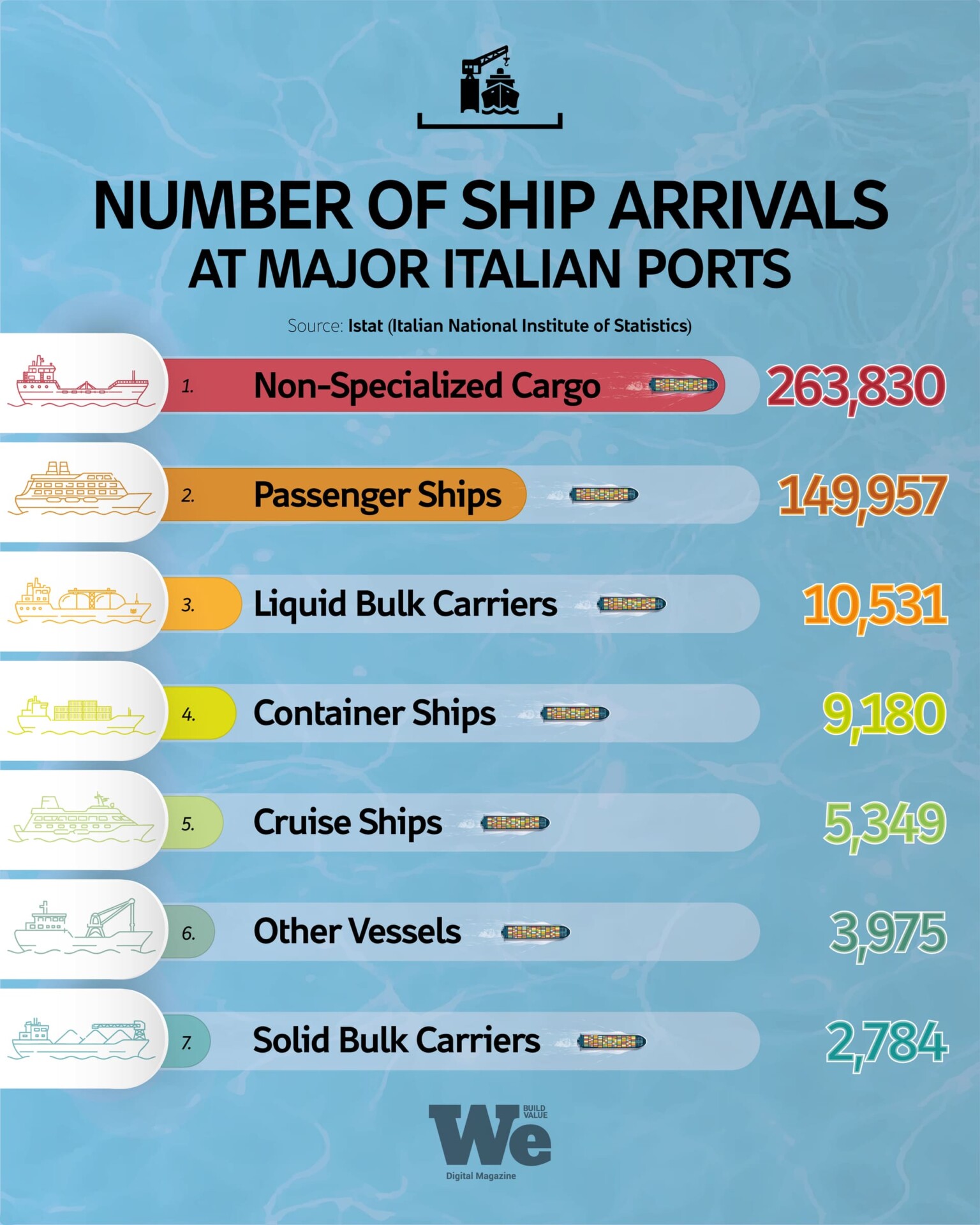
The Mediterranean Sea concentrates over 20% of global maritime traffic despite representing just 1% of the world’s marine surface.
From Telecommunications to Oil Pipelines: An Invisible Network for Global Trade and Energy Security
Behind the routes traversed every day by thousands of ships lies a dense network of infrastructure that makes the functioning of the Mediterranean economy possible. According to a recent analysis published by the Italian daily newspaper Il Sole 24 Ore, the Mare Nostrum currently hosts approximately 850 strategic pieces of infrastructure, making it one of the most complex logistical, energy, and digital systems in the world.
This is a true integrated architecture connecting three continents. Around 450 ports operate along its coasts – ranging from major international gateways to regional hubs – while 65 telecommunication backbones and over 260 submarine cables run across the seabed, guaranteeing a large portion of the digital communications between Europe, Asia, and Africa.
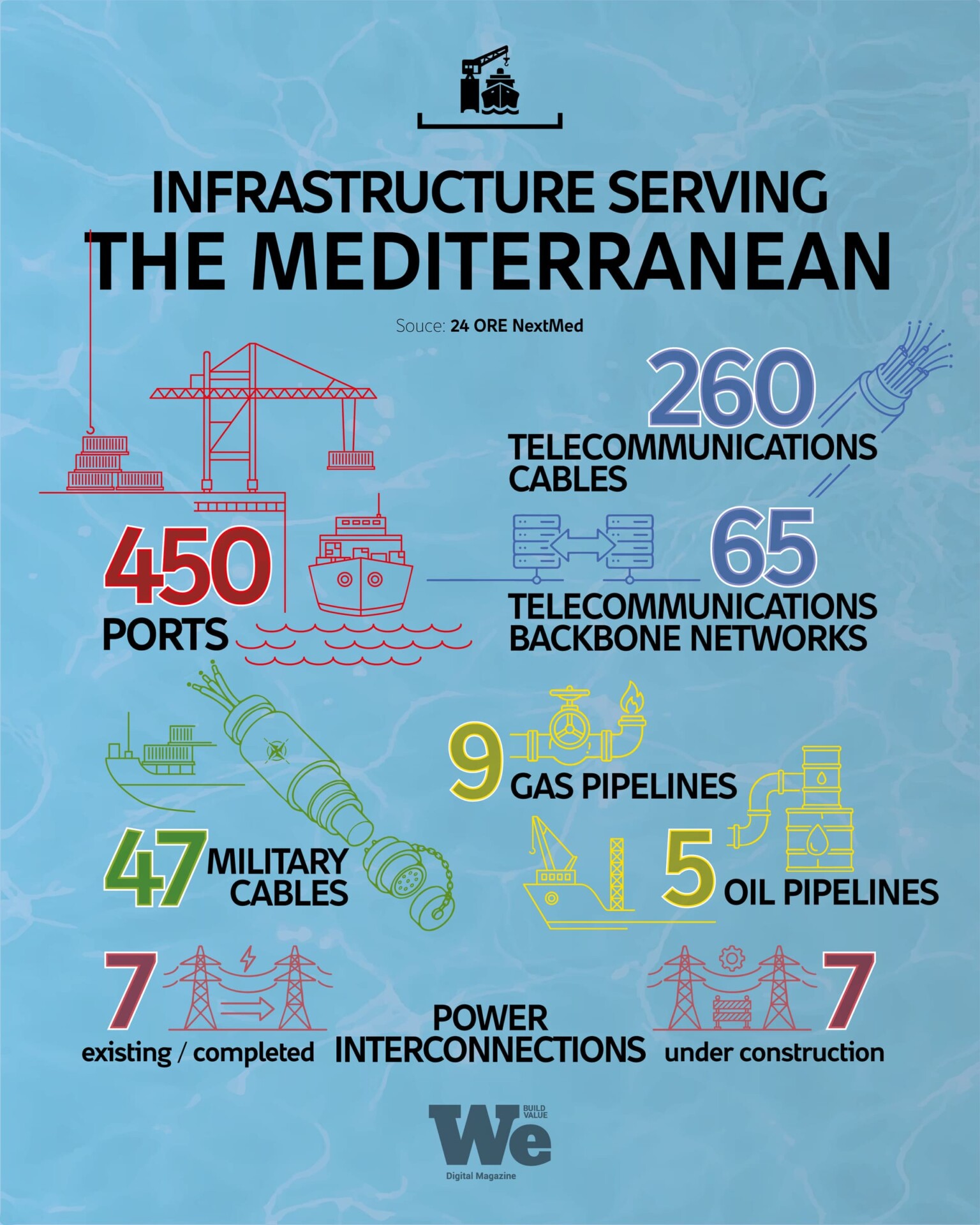
According to the study, an incredibly significant share of global data traffic transits through these networks, confirming that the Mediterranean Sea has become not only a commercial corridor but also one of the planet’s primary digital highways.
Alongside connectivity infrastructure, an equally strategic network dedicated to energy is expanding. The Mediterranean basin is crossed by numerous pipelines transporting gas, oil, and electricity between the two shores of the sea, contributing to European energy security.
The map identifies nine gas pipelines, five oil pipelines, and several electrical interconnections already operational, to which new projects under construction are being added, destined to further strengthen energy trade between Europe, North Africa, and the Middle East.
The complexity of this system also emerges from the presence of infrastructure dedicated to security and defense, with dozens of military connections intertwining with civil networks.
Taken together, these assets compose an invisible yet essential web that sustains global trade, data transmission, energy supplies, and the economic competitiveness of the entire region.
It is this extraordinary concentration of infrastructure that explains why the Mediterranean has returned to the very center of global geopolitics and investments destined to reshape 21st-century trade routes.
Up to 15% of global trade and approximately 30% of global container traffic transit through the Suez Canal.
Maritime Transport: The Challenge of the Ports of the Future
In this scenario, ports are taking on an increasingly central role. The growing size of container ships, the rise in cargo volumes handled, and the need to reduce turnaround times are driving unprecedented investments in new port infrastructure.
Competition is no longer just about the capacity to receive goods, but about the ability to transform ports into integrated platforms capable of rapidly connecting maritime transport with rail and road networks.
For Italy, this challenge holds a particular significance. Situated at the center of the routes connecting the Suez Canal with Northern Europe, the peninsula can become one of the continent’s primary logistical hubs, intercepting a growing share of the traffic that currently continues toward the ports of the Northern Range.
It is precisely for this reason that strategic infrastructure projects like the New Breakwater of Genoa are essential.
The Mediterranean basin hosts around 850 strategic infrastructure facilities, including ports, energy networks, submarine cables, and logistical links.
New Genoa Breakwater: The Mediterranean’s Gateway to Europe
Among the most significant projects underway in the Mediterranean Sea, the New Breakwater of Genoa stands out as one of the most complex maritime works currently under construction in Europe.
Built by the PerGenovaBreakwater consortium led by Webuild, the infrastructure will enable the port of Genoa to achieve a decisive leap in scale. Once completed, the new breakwater will reach a length of approximately 6 kilometers, creating a much wider port basin than the current one and thus allowing safe access for the new generations of ships carrying containers and cruise ships.
Genoa’s New Breakwater project represents an unprecedented intervention in terms of size and engineering complexity. The breakwater is being constructed on sea beds reaching depths of 50 meters—levels rarely faced in port works of this scale. The gigantic concrete caissons, some of which exceed 67 meters in length and 33 meters in height, are transported and submerged through operations requiring up to two days of continuous work.
This investment does not concern the port of Genoa alone. It is part of a broader strategy aimed at strengthening the role of Italy and its ports along the logistical corridor connecting the Mediterranean Sea to European markets.
The Mediterranean seabed is home to 65 telecommunication backbones and over 260 undersea cables that support global communications.
Infrastructure as a Factor of Competitiveness
The centrality of the Mediterranean will therefore not depend solely on its geographical position. Increasingly, it is infrastructure that will make the difference: more efficient ports, fast railway connections, advanced digital systems, and integrated energy networks represent the tools through which countries can attract investment and capture new shares of traffic.
In a context characterized by growing instability in geopolitics, infrastructure is taking on a strategic function comparable to that of major global trade routes. It is these works that determine the resilience of supply chains and a territory’s capacity to integrate into global flows.
For this reason, the Mediterranean is returning to the center of industrial policies and international investments. And for this reason, projects like the New Breakwater of Genoa represent not just large construction sites, but fundamental pieces of a new economic geography that sees the Mare Nostrum reclaiming its role as a natural bridge between three continents.
The New Breakwater of Genoa, built by the consortium led by Webuild, will strengthen Italy’s role as a gateway to European markets.
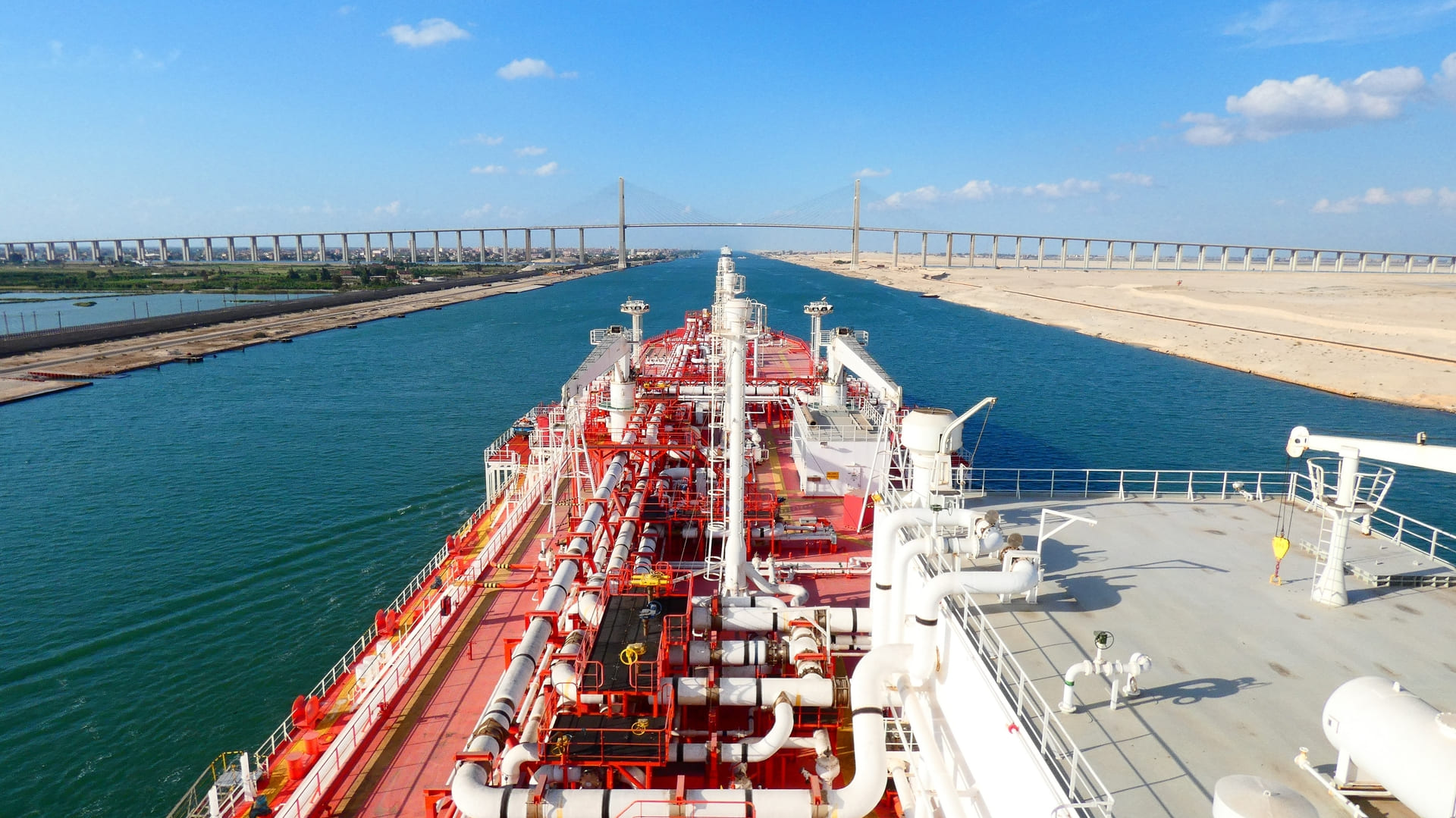 Suez Canal, Egypt
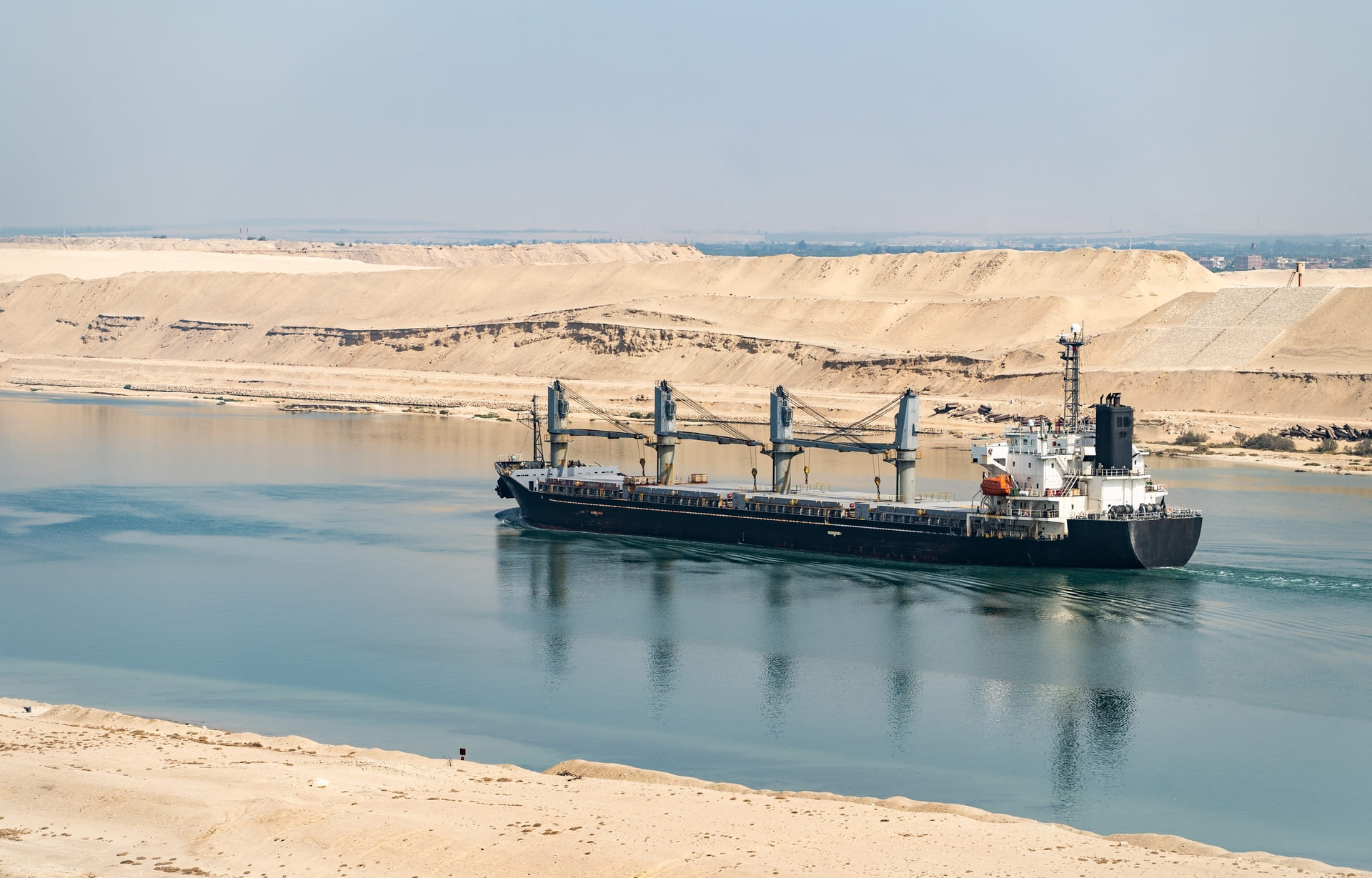 Suez Canal, Egypt
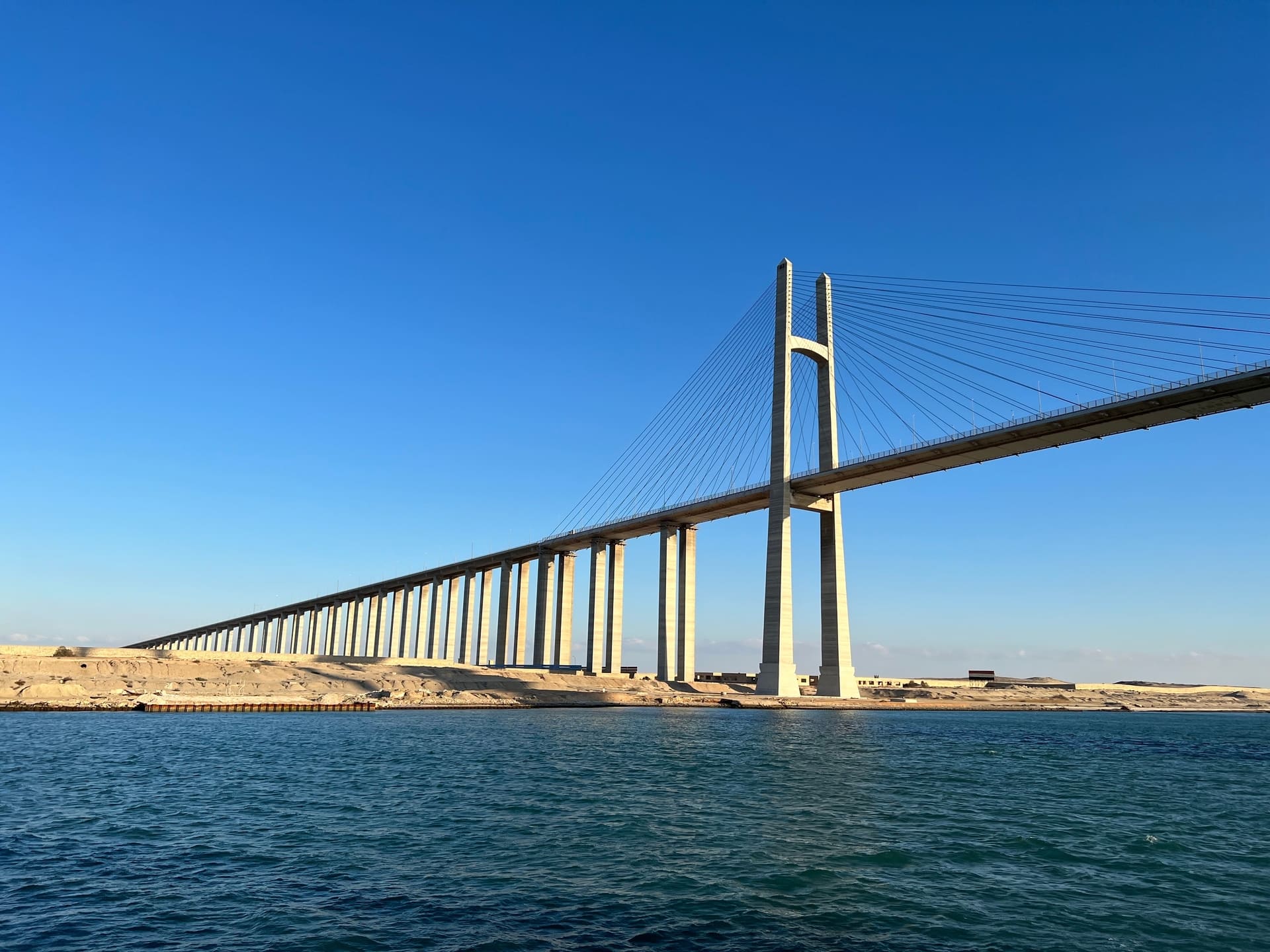 Bridge crossing the Suez Canal, Egypt
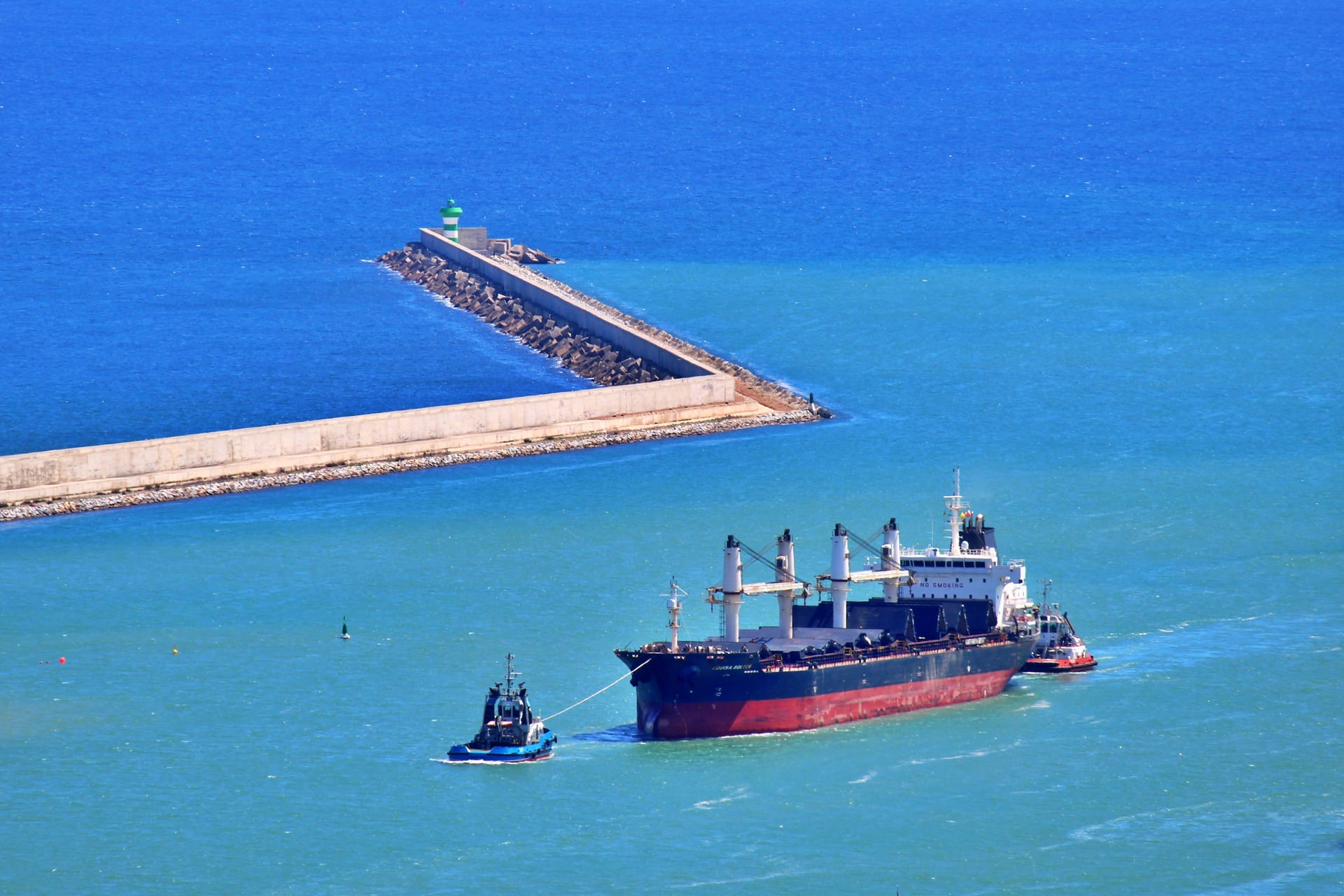 Ship at the entrance of the Port of Barcelona
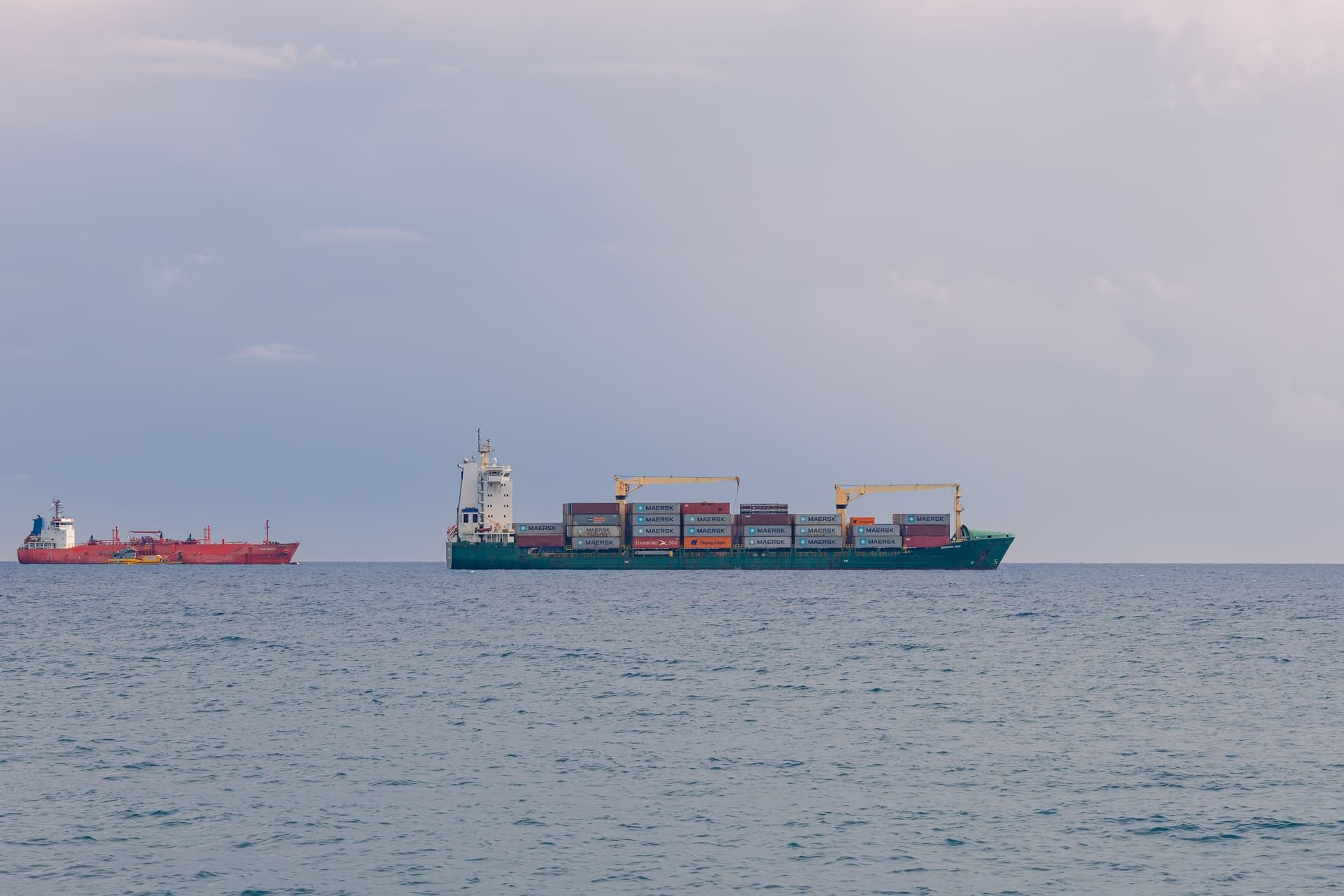 Cargo ship off the coast of Limassol, Cyprus
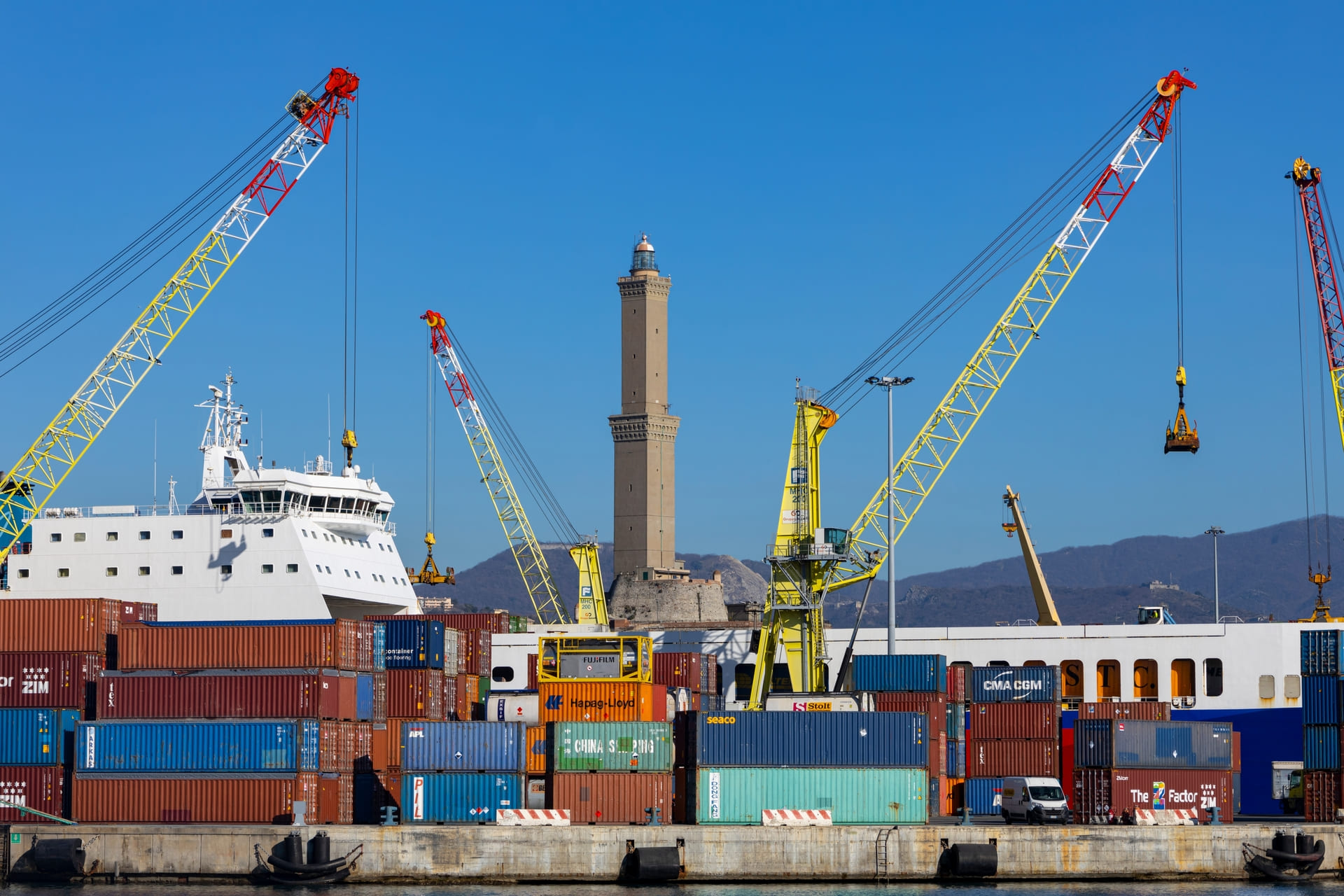 Genoa port terminal
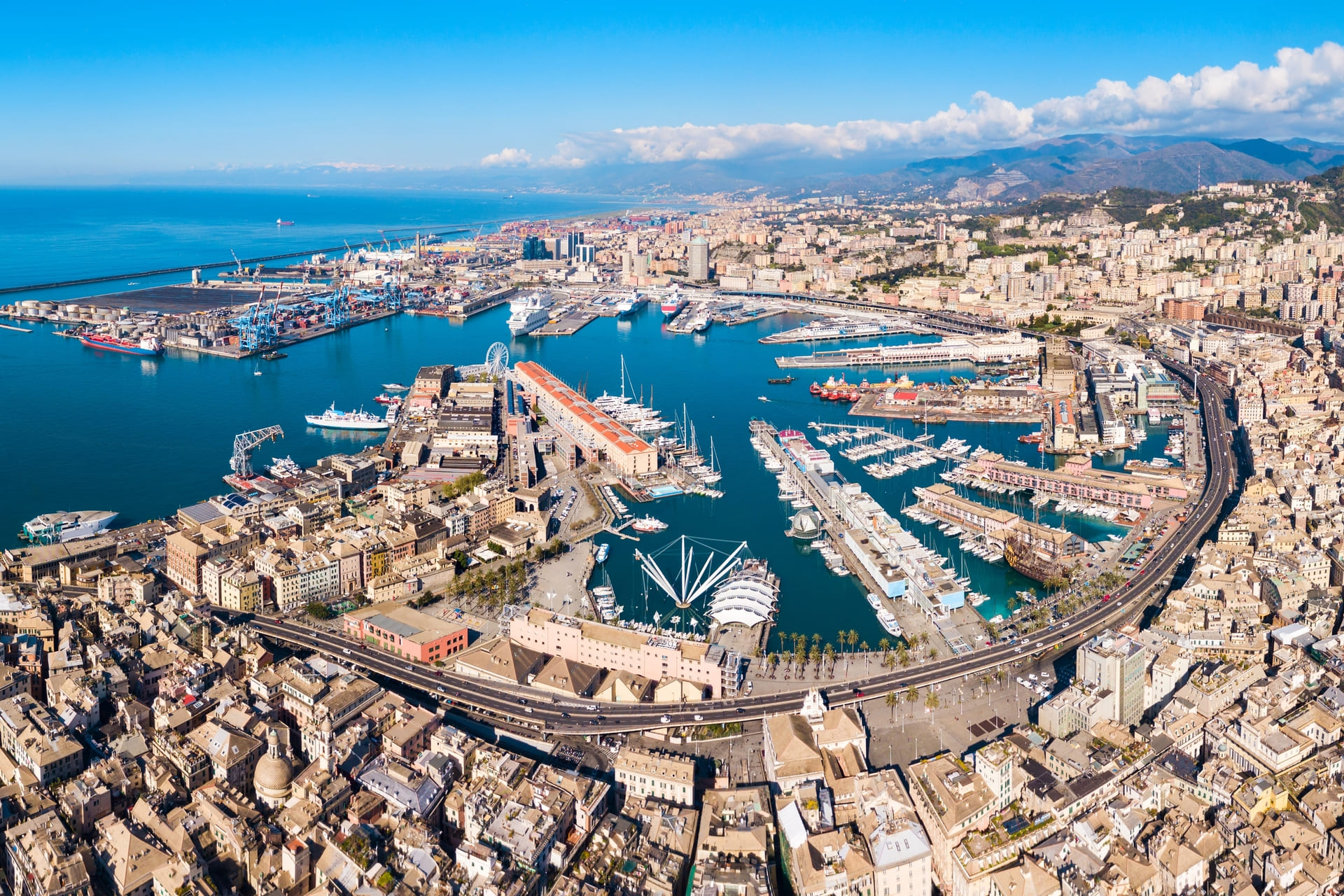 Aerial view of the Port of Genoa
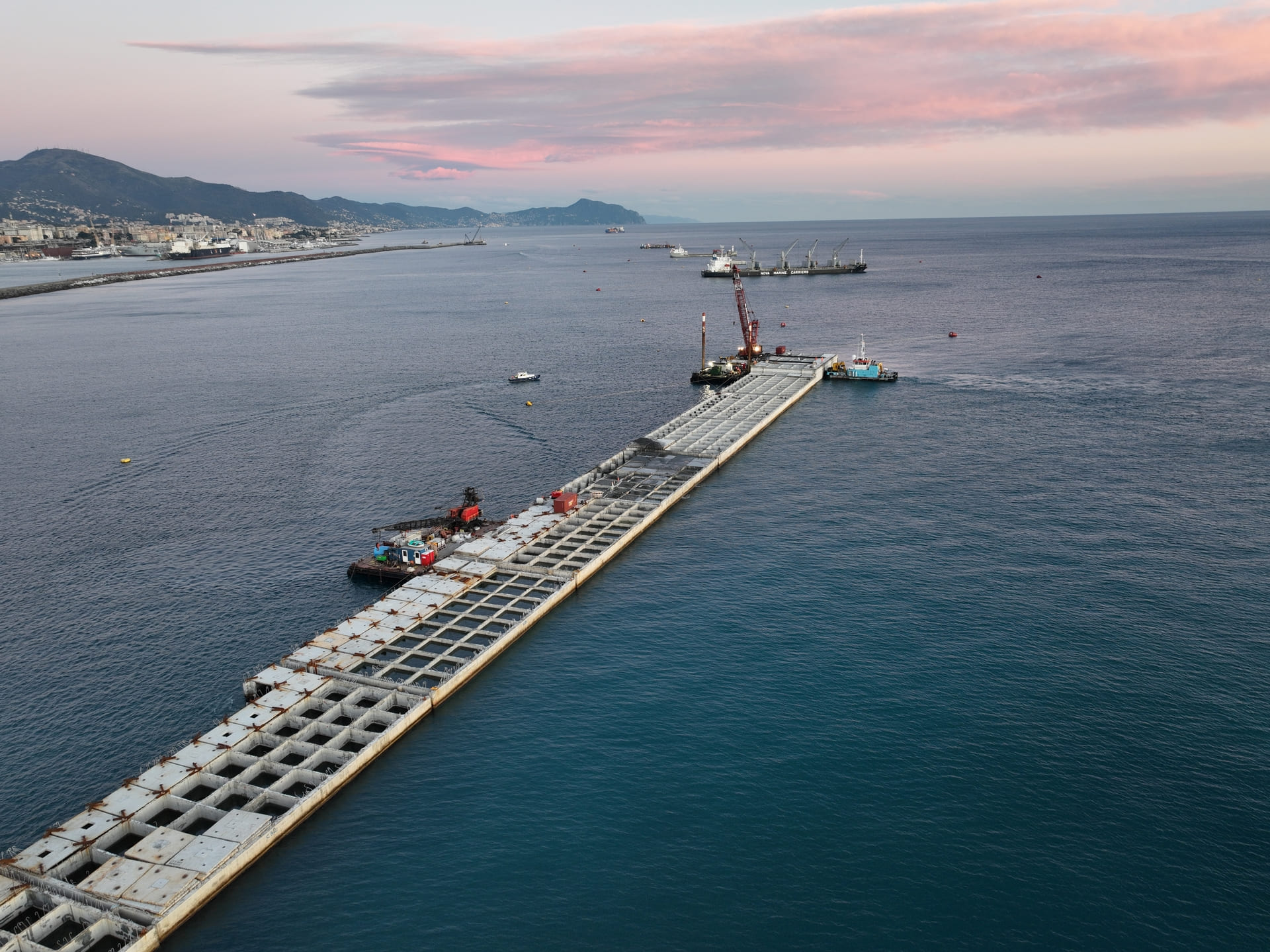 Genoa's New Breakwater construction site
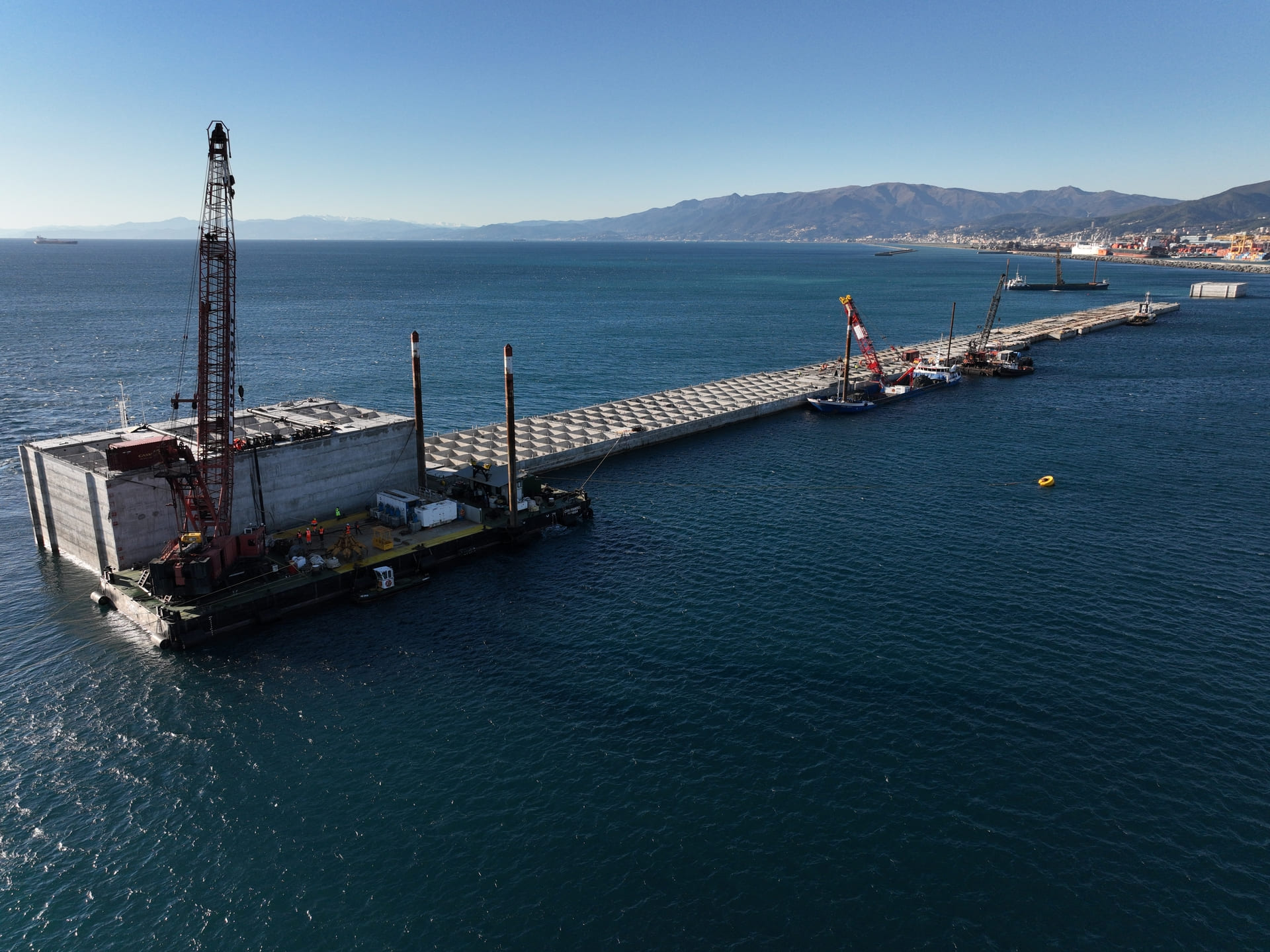 Genoa's New Breakwater construction site
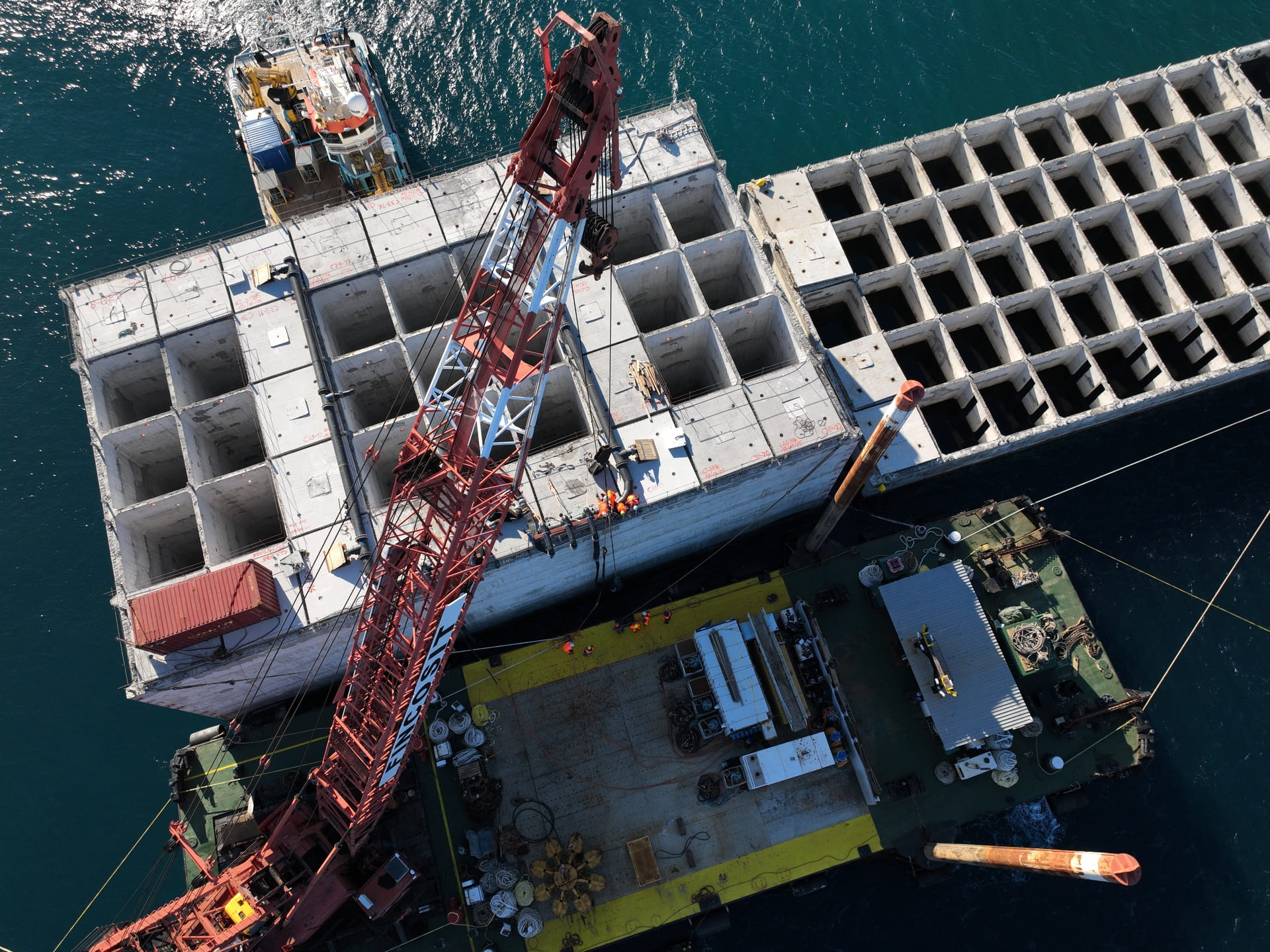 Genoa's New Breakwater construction site
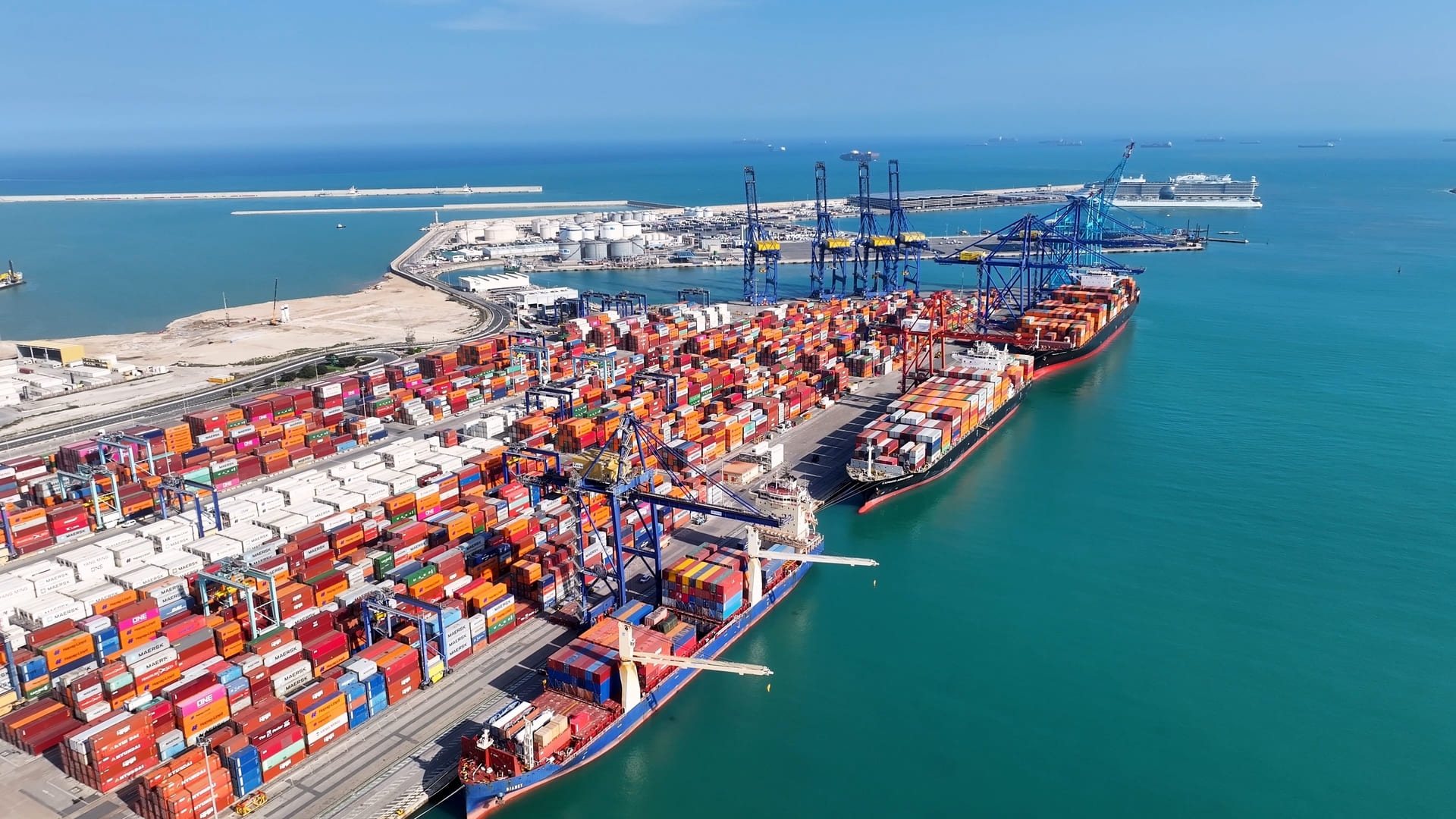 Port of Valencia, Spain
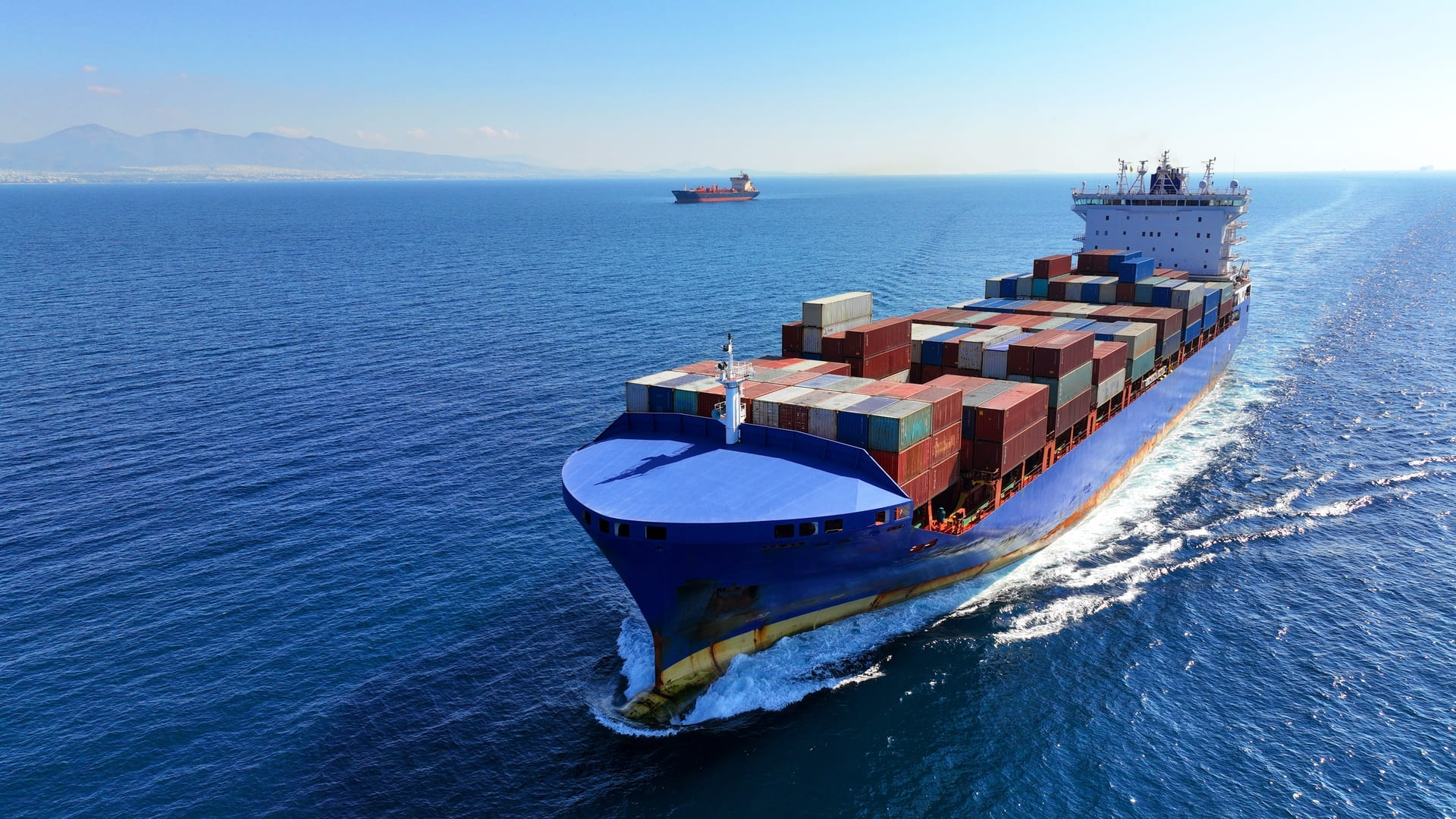 Container ship underway
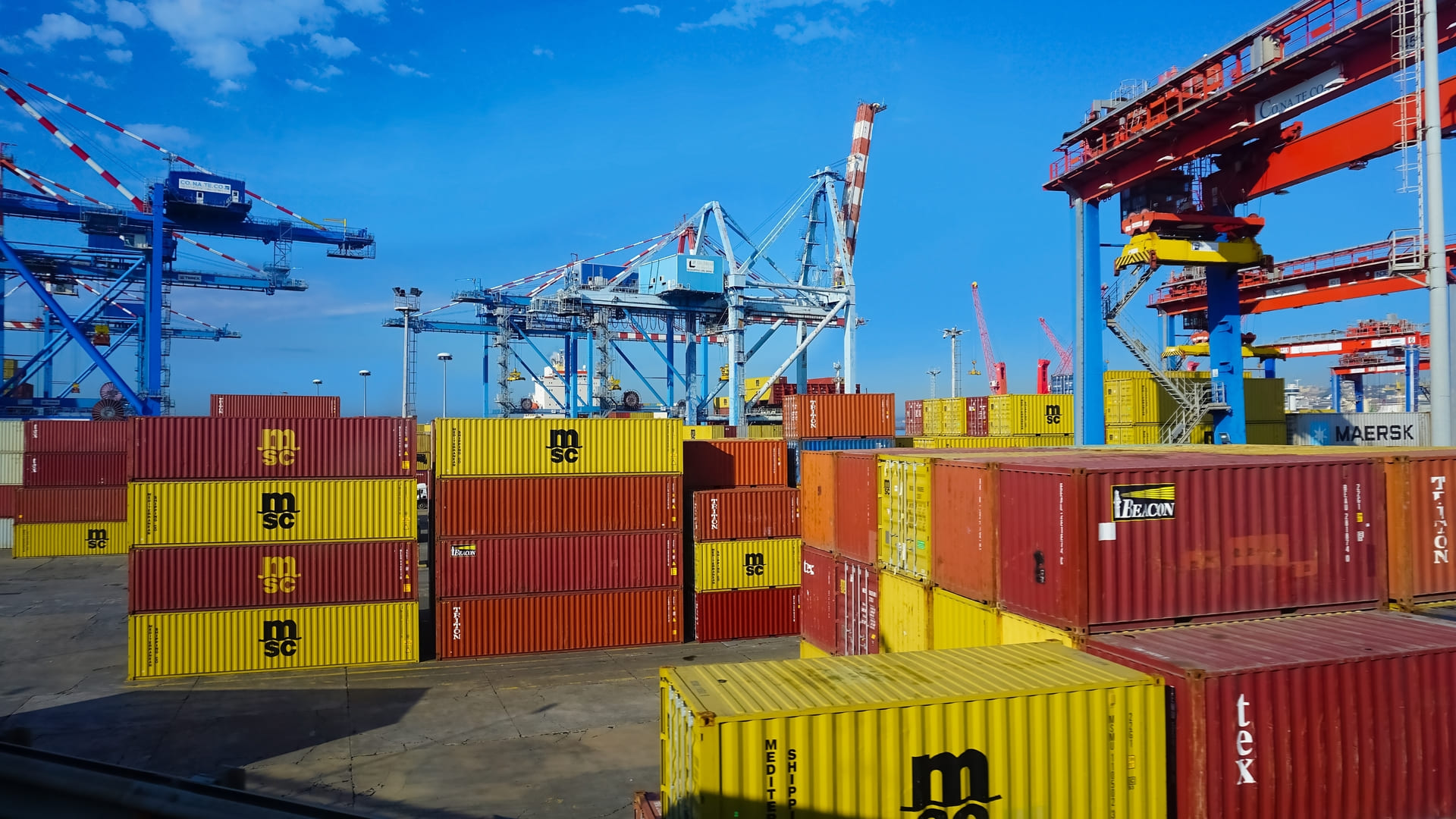 Container terminal