


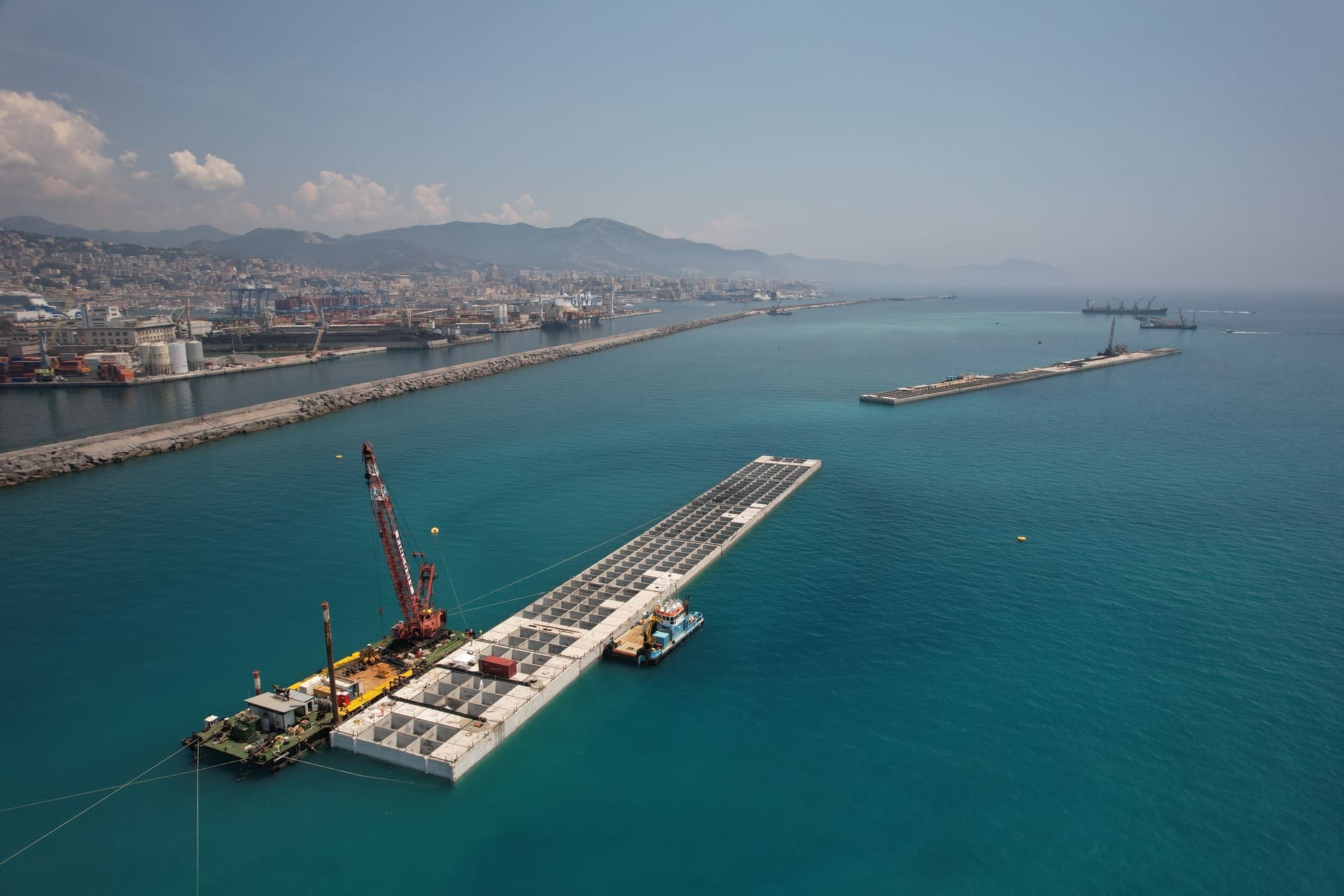
 New Genoa Breakwater construction site
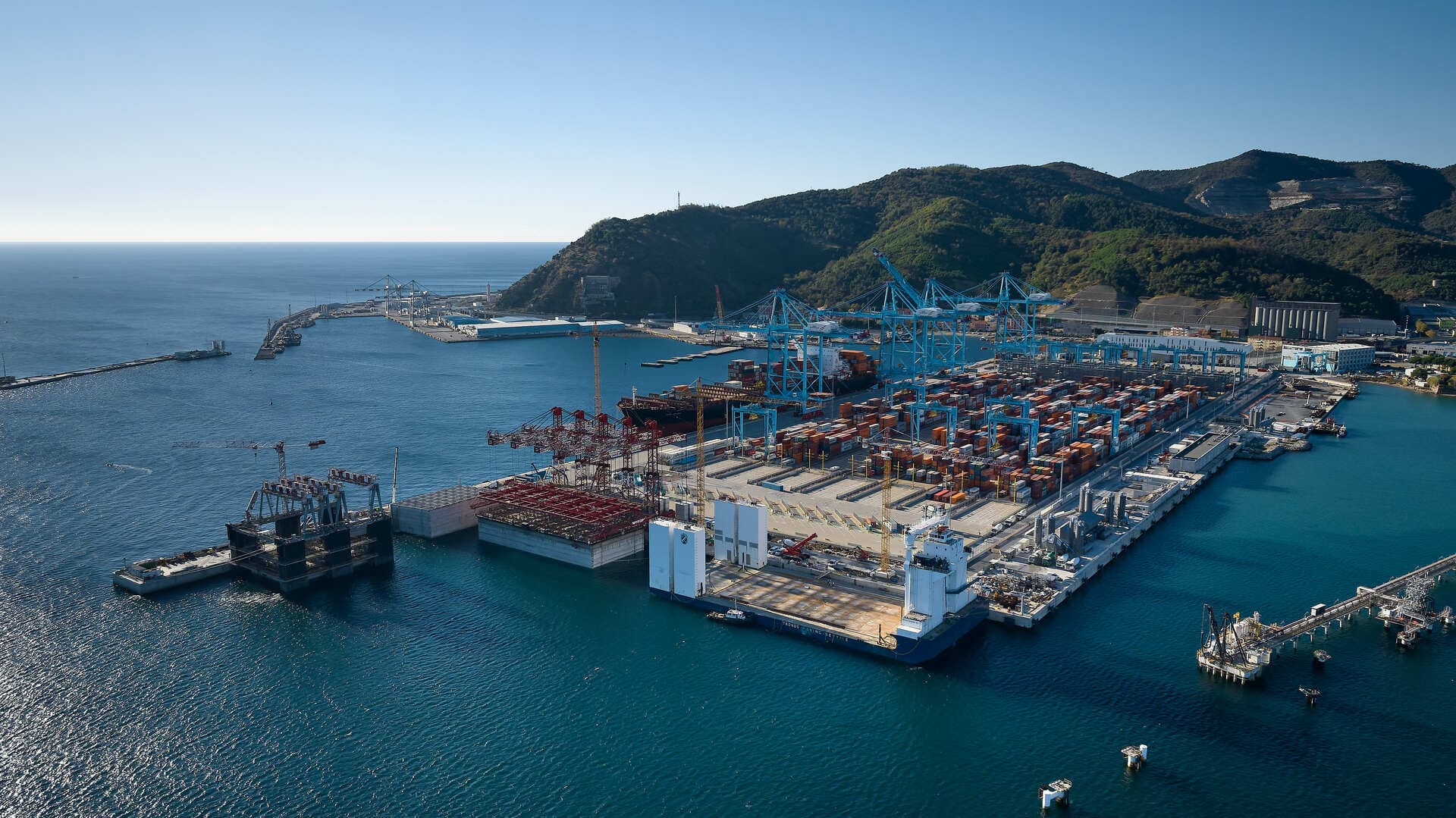 New Genoa Breakwater construction site
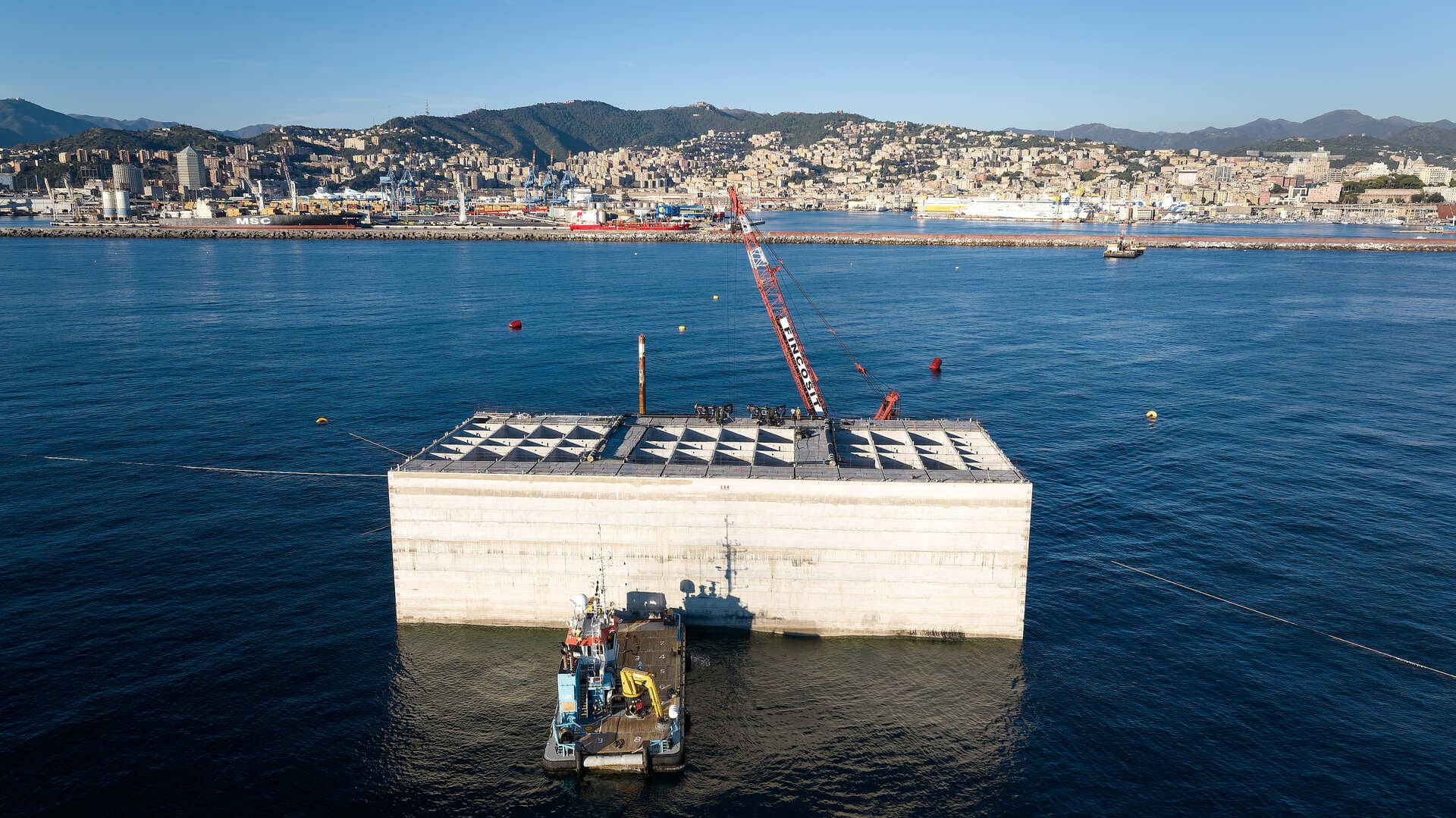 New Genoa Breakwater construction site
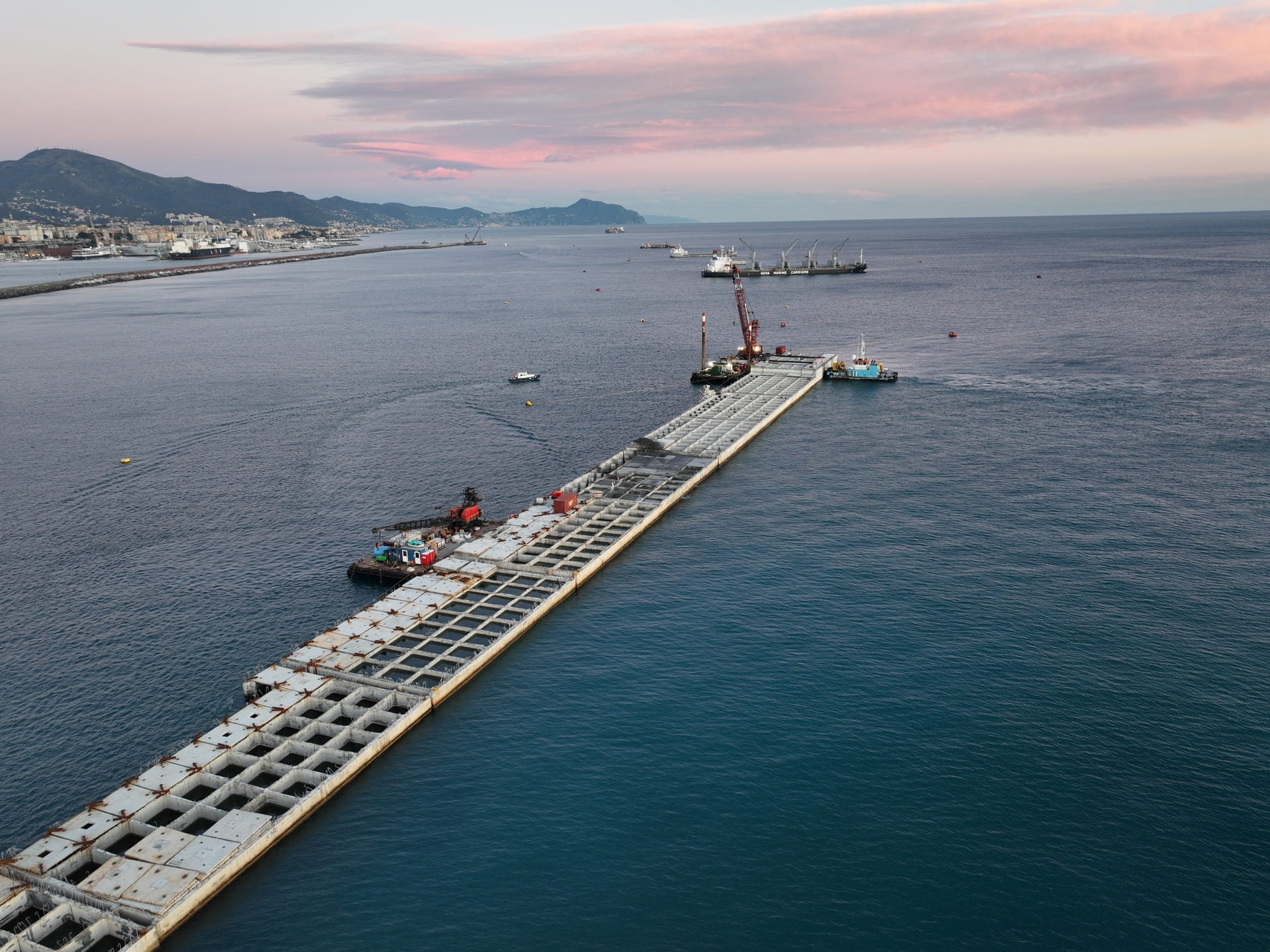 New Genoa Breakwater construction site
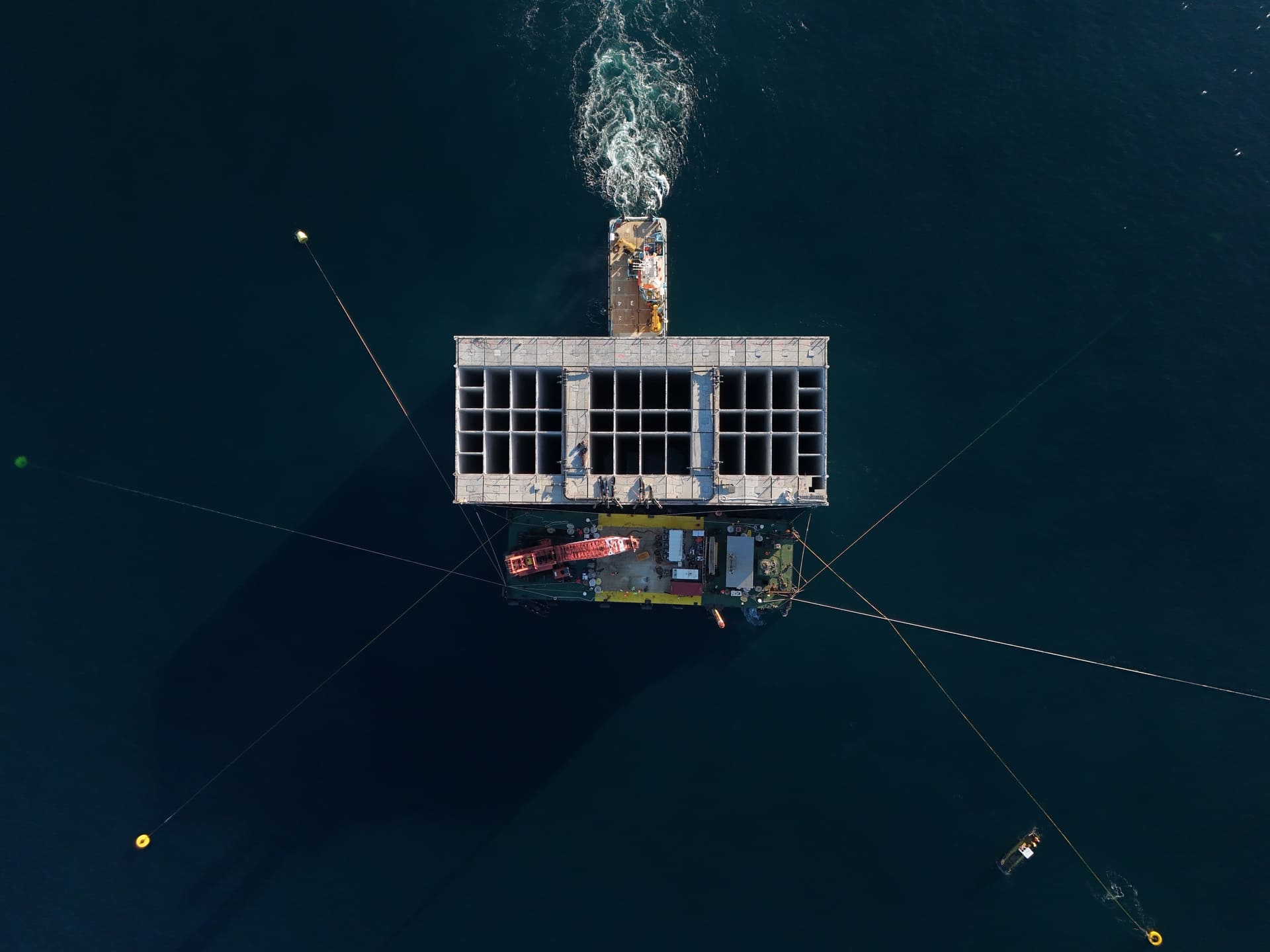 New Genoa Breakwater construction site
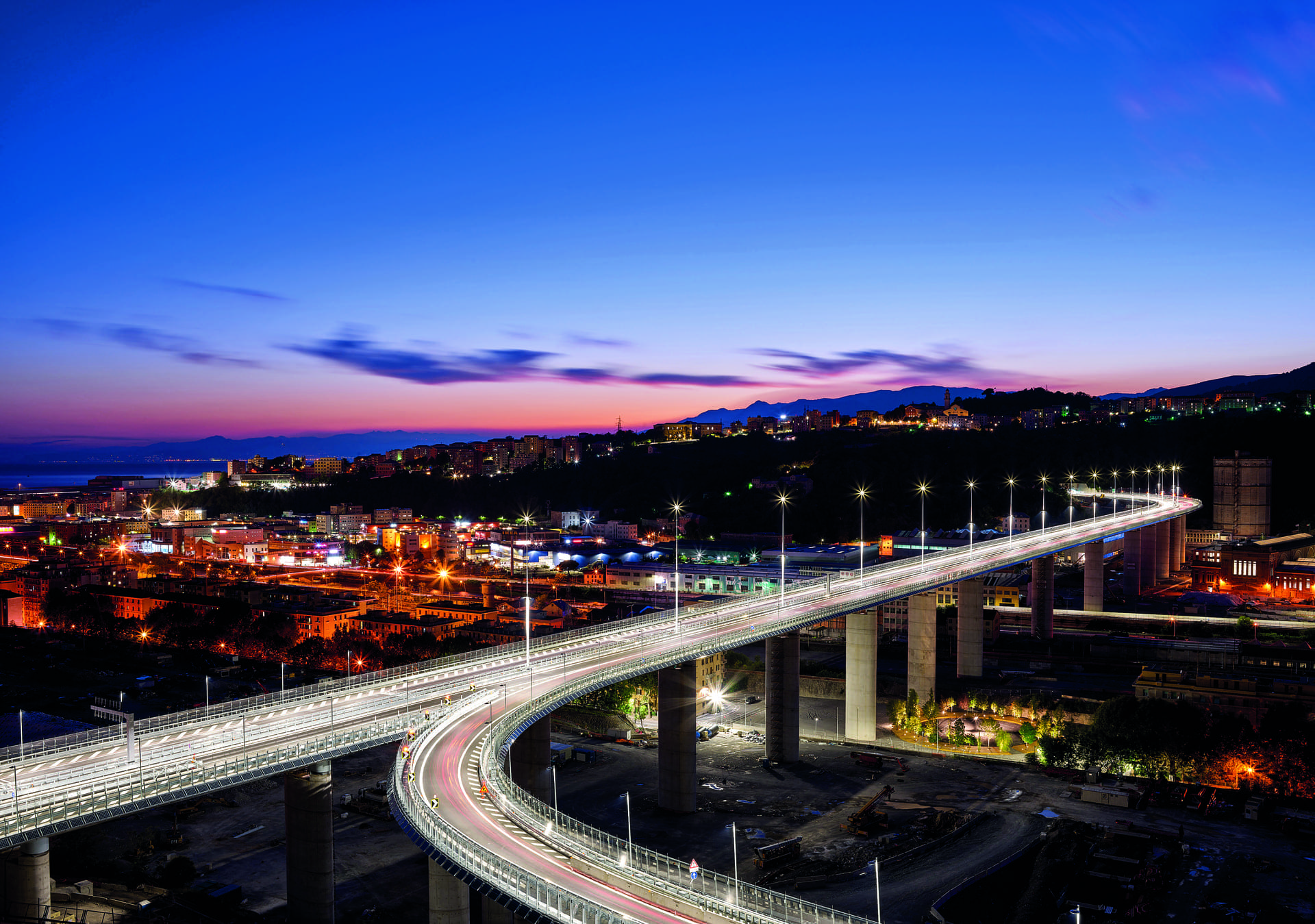 San Giorgio Bridge, Genoa
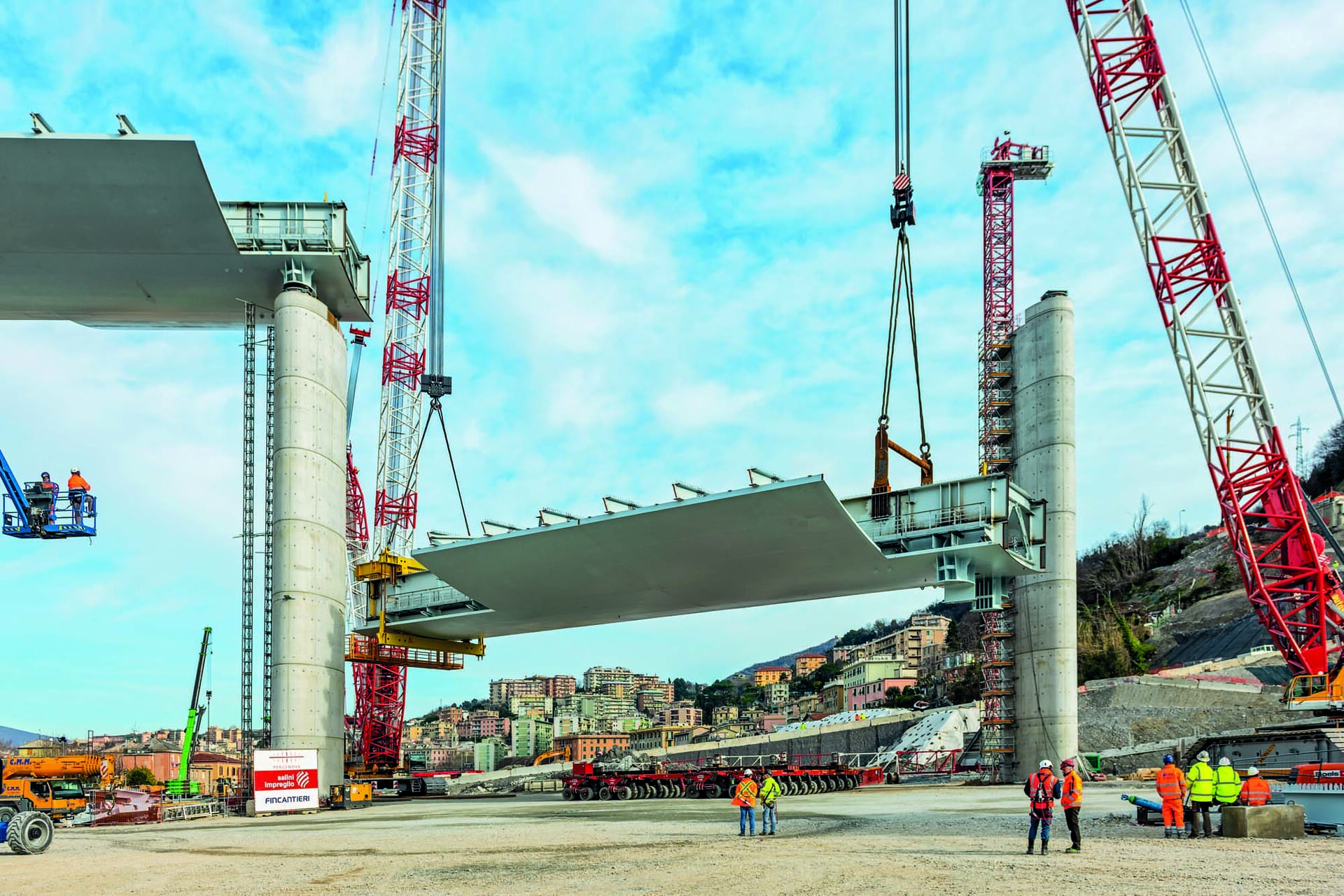
 Construction phases of the San Giorgio Bridge, Genoa
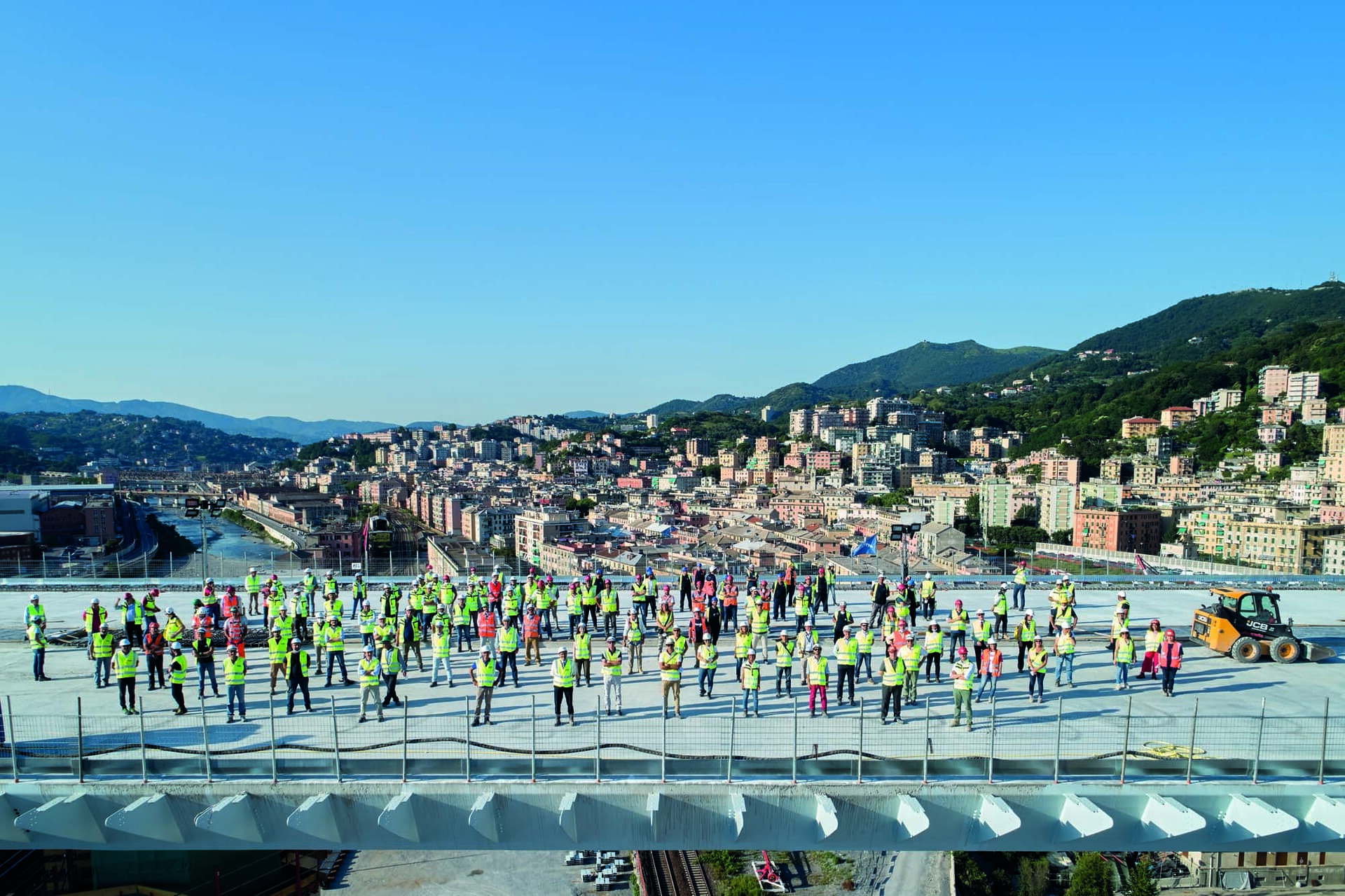
 Construction phases of the San Giorgio Bridge, Genoa
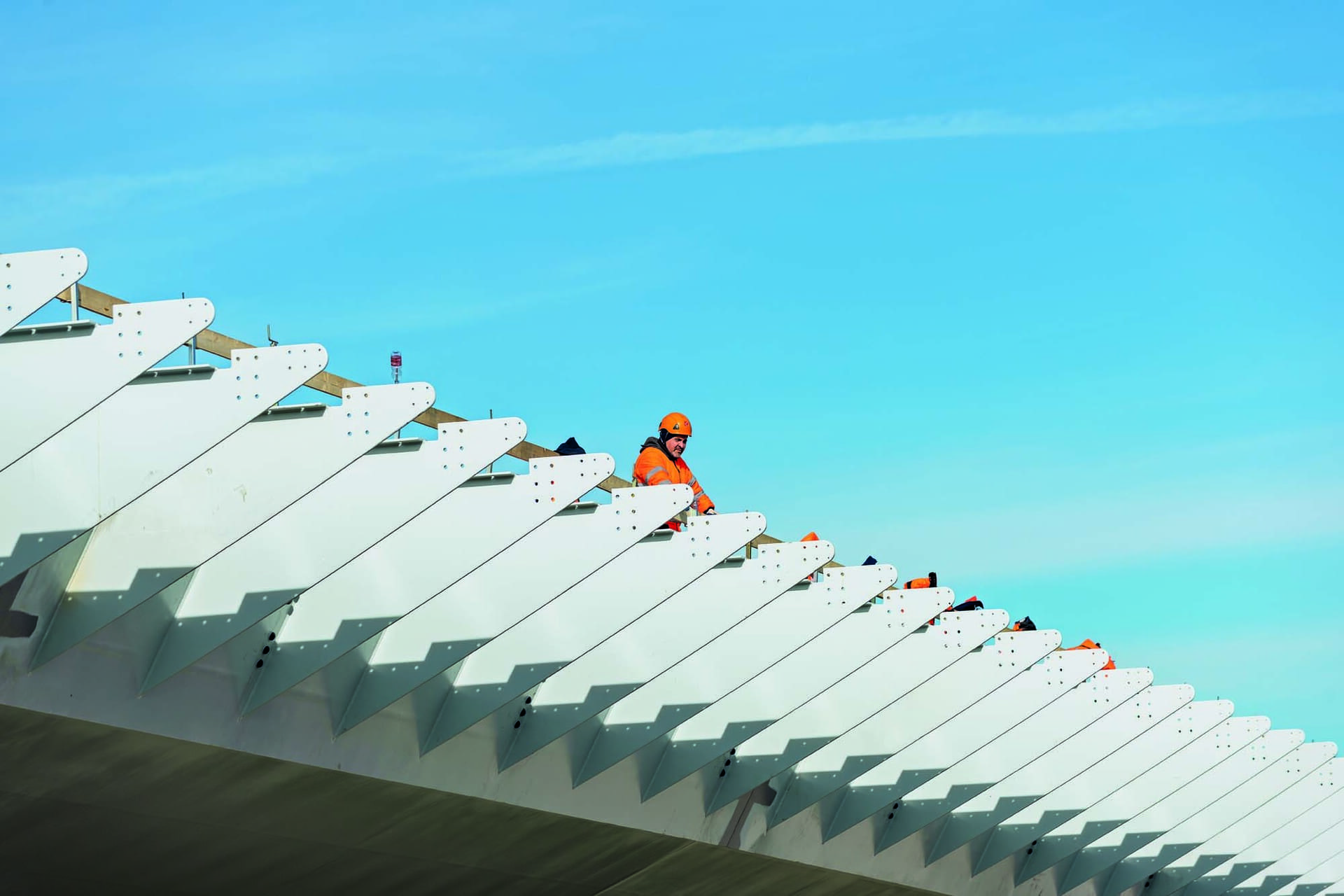 Construction phases of the San Giorgio Bridge, Genoa
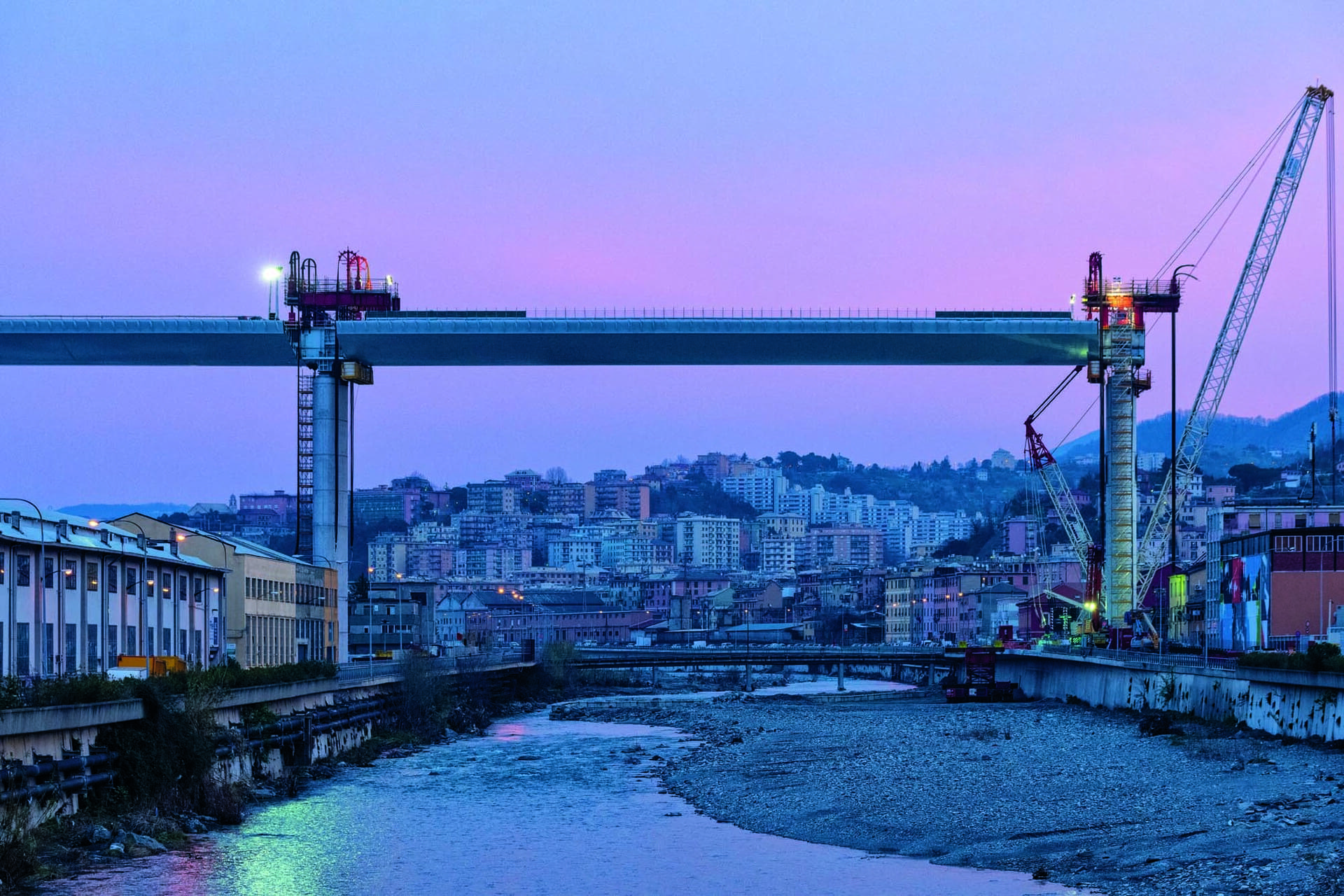 Construction phases of the San Giorgio Bridge, Genoa
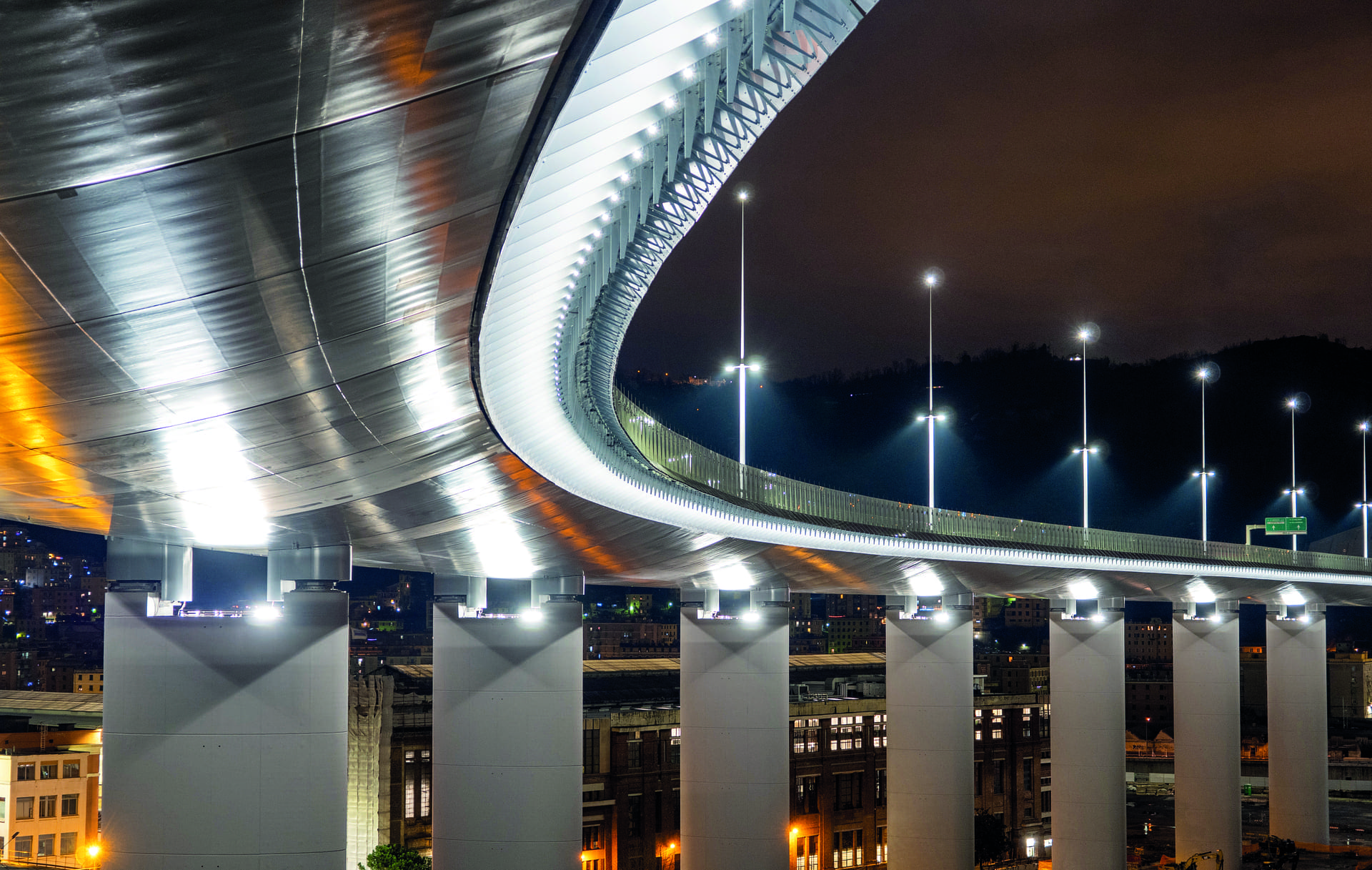 San Giorgio Bridge, Genoa
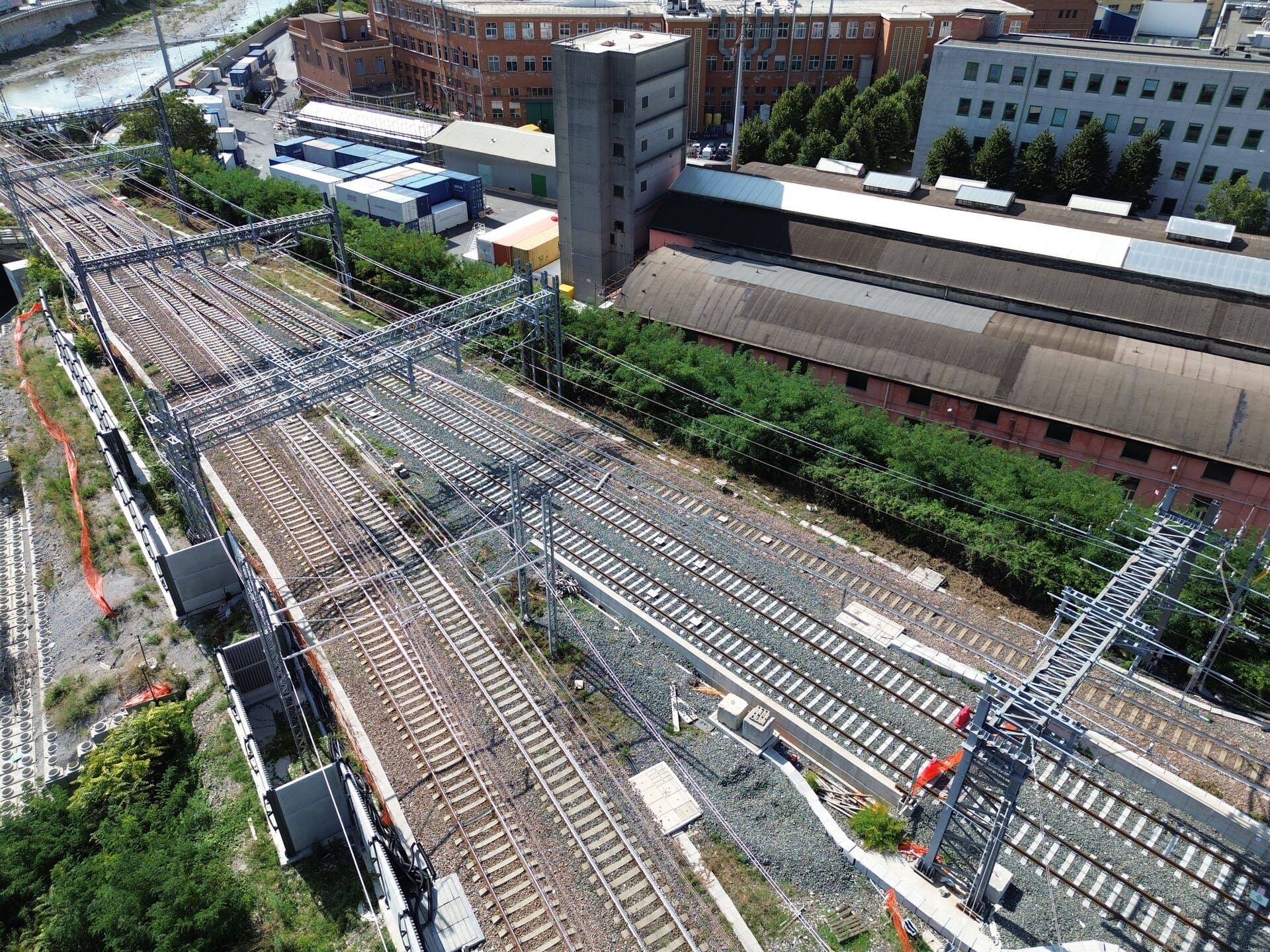 Terzo Valico dei Giovi-Genoa Hub construction site
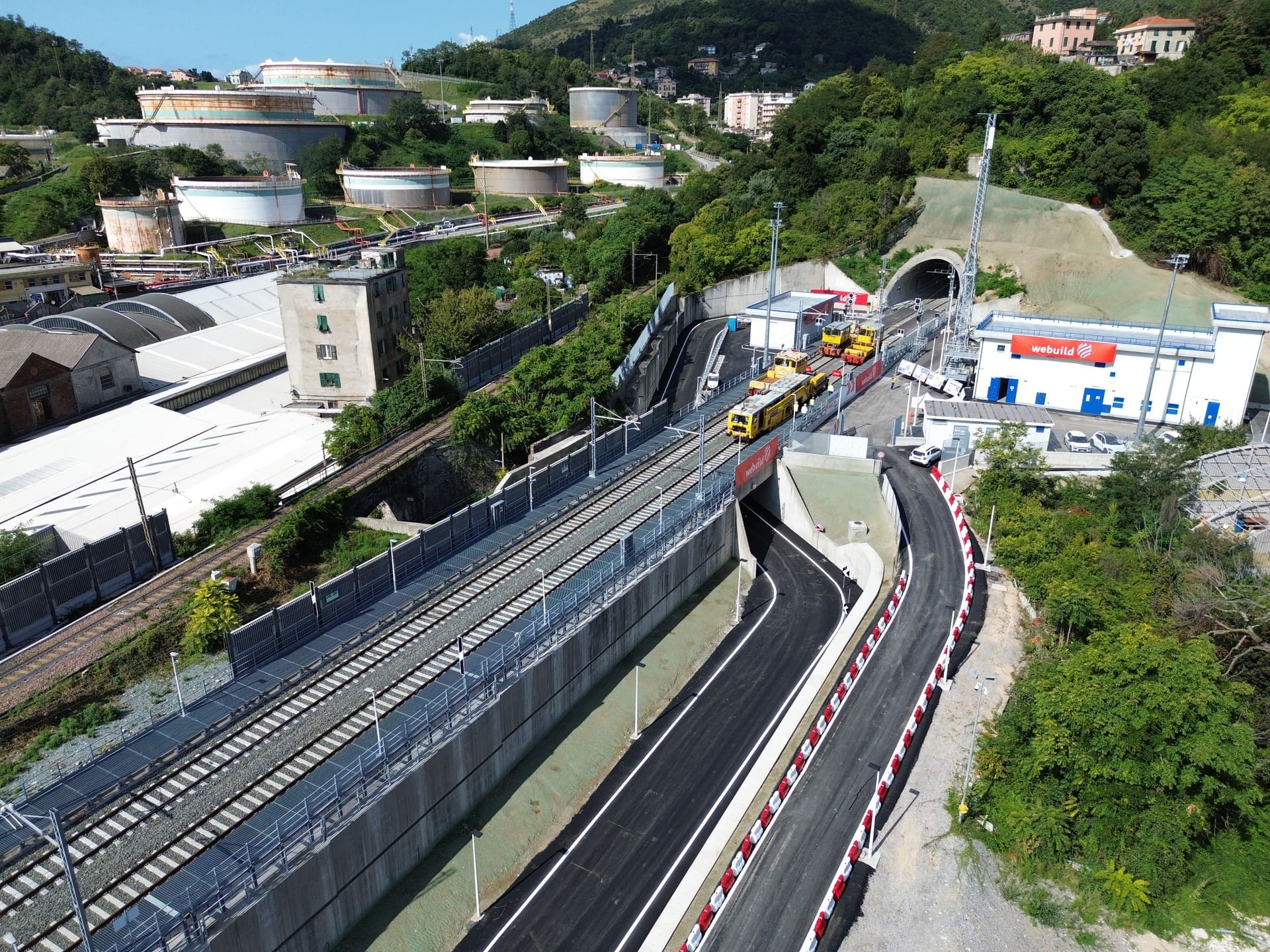 Terzo Valico dei Giovi-Genoa Hub construction site
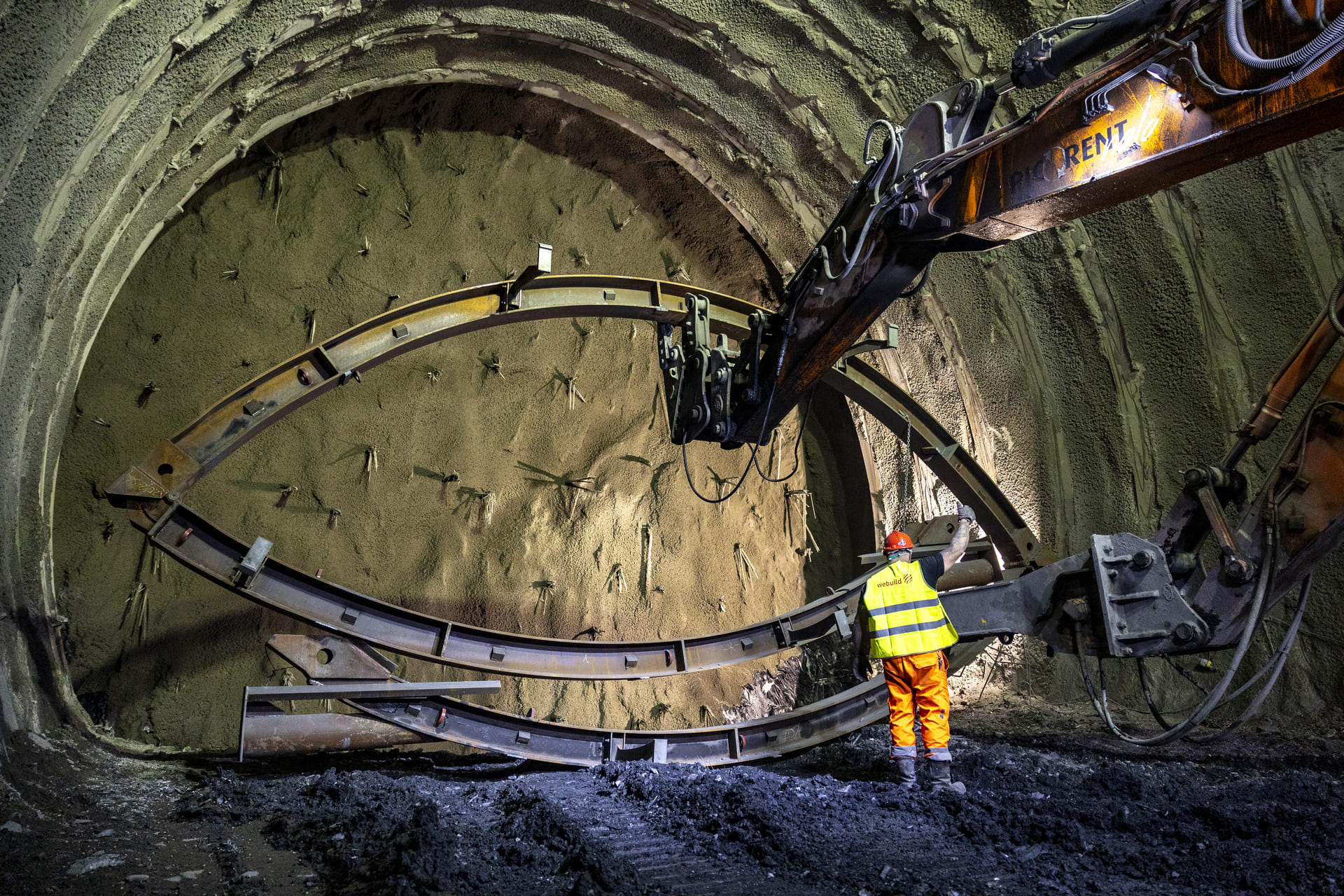 Terzo Valico dei Giovi-Genoa Hub construction site
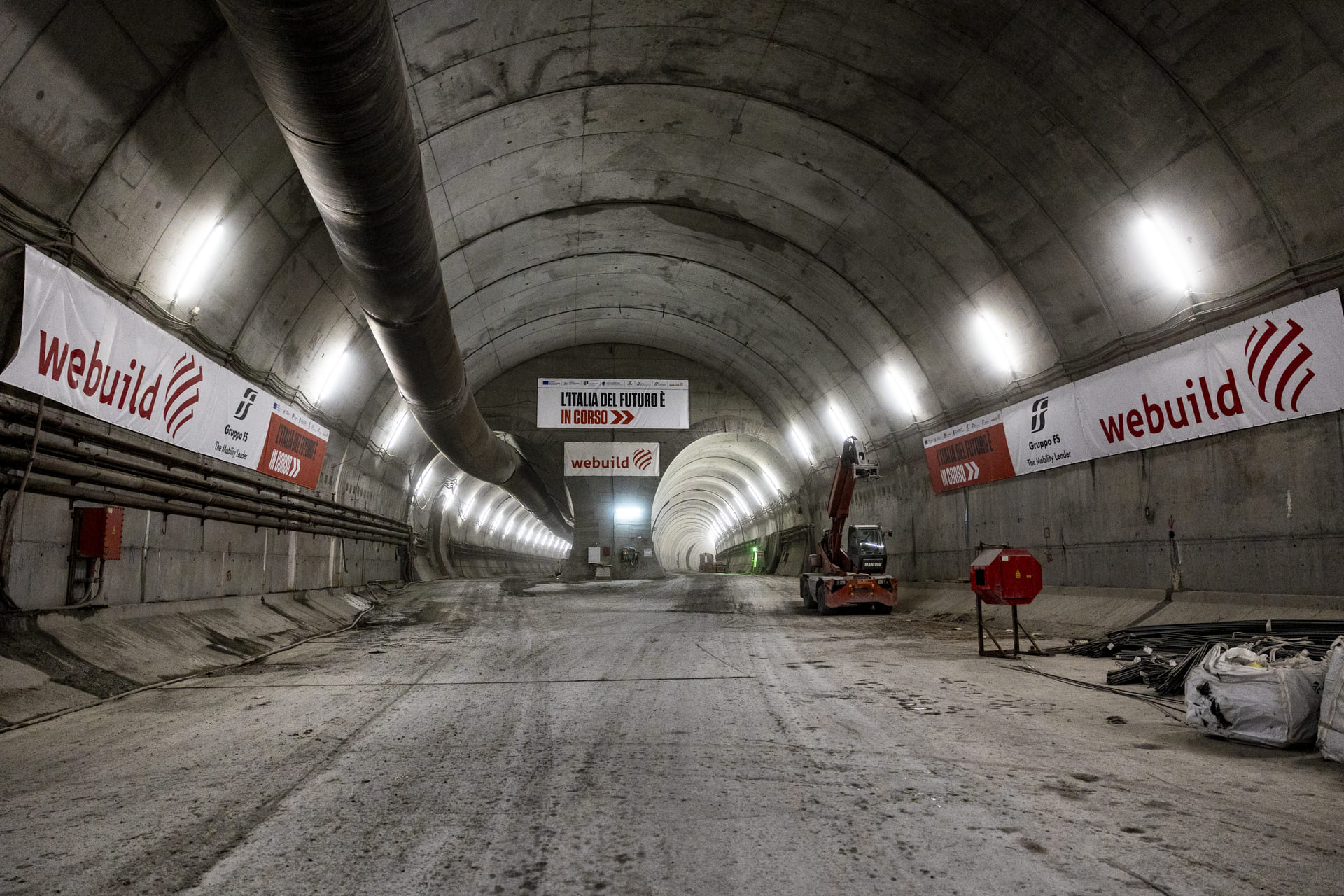 Terzo Valico dei Giovi-Genoa Hub construction site
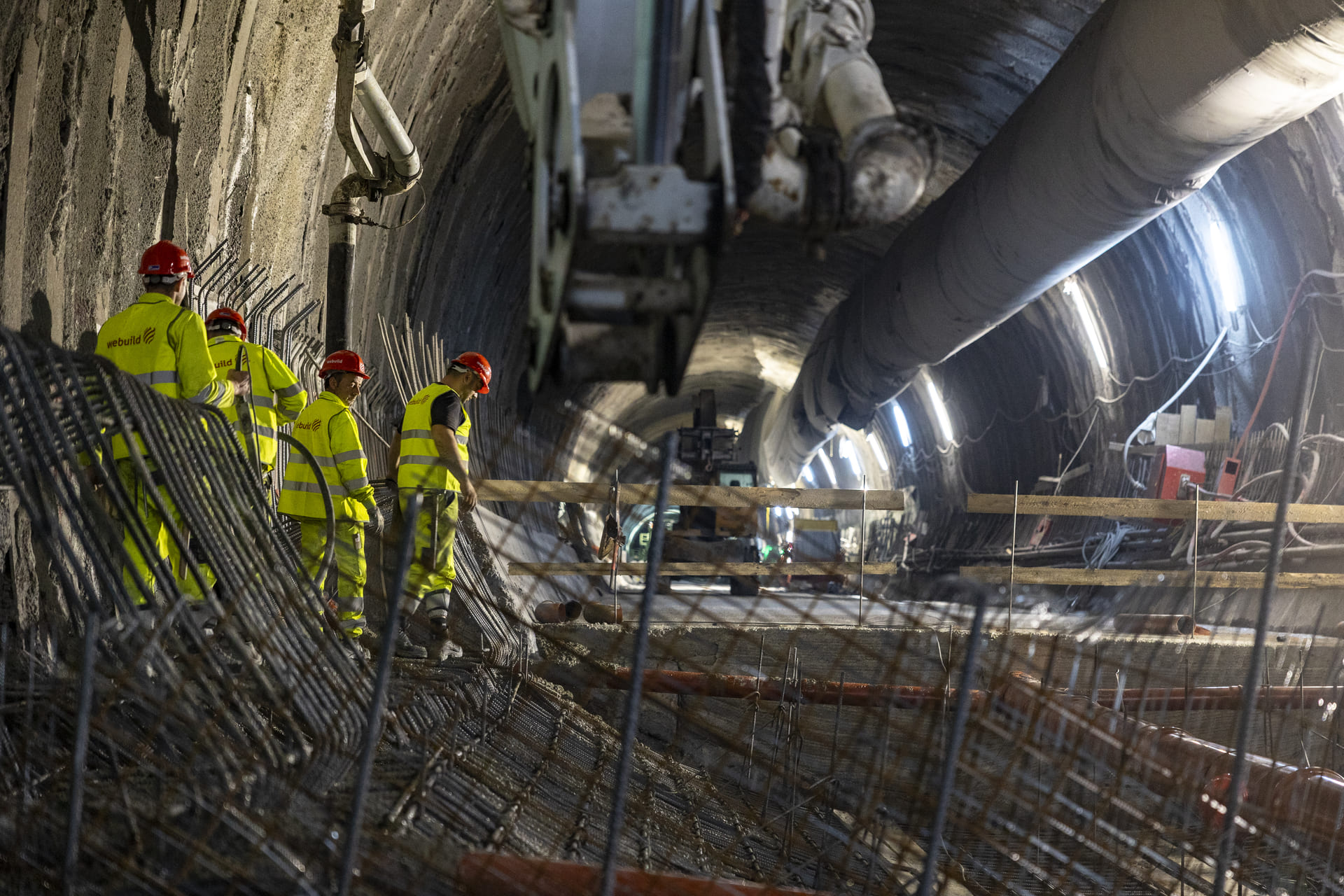 Terzo Valico dei Giovi-Genoa Hub construction site
- The companies that are now part of the Webuild Group have been active in Liguria since 1910, with dozens of infrastructure projects built over more than a century of history.
- Built in just over a year following the collapse of the Morandi Bridge, the Genoa San Giorgio Bridge involved more than 1,000 people and 330 companies from the supply chain.
- The new Breakwater will extend for approximately 6 kilometers on seabeds up to 50 meters deep, allowing the port to welcome ships up to 400 meters long.
- With a 53-kilometer route, 70% of which is underground, the Terzo Valico dei Giovi will strengthen the connection between the Ligurian port system, Northern Italy, and major European corridors.
- Fisia Italimpianti—a Webuild Group company with a century of experience in the water sector—has its headquarters in Genoa.
Read more


Genoa is experiencing one of the most important infrastructural eras in its recent history.
In the sea in front of the city, a new breakwater is taking shape, destined to change the international role of its port. Beneath the Apennines, construction sites for the Terzo Valico dei Giovi and the Genoa Hub are advancing, which will bring Liguria closer to Northern Italy and the major European corridors.
Major infrastructure projects, diverse in scale and function, yet all part of the same transformation aimed at overcoming the geographical constraints of a territory squeezed between the sea and the mountains, strengthening port connections, making mobility more efficient, and building new development opportunities for Genoa and the entire Liguria region.
An era of major projects that was not born today, but is the most recent chapter of a story with deep roots that, for over a century, has linked the companies that are now part of the Webuild Group to Liguria. Since 1910, they have been engaged in the construction of strategic infrastructure, from the Genoa-La Spezia railway line to the historic Recco Viaduct, from the Genoa-Ventimiglia railway to the Genoa metro, and from motorway connections and aqueducts to hospitals.
A presence that has spanned different eras, following and often anticipating the needs of a region where every new connection represents a conquest of space and accessibility. Leading all the way to the major projects of today, which inherit that legacy and project it into the future.
Throughout this long journey, Genoa has become the center of a new era of infrastructural transformation. An era that had one of its most important symbols in the construction of the Genoa San Giorgio Bridge, and which today continues in the construction sites of the new Breakwater and the Terzo Valico dei Giovi.
After the Morandi Bridge: The Genoa San Giorgio Bridge, the Symbol of a City Restarting
On August 3, 2020, Genoa inaugurated its new bridge. Just over a year after the start of construction, the Genoa San Giorgio Bridge restored to the city and the country an essential hub along one of the primary transport axes of Northwestern Italy, marking a new beginning following the collapse of the Morandi Bridge.
Built by Webuild and Fincantieri Infrastructure, united in the PerGenova consortium, the bridge became the symbol of an extraordinary industrial mobilization and of a model capable of bringing together institutions, businesses, and a vast supply chain around a common goal.
To build it, the construction site never stopped. Activities continued 24 hours a day, seven days a week, even during the months of the pandemic-related lockdown. Over 1,000 people worked on the execution of the project, alongside a supply chain of 330 companies.
Indeed, this Genoa bridge represents a strategic hub for connections with France, the port, the main routes crossing Liguria and, at the same time, it is a work conceived according to advanced criteria of safety, durability, and sustainability, seamlessly integrating into the Val Polcevera and restoring to Genoa an infrastructure essential for its mobility and for the competitiveness of its economic system.
A new era opened with the Genoa San Giorgio Bridge, because while the bridge returned to reunite the city, other major infrastructure projects were beginning to build the connections that Genoa will need in the decades to come.
New Breakwater: a Frontier for the Port of Genoa
One of these transformations is taking place today in the sea in front of Genoa. Approximately 750 meters further offshore compared to the existing breakwater, Webuild is engaged as the leader of the PerGenova Breakwater consortium in the construction of the new Breakwater, one of the most complex marine works currently being executed in Europe.
The project was conceived to respond to a transformation that has been changing global maritime transport for years: the increasing size of ships and the need for major ports to adapt their infrastructure, maneuvering spaces, and access points.
The new breakwater will have a total length of approximately 6 kilometers and will be built on seabeds reaching depths of up to 50 meters. By shifting the port’s protective barrier further out to sea, it will allow for the safe entry and maneuvering of ships up to 400 meters long, including large World Class cruise ships.
The new configuration will redesign the spaces of the seaport basin, with the Sampierdarena channel reaching a maximum width of 500 meters, while a new turning basin with a diameter of 800 meters and an access channel 310 meters wide will be created.
These numbers reflect the scale of the project, but also the complexity of its construction. In fact, the first step consists of creating an enormous base on the seabed, formed using approximately 9 million tons of rocky material.
On top of this foundation, gigantic prefabricated reinforced concrete cellular caissons are then positioned to form the structure of the breakwater: some reach 67 meters in length, 30 meters in width, and over 33 meters in height, dimensions that make them the largest ever built in Italy.
Working in the open sea and at depths of up to 50 meters has consequently required innovative engineering solutions, ranging from the unexploded ordnance (UXO) clearance of the seabed to its consolidation, achieved also through gravel columns, all the way to a geotechnical monitoring system with wireless data transmission. Furthermore, a floating batching plant capable of executing offshore concrete pours exceeding 500 cubic meters per day was designed for the construction of the superstructures.
Once completed, the new Breakwater will also offer greater protection of the port of Genoa basin from storm surges and will enable a more efficient separation between different types of traffic, including cargo, passengers, and recreational boaters.
Terzo Valico dei Giovi: Genoa and Italy Closer to Europe
For centuries, the Apennines have represented both a protection and a barrier for Genoa. Overcoming them more rapidly and efficiently means bringing the port closer to the Po Valley, to the major manufacturing centers of Northern Italy, and, from there, to European markets.
This is the challenge of the Terzo Valico dei Giovi-Genoa Hub Unified Project, one of the largest infrastructure construction sites active in Italy today.
The new High-Speed and High-Capacity railway line between Genoa and Milan stretches for 53 kilometers. Considering the single- and double-tube tunnels and the interconnections, the project includes a total of approximately 90 kilometers of tunnels, creating the most extensive underground railway system ever built in Italy.
The new infrastructure is a strategic component of the Rhine-Alpine Corridor within the trans-European TEN-T network, one of the primary axes for the transport of passengers and freight across the continent. Its objective is to enhance the connections between the Ligurian port system, the ports of the northern Tyrrhenian Sea, Northern Italy, and the rest of Europe.
This function becomes even more strategic through its integration with the Genoa railway Hub. Indeed, the system connects the main commercial port areas, from the Port of Prà to Calata Bettolo, with the city’s stations and railway network, before continuing inland and toward the North of the country.
The Breakwater and the Terzo Valico dei Giovi are thus two parts of the same strategy: on one hand, creating the conditions for the port of Genoa to welcome the mega-ships of the future, and on the other, building a network capable of transferring people and cargo more quickly and efficiently toward Northern Italy and Europe.
Webuild in Liguria: A Century of Infrastructure, A New Era of Development
The Genoa San Giorgio Bridge, the new Breakwater, and the Terzo Valico dei Giovi are the most visible expressions of Webuild’s presence in today’s Liguria. Over time, these three infrastructure projects have activated a supply chain of thousands of businesses and generated a total of over 7,000 jobs.
However, the Group’s bond with the region also stems from the permanent presence of industrial and technological expertise. Indeed, Genoa is home to the headquarters of Fisia Italimpianti, a Webuild Group company with a hundred years of experience in the water sector.
The company operates internationally in the design and construction of desalination and water treatment plants—an industrial presence that complements the long history of works completed in the region and helps make Liguria one of the places where the relationship between the Group and infrastructural development has its deepest roots.
This is a story destined to continue, because while the construction sites of the Breakwater and the Terzo Valico advance, a major new infrastructure is preparing to redesign Genoa’s mobility. This time, by passing beneath its port.