


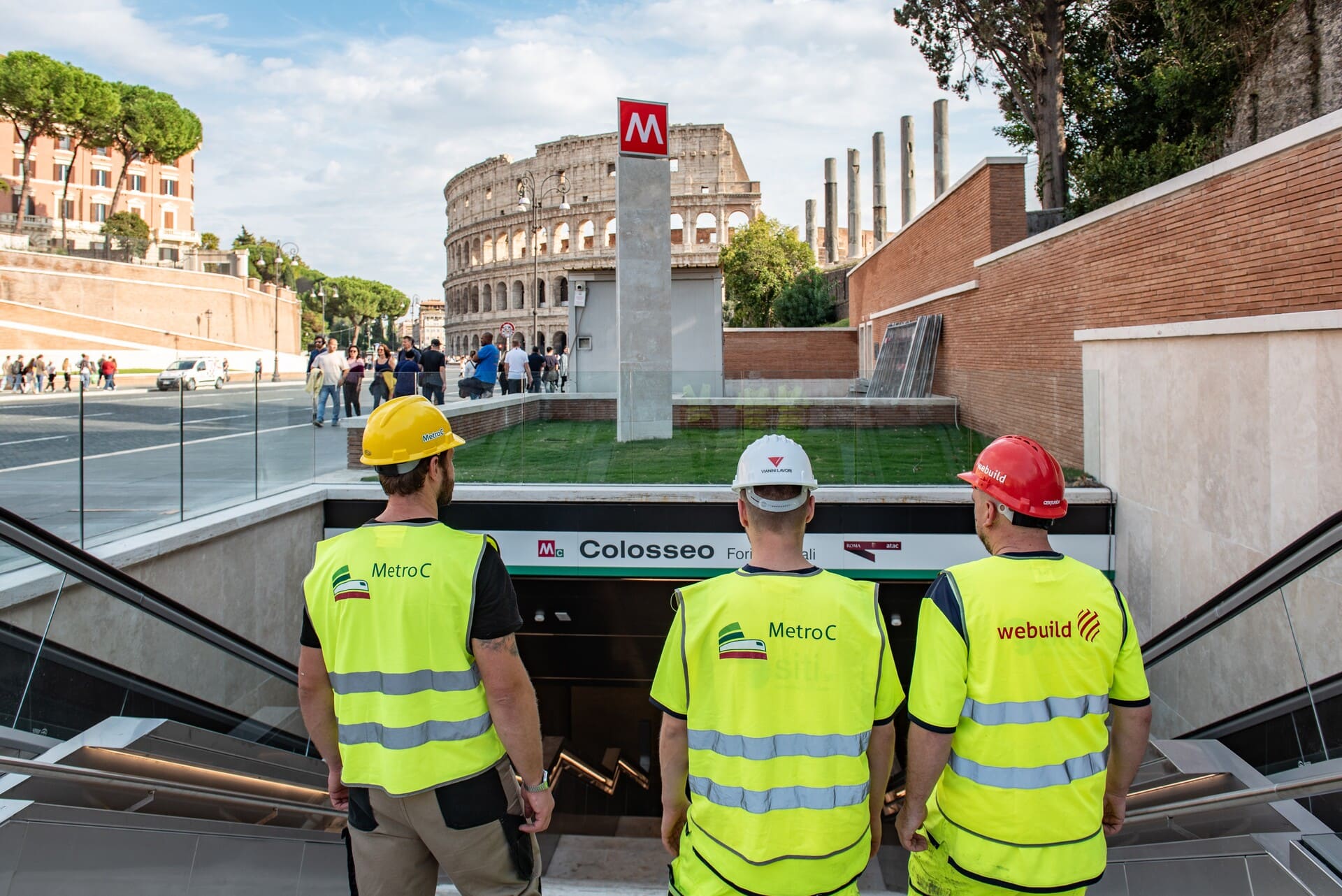
 Entrance of the new Colosseo-Fori Imperiali metro station
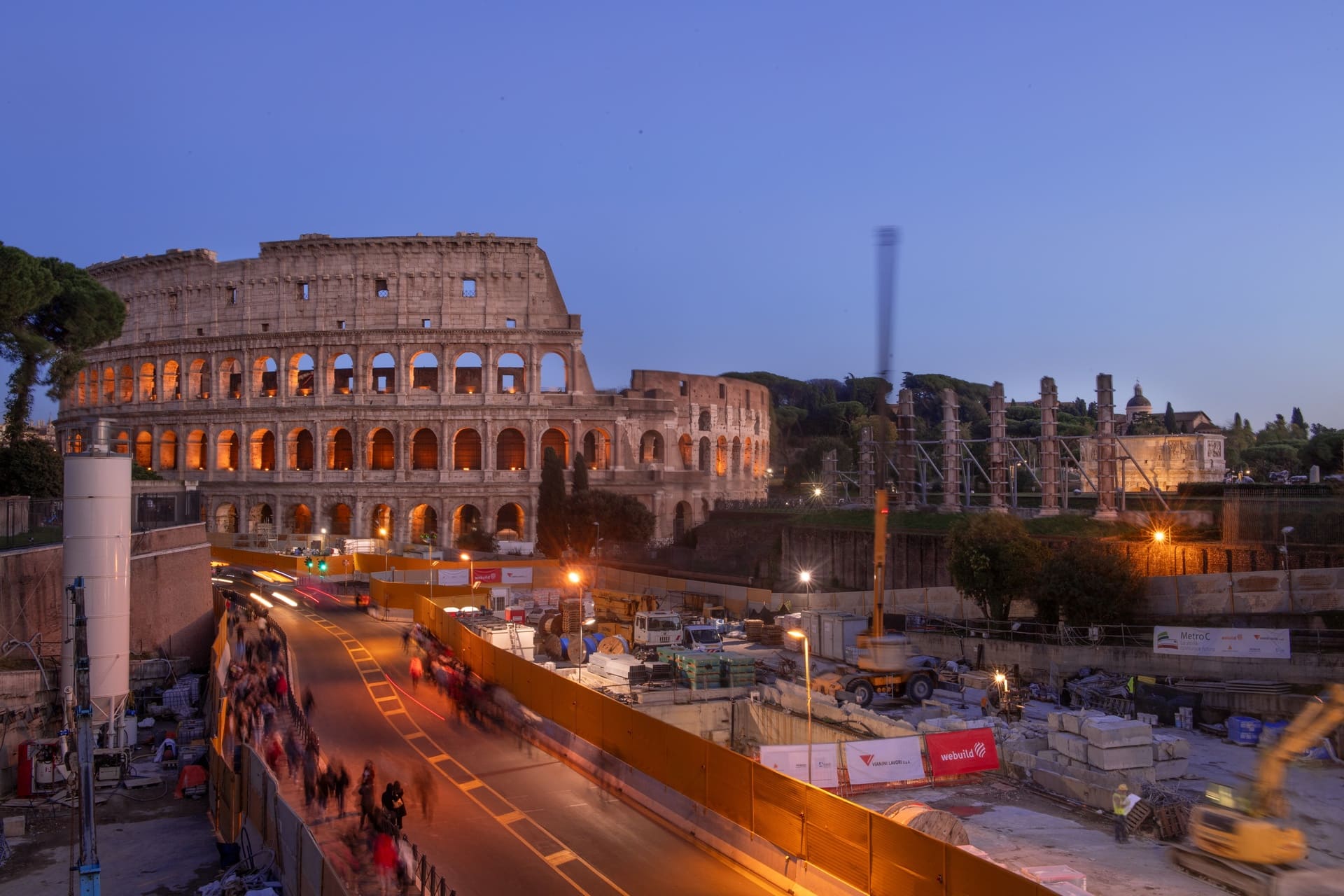 Metro C station construction site
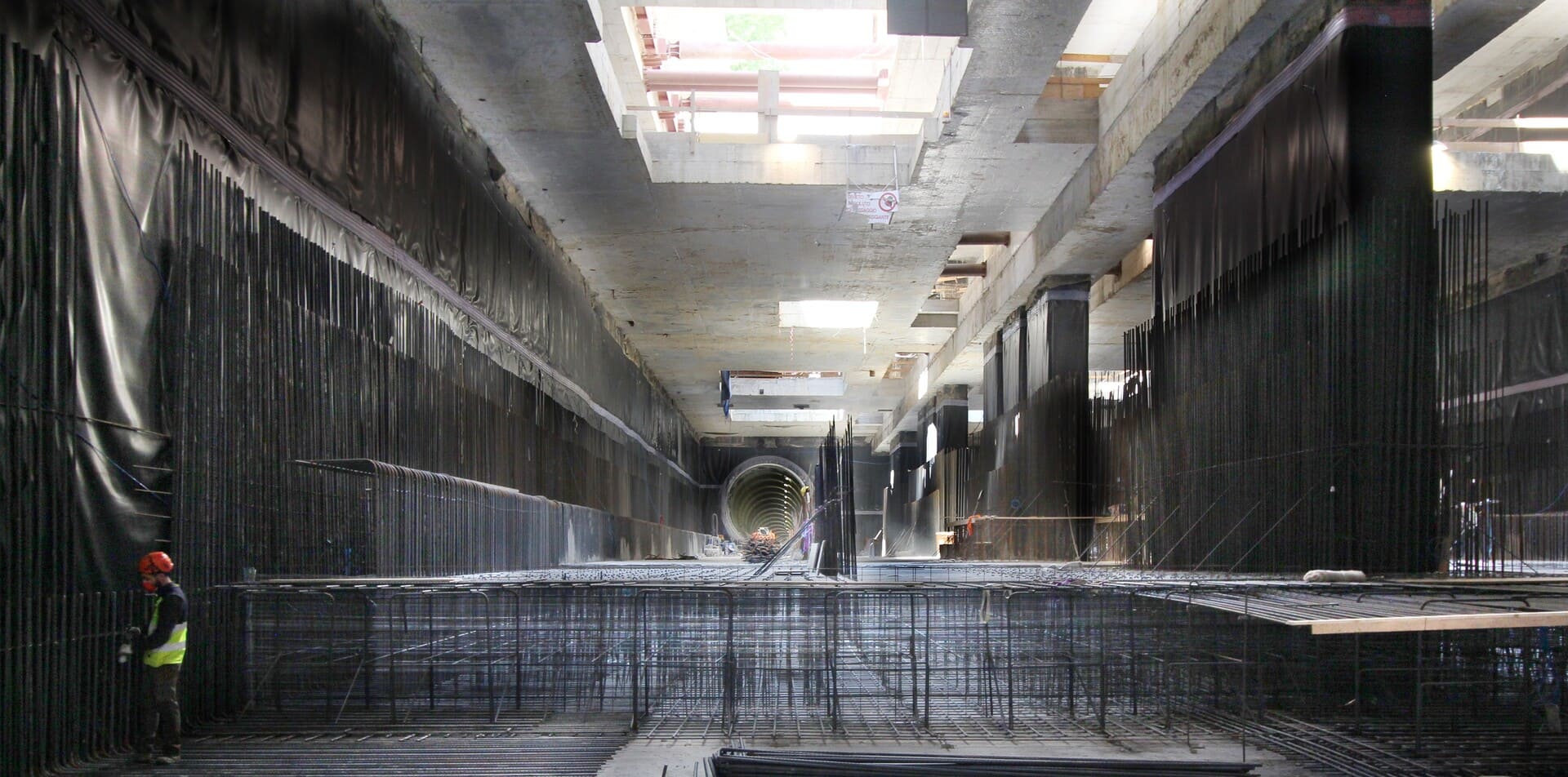 Stages of construction at the Colosseo-Fori Imperiali station
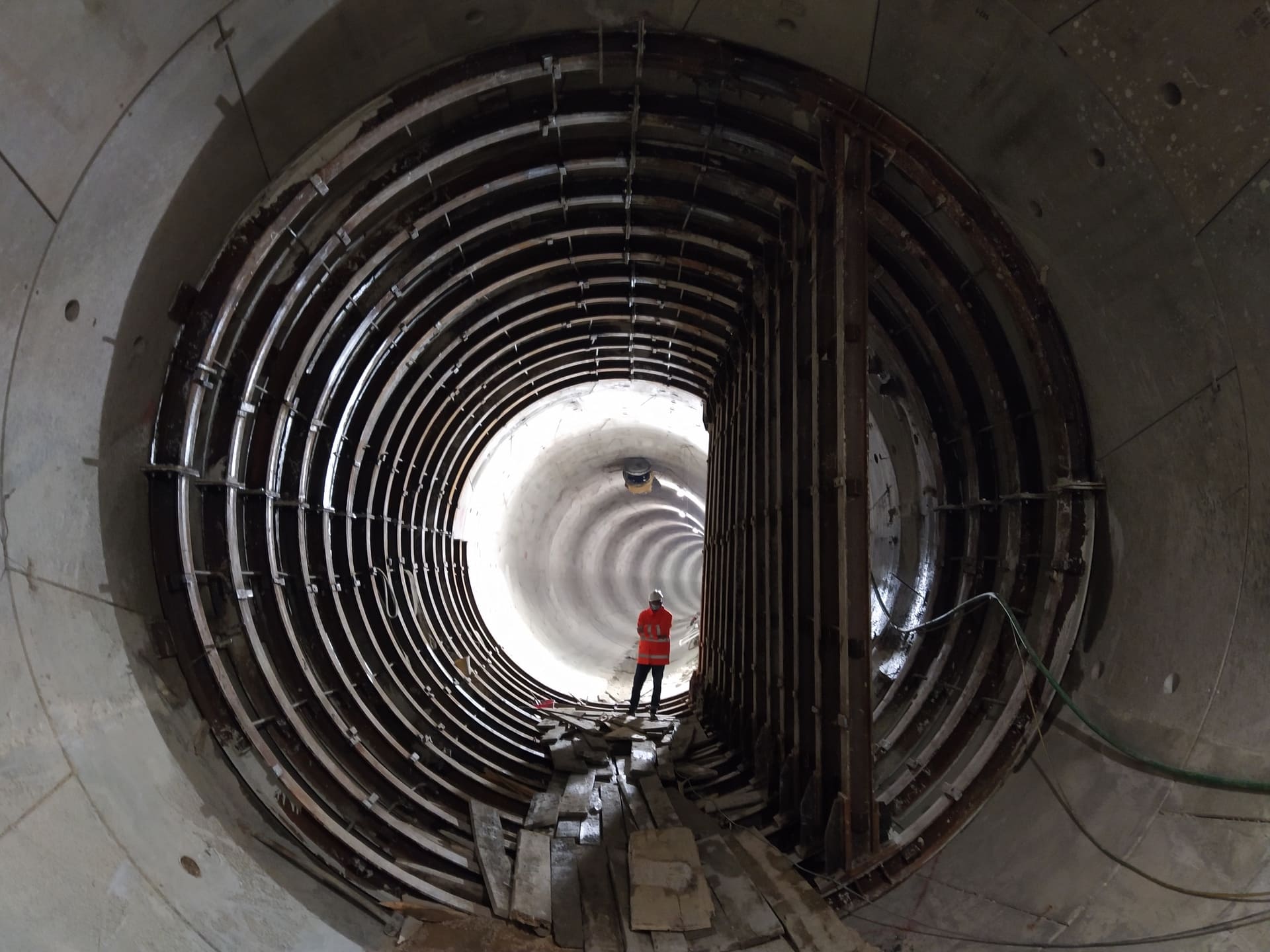 Stages of construction at the Colosseo-Fori Imperiali station
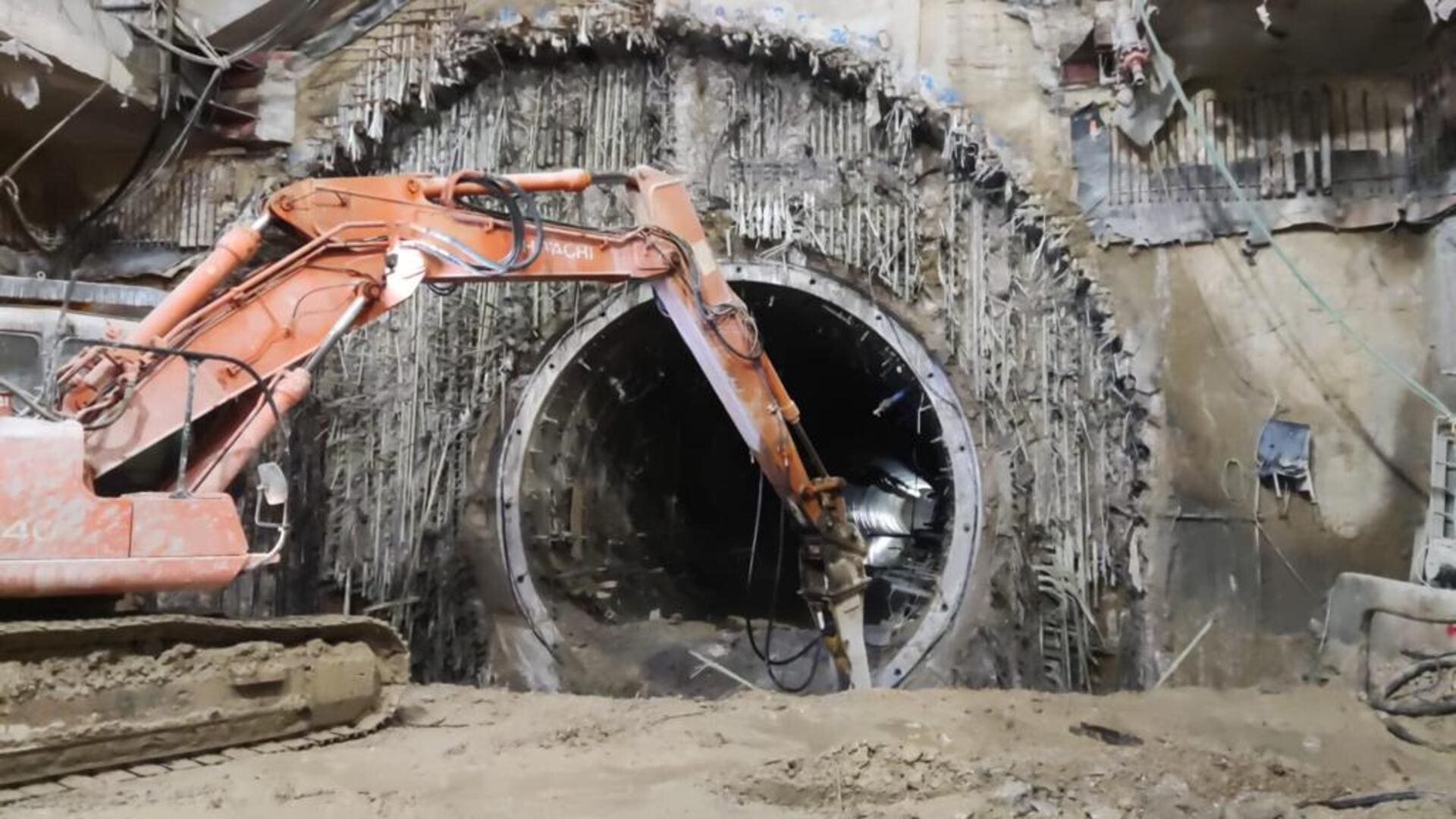 Stages of construction at the Colosseo-Fori Imperiali station
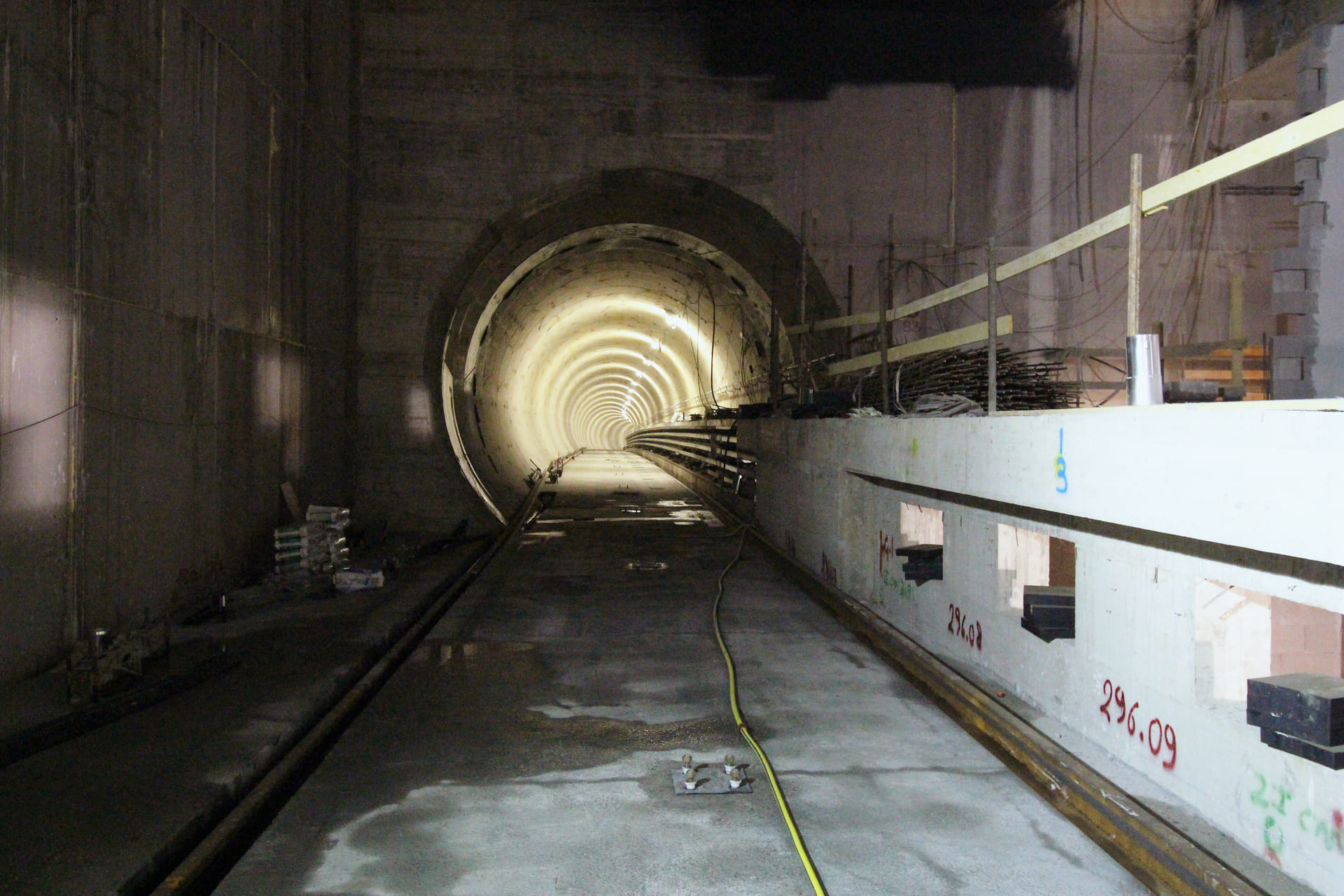 Stages of construction at the Colosseo-Fori Imperiali station
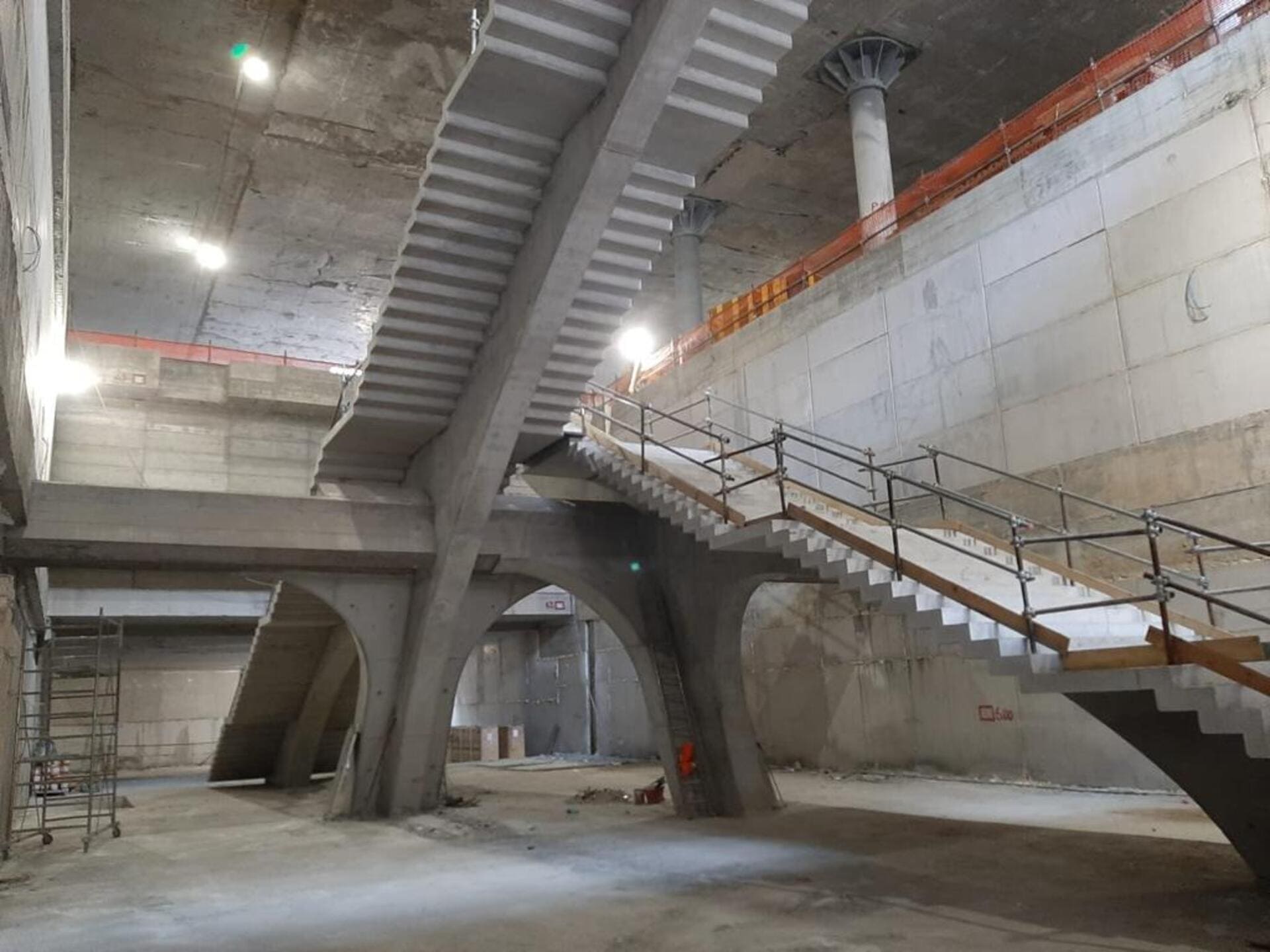 Stages of construction at the Colosseo-Fori Imperiali station
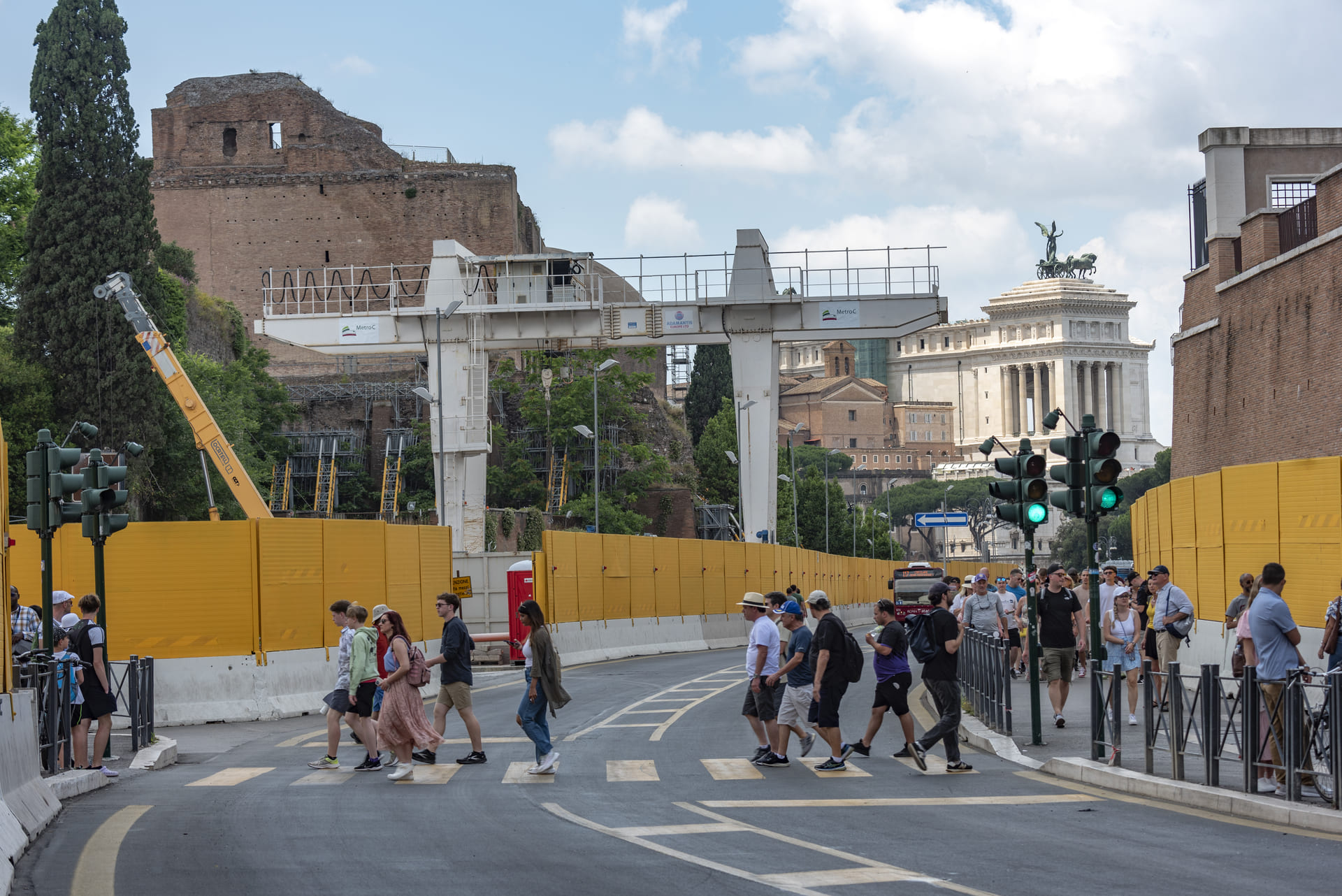 External view of the station construction site
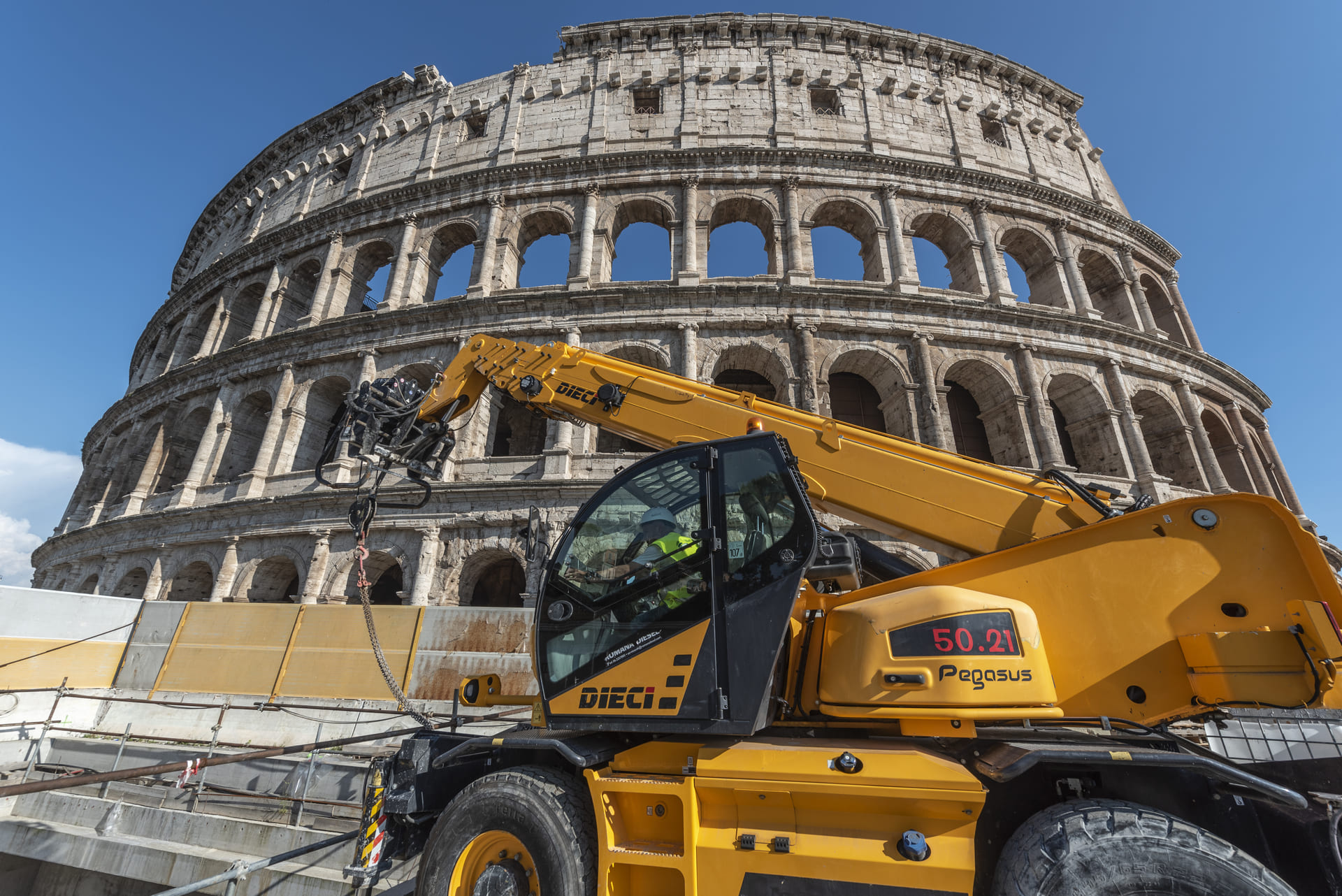 External view of the station construction site
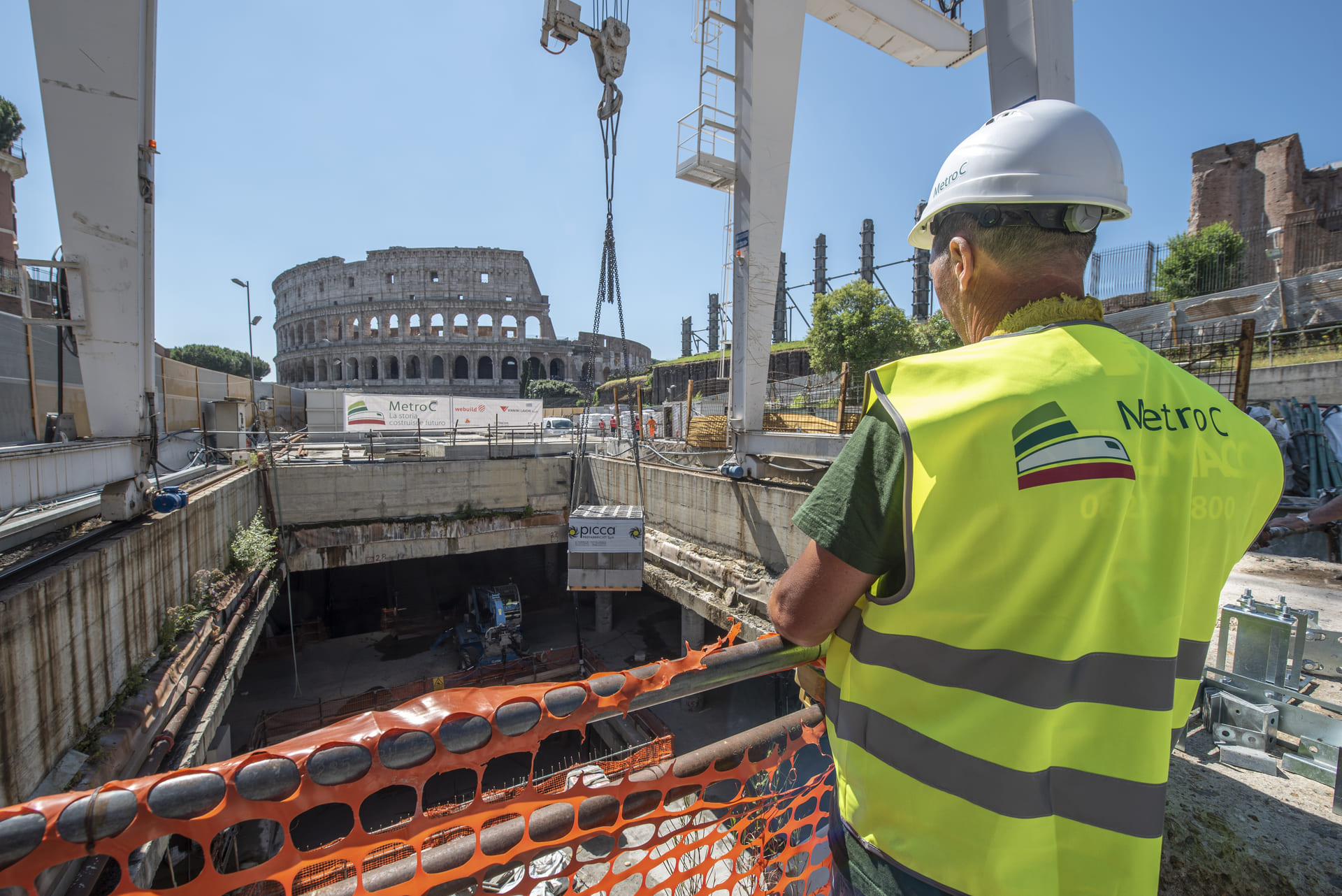 External view of the station construction site
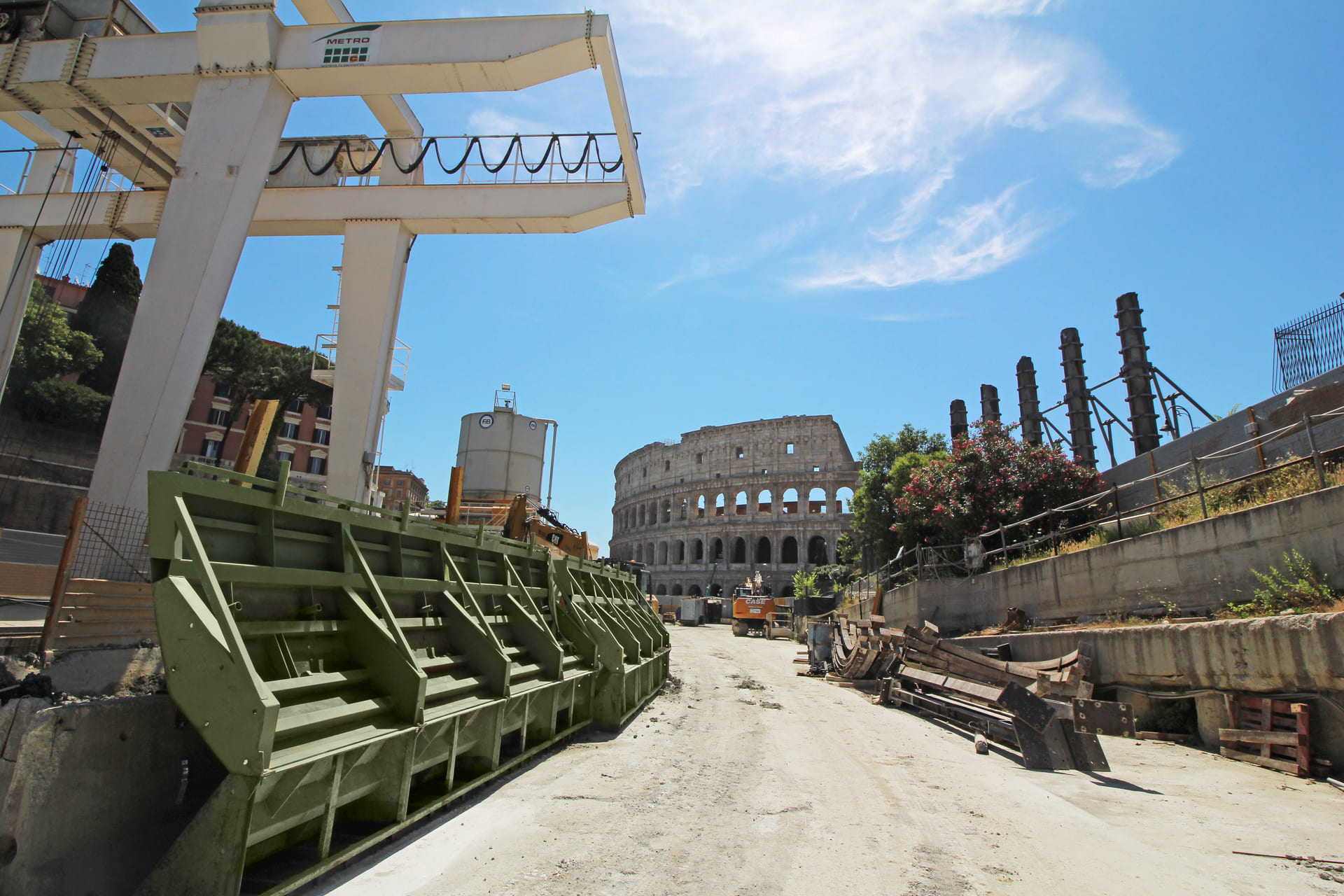 External view of the station construction site
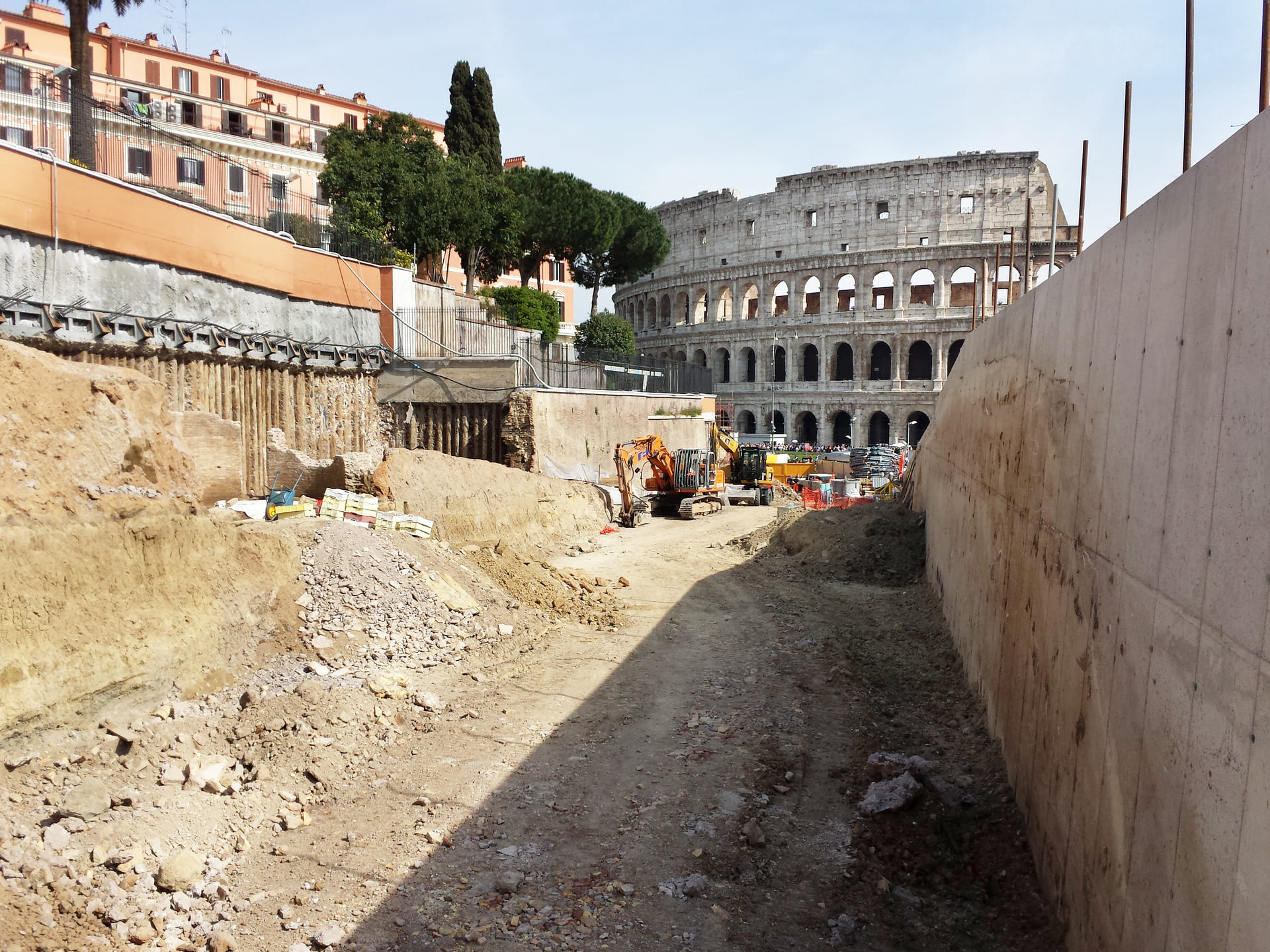 External view of the station construction site
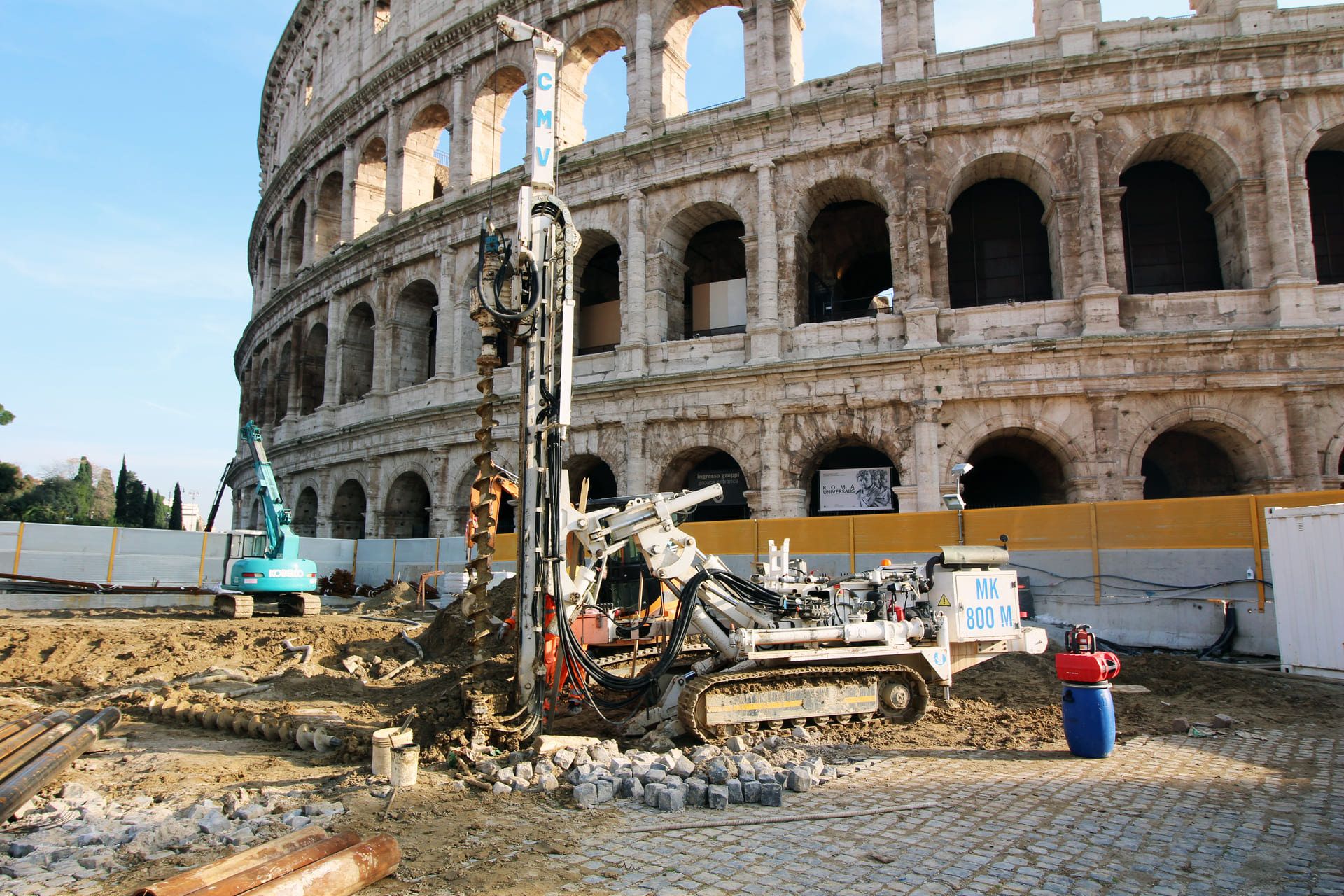 External view of the station construction site
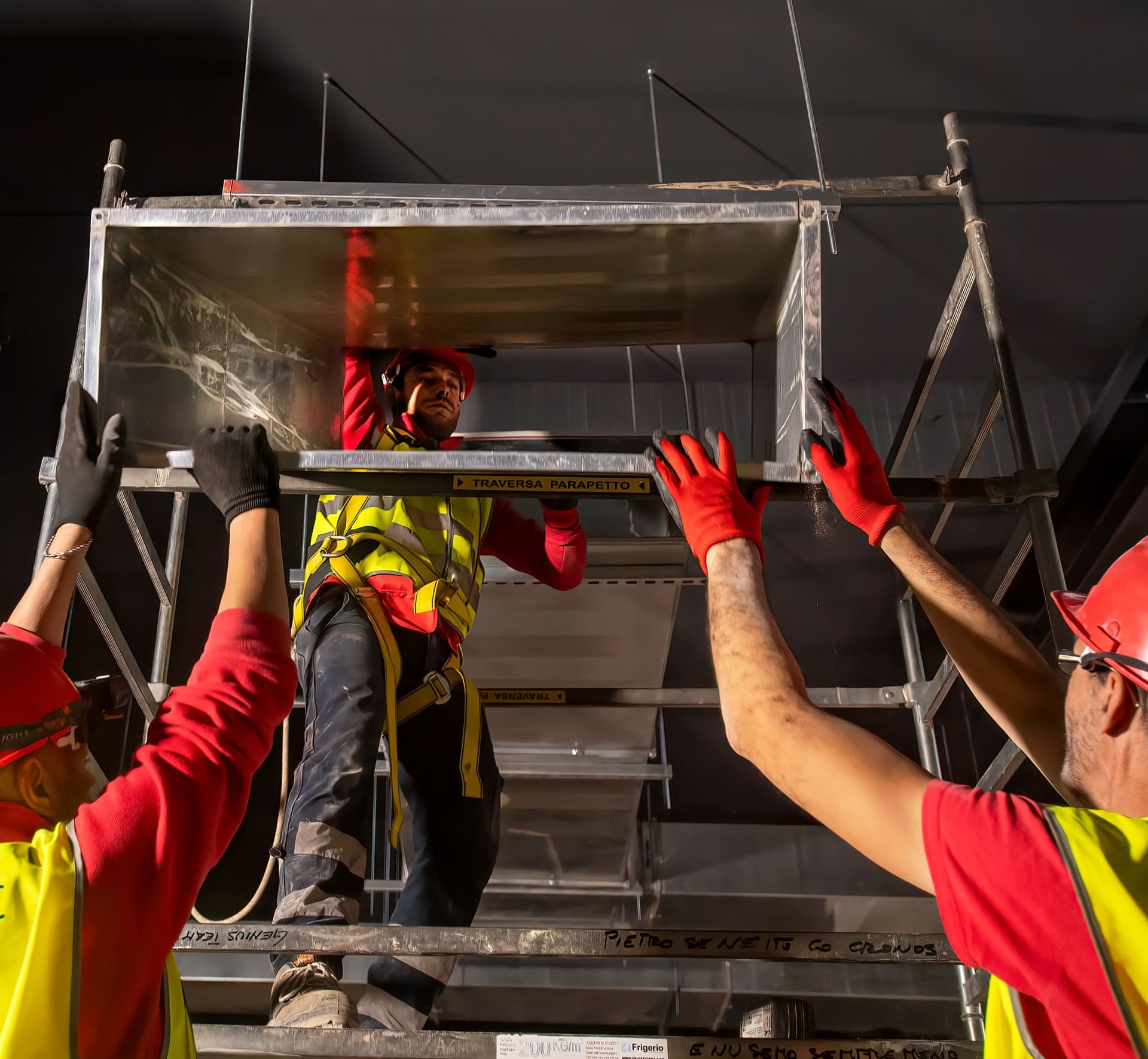 Workers inside the construction site
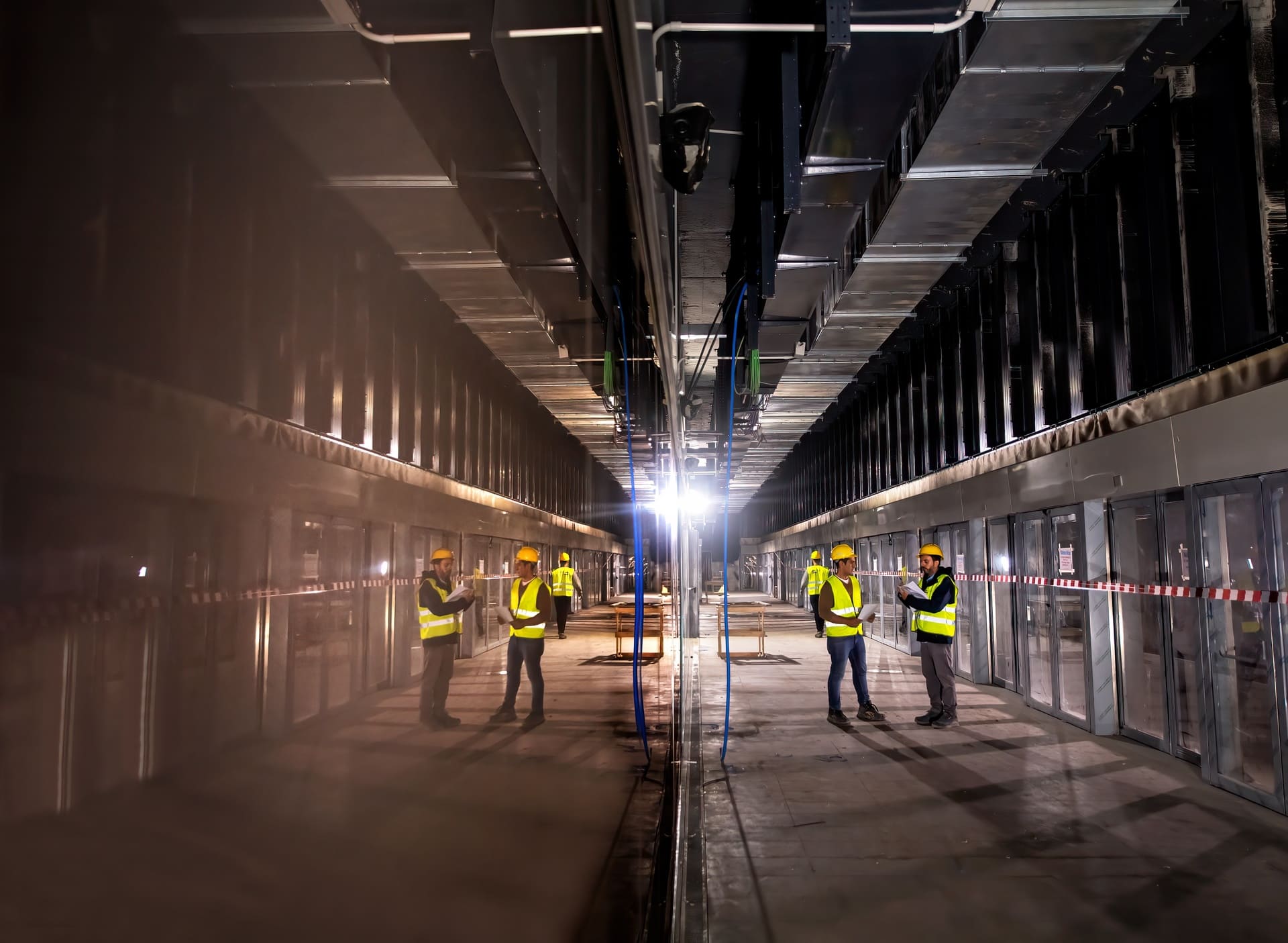 Workers inside the construction site
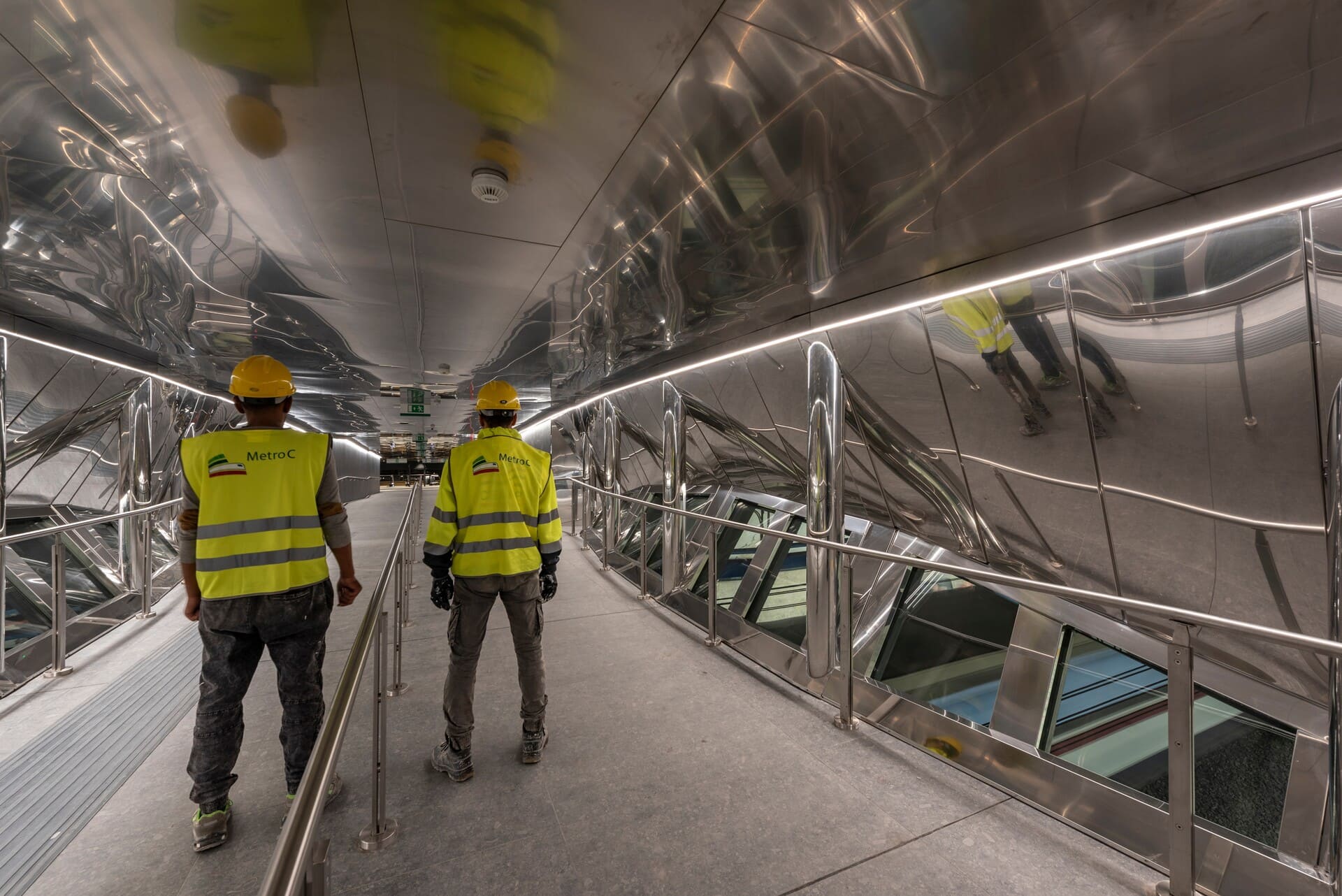 Workers inside the construction site
 Workers inside the construction site
 Workers inside the construction site
 Aerial view of the station construction site
 Stages of construction at the Colosseo-Fori Imperiali station
- During the construction of the Colosseum–Imperial Forums station, engineering and archaeology had to dialogue every day, turning Rome’s subsoil into a unique laboratory
- The station extends for 150 metres across four levels, protected by diaphragm walls up to 50 metres deep and built using the top-down method to ensure stability and minimise deformation
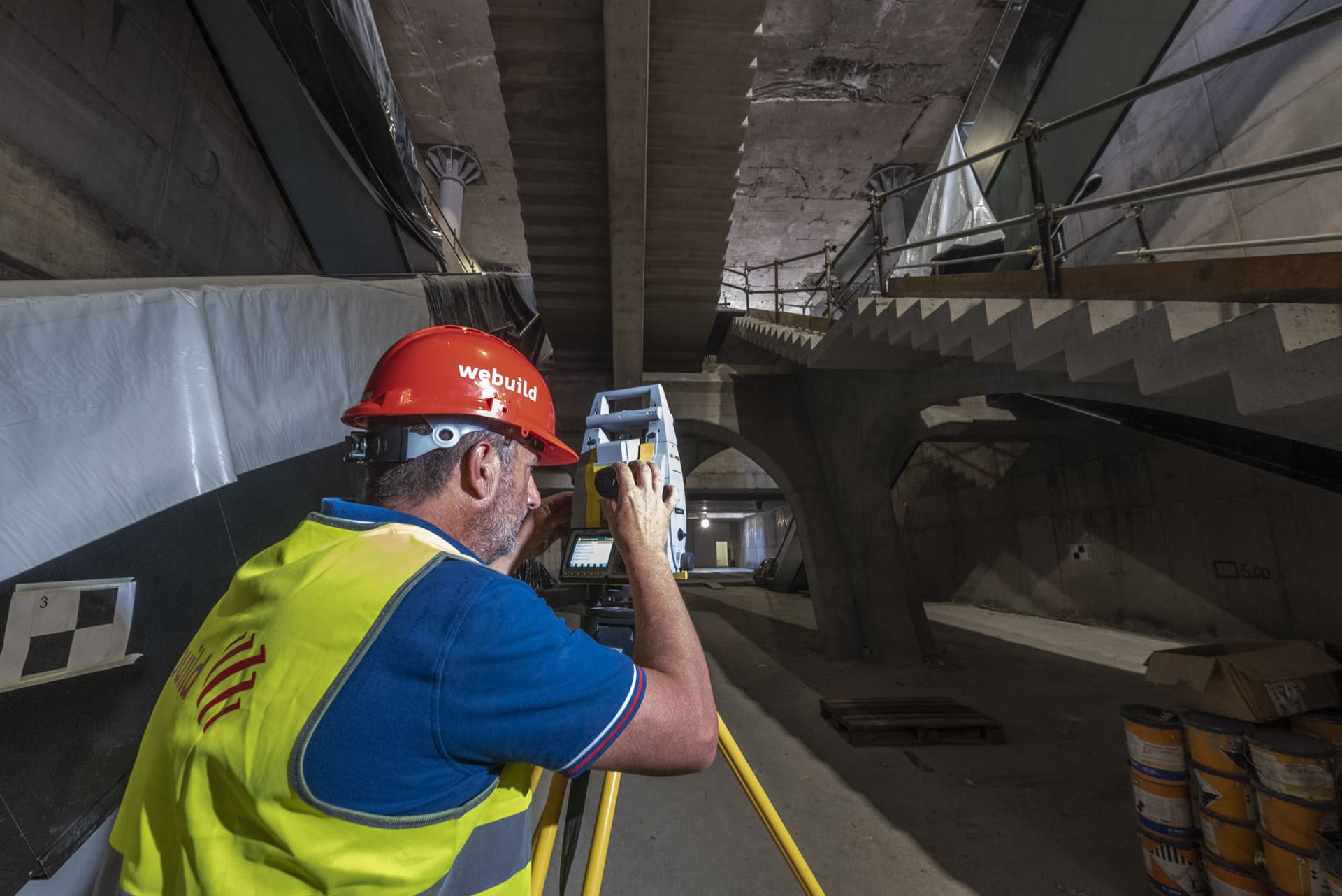
- Sensors and 24-hour monitoring instruments measured micro-movements and vibrations, ensuring that no monument suffered stress during excavation
- Archaeologists worked alongside every phase, documenting more than twenty centuries of stratigraphy and managing discoveries and finds with an approach that protects and restores value to the city
- The Metro C Consortium (led by Webuild and Vianini Lavori) signed a Prontuario with the Superintendencies and institutions, defining procedures and limits at every stage of excavation
Read more

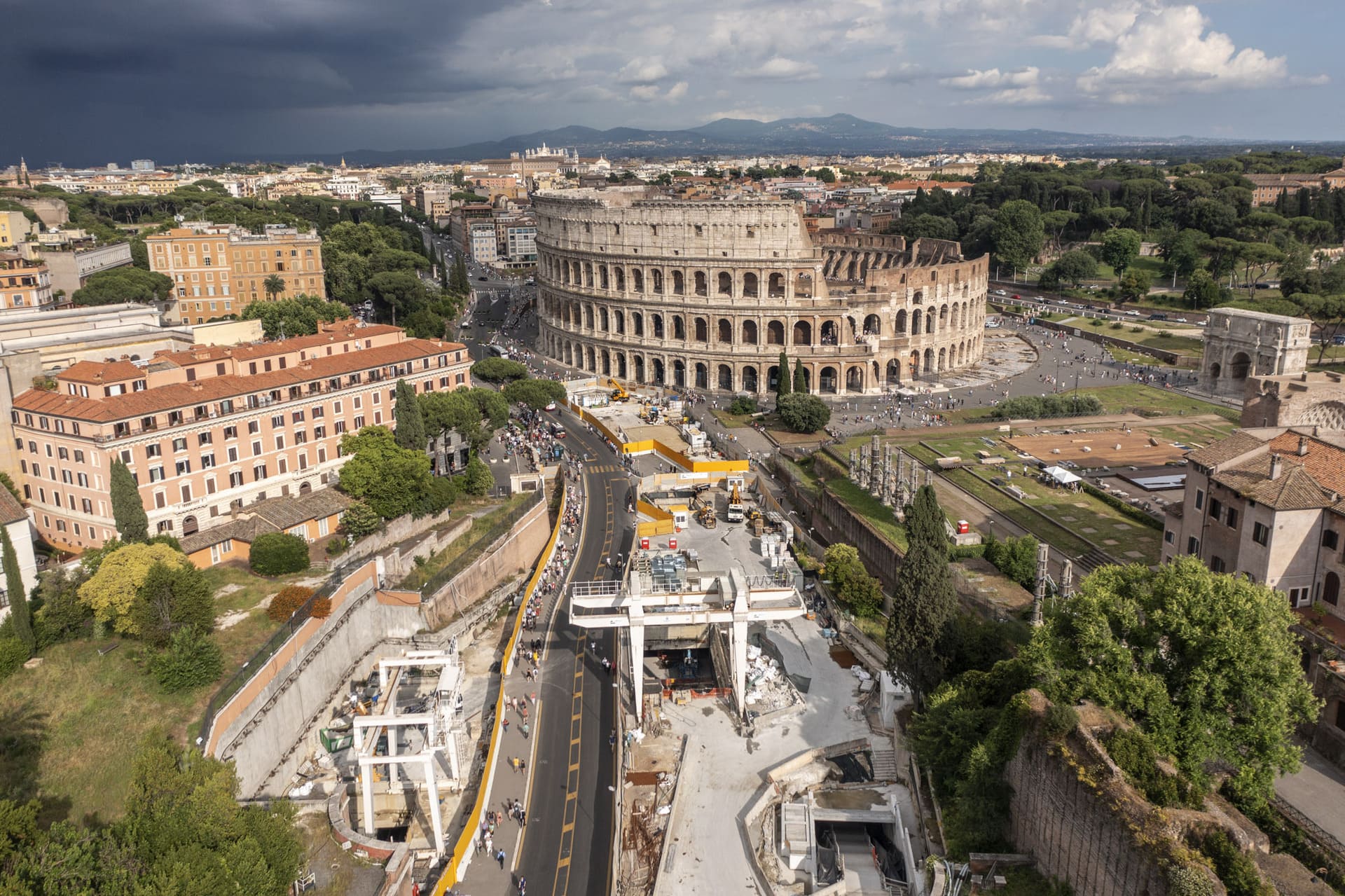
Just a few metres from the Amphitheatrum Flavium (better known as the Colosseum), every centimetre excavated was an act of absolute precision. The Colosseum–Imperial Forums station on Line C of the Rome Underground – built by the Metro C consortium (led by Webuild and Vianini Lavori), commissioned by Roma Metropolitane S.r.l., and inaugurated on December 16, 2025 – was born out of one of the most complex construction sites ever tackled in Europe. A place where engineering and archaeology had to learn to speak to each other, finding a common language.
“We had to invent a new way of building, where modern technology and respect for antiquity could coexist,” says Eng. Marco Cervone, Construction Manager of Metro C. “It was necessary to monitor the progress of the works in real time and work as if we were inside a museum, but without ever stopping the city”.
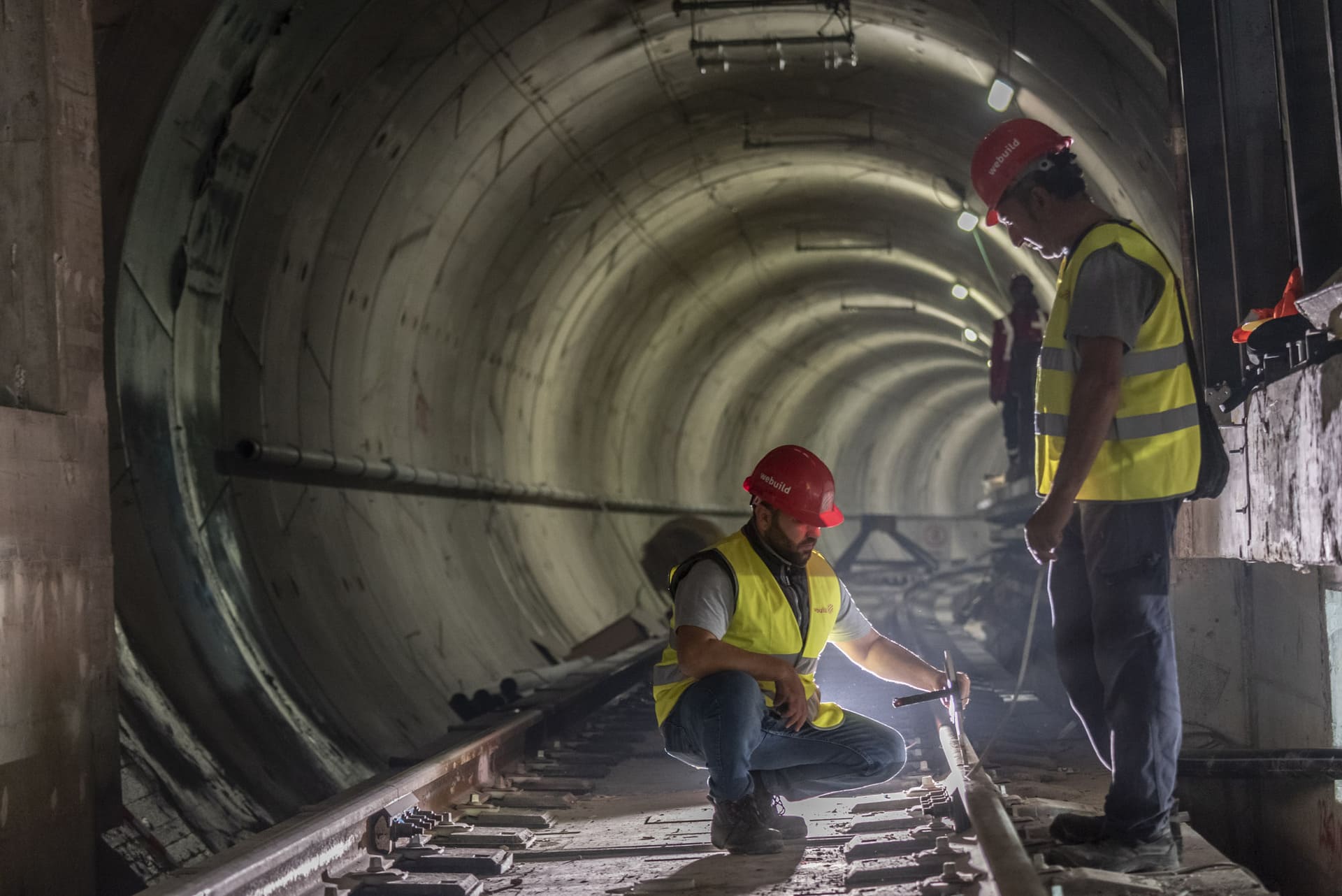
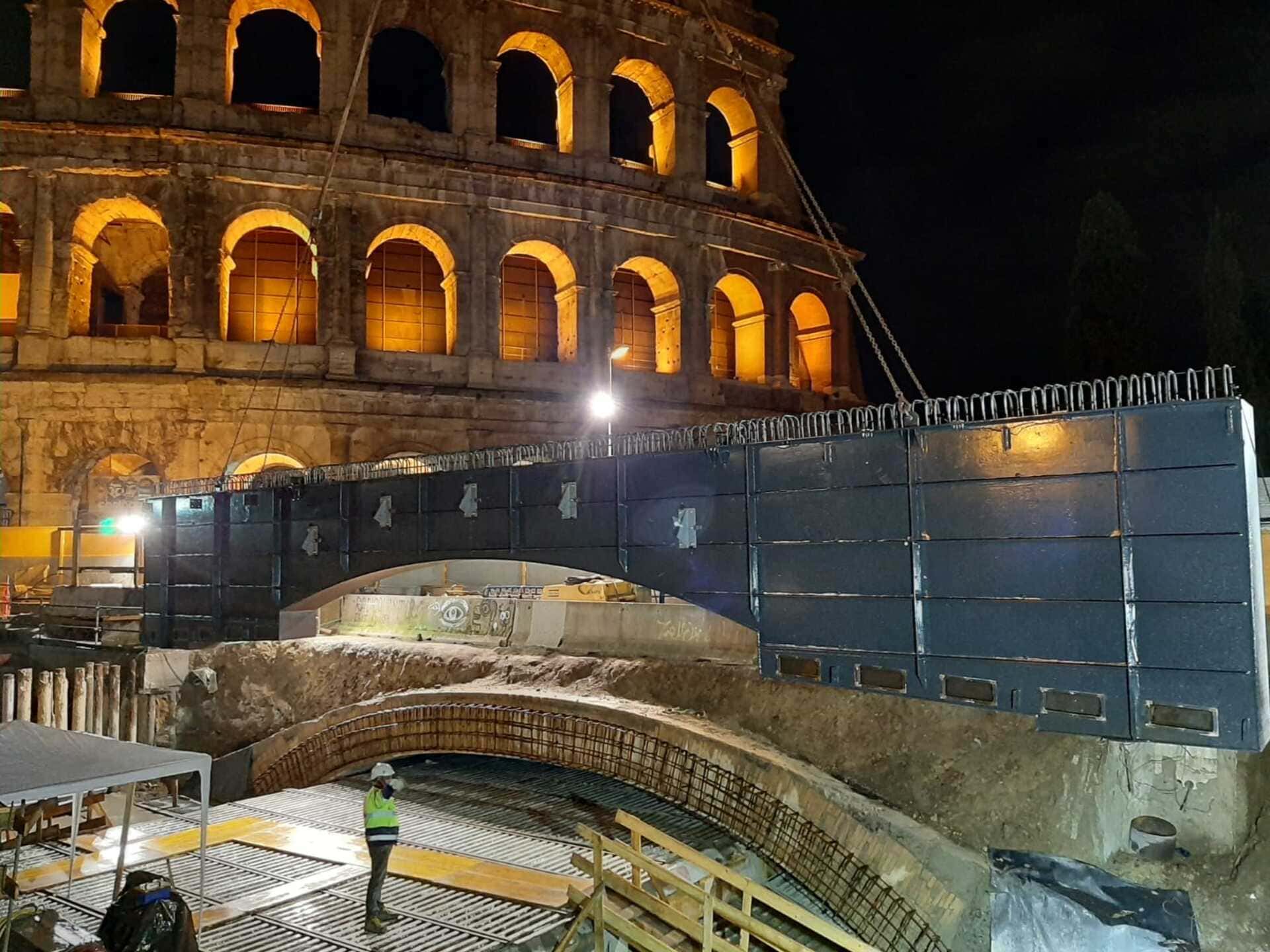
The new Rome metro station extends for about 150 metres beneath Via dei Fori Imperiali, across four underground levels, and is enclosed by reinforced-concrete diaphragm walls reaching depths of almost 50 metres. Excavation was carried out using the top-down technique, constructing the slabs from the top downwards to ensure ground stability and minimise deformation.
Beneath the Clivo di Acilio and along the front of the Temple of Venus and Rome, hundreds of micropiles and anchors consolidated a delicate, layered subsoil rich with history.
The real challenge, however, was not only digging, but controlling the invisible. Sensors capable of detecting imperceptible micro-movements and vibrations were installed on the structures of the Roman Colosseum, on the Basilica of Maxentius, on ancient columns and walls. Accelerometers, strain gauges, piezometers, inclinometers: a monitoring network active 24 hours a day, with data flowing into a control system.
“We never recorded any anomalies,” Cervone emphasises. “Protecting the heritage was our absolute priority. Every technical decision was guided by this principle.”
At the same time, archaeologists accompanied every phase of excavation, documenting and studying a stratigraphy that tells more than twenty centuries of urban history.
“Digging here meant working on tiptoe,” explains Elisa Cella of the Colosseum Archaeological Park. “Every discovery had to be understood, safeguarded and, where possible, returned to the city.”
Colosseum-Imperial Forums: Archaeology as a Rule, Not an Obstacle
The Metro C Consortium, led by Webuild and Vianini Lavori, worked within a protocol shared with the Superintendencies, the Ministry of Culture and the Municipality of Rome, a “Prontuario” that defined procedures at every stage of excavation.
“The first thing we did,” Elisa Cella continues, “was photograph everything. We fixed the state of conservation of the monuments with so-called condition surveys, so that we could monitor even the slightest variation.”
On the surfaces and sensitive elements of the archaeological area – the Colosseum, the Temple of Venus and Rome, the Basilica of Maxentius – hundreds of sensors were installed to detect micro-movements and vibrations in real time.
“We monitored the entire area,” adds engineer Marco Cervone, Construction Manager for the Metro C Consortium, “and despite the depth of the excavations, no monument ever showed the slightest sign of stress. It was a technical and cultural challenge at the same time.”
Protection was not an “external” constraint, but a structural component of the project. The result is a station that does not hide the complexity of its construction process, but sublimates it into a sober, material architecture, where light and shadow guide passengers and highlight the Ancient Rome finds. A rare balance, the result of a method that today represents an international model for infrastructure development in sensitive contexts.
This same method guides the construction of the entire Line C, one of Rome’s metro lines that crosses the Italian capital while tackling some of the most archaeologically delicate areas in the world, as demonstrated by the construction of the future Piazza Venezia station. A project that has turned every site into a laboratory of innovation, where solutions tested in other contexts have been adapted to a city unique in its complexity.
In this journey, Webuild has played a decisive role, putting to use a wealth of expertise gained from major international underground projects, from the Thessaloniki metro to Milan’s, from Paris’s Grand Paris Express to Copenhagen’s Cityringen.
This is why Rome subway’s Line C is not just a new transport infrastructure, but proof that it is possible to build even where it once seemed impossible, provided technology, responsibility and a long-term vision are combined.
The “Heart” Station of Line C: An Infrastructure Reshaping Rome’s Public Transport System
The Colosseum–Imperial Forums station is not only an extraordinary project in itself, but also one of the symbolic and functional nodes of the overall Line C project, the third line of Rome metro, designed to cross the city along a strategic east–west axis and radically change public transportation for hundreds of thousands of people.
Today Line C is operational in its eastern section and extends for about 19 kilometres, connecting Monte Compatri/Pantano to the Amphitheatrum Flavium with 24 stations and an automatic operating system that makes it one of the most technologically advanced urban transport infrastructures in Italy.
But the overall vision goes much further. The infrastructure construction project envisages completing the line towards the historic centre and then towards the north-west, intercepting major urban hubs and railway junctions, building a backbone capable of relieving pressure on roads and surface local transport.
In this perspective, Colosseum–Imperial Forums is destined to become one of the turning points of the entire transport system. A station designed to serve a central area that until now has paid more than others for the Roman paradox of a “city visited by everyone but crossed by few”.
Here, public transport enters the Ancient Rome heart without violating it, transforming an extremely delicate place into a new gateway to the contemporary city.
The impact is not only engineering or urbanistic, but cultural: Line C, with its new stations, is helping to shift the very idea of the metro from a simple transportation infrastructure to a tool for urban regeneration.
For Rome, this means reducing travel times, offering real alternatives to private cars, connecting suburbs and centre in a more balanced way, and above all building a more modern and resilient network, capable of supporting the city’s growth without consuming further surface space.