


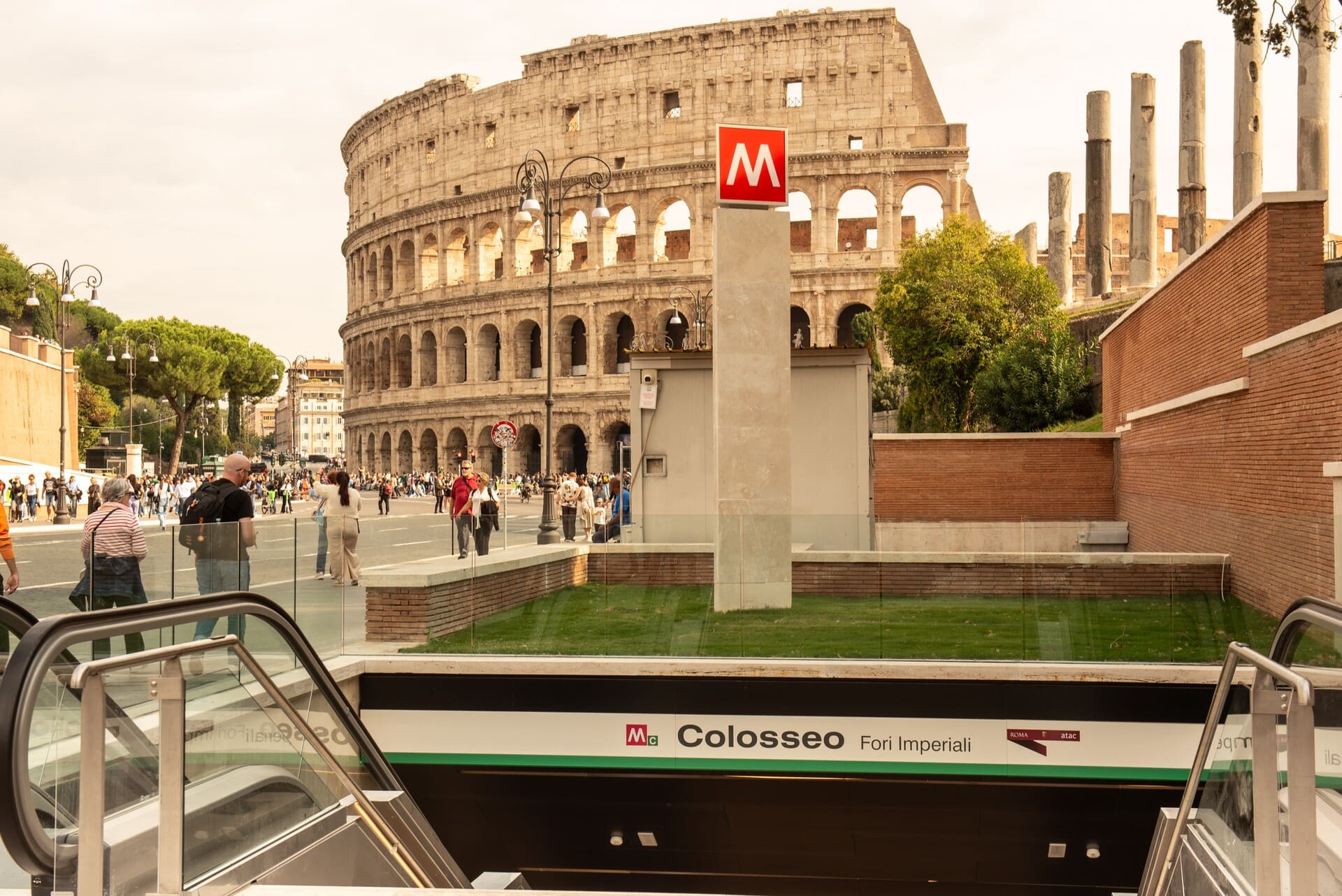
 Entrance to the Colosseo-Fori Imperiali station, Metro Line C
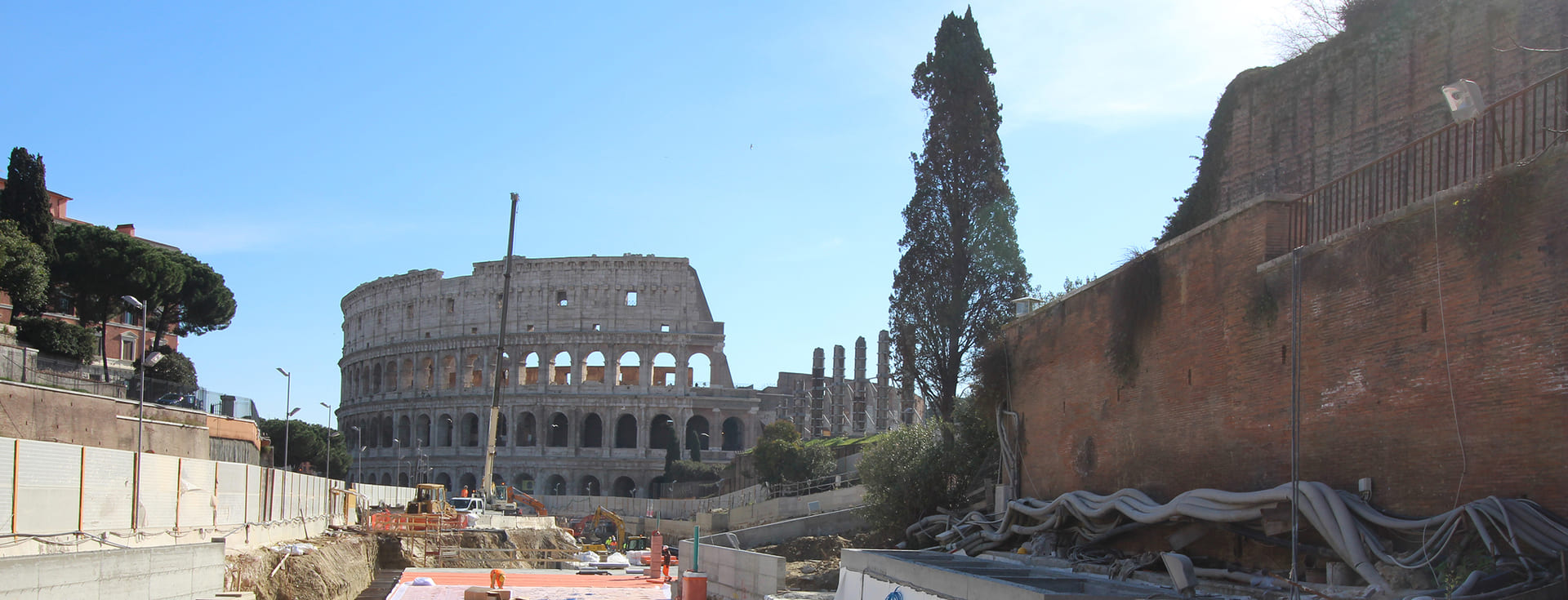 Construction site of the Colosseo-Fori Imperiali station
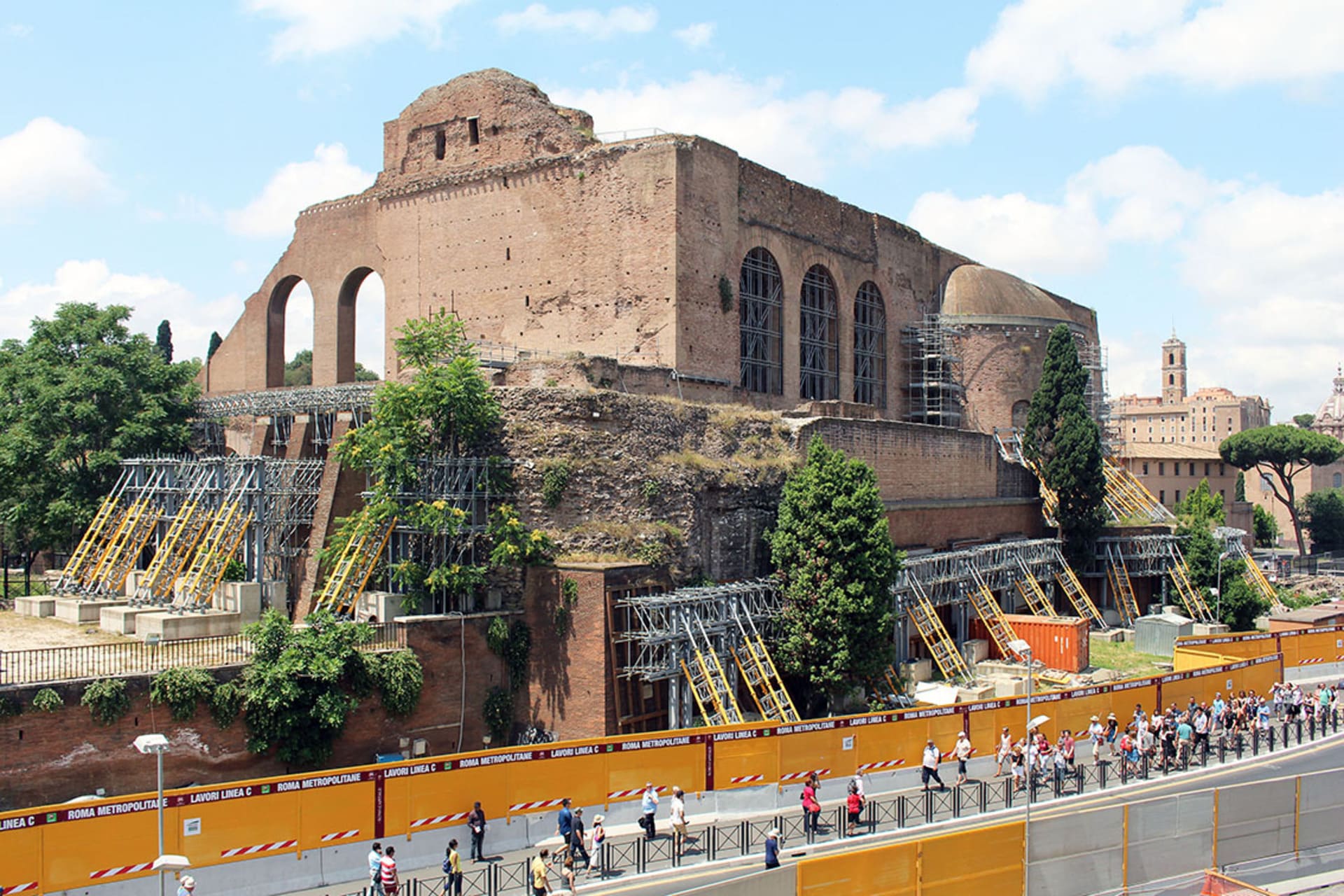 Construction site of the Colosseo-Fori Imperiali station
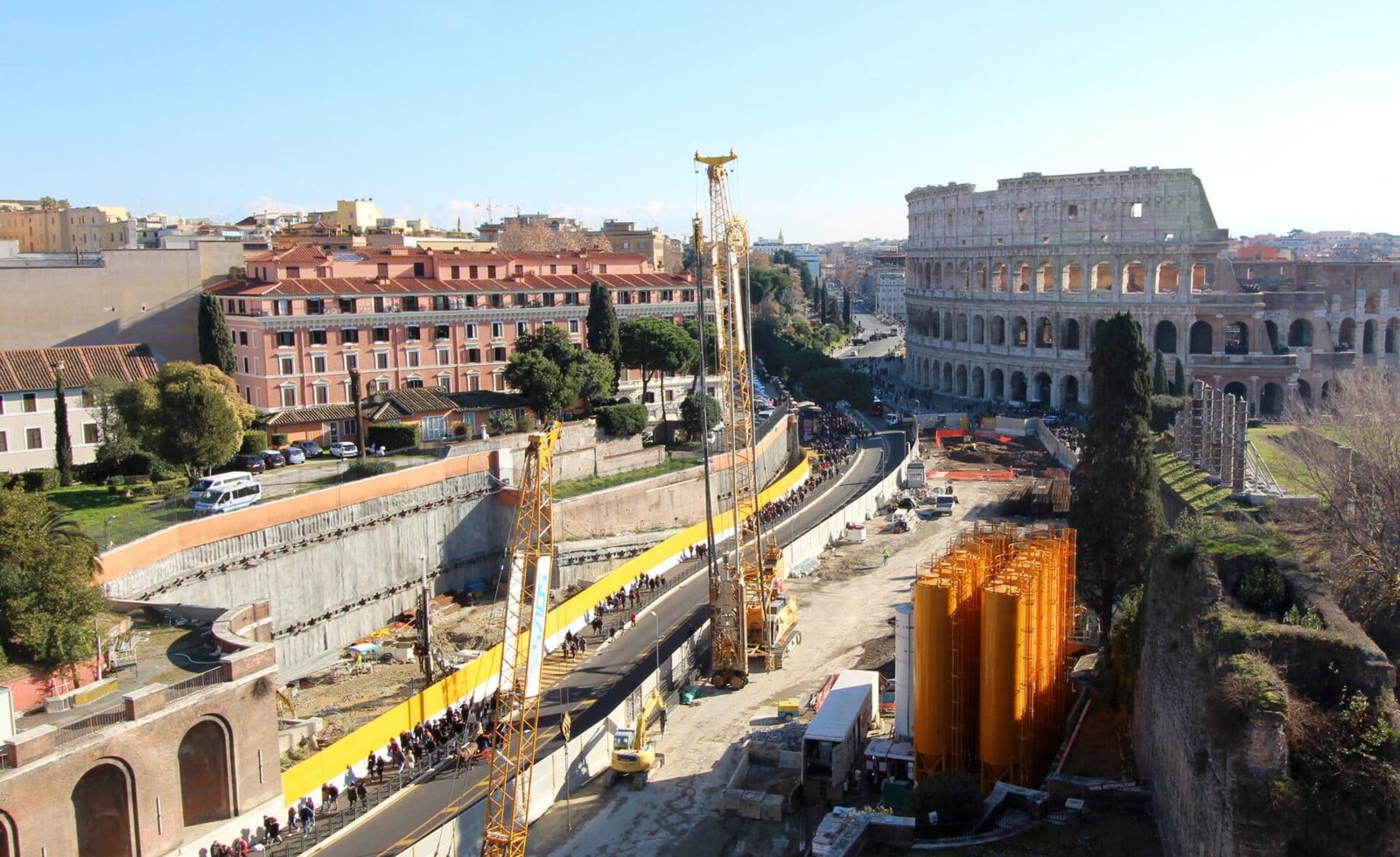 Construction site of the Colosseo-Fori Imperiali station
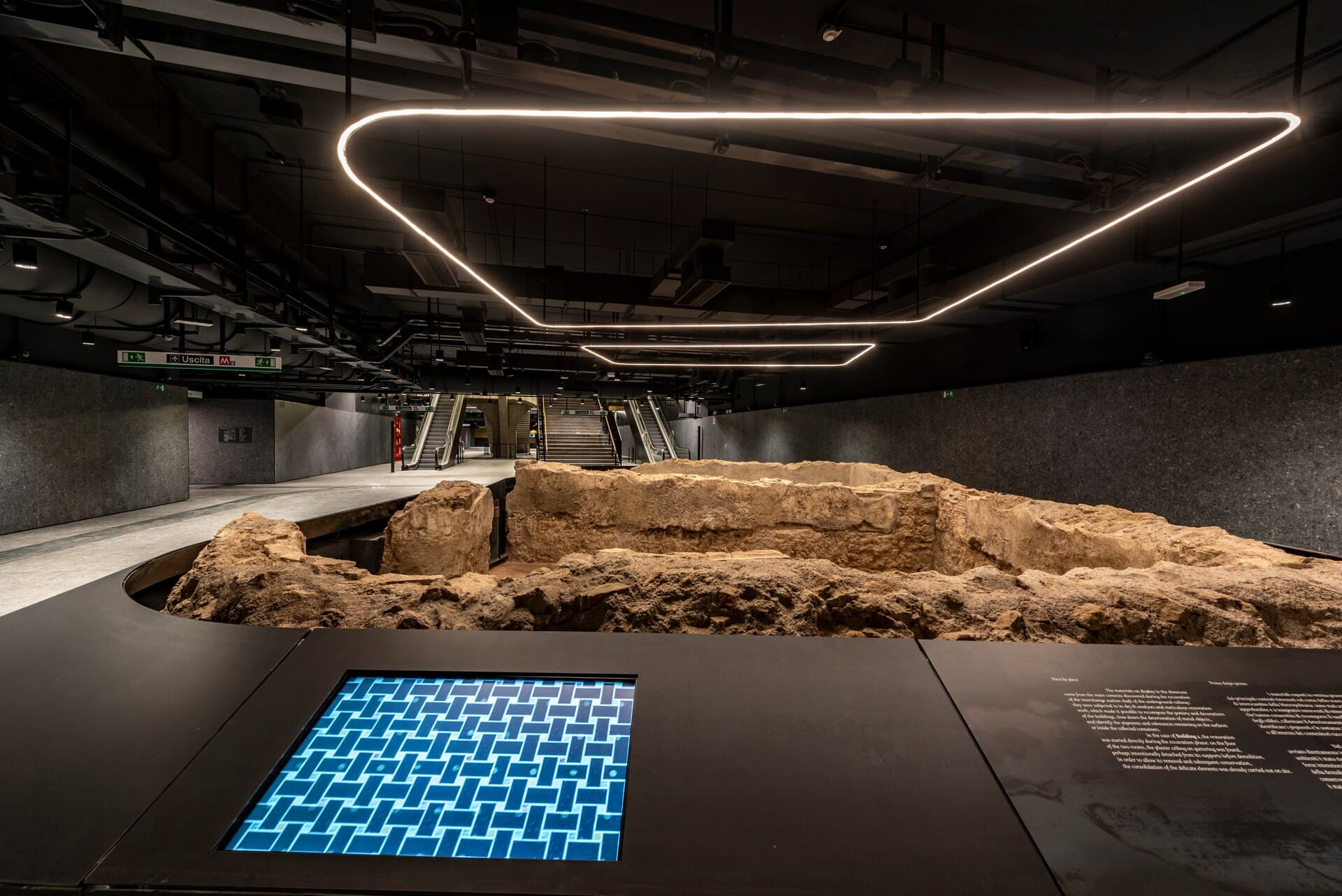 Archaeological area inside the station
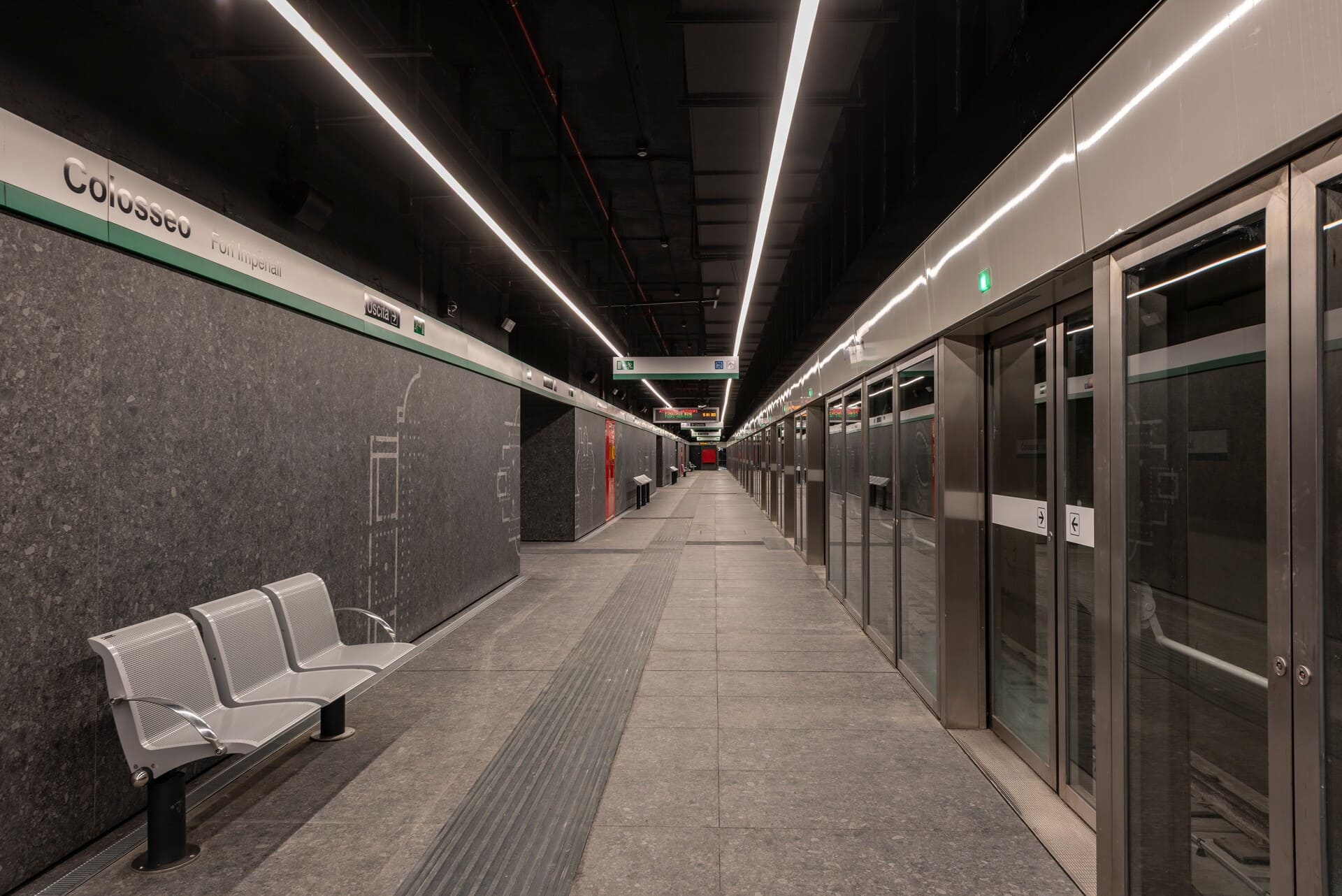 Platform of the Colosseo-Fori Imperiali station
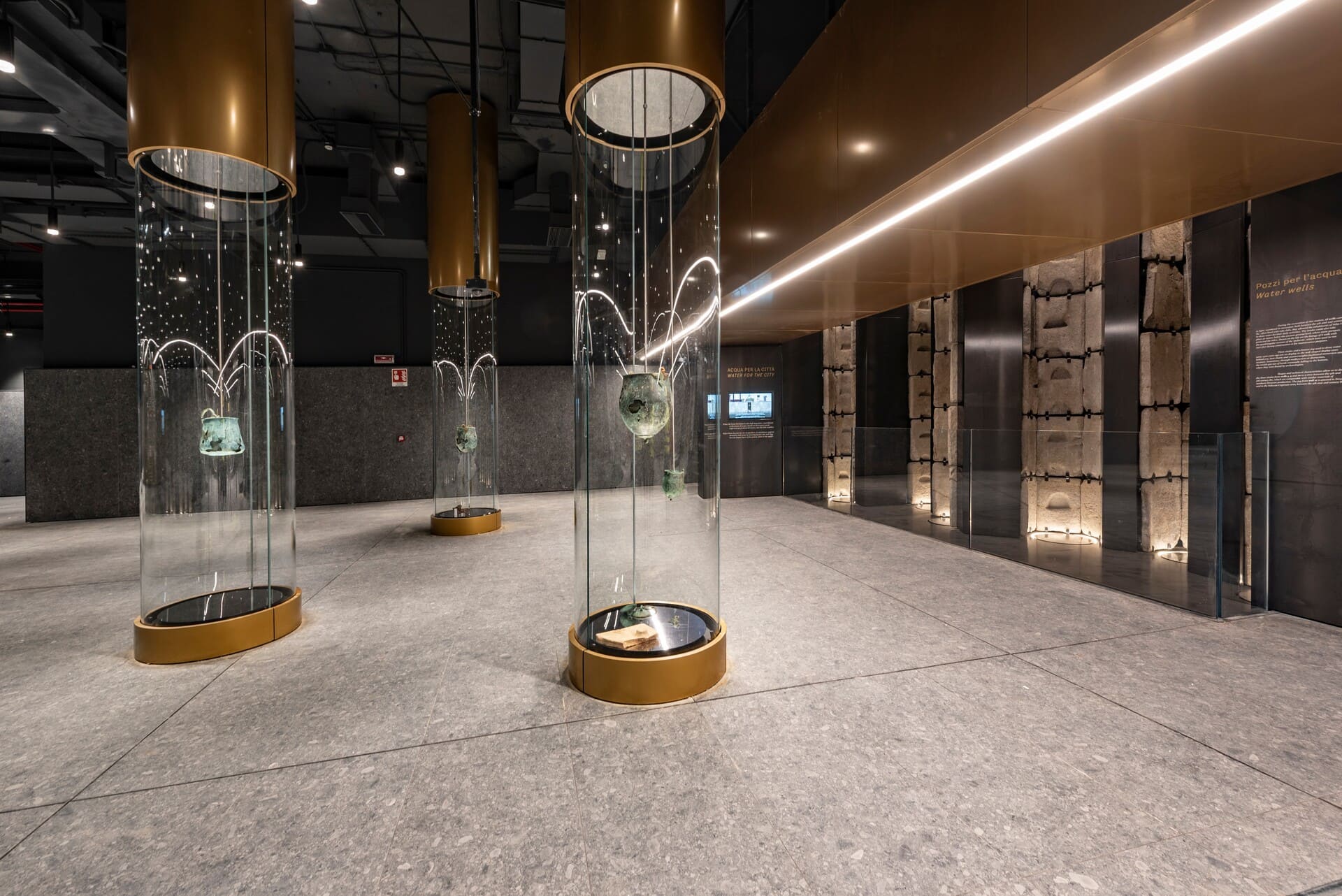 Interior of the Colosseo-Fori Imperiali station
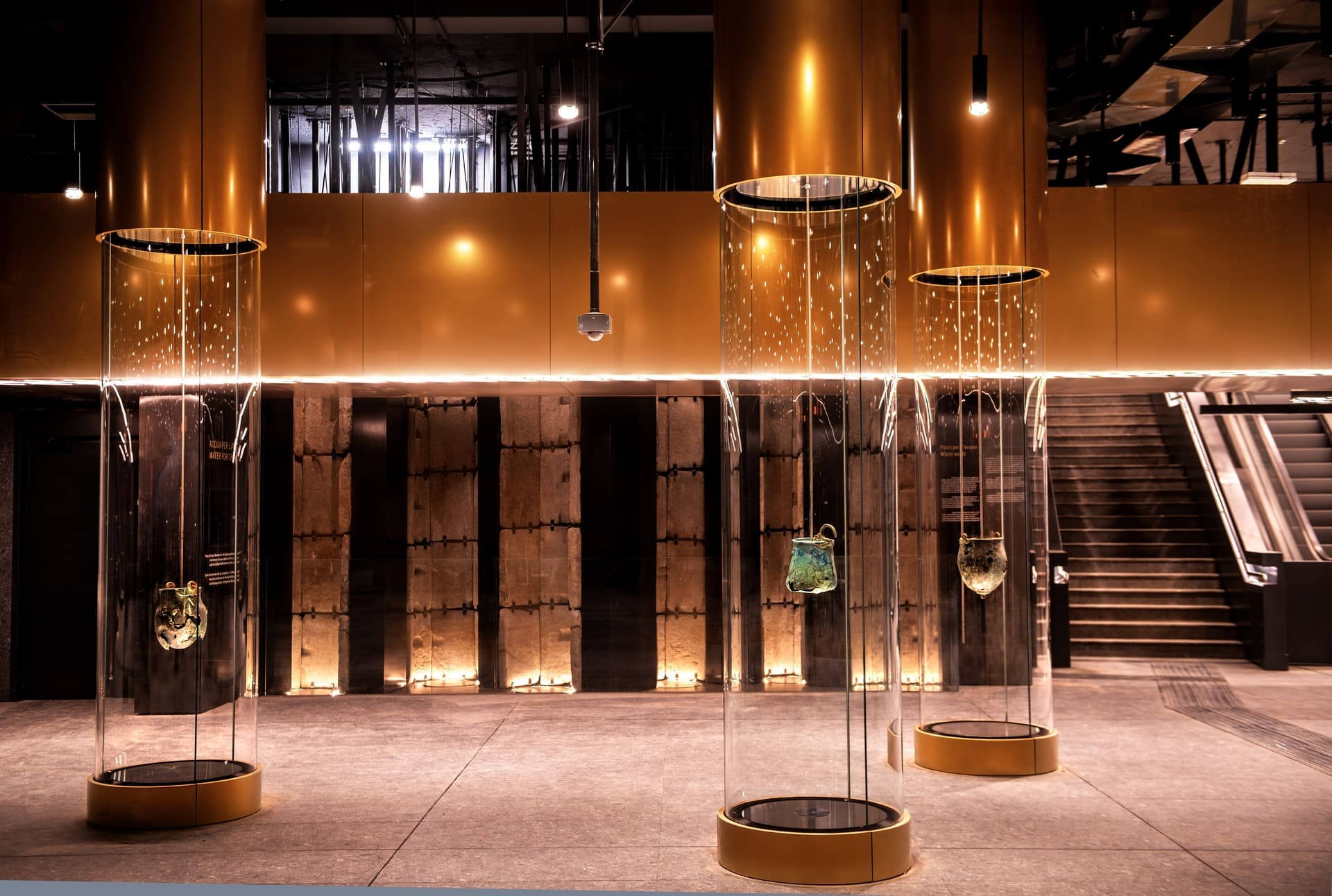 Interior of the Colosseo-Fori Imperiali station
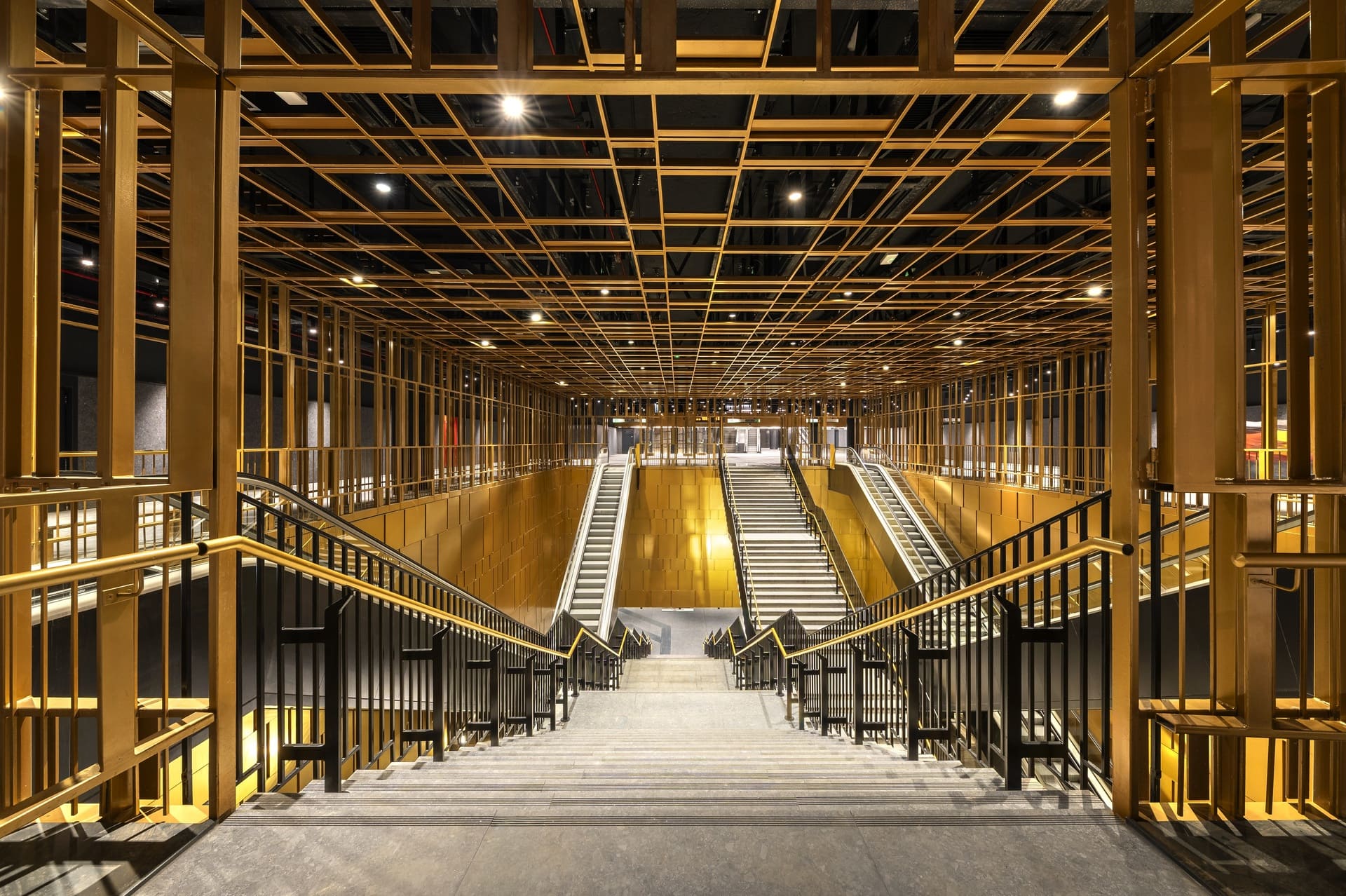 Interior of the Colosseo-Fori Imperiali station
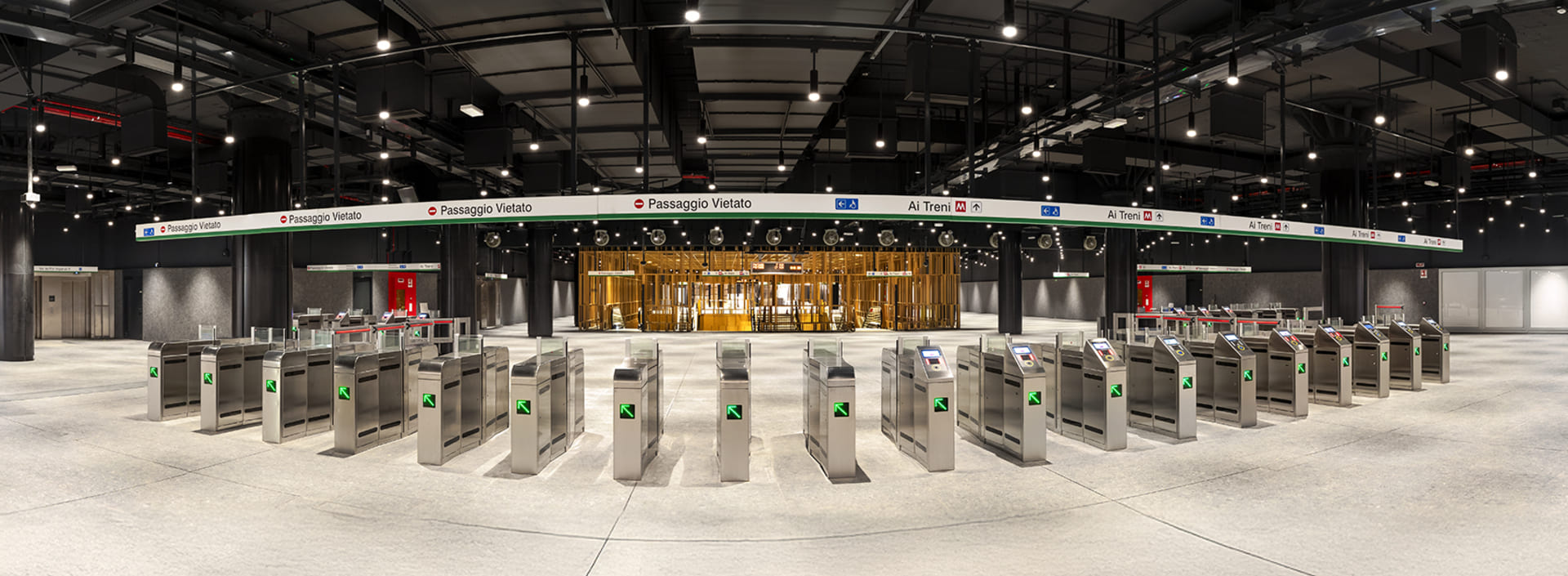 Interior of the Colosseo-Fori Imperiali station
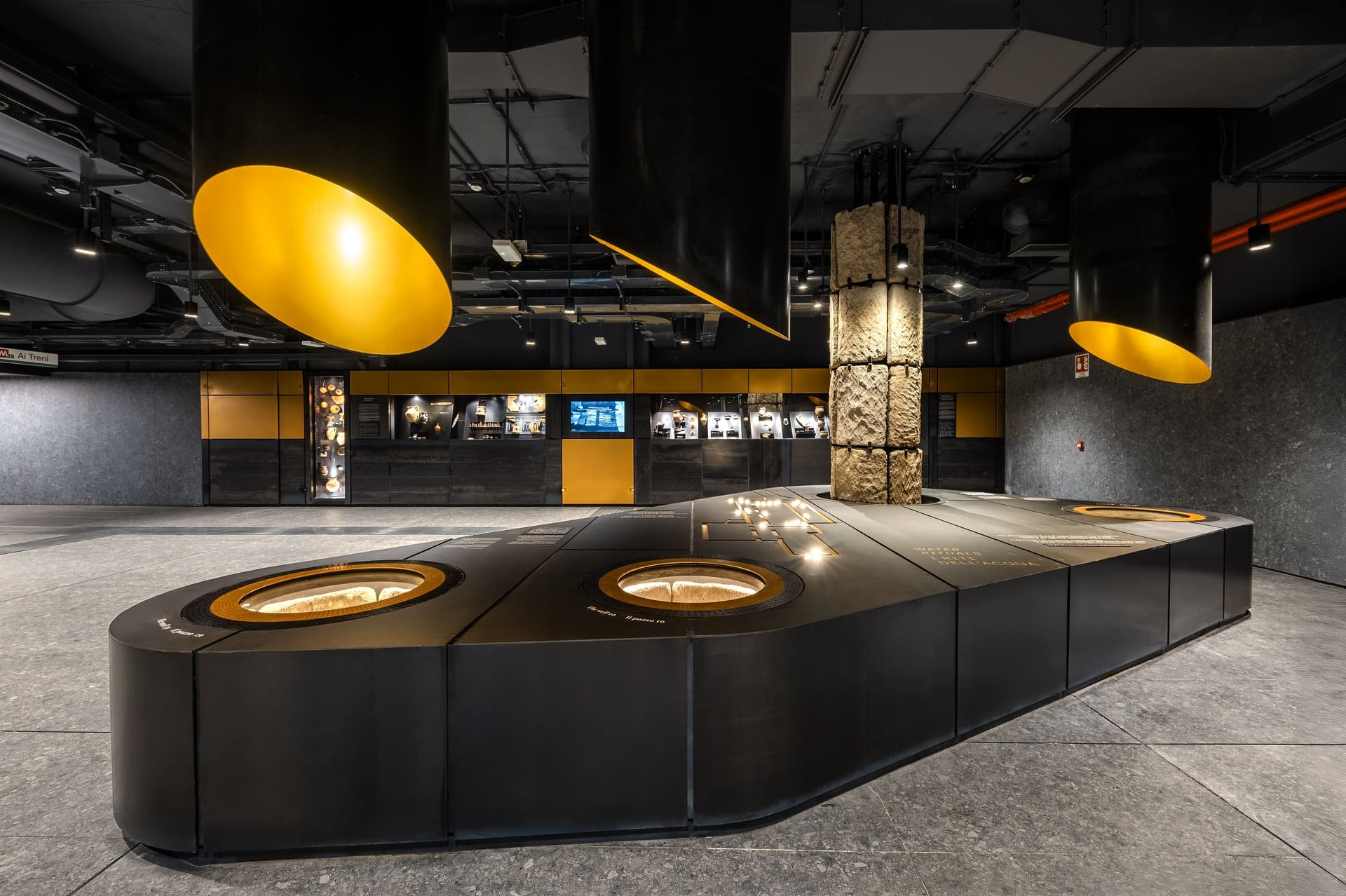 Interior of the Colosseo-Fori Imperiali station
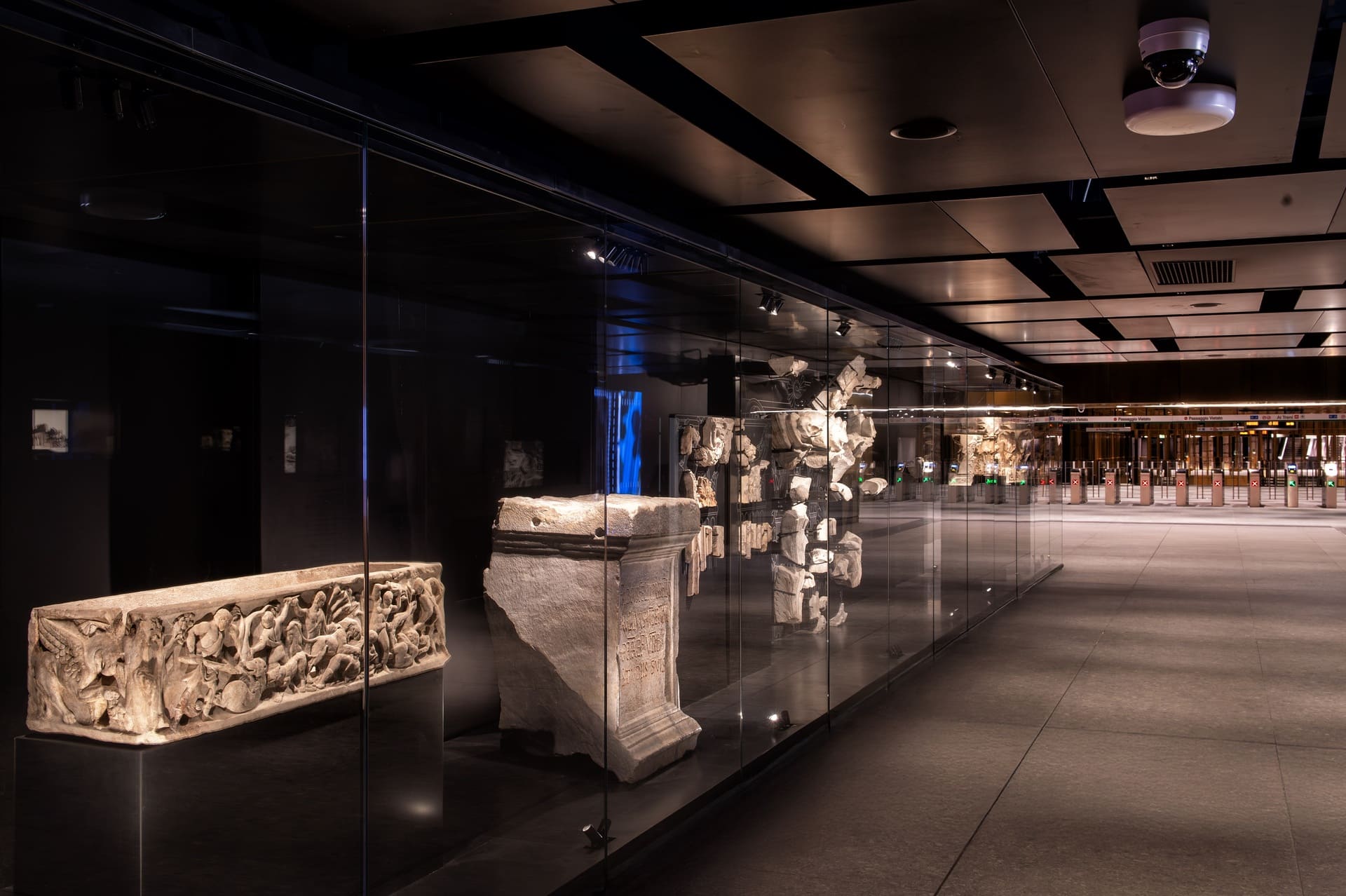 Interior of the Colosseo-Fori Imperiali station
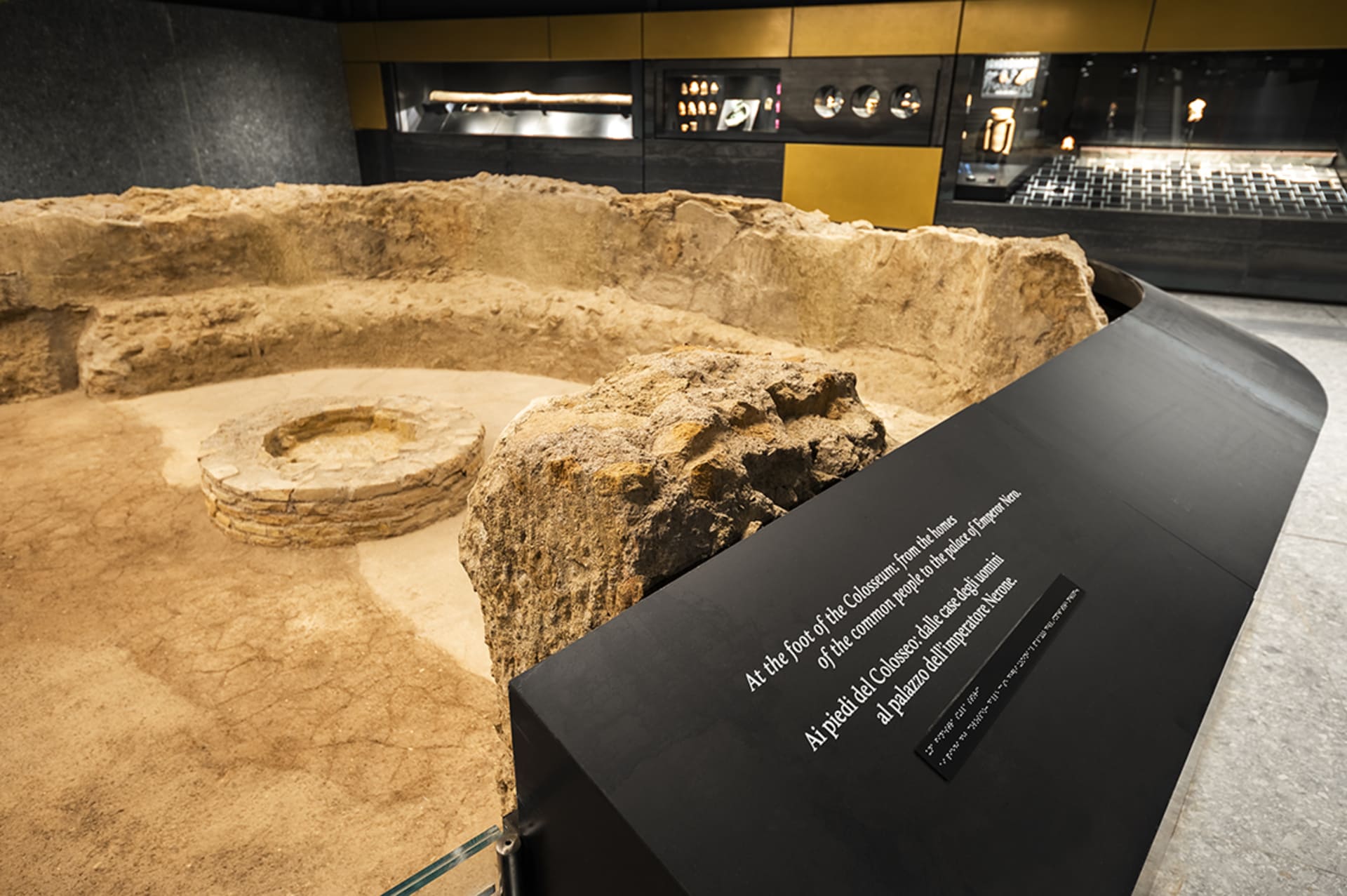 Interior of the Colosseo-Fori Imperiali station
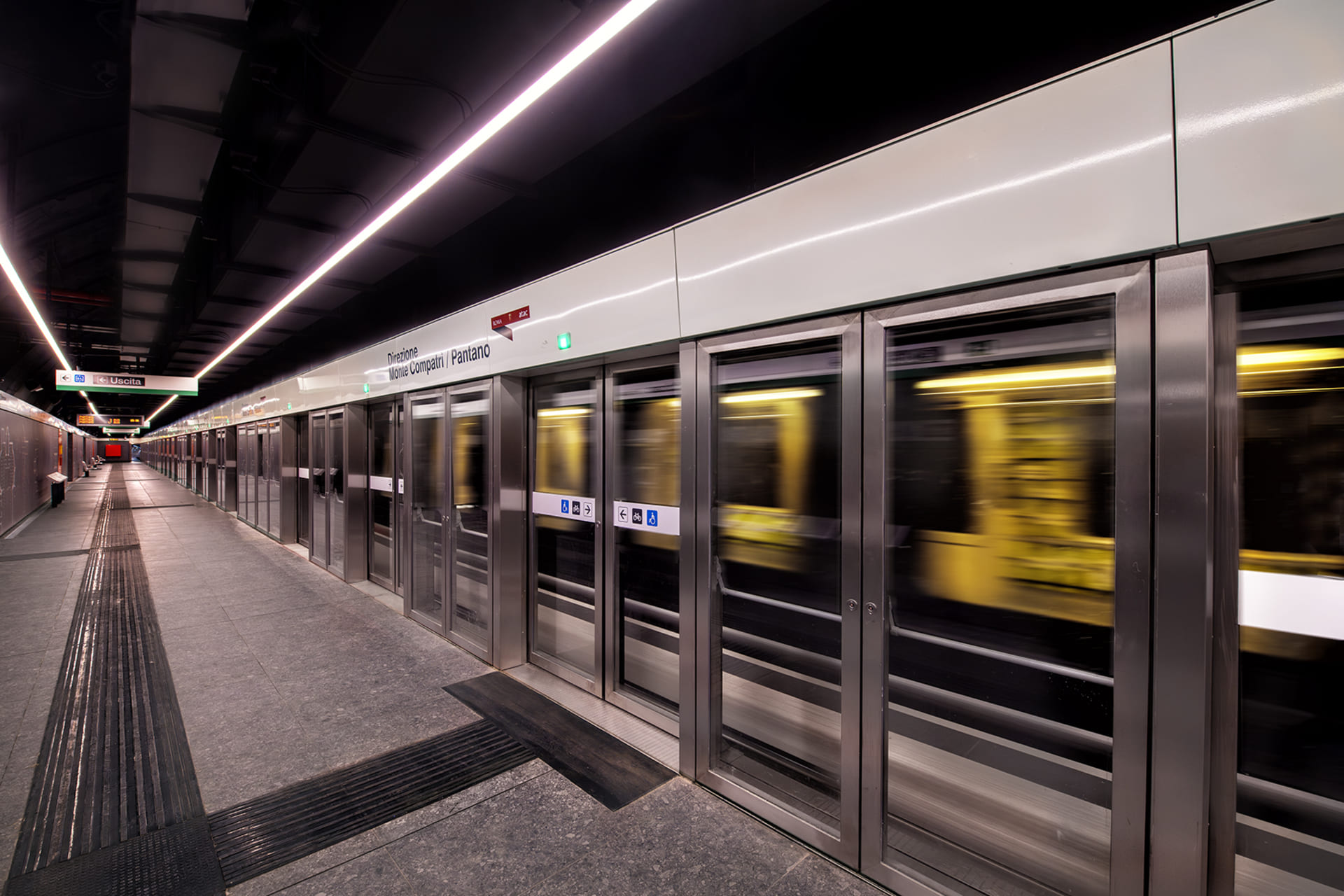 Platform of the Colosseo-Fori Imperiali station
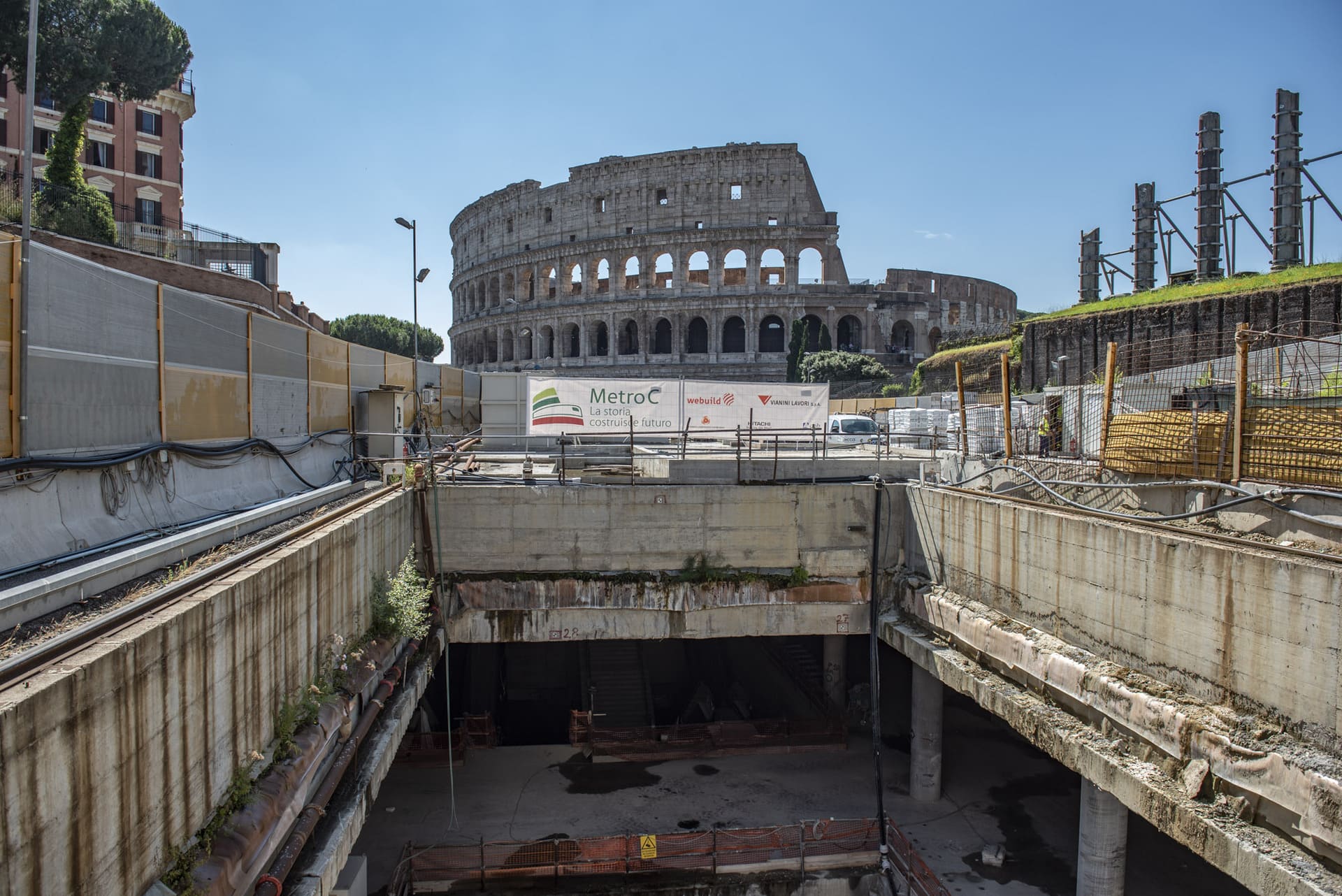 Construction site of the Colosseo-Fori Imperiali station
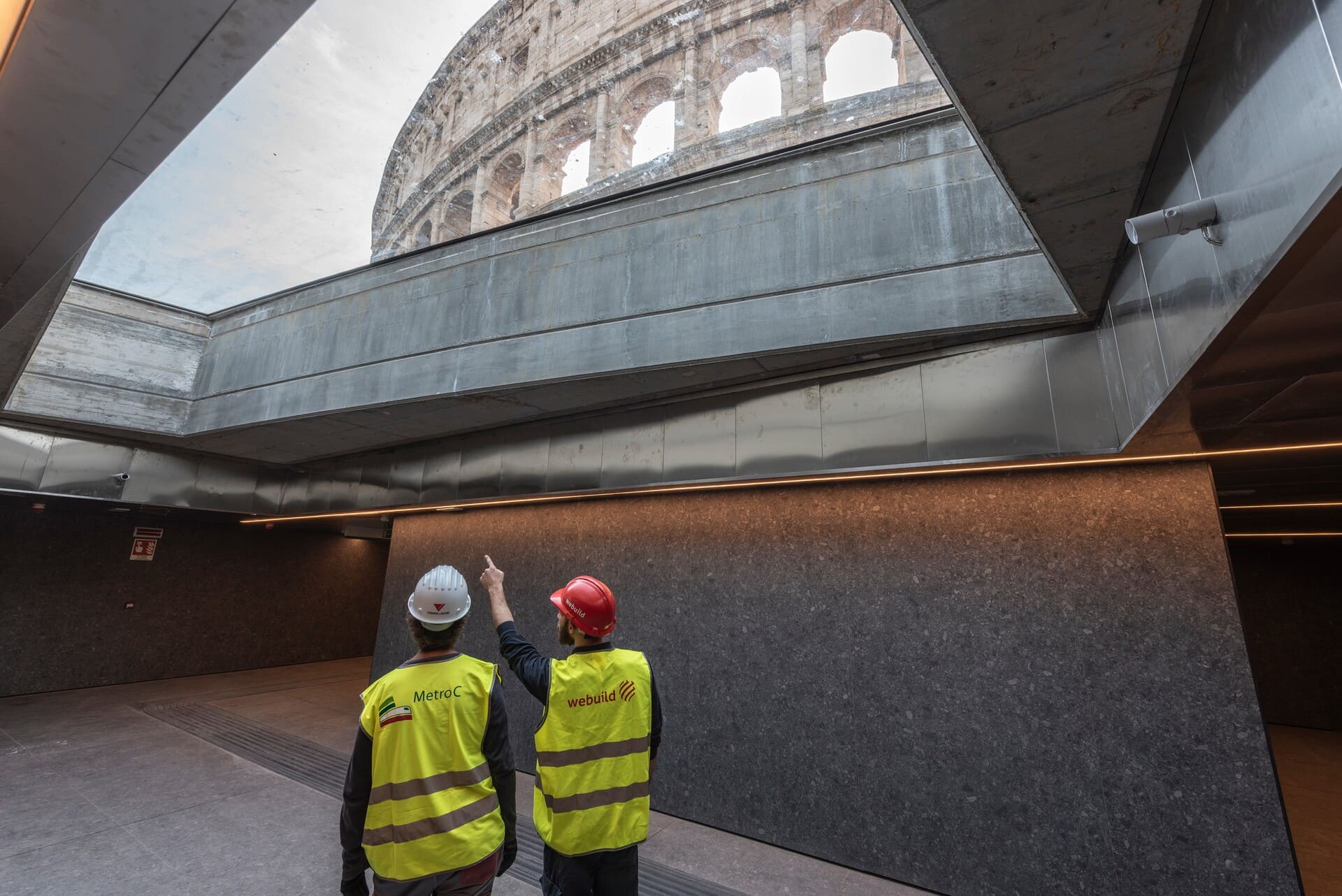 Construction site of the Colosseo-Fori Imperiali station
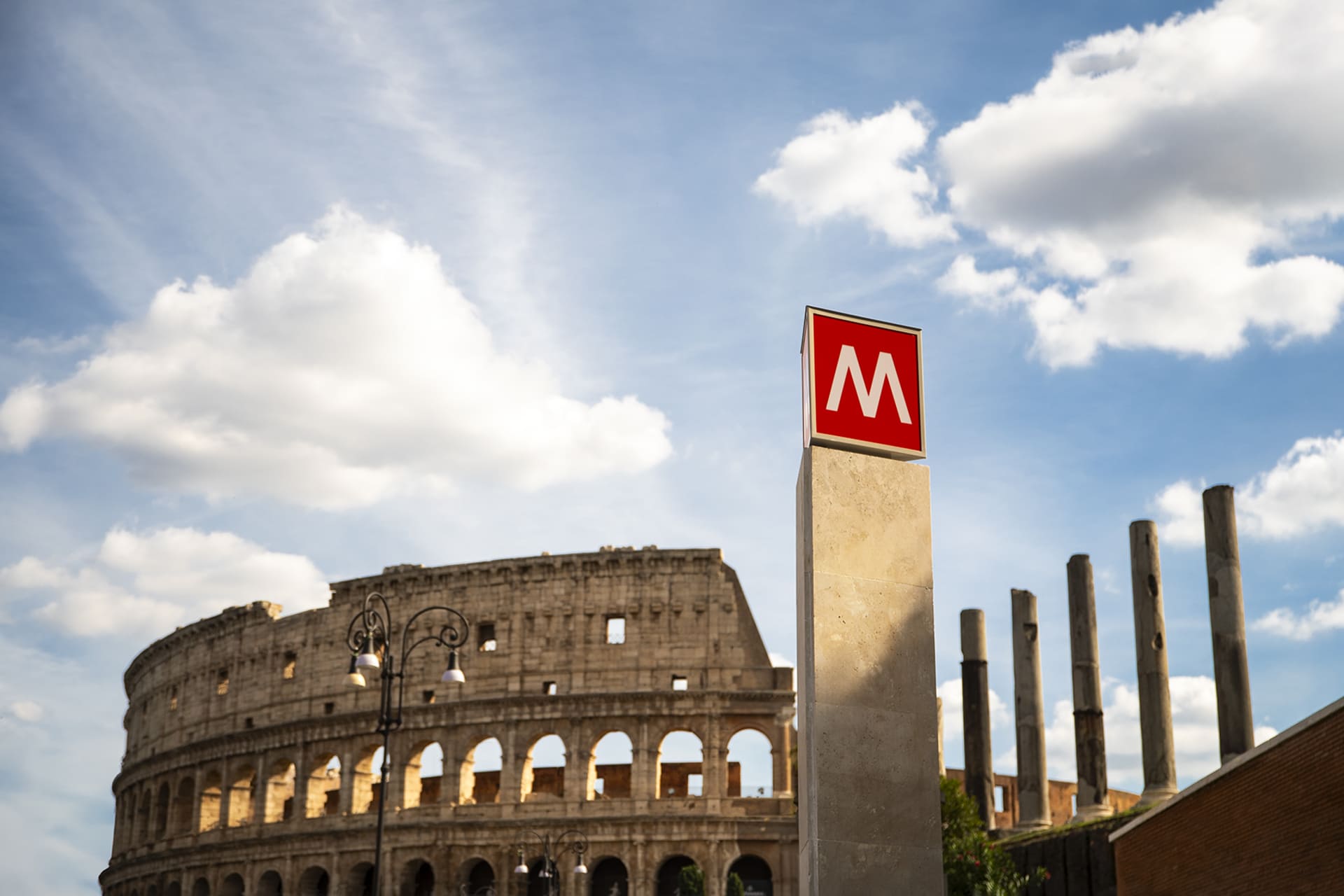 Metro Line C, Colosseo-Fori Imperiali station
- In the archaeological heart of Rome, engineering and archaeology worked together under rigorous protocols to protect one of the world’s most fragile heritages
- Five exhibition areas, unique artefacts and relocated ancient architectures accompany passengers on a descent through two thousand years of history
- The museographic project uses the metaphor of the well to narrate Rome’s stratification, transforming the station into a place of public archaeology
- With the interchange between Line C and Line B, the new Rome metro station reshapes access to the historic centre and strengthens the sustainable mobility network
- Line C now stretches over 21 km with 24 stations and connects the outskirts with the centre of Rome
Read more

There is a place in Rome where time does not flow in a straight line, but in layers. It lies beneath the Imperial Forums, along the axis linking the Amphitheatrum Flavium (Colosseum) to Trajan’s Forum, where the new Colosseo–Fori Imperiali station on Rome Metro Line C takes passengers down into a depth that is both geographical and historical.
Here, the journey does not begin when the train arrives: it starts when you step onto the descent and, metre by metre, the city changes era.
The station was built by the Metro C Consortium (led by Webuild and Vianini Lavori) and inaugurated on 16 December 2025, together with the nearby Porta Metronia station, marking the arrival of Line C in the symbolic heart of the capital and the long-awaited interchange with Line B.
But more than a new stop, Colosseo–Fori Imperiali is an idea: to demonstrate that a transportation infrastructure can become a permanent cultural device. A museum to be walked through every day, without separating mobility from memory.
Colosseo-Fori Imperiali: A Station as Long as a Story, as Deep as Roman Civilisation
From an engineering standpoint, this public infrastructure project is monumental: the station extends for around 150 metres and plunges almost 40 metres underground, in a context where every vibration is potentially a fracture in the history of Rome. Yet the result does not bear the mark of a building site “imposed” on the city: it is rather a careful stitching together, a work of subtraction and listening.
“Digging here,” explains Elisa Cella from the Colosseum archaeological Park, “meant working on tiptoe, aware that we were standing on the foundations of Roman civilisation. Every gesture had to be precise, every vibration controlled, every discovery enhanced.”
That phrase – “on tiptoe” – is perhaps the narrative key to the entire station. Because Colosseo–Fori Imperiali is born of a pact: not merely to “protect” the finds, but to transform the discoveries into a public story, integrated into the travellers’ route.
Five Areas, One Descent: How the Station-Museum Interacts with the Archaeological Site
The cultural dimension of this public infrastructure is not a decorative frame. It is a fully-fledged museum project, promoted by the Colosseum archaeological Park and developed with Sapienza University, which accompanies passengers from the entrance to the platforms through five exhibition areas.
In the atrium – accessible without a ticket – time is “staged” through video installations and dioramas: five symbolic monuments, from the Forum of Augustus to the Temple of Venus and Roma, from Trajan’s Column to the Basilica of Constantine, at the Colosseum, reconstructed as small illuminated theatres. They are not simple models, but an editorial choice that forces travellers to bend down, change posture, and enter into detail.
Beyond the ticket barriers, the narrative descends into material substance. On the opposite side appear wells of the Roman Republic, structures built between the 5th and 2nd centuries BC that supplied water to the inhabitants of the Velia. Their operation is explained through three large cylindrical glass cases and a video, while tuff slabs have been repositioned near the point of discovery.
Then comes the emotional heart of the route: the station does not display objects alone, but also architecture. Among the most powerful finds is a private balneum belonging to a domus, datable between the 2nd century BC and the fire of AD 64 during the reign of Emperor Nero. The pool with steps and laconicum were excavated, documented, removed, restored and relocated inside the station, accompanied by interpretative displays and reconstructions.
A large circular window in the connecting corridor between Line B and Line C marks the exact point of the discovery and restores a view that, during the works, had become almost an obsession: a glimpse of the Roman Colosseum from below, through an oculus that transforms the interchange into an experience.
Alongside the structures, the station highlights individual artefacts: a marble head of Medusa from the Temple of Venus and Roma; the reconstruction of the decorations of the cult hall of the Templum Pacis; materials from the domus on the Clivus of Acilius; a rare wooden weaver’s sword; a bronze fistula with inscriptions attesting to the co-regency of Marcus Aurelius and Commodus. And, as an almost “narrative” sign, the base of the statue of Passifilus, discovered in Hadrian’s Auditoria.
The common thread is the metaphor of the well, chosen by the Sapienza curators of the exhibition design, Filippo Lambertucci and Andrea Grimaldi: descending to seek water, descending to seek meaning, descending to bring back to the surface what time had buried. It is a station that does not illuminate everything: it chooses half-light as its atmosphere, and light as its director.
Rome Metro Line C Today: Figures, Network, and Impact on Rome Public Transport
Within this cultural framework, Colosseo–Fori Imperiali is also a decisive piece of functional infrastructure, linking two lines and reshaping access to the historic centre. With the opening of the San Giovanni–Colosseo section and the new stations, Line C now extends to 21.2 km with 24 stations.
But the project is far broader. The core planned route will take the line to around 29 km with 31 stations, as far as Clodio/Mazzini, with the option of an extension towards Farnesina, transforming the line into a backbone designed to stitch together distant urban districts, connecting suburbs and strategic hubs and increasing the network effect of public transport in Rome.
In terms of impact, the line aims to carry up to 800,000 people a day and cut CO₂ emissions by up to 34,000 tonnes a year.