


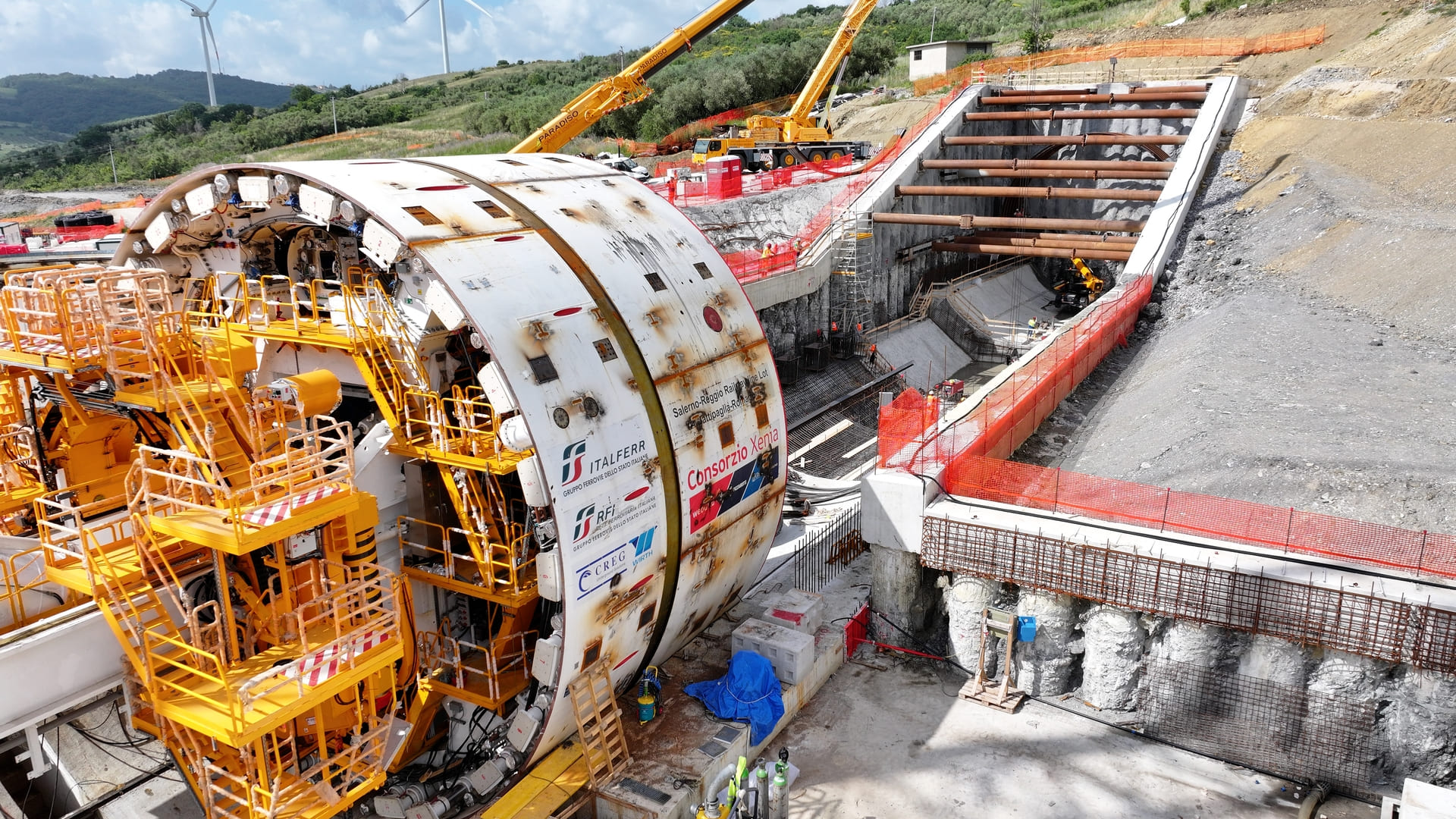
 TBM at work on Lot 1A Battipaglia-Romagnano (Salerno-Reggio Calabria High-Speed Railway)
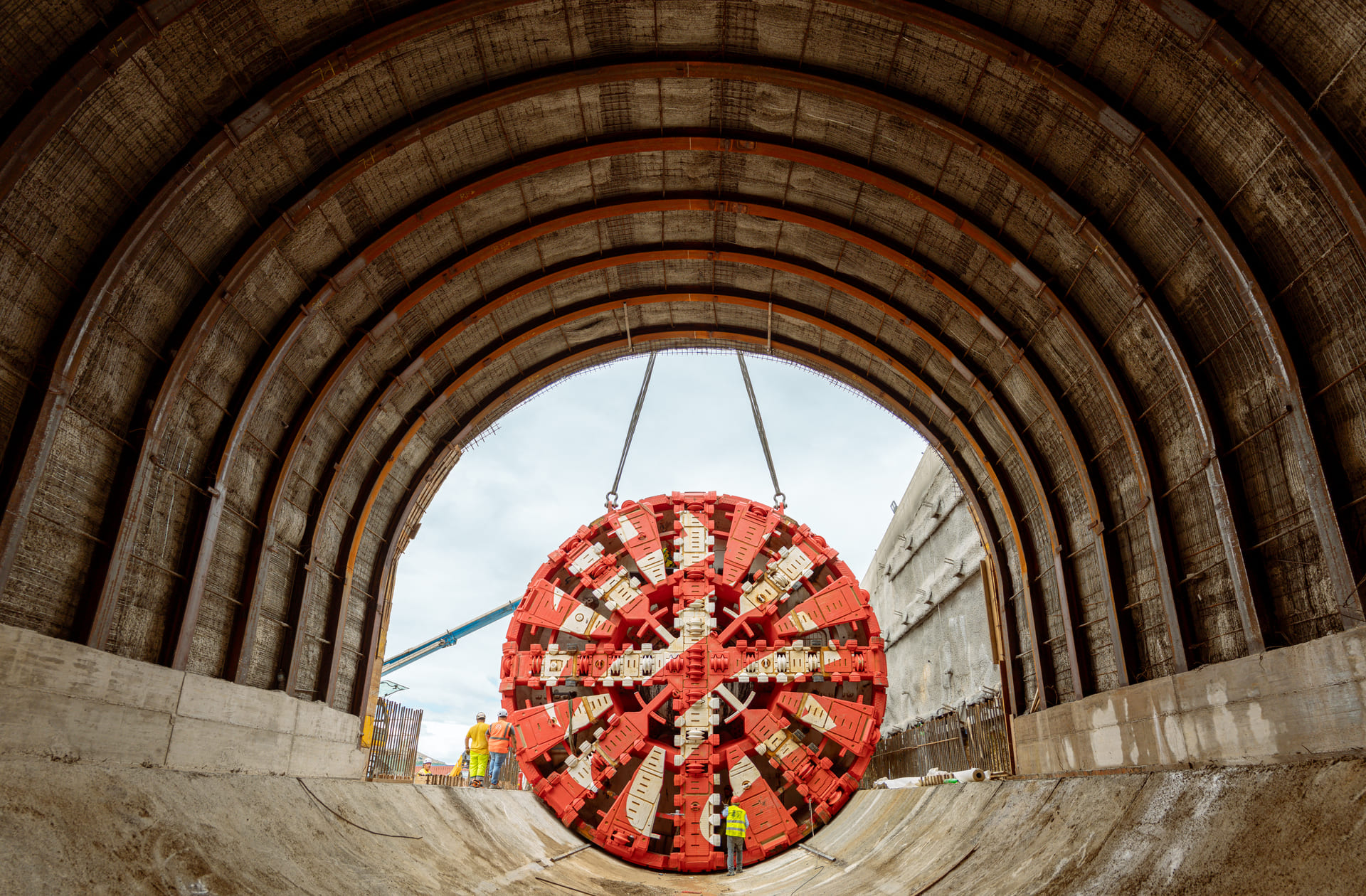 TBM at work on Lot 1A Battipaglia-Romagnano (Salerno-Reggio Calabria High-Speed Railway)
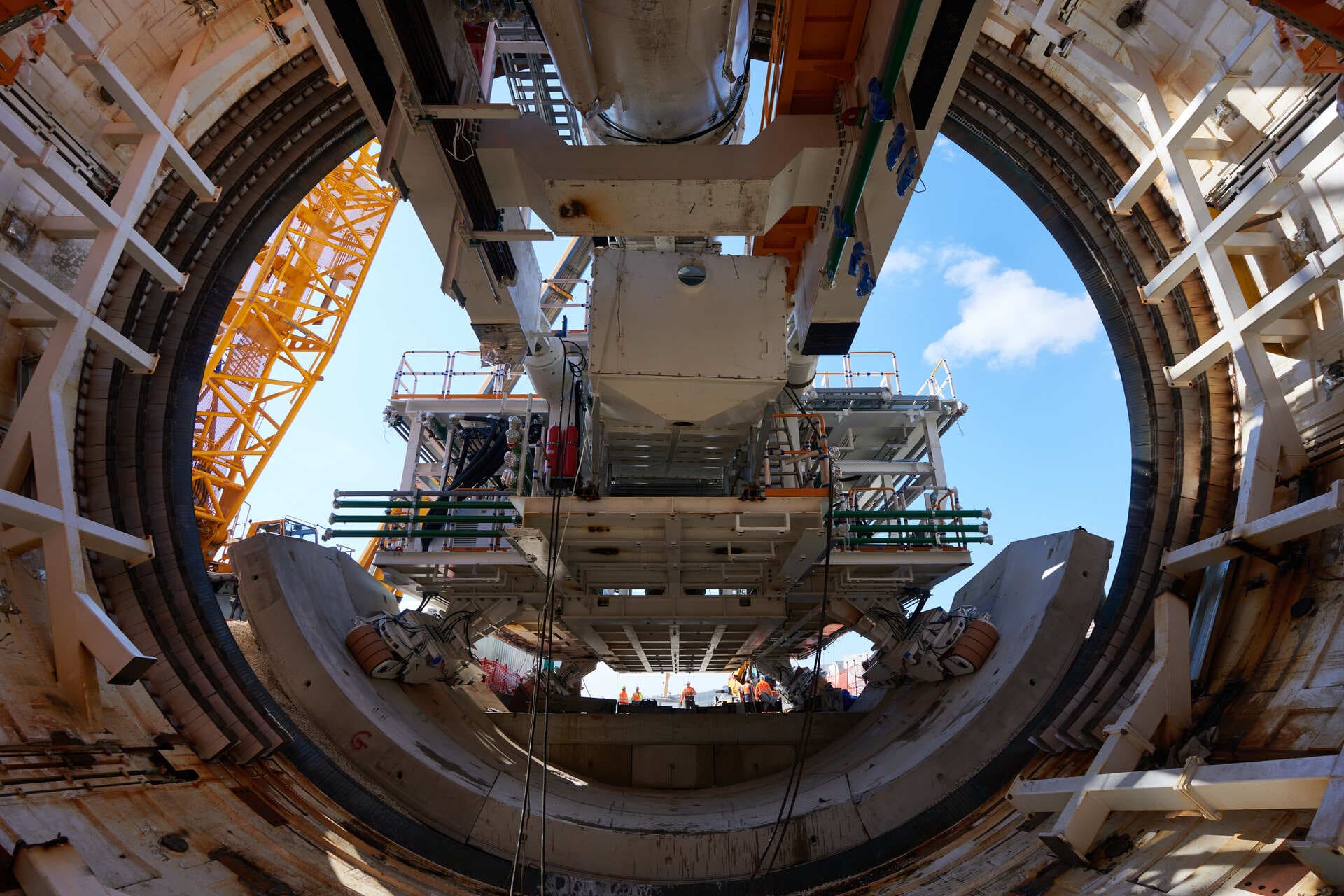 TBM at work on Lot 1A Battipaglia-Romagnano (Salerno-Reggio Calabria High-Speed Railway)
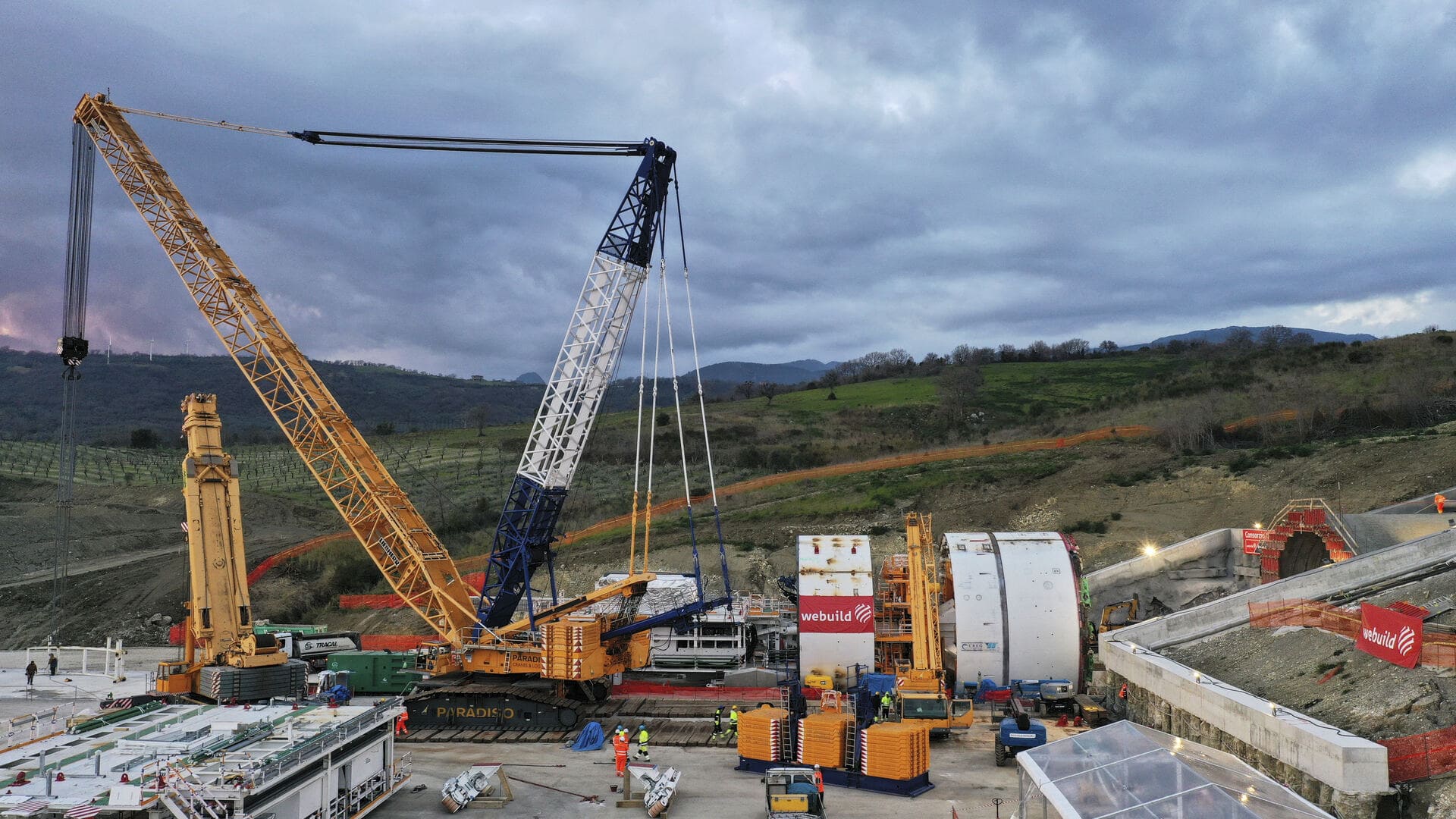 TBM at work on Lot 1A Battipaglia-Romagnano (Salerno-Reggio Calabria High-Speed Railway)
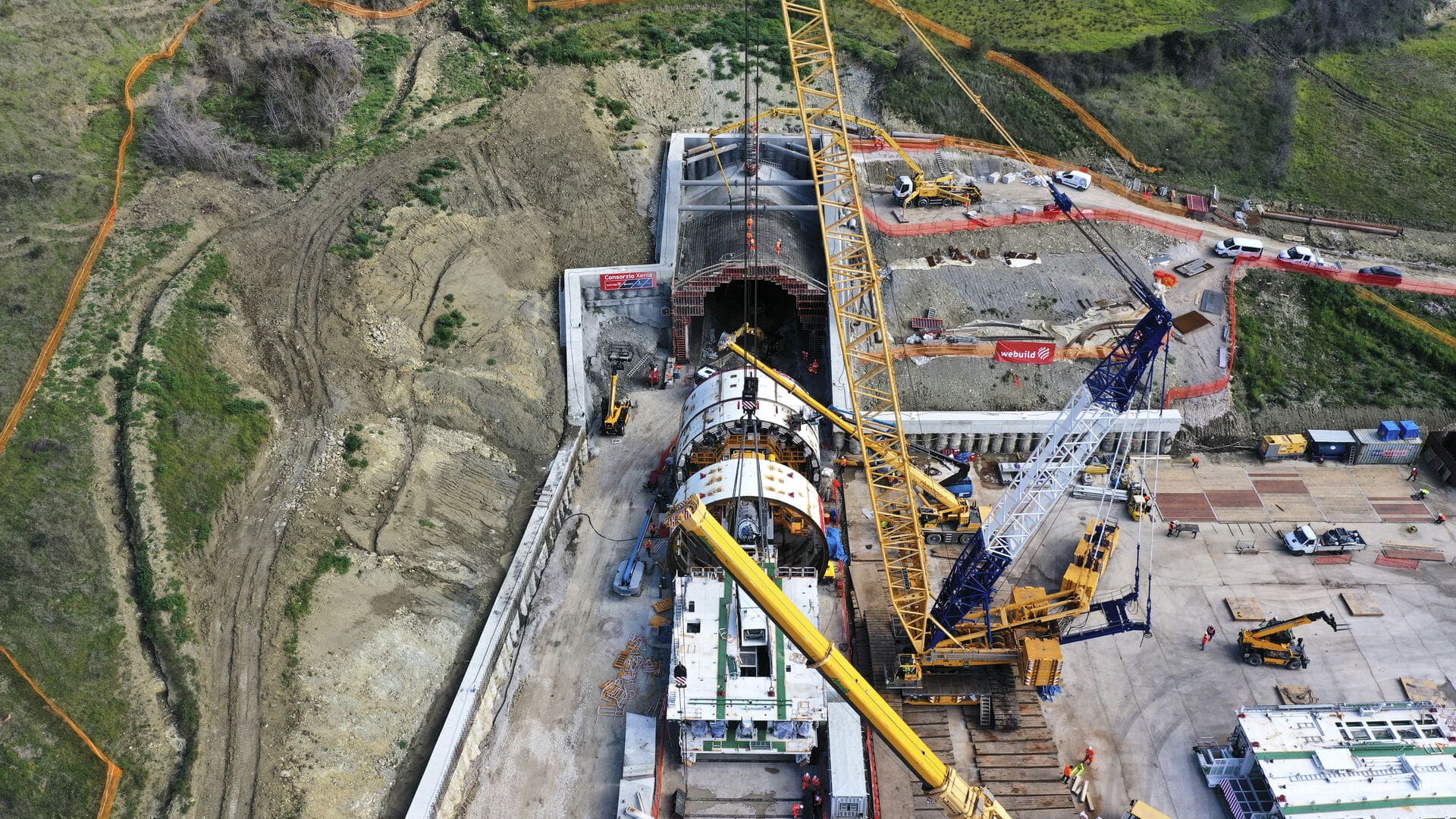 TBM at work on Lot 1A Battipaglia-Romagnano (Salerno-Reggio Calabria High-Speed Railway)
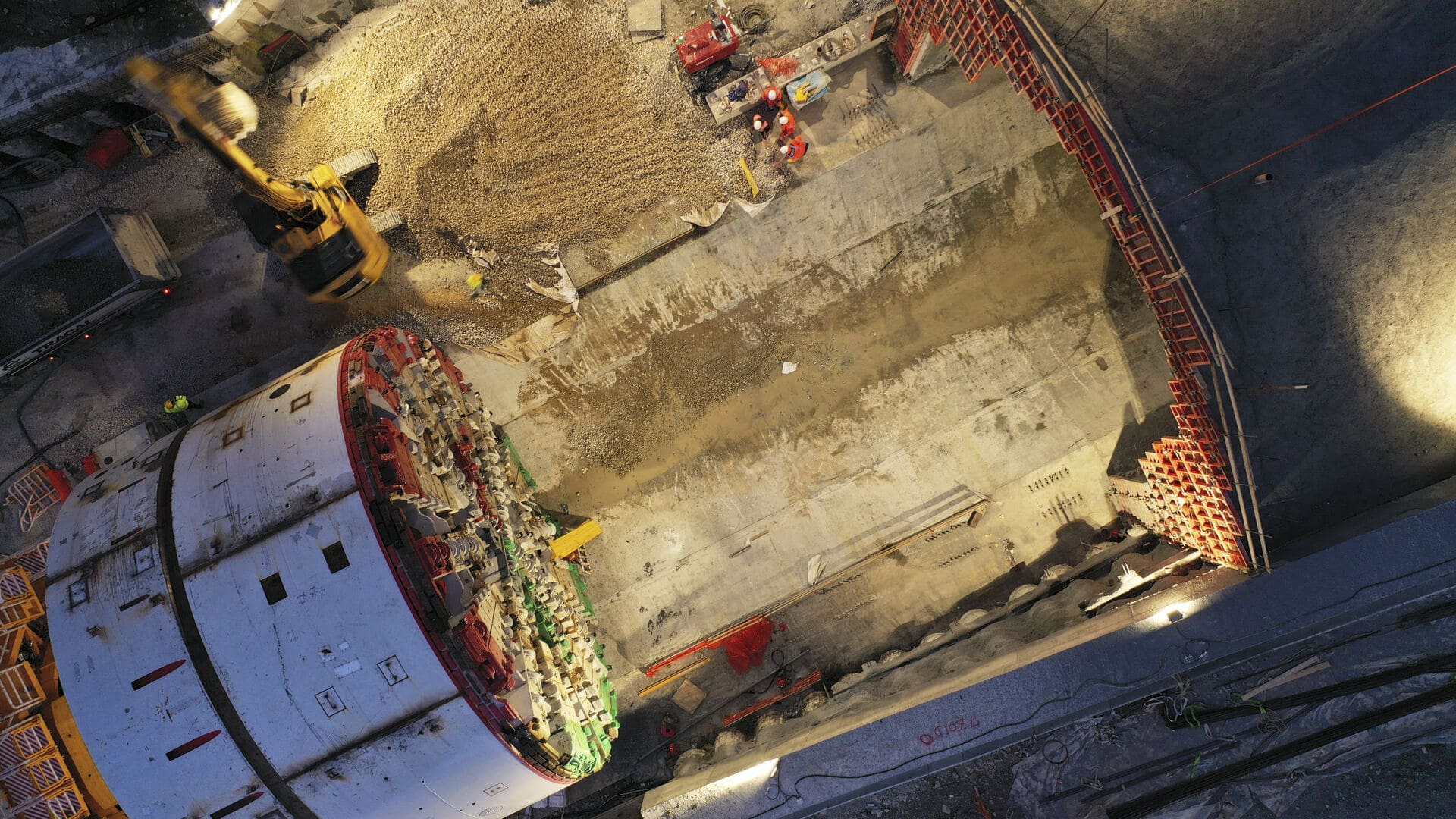 TBM at work on Lot 1A Battipaglia-Romagnano (Salerno-Reggio Calabria High-Speed Railway)
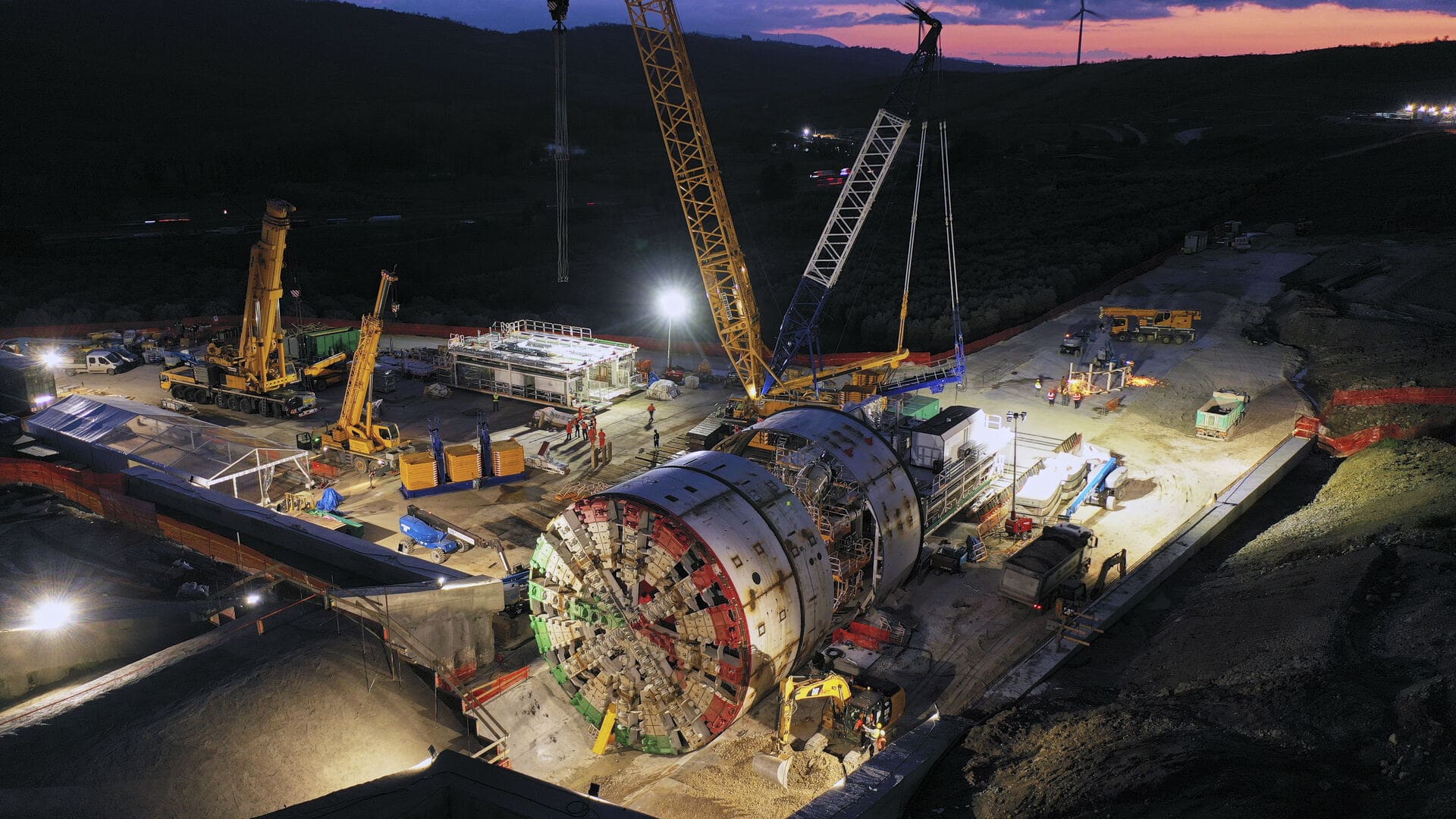 TBM at work on Lot 1A Battipaglia-Romagnano (Salerno-Reggio Calabria High-Speed Railway)
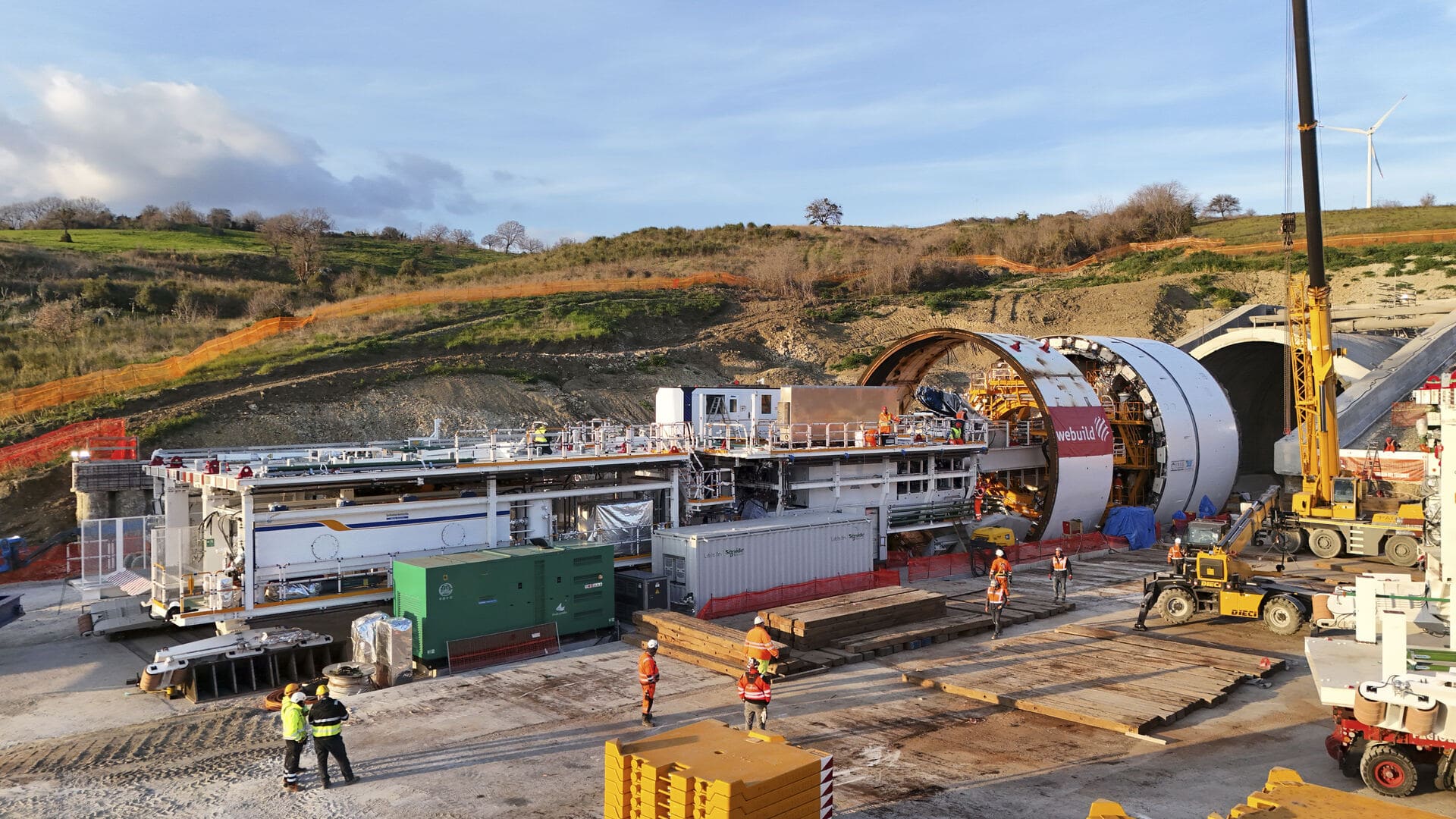 TBM at work on Lot 1A Battipaglia-Romagnano (Salerno-Reggio Calabria High-Speed Railway)
 TBM at work on Lot 1A Battipaglia-Romagnano (Salerno-Reggio Calabria High-Speed Railway)
 TBM at work on Lot 1A Battipaglia-Romagnano (Salerno-Reggio Calabria High-Speed Railway)
- Lot 1A Battipaglia-Romagnano covers 35 kilometers, with roughly 18 running underground
- The TBM Leucosia completes the 800-meter Serra Lunga tunnel and prepares for the excavation of the Acerra
- Four TBMs, 20 tunnels, and 19 viaducts: the construction site enters its most complex execution phase
- Over 2,000 people and approximately 1,000 businesses are working on the South's new HS/HC line
- The Salerno-Reggio Calabria line will bring the South's High-Speed rail into the European Scandinavian-Mediterranean Corridor
read more

Beneath the mountains of the Sele Valley, in the province of Salerno, a journey is underway that advances without seeing the light. It is that of the giant Tunnel Boring Machines (TBMs) working to excavate the route of the new Salerno–Reggio Calabria High-Speed/High-Capacity line—a railway set to push Italy’s high-speed rail network further south and reshape connections along the Southern Tyrrhenian spine.
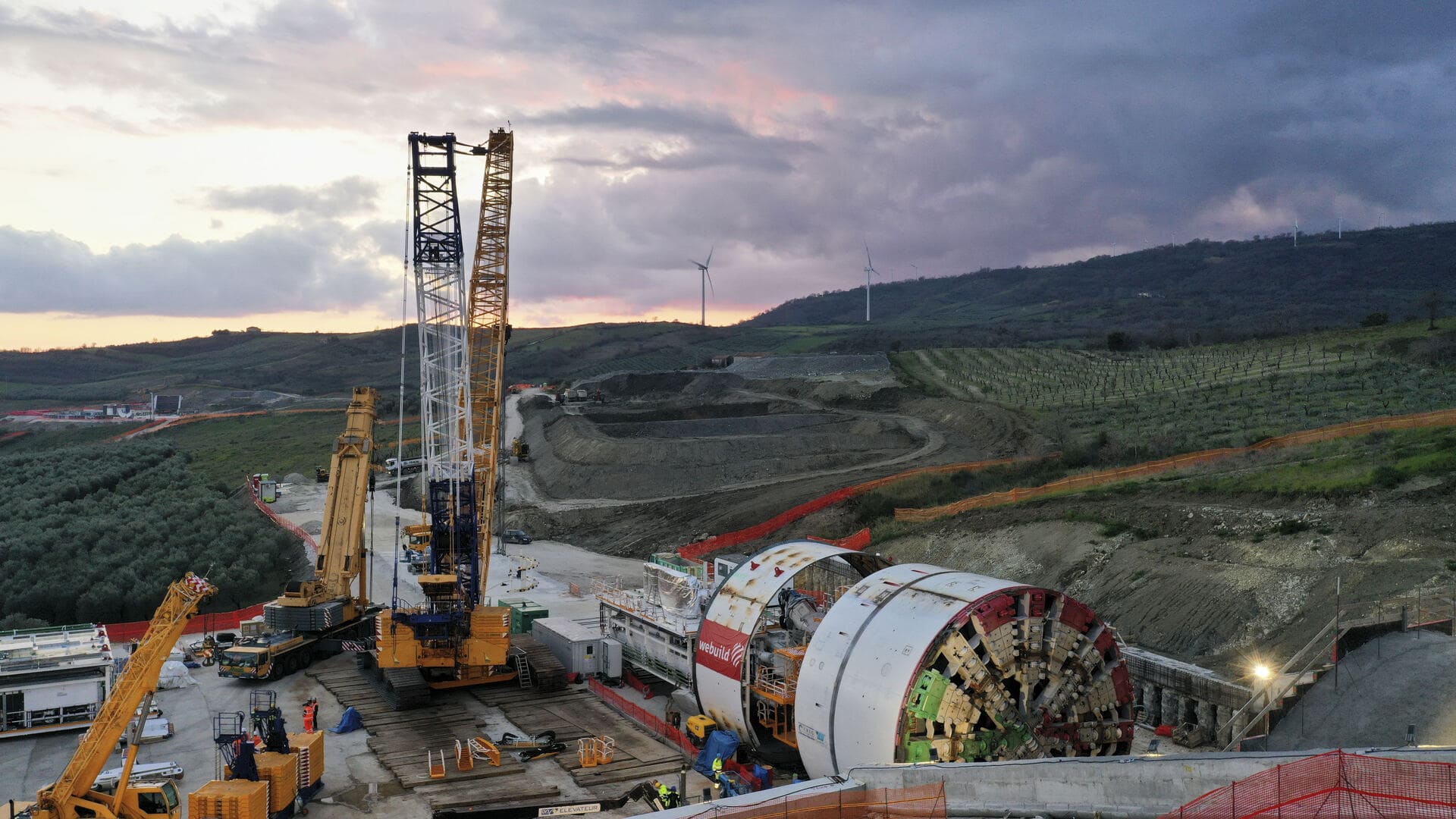
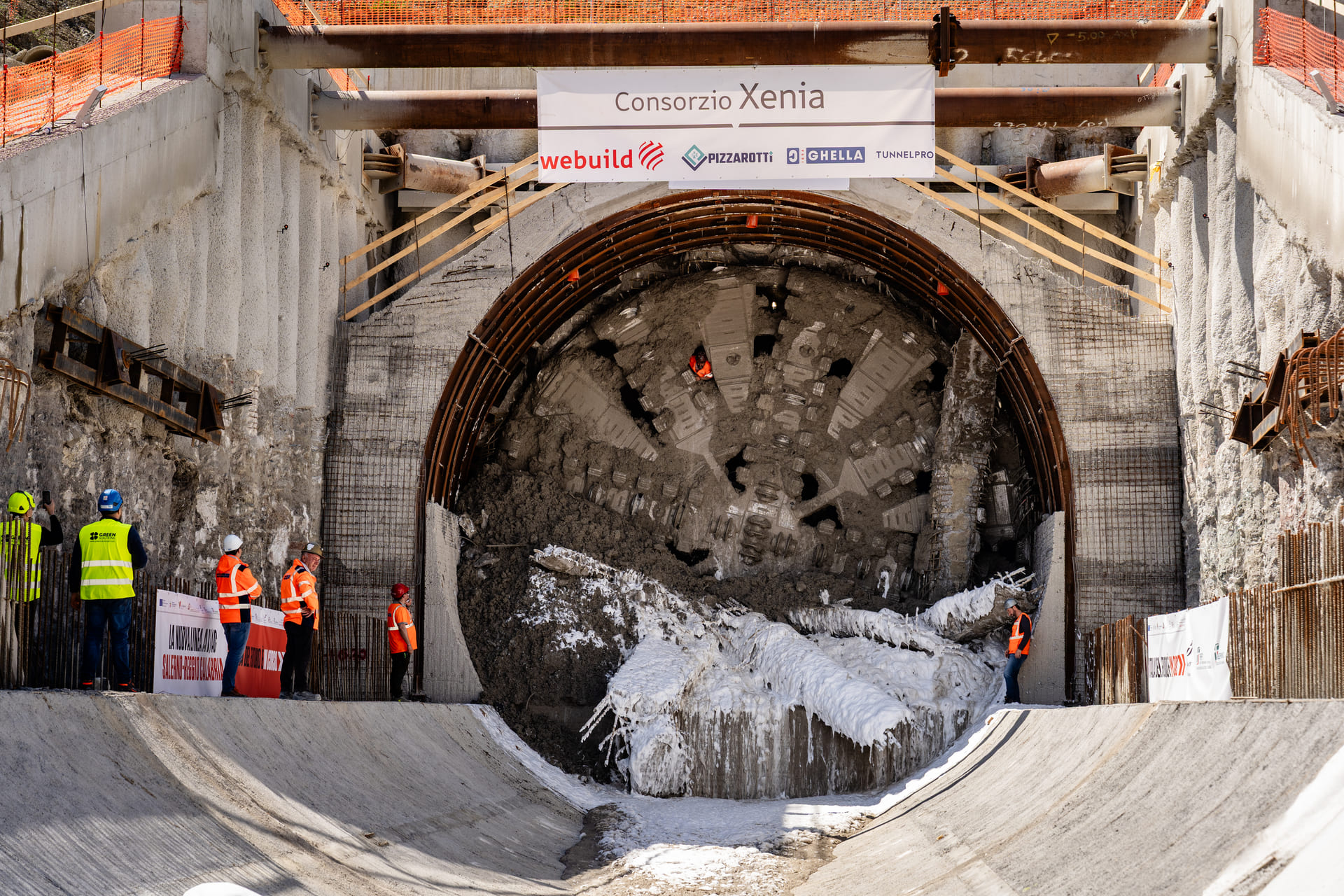
Leucosia, one of the four moles currently engaged in the excavation, recently broke through the final diaphragm of the Serra Lunga tunnel after excavating 800 meters beneath the hills between Eboli and Campagna. Now awaiting it are a viaduct, a new excavation face, and more mountains to cross.
A little farther away, the mole Mireille has just begun a new journey: over 2.5 kilometers inside the Sicignano tunnel, after having already completed the Caterina tunnel and traveled roughly 400 meters to reach the new face.
Leucosia and Mireille are two of the four large TBMs operating on Lot 1A Battipaglia–Romagnano; together with Partenope and Ligea, they advance underground while viaducts, cut-and-cover tunnels, and railway structures take shape on the surface.
It is a 35-kilometer-long construction site, but above all, the first piece of a much larger infrastructure project: bringing High-Speed rail across Calabria and building a new railway continuity between the Mezzogiorno, the rest of Italy, and Europe.
Because the Salerno–Reggio Calabria High-Speed rail line is not merely a new railway, but a key segment in a new geography of connections across Southern Italy—taking shape alongside the Naples–Bari High-Speed railway line and the lines under construction along the Palermo–Catania–Messina axis.
It is a network aimed at overcoming historical distances and discontinuities, turning the South no longer into the terminus of High-Speed trains in Italy, but into an integral part of the major Scandinavian–Mediterranean Corridor spanning Europe from north to south.
Salerno–Reggio Calabria: Four Tunnel Boring Machines at Work on the Battipaglia–Romagnano Section
Leucosia, Mireille, Partenope, and Ligea: four large tunnel boring machines excavating beneath the mountains, together shaping the alignment of the future high-speed railway line.
On the Lot 1A job site, the latest milestone achieved bears the name of Leucosia. Over 100 specialized technicians, working continuous 24/7 shifts, guided the drive of its cutterhead (with a TBM diameter of over 13 meters) through the 800 meters of the Serra Lunga tunnel—working through heterogeneous ground, reaching peak advance rates of around 15 meters per day, and placing over 2,900 precast concrete segments.
Now another complex operation begins for Leucosia: the TBM will be slid across a viaduct to reach the portal of the 224-meter-long Acerra tunnel, and subsequently that of the Petrolla tunnel, which extends for 1.2 kilometers.
A short distance away, Mireille has resumed its journey. The TBM had already excavated the Caterina tunnel—the first of the eight natural tunnels to be completed using mechanized excavation to be completed on this lot. Before arriving in Campania, the same tunnel boring machine had worked in France on Line 16 of the Grand Paris Express and was subsequently refurbished by Webuild in the Terni facility, where large excavation machinery is reclaimed and adapted for deployment on new infrastructure projects, “also in line with circular economy principles.
Today, Mireille has entered the mountain to construct the more than 2.5 kilometers of the Sicignano tunnel, while its “colleague” Partenope is engaged in the 3-kilometer-long Saginara tunnel, and the fourth mole (Ligea) is constructing the 2.2-kilometer-long Piano Grasso tunnel before moving on to the 1.5 kilometers of the Contursi tunnel.
Four massive tunnel boring machines, multiple active excavation faces, and a sequence of tunnels and viaducts that reflects the true engineering scale of the project.
High-Speed Rail in Calabria: The Railway Hinge of South Italy
Once the railway line is inaugurated, high-speed trains will run on the Lot 1A section between Battipaglia and Romagnano at speeds of 300 km/h—a highly complex alignment spanning 35 kilometers, with roughly 18 kilometers underground and a total of 20 tunnels and 19 viaducts.
The construction of this infrastructure project, awarded to a consortium led by the Webuild Group alongside FS Rail Construction, Ghella, and Tunnel Pro, has entered its most intricate execution phase with a construction site ecosystem currently employing over 2,000 direct and third-party workers, and a supply chain of more than 1,300 direct and indirect companies, around 80% of which are local.
However, the 35 kilometers of the Battipaglia–Romagnano section reveal only a fraction of the broader project. The new Salerno–Reggio Calabria line is destined to extend Italy’s High-Speed/High-Capacity network southward along an alignment that assumes a strategic role precisely because it connects infrastructure and regions that have suffered for decades from a deficit of modern rail connections.
It is within this perspective that the Salerno–Reggio Calabria becomes a critical hinge for the Mezzogiorno. To the north, it connects with the national High-Speed rail network and the railway line that connects Naples to Bari, which crosses the Apennines to link the Tyrrhenian and Adriatic coasts. Heading to the South of Italy, the corridor points toward Calabria and conceptually extends onward to Sicily, where new lines along the Palermo–Catania–Messina axis are currently under construction.
This is a rail geography no longer measured solely by the distance between individual cities, but by the capacity to interconnect distinct networks.
With the activation of the Naples–Cancello section, the Naples–Bari High-Speed rail line has already taken its first operational step toward connecting Campania and Apulia directly and integrating the line into the national high-speed network via the Afragola station. In Sicily, the Palermo–Catania–Messina line aims to cut travel times within the island and integrate it into the continental rail system. The Salerno–Reggio Calabria line occupies the central segment of this new map—the spine bringing the high-speed network along the South’s Tyrrhenian corridor.
For Webuild, this transformation coincides with an extensive commitment across construction sites throughout the Mezzogiorno. The Group is currently working on 21 projects in the South of Italy, representing a total awarded value exceeding 16 billion euros and involving 10,300 people (direct and subcontractor staff) alongside a supply chain of 8,000 businesses engaged since the start of operations.